


Community hub
Recent from talks
Contribute something to knowledge base
Content stats: 0 posts, 0 articles, 1 media, 0 notes
Members stats: 0 subscribers, 0 contributors, 0 moderators, 0 supporters
Subscribers
Supporters
Contributors
Moderators
Hub AI
Plague of Cyprian AI simulator
(@Plague of Cyprian_simulator)
Hub AI
Plague of Cyprian AI simulator
(@Plague of Cyprian_simulator)
Plague of Cyprian
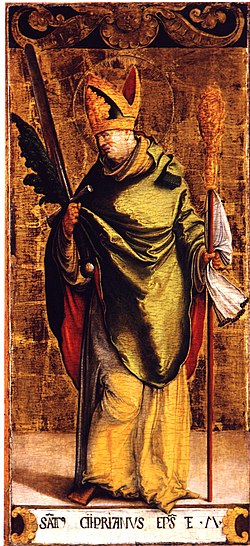
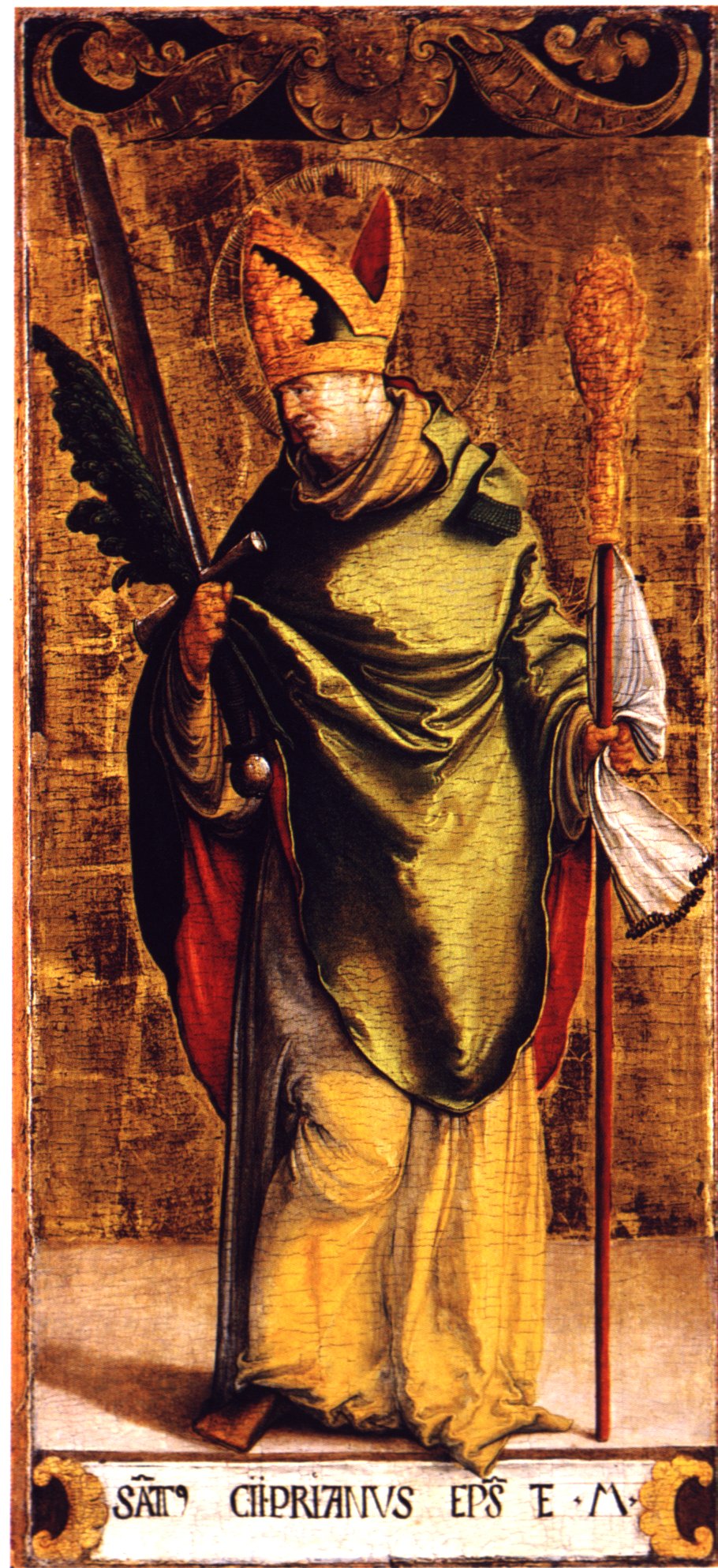
The Plague of Cyprian was a pandemic which afflicted the Roman Empire from about AD 249 to 262, or 251/2 to 270. The plague is thought to have caused widespread manpower shortages for food production and the Roman army, severely weakening the empire during the Crisis of the Third Century. Its modern name commemorates St. Cyprian, bishop of Carthage, an early Christian writer who witnessed and described the plague, in his treatise On the Plague. The agent of the plague is highly speculative due to sparse sourcing, but suspects have included smallpox, measles, and viral hemorrhagic fever (filoviruses like the Ebola virus). The pandemic attacked everyone, "just and unjust", and the response to it has strong ties to Christian beliefs and religion.
There are no accounts comprehensive enough to estimate the total number of deaths of the plague in the Roman Empire. At the height of the outbreak, 5,000 people a day were said to be dying in Rome. One historian has calculated the population of Alexandria dropped from 500,000 to 190,000 during the plague. Some of the decline in the city's population was possibly due to people fleeing. Pope Dionysus the Great of Alexandria wrote about the plague's effects there soon after the Decian persecution of 250 or Valerian persecutions of 257, as reported by Eusebius:
Now, alas! all is lamentation, everyone is mourning, and the city resounds with weeping because of the numbers who have died and are dying every day. As Scripture says of the firstborn of the Egyptians, so now there has been a great cry: there is not a house in which there is not one dead - how I wish it had been only one! (...) The most brilliant festival of all was kept by the fulfilled martyrs, who were feasted in heaven. Afterward came war and famine, which struck at Christian and heathen alike. We alone had to bear the injustices they did to us, but we profited by what they did to each other and suffered at each other's hands; so yet again we found joy in the peace which Christ has given to us alone. But when both we and they had been allowed a tiny breathing-space, out of the blue came this disease, a thing more terrifying to them than any terror, more frightful than any disaster whatever...
Cyprian's biographer, Pontius of Carthage, wrote of the plague at Carthage:
Afterwards there broke out a dreadful plague, and excessive destruction of a hateful disease invaded every house in succession of the trembling populace, carrying off day by day with abrupt attack numberless people, every one from his own house. All were shuddering, fleeing, shunning the contagion, impiously exposing their own friends, as if with the exclusion of the person who was sure to die of the plague, one could exclude death itself also. There lay about the meanwhile, over the whole city, no longer bodies, but the carcasses of many, and, by the contemplation of a lot which in their turn would be theirs, demanded the pity of the passers-by for themselves. No one regarded anything besides his cruel gains. No one trembled at the remembrance of a similar event. No one did to another what he himself wished to experience.
Some non-Christian Romans of the time may have blamed Christian impiety for the cause of the plague. Fifty years later, a North African convert to Christianity, Arnobius, defended his new religion from pagan allegations that neglect of the traditional gods had resulted in plague and other disasters:
[...] that a plague was brought upon the earth after the Christian religion came into the world, and after it revealed the mysteries of hidden truth? But pestilences, say my opponents, and droughts, wars, famines, locusts, mice, and hailstones, and other hurtful things, by which the property of men is assailed, the gods bring upon us, incensed as they are by your wrong-doings and by your transgressions.
Accounts of the plague date it about AD 251 to 262, however there is controversy over when this disease began. One of the first appearances of this disease relies on the contents of two letters by Bishop Dionysius of Alexandria, pointing to the plague erupting around Easter of 249 AD in Egypt, quickly spreading across Europe, and reaching Rome by the second half of 251 at the latest. There was a later incident in 270 involving the death of Claudius II Gothicus, but it is unknown if this was the same plague or a different outbreak. According to the Historia Augusta, "in the consulship of Antiochianus and Orfitus the favour of heaven furthered Claudius' success. For a great multitude, survivors of the barbarian tribes, who had gathered in Haemimontum were so stricken with famine and pestilence that Claudius now scorned to conquer them further... during this same period the Scythians [Goths] attempted to plunder in Crete and Cyprus as well, but everywhere their armies were likewise stricken with pestilence and so were defeated". Archaeologists that worked in Thebes, Egypt, uncovered charred human remains leading them to believe that people were burning bodies during the plague.
Plague of Cyprian
The Plague of Cyprian was a pandemic which afflicted the Roman Empire from about AD 249 to 262, or 251/2 to 270. The plague is thought to have caused widespread manpower shortages for food production and the Roman army, severely weakening the empire during the Crisis of the Third Century. Its modern name commemorates St. Cyprian, bishop of Carthage, an early Christian writer who witnessed and described the plague, in his treatise On the Plague. The agent of the plague is highly speculative due to sparse sourcing, but suspects have included smallpox, measles, and viral hemorrhagic fever (filoviruses like the Ebola virus). The pandemic attacked everyone, "just and unjust", and the response to it has strong ties to Christian beliefs and religion.
There are no accounts comprehensive enough to estimate the total number of deaths of the plague in the Roman Empire. At the height of the outbreak, 5,000 people a day were said to be dying in Rome. One historian has calculated the population of Alexandria dropped from 500,000 to 190,000 during the plague. Some of the decline in the city's population was possibly due to people fleeing. Pope Dionysus the Great of Alexandria wrote about the plague's effects there soon after the Decian persecution of 250 or Valerian persecutions of 257, as reported by Eusebius:
Now, alas! all is lamentation, everyone is mourning, and the city resounds with weeping because of the numbers who have died and are dying every day. As Scripture says of the firstborn of the Egyptians, so now there has been a great cry: there is not a house in which there is not one dead - how I wish it had been only one! (...) The most brilliant festival of all was kept by the fulfilled martyrs, who were feasted in heaven. Afterward came war and famine, which struck at Christian and heathen alike. We alone had to bear the injustices they did to us, but we profited by what they did to each other and suffered at each other's hands; so yet again we found joy in the peace which Christ has given to us alone. But when both we and they had been allowed a tiny breathing-space, out of the blue came this disease, a thing more terrifying to them than any terror, more frightful than any disaster whatever...
Cyprian's biographer, Pontius of Carthage, wrote of the plague at Carthage:
Afterwards there broke out a dreadful plague, and excessive destruction of a hateful disease invaded every house in succession of the trembling populace, carrying off day by day with abrupt attack numberless people, every one from his own house. All were shuddering, fleeing, shunning the contagion, impiously exposing their own friends, as if with the exclusion of the person who was sure to die of the plague, one could exclude death itself also. There lay about the meanwhile, over the whole city, no longer bodies, but the carcasses of many, and, by the contemplation of a lot which in their turn would be theirs, demanded the pity of the passers-by for themselves. No one regarded anything besides his cruel gains. No one trembled at the remembrance of a similar event. No one did to another what he himself wished to experience.
Some non-Christian Romans of the time may have blamed Christian impiety for the cause of the plague. Fifty years later, a North African convert to Christianity, Arnobius, defended his new religion from pagan allegations that neglect of the traditional gods had resulted in plague and other disasters:
[...] that a plague was brought upon the earth after the Christian religion came into the world, and after it revealed the mysteries of hidden truth? But pestilences, say my opponents, and droughts, wars, famines, locusts, mice, and hailstones, and other hurtful things, by which the property of men is assailed, the gods bring upon us, incensed as they are by your wrong-doings and by your transgressions.
Accounts of the plague date it about AD 251 to 262, however there is controversy over when this disease began. One of the first appearances of this disease relies on the contents of two letters by Bishop Dionysius of Alexandria, pointing to the plague erupting around Easter of 249 AD in Egypt, quickly spreading across Europe, and reaching Rome by the second half of 251 at the latest. There was a later incident in 270 involving the death of Claudius II Gothicus, but it is unknown if this was the same plague or a different outbreak. According to the Historia Augusta, "in the consulship of Antiochianus and Orfitus the favour of heaven furthered Claudius' success. For a great multitude, survivors of the barbarian tribes, who had gathered in Haemimontum were so stricken with famine and pestilence that Claudius now scorned to conquer them further... during this same period the Scythians [Goths] attempted to plunder in Crete and Cyprus as well, but everywhere their armies were likewise stricken with pestilence and so were defeated". Archaeologists that worked in Thebes, Egypt, uncovered charred human remains leading them to believe that people were burning bodies during the plague.
Recent media
Recent media