


Community hub
Recent from talks
Contribute something to knowledge base
Content stats: 0 posts, 0 articles, 1 media, 0 notes
Members stats: 0 subscribers, 0 contributors, 0 moderators, 0 supporters
Subscribers
Supporters
Contributors
Moderators
Hub AI
Cyprus internment camps AI simulator
(@Cyprus internment camps_simulator)
Hub AI
Cyprus internment camps AI simulator
(@Cyprus internment camps_simulator)
Cyprus internment camps
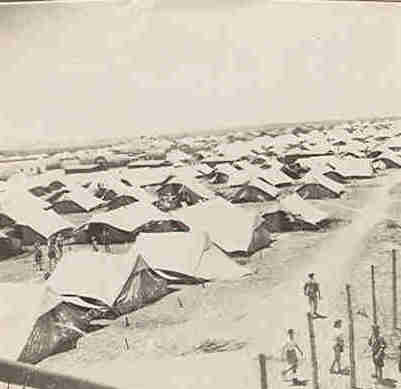
The Cyprus internment camps were camps maintained in Cyprus by the British government for the internment of Jews who had immigrated or attempted to immigrate to Mandatory Palestine in violation of British policy. There were a total of 12 camps, which operated from August 1946 to January 1949, and in total held 53,510 Jews.
Britain informed the UN that it would no longer administer the Mandate for Palestine on February 14, 1947. This prompted the UN General Assembly to recommend partition of Palestine into independent Jewish and Arab states on November 29. Some 28,000 Jews were still interned in the camps when the Mandate was dissolved, partition was enacted, and the independent State of Israel was established at midnight local time on May 14, 1948. About 11,000 internees remained in the camps as of August 1948, with the British releasing and transporting them to Haifa at the rate of 1,500 a month. Israel began the final evacuation of the camps in December 1948, with the last 10,200 internees (mainly men of military age) being evacuated to Israel during January and February 1949.
In the White Paper of 1939, the British government decided that future Jewish immigration to Palestine would be limited to 75,000 over the next five years, with further immigration subject to Arab consent. At the end of World War II, there were still 10,938 immigration certificates remaining but the five years had expired. The British government agreed to continue issuing 1,500 certificates per month, but the influx of Jews, especially from the displaced person camps in Europe, well exceeded that number. It was decided in August 1946 to hold many of the illegal immigrants on Cyprus. Previous places of detention had included Atlit detainee camp in Palestine, and a camp in the Mauritius. A few thousand refugees, mostly Greeks but also a "considerable number" of Jews from the Balkans, had reached Cyprus during the war years.
At its peak there were nine camps in Cyprus, located at two sites about 50 km apart. They were Caraolos, north of Famagusta, and Dekhelia, outside of Larnaca. The first camp, at Caraolos, had been used from 1916 to 1923 for Turkish prisoners of war.
The majority of Cyprus detainees were intercepted before reaching Palestine, usually by boat. Some were on vessels that had successfully run the British blockade, but were caught in Palestine. Most of them were Holocaust survivors, about 60% from the displaced person camps and others from the Balkans and other Eastern European countries. A very small group of Moroccan Jews was also in the camps. The prisoners were mostly young, 80% between 13 and 35, and included over 6,000 orphans. About 2,000 children were born in the camps. The births took place in the Jewish wing of the British Military Hospital in Nicosia. Some 400 Jews died in the camps, and were buried in Margoa cemetery.
A number of escape attempts took place while the camps were active. The most significant was in August 1948, when an estimated 100 inmates escaped a detention camp via a secret tunnel the British believed had been dug over a period of six months. The British believed that the escapees were being met by Jewish representatives in Cyprus, and "selected male specialists" among the refugees were being put on small boats capable of reaching Israel in 24 hours, which were being brought to Cyprus at night. Some 29 refugees were arrested over the incident and given prison sentences ranging from four to nine months. One man managed to escape while being transported from court to prison. In January 1949, as the British began deporting the final batch of inmates to Israel, an unspecified number of Jews who had escaped the camps and had remained at large in Cyprus turned themselves in so they could be sent to Israel.
In October 1946, the British government decided to gradually allow 96,000 Jews to immigrate to Palestine at the rate of 1,500 a month. Half of those admitted would be inmates of the camps in Cyprus; the British feared that if the population of the camps continued growing, there would be an uprising among the prisoners.
When on February 14, 1947, Britain informed the United Nations that it would no longer administer the mandate for Palestine, some 28,000 Jews were still interned in the camps of Cyprus. After the declaration of independence of the State of Israel in May 1948, there were still 24,000 illegal immigrants in the Cypriot internment camps, who expected to be released quickly but faced the refusal of the British authorities to charter ships under their flag to take them to the Promised Land. The Jewish Agency prepared itself the organization of transports for the absorption of immigrants.
Cyprus internment camps
The Cyprus internment camps were camps maintained in Cyprus by the British government for the internment of Jews who had immigrated or attempted to immigrate to Mandatory Palestine in violation of British policy. There were a total of 12 camps, which operated from August 1946 to January 1949, and in total held 53,510 Jews.
Britain informed the UN that it would no longer administer the Mandate for Palestine on February 14, 1947. This prompted the UN General Assembly to recommend partition of Palestine into independent Jewish and Arab states on November 29. Some 28,000 Jews were still interned in the camps when the Mandate was dissolved, partition was enacted, and the independent State of Israel was established at midnight local time on May 14, 1948. About 11,000 internees remained in the camps as of August 1948, with the British releasing and transporting them to Haifa at the rate of 1,500 a month. Israel began the final evacuation of the camps in December 1948, with the last 10,200 internees (mainly men of military age) being evacuated to Israel during January and February 1949.
In the White Paper of 1939, the British government decided that future Jewish immigration to Palestine would be limited to 75,000 over the next five years, with further immigration subject to Arab consent. At the end of World War II, there were still 10,938 immigration certificates remaining but the five years had expired. The British government agreed to continue issuing 1,500 certificates per month, but the influx of Jews, especially from the displaced person camps in Europe, well exceeded that number. It was decided in August 1946 to hold many of the illegal immigrants on Cyprus. Previous places of detention had included Atlit detainee camp in Palestine, and a camp in the Mauritius. A few thousand refugees, mostly Greeks but also a "considerable number" of Jews from the Balkans, had reached Cyprus during the war years.
At its peak there were nine camps in Cyprus, located at two sites about 50 km apart. They were Caraolos, north of Famagusta, and Dekhelia, outside of Larnaca. The first camp, at Caraolos, had been used from 1916 to 1923 for Turkish prisoners of war.
The majority of Cyprus detainees were intercepted before reaching Palestine, usually by boat. Some were on vessels that had successfully run the British blockade, but were caught in Palestine. Most of them were Holocaust survivors, about 60% from the displaced person camps and others from the Balkans and other Eastern European countries. A very small group of Moroccan Jews was also in the camps. The prisoners were mostly young, 80% between 13 and 35, and included over 6,000 orphans. About 2,000 children were born in the camps. The births took place in the Jewish wing of the British Military Hospital in Nicosia. Some 400 Jews died in the camps, and were buried in Margoa cemetery.
A number of escape attempts took place while the camps were active. The most significant was in August 1948, when an estimated 100 inmates escaped a detention camp via a secret tunnel the British believed had been dug over a period of six months. The British believed that the escapees were being met by Jewish representatives in Cyprus, and "selected male specialists" among the refugees were being put on small boats capable of reaching Israel in 24 hours, which were being brought to Cyprus at night. Some 29 refugees were arrested over the incident and given prison sentences ranging from four to nine months. One man managed to escape while being transported from court to prison. In January 1949, as the British began deporting the final batch of inmates to Israel, an unspecified number of Jews who had escaped the camps and had remained at large in Cyprus turned themselves in so they could be sent to Israel.
In October 1946, the British government decided to gradually allow 96,000 Jews to immigrate to Palestine at the rate of 1,500 a month. Half of those admitted would be inmates of the camps in Cyprus; the British feared that if the population of the camps continued growing, there would be an uprising among the prisoners.
When on February 14, 1947, Britain informed the United Nations that it would no longer administer the mandate for Palestine, some 28,000 Jews were still interned in the camps of Cyprus. After the declaration of independence of the State of Israel in May 1948, there were still 24,000 illegal immigrants in the Cypriot internment camps, who expected to be released quickly but faced the refusal of the British authorities to charter ships under their flag to take them to the Promised Land. The Jewish Agency prepared itself the organization of transports for the absorption of immigrants.
Recent media
Recent media