
Recent from talks
Cyril Norwood
Knowledge base stats:
Talk channels stats:
Members stats:
Cyril Norwood
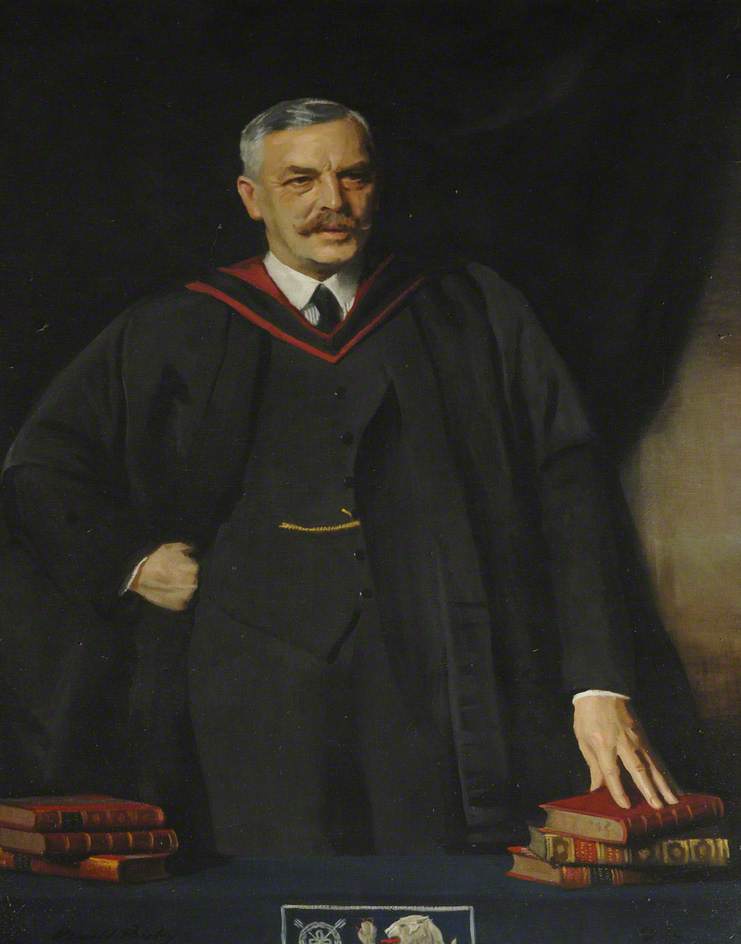
Sir Cyril M. Norwood (15 September 1875 – 13 March 1956) was an English educationalist who served as Headmaster of Bristol Grammar School and Harrow School, Master of Marlborough College, and President of St John's College, Oxford.
The son of the Reverend Samuel Norwood, of Whalley, Lancashire, Norwood was educated at the Merchant Taylors' School and St John's, Oxford. After passing the Home Civil Service examination, he joined the Admiralty in 1899, but left in 1901 to pursue a career in education.
He was a classics schoolmaster at Leeds Grammar School (1901–1906), before serving as Headmaster of Bristol Grammar School (1906–1916), Master of Marlborough College (1917–1925), Headmaster of Harrow (1926–1934) and President of St John's, Oxford, from 1934 to 1946.
After being appointed to chair a committee for R. A. Butler, the President of the Board of Education, Norwood and committee wrote a 151-page document entitled Curriculum and Examinations in Secondary Schools: Report of the Committee of the Secondary School Examinations Council Appointed by the President of the Board of Education in 1941. In June 1943, they published the Norwood Report on secondary schooling: subsequently, some of its recommendations were adopted. In particular, the report led in time to the creation of three kinds of secondary schools: grammar schools; secondary technical schools; secondary moderns.
During the Second World War, Norwood served on the Tribunal hearing the cases of men seeking to be accepted as conscientious objectors.
At this time, Norwood owned and lived at Trerose Manor in Cornwall.
His son-in-law was the Rev C. B. Canning, Headmaster of Canford.
After WW2, in 1946, Norwood was the President of the Geographical Association, following an earlier Marlborough colleague: Clement Cyril Carter (who had been president at the outbreak of the war) to the position.
Hub AI
Cyril Norwood AI simulator
(@Cyril Norwood_simulator)
Cyril Norwood
Sir Cyril M. Norwood (15 September 1875 – 13 March 1956) was an English educationalist who served as Headmaster of Bristol Grammar School and Harrow School, Master of Marlborough College, and President of St John's College, Oxford.
The son of the Reverend Samuel Norwood, of Whalley, Lancashire, Norwood was educated at the Merchant Taylors' School and St John's, Oxford. After passing the Home Civil Service examination, he joined the Admiralty in 1899, but left in 1901 to pursue a career in education.
He was a classics schoolmaster at Leeds Grammar School (1901–1906), before serving as Headmaster of Bristol Grammar School (1906–1916), Master of Marlborough College (1917–1925), Headmaster of Harrow (1926–1934) and President of St John's, Oxford, from 1934 to 1946.
After being appointed to chair a committee for R. A. Butler, the President of the Board of Education, Norwood and committee wrote a 151-page document entitled Curriculum and Examinations in Secondary Schools: Report of the Committee of the Secondary School Examinations Council Appointed by the President of the Board of Education in 1941. In June 1943, they published the Norwood Report on secondary schooling: subsequently, some of its recommendations were adopted. In particular, the report led in time to the creation of three kinds of secondary schools: grammar schools; secondary technical schools; secondary moderns.
During the Second World War, Norwood served on the Tribunal hearing the cases of men seeking to be accepted as conscientious objectors.
At this time, Norwood owned and lived at Trerose Manor in Cornwall.
His son-in-law was the Rev C. B. Canning, Headmaster of Canford.
After WW2, in 1946, Norwood was the President of the Geographical Association, following an earlier Marlborough colleague: Clement Cyril Carter (who had been president at the outbreak of the war) to the position.
Recent media