
Recent from talks
D. P. Roy Choudhury
Knowledge base stats:
Talk channels stats:
Members stats:
D. P. Roy Choudhury
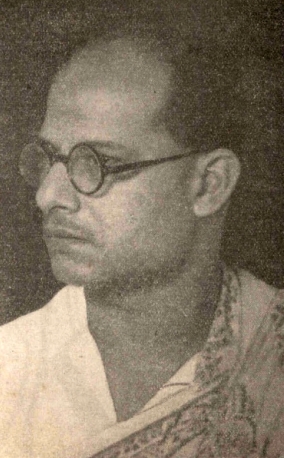
Devi Prasad Roy Choudhury MBE (15 June 1899 – 15 October 1975) was an Indian sculptor, painter and educator. He is well known for his monumental bronze sculptures, especially the Triumph of Labour and the Martyrs' Memorial, and is rated by many as one among the major artists of Indian modern art. He worked in a broad spectrum of mediums including watercolors, expressionist landscapes and commissioned portraits. Large scale sculptures were his particular strength and he made social realism the cornerstone of his art. In addition to painting and sculpting, he also wrestled, played the flute, engaged in hunting and wrote short stories in his spare time.
He served as the principal of Madras School of Art from 1929 to 1957 and became one of the first Indians to head a government educational institution at the time. The Government of India awarded him the third highest civilian honour of the Padma Bhushan, in 1958, for his contributions in the field of arts. He was elected as the Fellow of Lalit Kala Akademi in 1962.
Roy Choudhury was born on 15 June 1899 at Tejhat, in Rangpur in the undivided Bengal of the British India (presently in Bangladesh), and did his academic studies from home. He took his first painting lessons under the guidance of Abanindranath Tagore, the renowned Bengali painter. He also received lessons about life-drawing and portraiture in western style from an Italian painter named Boeiss. This was followed by sculpture training under the guidance of Hiranmoy Roy Choudhury, who taught him to build in rather than carve in his figures.
Roy Choudhury’s interest of getting into art caused a rift between him and his zamindar grandfather, the head of the family, who disinherited him. Subsequently, he had to take up work as a scene painter for a theatre in North Kolkata and taught art at a boys' school in the city. He also taught for some time at Santiniketan where Ramkinkar Baij was one of his students.
Roy Choudhury joined the Madras School of Art in 1929 as a superintendent. He thus became one of the first Indians to head an educational institution that was run by the British. He accepted the post on the understanding that he should be permitted to take up private assignments. During his thirty years at the school, he inspired several artists form South India. He helped spark creativity among the students who had produced only conventional work until that time. This entirely changed the existing image of the school as an industrial arts centre. Subsequently, he was honoured by the British Government as an MBE in 1937 for his service.
Despite being in charge of the school for almost three decades, Roy Choudhury was quite productive as an artist. He maintained two studios, one at his residence and the other at the school. He worked from early morning till late in the evening, mostly on large-scale sculptures. However, he did not hold any exhibition of his works during his lifetime, as he believed:
I consider my modest studio as a sort of old, sacred temple devoted to the cause of art. I worship the objects I create. I can never think of them being carried now and then for public view. Those who are real lovers of art are welcome to my studio. Don’t the devotees pay a visit to the dilapidated temple in a village?
When Lalit Kala Akademi was founded in 1954, he was appointed as the founder chairman. He also served as president of the UNESCO Art Seminar conducted in 1955 at Tokyo and the Nikhil Bharat Bangiya Sahitya Sammilani of 1956 organized in Chennai. Along with his art, he was well known for his Bengali short stories published in the Bengali magazines of the time.
Hub AI
D. P. Roy Choudhury AI simulator
(@D. P. Roy Choudhury_simulator)
D. P. Roy Choudhury
Devi Prasad Roy Choudhury MBE (15 June 1899 – 15 October 1975) was an Indian sculptor, painter and educator. He is well known for his monumental bronze sculptures, especially the Triumph of Labour and the Martyrs' Memorial, and is rated by many as one among the major artists of Indian modern art. He worked in a broad spectrum of mediums including watercolors, expressionist landscapes and commissioned portraits. Large scale sculptures were his particular strength and he made social realism the cornerstone of his art. In addition to painting and sculpting, he also wrestled, played the flute, engaged in hunting and wrote short stories in his spare time.
He served as the principal of Madras School of Art from 1929 to 1957 and became one of the first Indians to head a government educational institution at the time. The Government of India awarded him the third highest civilian honour of the Padma Bhushan, in 1958, for his contributions in the field of arts. He was elected as the Fellow of Lalit Kala Akademi in 1962.
Roy Choudhury was born on 15 June 1899 at Tejhat, in Rangpur in the undivided Bengal of the British India (presently in Bangladesh), and did his academic studies from home. He took his first painting lessons under the guidance of Abanindranath Tagore, the renowned Bengali painter. He also received lessons about life-drawing and portraiture in western style from an Italian painter named Boeiss. This was followed by sculpture training under the guidance of Hiranmoy Roy Choudhury, who taught him to build in rather than carve in his figures.
Roy Choudhury’s interest of getting into art caused a rift between him and his zamindar grandfather, the head of the family, who disinherited him. Subsequently, he had to take up work as a scene painter for a theatre in North Kolkata and taught art at a boys' school in the city. He also taught for some time at Santiniketan where Ramkinkar Baij was one of his students.
Roy Choudhury joined the Madras School of Art in 1929 as a superintendent. He thus became one of the first Indians to head an educational institution that was run by the British. He accepted the post on the understanding that he should be permitted to take up private assignments. During his thirty years at the school, he inspired several artists form South India. He helped spark creativity among the students who had produced only conventional work until that time. This entirely changed the existing image of the school as an industrial arts centre. Subsequently, he was honoured by the British Government as an MBE in 1937 for his service.
Despite being in charge of the school for almost three decades, Roy Choudhury was quite productive as an artist. He maintained two studios, one at his residence and the other at the school. He worked from early morning till late in the evening, mostly on large-scale sculptures. However, he did not hold any exhibition of his works during his lifetime, as he believed:
I consider my modest studio as a sort of old, sacred temple devoted to the cause of art. I worship the objects I create. I can never think of them being carried now and then for public view. Those who are real lovers of art are welcome to my studio. Don’t the devotees pay a visit to the dilapidated temple in a village?
When Lalit Kala Akademi was founded in 1954, he was appointed as the founder chairman. He also served as president of the UNESCO Art Seminar conducted in 1955 at Tokyo and the Nikhil Bharat Bangiya Sahitya Sammilani of 1956 organized in Chennai. Along with his art, he was well known for his Bengali short stories published in the Bengali magazines of the time.
Recent media