Hubbry Logo
DC TalkDC TalkMain
Open search
DC Talk
Community hub
DC Talk
logo
8 pages, 0 posts
0 subscribers
Be the first to start a discussion here.
DC Talk
DC Talk
from Wikipedia

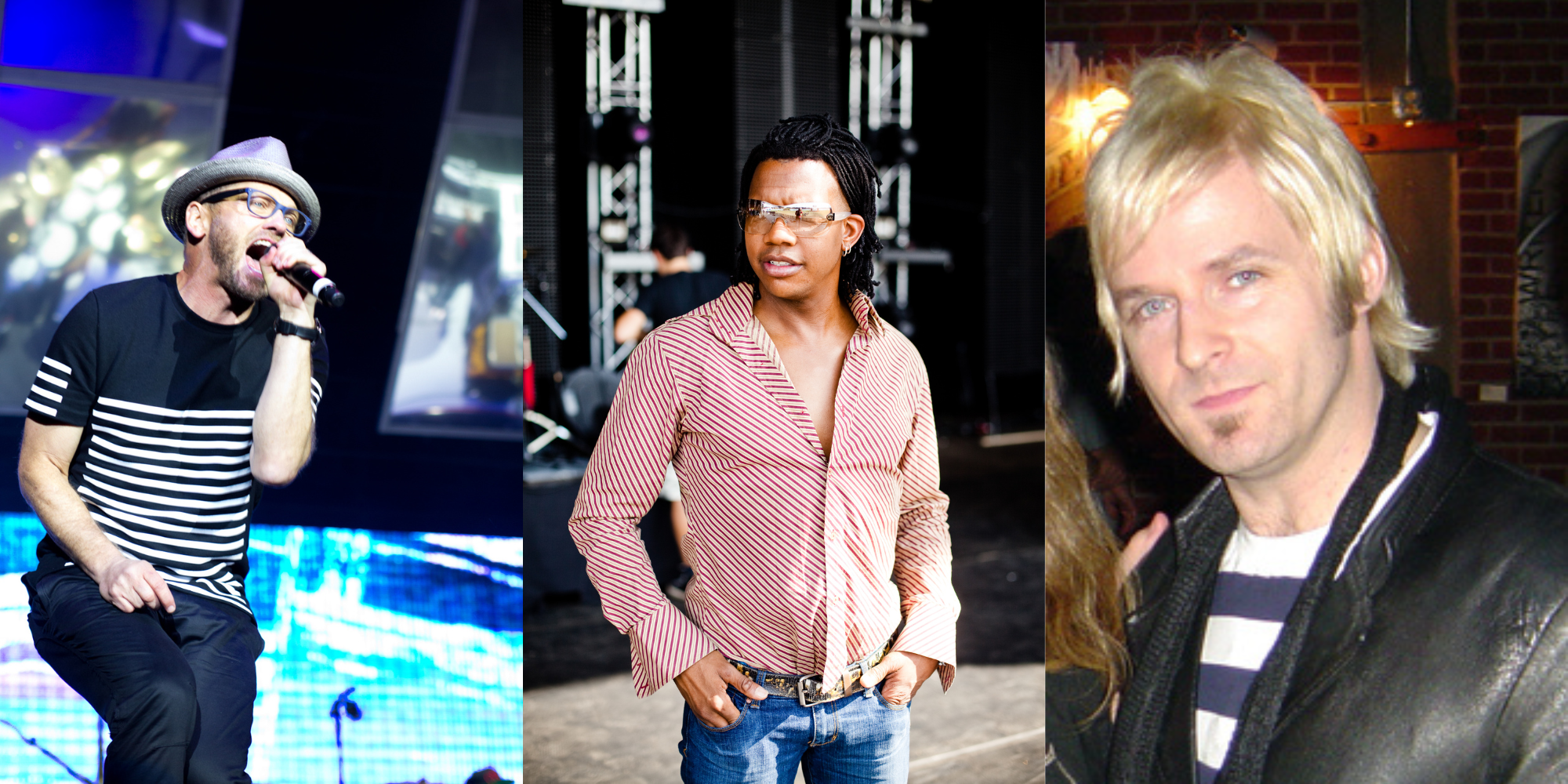
DC Talk (stylized as dc Talk) was a Christian rap and rock trio. The group was formed at Liberty University in Lynchburg, Virginia in 1987 by Toby McKeehan, Michael Tait, and Kevin Max Smith. They released five major studio albums together: dc Talk (1989), Nu Thang (1990), Free at Last (1992), Jesus Freak (1995), and Supernatural (1998). In 2002, the Encyclopedia of Contemporary Christian Music called dc Talk "the most popular overtly Christian act of all time."[1]

Key Information

In 2001, the group released an EP, Solo, which contained two solo songs from each member. Since that time, the three band members all have led solo careers and two have joined other groups, though they never formally disbanded. They performed and recorded individual songs together several times during the 2000s and 2010s, and in 2017, and in 2019 the band reunited for a cruise.

The group's musical style evolved significantly throughout its career. Its first two releases, DC Talk and Nu Thang, were predominantly hip hop. Their third album, Free at Last, also mainly took influence from hip hop while the group's music began to incorporate rock and other influences. The trio's last two albums, Jesus Freak and Supernatural, were predominantly pop rock.

In June 2025, following allegations of sexual assault made against Michael Tait, many radio stations removed from rotation DC Talk and Newsboys (with whom Tait was the lead singer from 2009 to 2025).[2] Tait is no longer mentioned on the dctalk.com website.[3]

History

[edit]

Formation

[edit]

While attending Liberty University, Toby McKeehan met Michael Tait, and the two began to perform together. Tait had previously been featured on Jerry Falwell's The Old Time Gospel Hour and with the Falwell Singers.[4] He also performed solo, what McKeehan later described as a "kind of an R&B/church-oriented music".[5]

The two joined forces to record a song that McKeehan had written, "Heavenbound".[4] They performed the song before an audience of 8,000 Liberty University students with McKeehan rapping and Tait singing the chorus.[4] The song was well received, selling out the approximately 3,000 copies[4] of their demo tape, Christian Rhymes to a Rhythm. The tape included "Heavenbound" and was distributed by the group in the Washington, D.C. area.[6]

Kevin Max Smith came from a campus rock band to join the group.[5] Max was approached by Tait after performing The Imperials's "Lord of the Harvest" during a chapel session. The two became friends and Max was introduced to McKeehan. All three moved off campus to live together.[7]

In 1988, the group independently released their self-titled album, a cassette-only release. This album would be re-released by ForeFront Records the following year.[8]

The success of the group's demo tape eventually led to a recording contract with ForeFront Records in January 1989.[4][7] Shortly after signing the recording contract the trio moved to Nashville, Tennessee,[7] and called themselves "DC Talk and the One Way Crew".[6] The name was later simplified to "DC Talk", which came to stand for "decent Christian talk", though originally "DC" was taken from Washington, D.C., where Toby McKeehan had formerly been rapping.[6]

DC Talk (1989)

[edit]

After signing the recording contract with ForeFront, the trio released their self-titled debut album, DC Talk, in 1989 with Mike Valliere and Vic Mignogna. The music video for their first single, "Heavenbound", received airplay on the BET network.[9]

Nu Thang (1990–1992)

[edit]

Their follow-up full-length release, Nu Thang, and a Christmas three-song EP titled Yo! Ho! Ho!, were both released in 1990. Nu Thang had two successful singles: "I Luv Rap Music" and "Can I Get a Witness".[10] Apart from dealing with strictly Christian themes, the band incorporated songs addressing social issues, such as racism in the song "Walls" and abortion in "Children Can Live Without It".[9] The hip hop/pop styling of the album earned the band attention, expanding the group's audience, and by 1991, Nu Thang had sold 200,000 copies.[6] The band became an opening act for Michael W. Smith and received a Dove Award.[6][11] The release of their Rap, Rock, n' Soul video garnered a wider audience for the group, being certified gold for long form video.[1][11]

In 1992, a year after its release, Nu Thang sold more than 300,000 copies and gave the trio two more Dove Awards.[6] In addition to the increasing attention that the group began to receive, DC Talk appeared on The Arsenio Hall Show that same year.[6] "Nu Thang" was eventually certified gold, selling over 500,000 copies, an impressive feat for a Christian artist at that time.[1]

Free at Last (1992–1994)

[edit]

In November 1992, the group released their third album, Free at Last, which was eventually certified platinum by the RIAA in 1995.[12] In 2001, CCM ranked "Free at Last" as the ninth best album in Christian music.[13] The album included a cover version of the Bill Withers song "Lean on Me" and a remake of "Jesus Is Just Alright", originally recorded by the Art Reynolds Singers.[10] Free at Last stayed at the No. 1 spot on the Billboard CCM sales chart for 34 weeks and was the band's first album to top the Christian Albums chart.[10][11][14] DC Talk became one of the first contemporary Christian groups to perform on late-night television[citation needed] when, on November 12, 1993, the band performed "Jesus Is Just Alright" on The Tonight Show with Jay Leno.[15] Free at Last also garnered the group's first Grammy Award for Best Rock Gospel Album in 1994.[1][10] The success of the album is attributed to the group moving away from a rap sound to a blend of hip-hop and pop.[11] The album also prompted the filming of a documentary film with the same name. In 1994, the band released a Christmas single, "We Three Kings", on the album "Joyful Christmas".

Free at Last: The Movie

[edit]

During the Free at Last tour, the band was followed around by camera crews to film a documentary. The documentary was planned to be released as a theatrical film, Free at Last: The Movie, and was heavily promoted on Lightmusic TV, a Christian music video show. After months of teaser trailers, they abruptly stopped, because the movie could not find a distributor.[16] Eight years after the film was to be released theatrically, the movie was finally released on DVD in unfinished form. Some of the footage used for the movie was shown in the music video for "The Hardway".

Jesus Freak (1995–1997)

[edit]

Jesus Freak was released in 1995, and it achieved the highest first-week sales of any Christian release at the time,[10][citation needed] reaching No. 16 on the Billboard 200.[17] The album, which was ultimately certified double platinum,[12] was certified gold within 30 days of its release.[18] This album was a fusion of musical stylings, with a more pop-rock oriented sound combined with hip hop.

Jesus Freak marked a milestone in the group's commercial career, as they signed a deal with Virgin Records in 1996 to distribute their music to the mainstream market.[11][19] It also earned DC Talk their second Grammy.[1]

The title track is also of historical importance. It is believed to be the first link between grunge and rapcore in Contemporary Christian music, and was the first non–Adult Contemporary song to win the Dove Award for Song of the Year. The song was also played on some secular stations.[1][20] "Between You and Me" was a successful single, reaching No. 24 and No. 29 respectively on Billboard's Adult Contemporary and Hot 100[17] and No. 12 on Casey's Top 40, while the video received regular airtime on MTV and VH1.[10]

With the release of the album, the group launched a massive tour titled the Freakshow Tour,[10] which took the trio across the United States, Canada, and Europe. The group released a live video titled Live in Concert: Welcome To The Freak Show which contained footage from the tour.[11] An audio CD of the soundtrack from the video was also released under the same title, reaching No. 109 on the Billboard 200.[17] The CD Welcome to the Freakshow was certified gold and won dc Talk another Grammy award.[1]

The album is looked at by many as one of the greatest and most important albums to be released in Christian music.[21]

Supernatural (1998–2000)

[edit]

Supernatural, released in 1998, was their last all-new studio album. Upon release, the album overtook Jesus Freak to set a new record for the highest first week sales for a Christian release.[10] It debuted at No. 4 on the Billboard 200 charts, an unprecedented feat for a Christian rock album.[11] Supernatural abandoned the hip hop/rap style found on the group's earlier releases to settle for the pop/rock sound.[11] The group has stated in The Supernatural Experience video that this album was different; it was a collaborative effort of all three members.[11] The singles for the album received their fair share of radio play on modern rock, contemporary Christian, and alternative outlets. The group then embarked on a 60-city tour across the United States titled, The Supernatural Experience. Footage from the tour was combined with interviews and released as The Supernatural Experience video and was certified gold for long form video.[1]

In addition to touring and recording Supernatural, the members of the group went on to co-author a book titled Jesus Freaks in collaboration with The Voice of the Martyrs in 1999. The book contains the shortened biographies and incidents in the lives of famous and lesser-known Christians who stood up for their faith. Since then, the group has co-authored a series of other books.[citation needed]

In 2000, DC Talk hosted a show titled Intermission: A Decade of DC Talk.[22] A compilation album titled Intermission: The Greatest Hits was then released, containing many of their previously recorded songs either remixed or in their original formats. Two new songs, "Chance" and "Sugar Coat It", were recorded for the album. Intermission reached No. 81 on the Billboard 200.[17]

Continued success, hiatus, and other activities (2000–present)

[edit]

In 2000, the members announced that they would be taking a break from the group to pursue solo efforts. They released Solo: Special Edition EP, which contained two new songs from each member's solo ventures and a live version of the U2 song "40" performed by all three members. The EP reached No. 142 on the Billboard 200 and won DC Talk their fourth Grammy award.[1][17]

During their hiatus, DC Talk has continued to sporadically release singles together, including "Let's Roll" (2002), which was about the September 11 attacks.[23] Multiple compilation albums have been released during their hiatus, including the 10th anniversary versions of their albums Free at Last (2002) and Jesus Freak (2006), as well as 8 Great Hits (2004), Freaked! (2006), The Early Years (2006), Greatest Hits (2007), and Back 2 Back Hits (2011).[24] The three members still frequently show up at each other's shows and cover DC Talk songs.[25][26][27] The band has also continued to help each other in their respective solo careers, including "Atmosphere" by tobyMac (2004), a cover of "The Cross" by Kevin Max (2007), and "Love Feels Like" by tobyMac (2015).[28][29] Most recently, the band was featured on tobyMac's single "Space" (2022).[30]

Group members TobyMac and Michael Tait, with assistance from Christian organization WallBuilders, collaborated on two books: Under God, published in 2004, and Living Under God: Discovering Your Part in God's Plan, published in 2005. Both books are collections of American history-inspired inspirational stories with a Christian perspective.[31][32]

In 2010, the trio performed with Aaron Shust, Brandon Heath, Matthew West, Natalie Grant, Steven Curtis Chapman, Casting Crowns, and some other artists to serve as the backing choir for "Come Together Now", a song about the 2010 Haiti earthquakes.[33] Later in the year, Kevin Max admitted that he would love to make more DC Talk music, but he thinks "that time has passed us by...". He then explained, "as individuals we are so different in our approaches that it might be quite a process."[34] tobyMac released the song "Wonderin'" with his album Tonight; the song is "a warm look back at DC Talk" for Toby.[35] On October 11, 2016, the trio came together to perform "Love Feels Like" at the Allen Arena in Nashville, Tennessee for the 47th Annual GMA Dove Awards.[36]

In 2015, Gotee Records announced the issuance of Jesus Freak and Supernatural on vinyl.[37]

In June 2025, following allegations of sexual assault made against Tait, many radio stations removed DC Talk and Newsboys (with whom Tait was the lead singer from 2009 to 2025) from circulation.[2]

Reunion tour

[edit]

In June 2010, Max tweeted that he was trying to arrange a reunion tour for "perhaps" 2011.[26][34] In January 2011, TobyMac stated that a reunion tour would probably happen "sooner or later", but not in the near future.[38] In January 2014, Tait indicated that he liked the sound of a "20-years-later" tour in 2015,[39] but tobyMac commented that "nothing concrete is in the works" due to conflicting schedules.[40]

DC Talk performed two concerts on July 13, 2017, and a third show on July 14, 2017 aboard the MSC Divina in the Bahamas on the reunion cruise. The group hinted at more reunions in the future.[41]

In June 2019, the group performed on a second cruise. Tait stated in an interview that DC Talk would be doing a "land cruise" starting in 2020,[42] though it never came to fruition.

Group members

[edit]
  • Toby McKeehan – lead and backing vocals, keyboards, programming, sampler, tambourine (1987–2002; 2015; 2017–2019; 2022)
  • Michael Tait – lead and backing vocals, tambourine (1987–2002; 2015; 2017–2019; 2022)
  • Kevin Max – lead and backing vocals, keyboards, tambourine (1988–2002; 2015; 2017–2019; 2022)

Band

[edit]
  • Jason Halbert – keyboards, organ
  • Brent Barcus – guitar
  • Erick Cole – guitar
  • Barry Graul – guitar
  • Mark Lee Townsend – guitar
  • Martin Upton – guitar
  • Otto "Sugar Bear" Price – bass
  • Will Denton – drums
  • Rick Mayday May – drums
  • Ric "DJ Form" Robbins – DJ
  • Marvin Sims – percussion
  • GRITS – choreography

Timeline

[edit]

Discography

[edit]

Bibliography

[edit]

Awards and nominations

[edit]

Grammy Awards

[edit]
Year Nominee / work Award Result
1992 Nu Thang Best Rock/Contemporary Gospel Album Nominated
1993 Free at Last Grammy Award for Best Rock Gospel Album Won
1996 Jesus Freak Grammy Award for Best Rock Gospel Album Won
1997 Welcome to the Freak Show Grammy Award for Best Rock Gospel Album Won
1999 Supernatural Grammy Award for Best Pop/Contemporary Gospel Album Nominated
2001 Solo Grammy Award for Best Rock Gospel Album Won

Dove Awards

[edit]
Year Nominee / work Award Result
1992 Rap, Rock, & Soul Long Form Music Video of the Year Won
"I Love Rap Music" Rap/Hip Hop Recorded Song of the Year Won
1993 "Can I Get a Witness" Rap/Hip Hop Recorded Song of the Year Won
1994 "Socially Acceptable" Rap/Hip Hop Recorded Song of the Year Won
"Jesus is Just Alright" Rock Recorded Song of the Year Won
1994 "Luv is a Verb" Rap/Hip Hop Recorded Song of the Year Won
1996 DC Talk Artist of the Year Won
"Jesus Freak" Song of the Year Won
"Jesus Freak" Rock Recorded Song of the Year Won
1997 "Between You and Me" Pop/Contemporary Recorded Song of the Year Won
Jesus Freak Rock Album of the Year Won
"Like It, Love It, Need It" Rock Recorded Song of the Year Won
"Jesus Freak" Short Form Music Video of the Year Won
1998 "Colored People" Short Form Music Video of the Year Won
1999 DC Talk Group of the Year Nominated
DC Talk Artist of the Year Nominated
"My Friend (So Long)" Rock Recorded Song of the Year Nominated
Supernatural Pop/Contemporary Album of the Year Nominated
2000 The Supernatural Experience Long Form Music Video of the Year Won
2001 "Dive" Alternative/Modern Rock Song Won
2004 Free at Last: The Movie (10th Anniversary) Long Form Music Video of the Year Nominated

References

[edit]
[edit]
Revisions and contributorsEdit on WikipediaRead on Wikipedia
from Grokipedia
DC Talk was an American Christian rap and rock trio formed in 1987 at in , by Toby McKeehan, , and . The group blended hip hop, rock, and pop elements to deliver lyrics centered on evangelical Christian messages, evolving stylistically from their debut rap-focused album to more rock-oriented sounds in later releases. Over their active years through 2000, DC Talk released five studio albums: DC Talk (1989), Nu Thang (1990), Free at Last (1992), Jesus Freak (1995), and Supernatural (1998). Their 1995 album Jesus Freak marked a breakthrough, peaking at number 16 on the Billboard 200—the highest chart position for a Christian album at the time—and selling over two million copies. Supernatural followed by debuting at number 4 on the Billboard charts. The group earned four Grammy Awards, primarily in the Best Rock Gospel Album category for works including Free at Last and Jesus Freak, along with multiple Dove Awards recognizing their influence in contemporary Christian music. Following , DC Talk entered an indefinite hiatus to allow members to pursue solo endeavors, with McKeehan achieving success as , Tait joining and leading the , and Max releasing independent albums; no full-group reunion has occurred since. Their work is credited with expanding the reach of into mainstream audiences through innovative genre fusion and unapologetic faith-based content.

History

Formation and early development (1987–1989)

DC Talk originated in 1987 at in , where Toby McKeehan began performing as a rapper under the moniker DC Talk, an acronym for "Decent Christian Talk." McKeehan, originally from the area, initially worked solo but soon collaborated with fellow student , who provided vocals during campus and church events. The duo's performances often featured Tait singing contemporary Christian songs before introducing McKeehan's rap sets, effectively blending melodic vocals with hip-hop to engage audiences unaccustomed to the genre in evangelical settings. Kevin Max Smith joined in 1988, leaving his university rock band to complete the trio. That year, the group produced an independent cassette demo, including tracks like "Heavenbound" from their earlier duo effort Christian Rhymes to a , which had sold approximately 3,000 copies at live shows. This demo, sometimes circulated as DC Talk and the One Way Crew, showcased their pioneering Christian rap style and drew interest from industry figures. ForeFront Records executive signed the group following the demo's reception, leading to the re-release of refined material as their self-titled debut in 1989. The featured eight tracks, such as "Heavenbound" (3:53), "Gah Ta Be" (3:58), and "Final Days" (4:08), emphasizing lyrical themes of faith, salvation, and cultural critique through rap-infused production. This release established DC Talk as innovators in Christian hip-hop, though initial distribution remained limited to cassette and niche markets.

Debut and Nu Thang eras (1989–1992)

DC Talk released their self-titled debut studio album on June 13, 1989, via , marking their entry into the scene with a primary focus on hip-hop. The record consisted of eight tracks, including "Heavenbound," "I Want to Be a Clone," and "Say the Word (Watch the Weight)," produced by Toby McKeehan and emphasizing rhythmic rhymes over Christian themes such as salvation and cultural critique. Recorded in a period of limited resources, the album reflected the group's early experimentation with rap, drawing from influences like Run-D.M.C. while adapting them to evangelical messaging. Commercial performance was modest, with the album selling 7,142 units by the end of 1989 and peaking at number 10 on the Top Christian Albums chart, indicative of a niche audience within at the time. Critical reception was lukewarm, with reviewers noting the raw, unpolished hip-hop delivery as innovative for Christian rap but limited by simplistic production and occasional awkward flows, though it laid groundwork for the group's evolution. In 1990, DC Talk followed with their sophomore album Nu Thang, released through , which refined their sound by incorporating and elements alongside rap. The 11-track effort featured standouts like the title song "Nu Thang," "Walls," "I Luv Rap Music," and "Things of This World," with McKeehan handling and the trio sharing vocals to address faith, social issues, and personal testimony. Music videos for "Nu Thang," "Walls," and "I Luv Rap Music" aided promotion, helping the album gain traction through and youth events. Nu Thang outperformed its predecessor, peaking at number 5 on the Top Christian Albums chart and achieving RIAA gold certification for over 500,000 units sold, a notable for early Christian hip-hop acts. Reviews acknowledged improvements in energy and hooks but critiqued persistent lyrical corniness and genre constraints, positioning it as a transitional work before broader stylistic shifts. These releases solidified DC Talk's presence in the Christian rap niche during 1989–1992, building a dedicated fanbase amid limited mainstream crossover.

Free at Last breakthrough (1992–1994)

DC Talk released their third studio album, Free at Last, in November 1992 through ForeFront Records. The album represented a stylistic evolution from the hip-hop-focused Nu Thang (1990), incorporating pop rap, new jack swing, and emerging rock elements alongside rap verses, broadening the group's appeal within Christian music. Produced with contributions from Mark Heimermann and Toby McKeehan, it featured singles like "Luv Is a Verb," "Jesus Is Just Alright," and "The Hardway," for which music videos were produced. Free at Last achieved significant commercial success, topping the Christian Albums chart for 34 weeks and selling over 1 million copies, earning RIAA certification on July 14, 1995. The album won the Grammy Award for Best Rock Gospel Album at the in 1994, defeating nominees including Degarmo & Key's Heat it Up. This breakthrough established DC Talk as leading figures in , transitioning them from niche rap acts to mainstream genre stars. Supporting the album's momentum, DC Talk embarked on the Free at Last Tour, their first major arena tour, spanning 1993 and 1994 with over 30 documented concerts across . The tour culminated in international dates in and in early 1995, and a live recording from 1994 performances was later released. In 1994, the group issued the long-form video Narrow Is the Road, documenting the tour and including the album's music videos, further solidifying their live draw and visual storytelling approach.

Jesus Freak era and mainstream ascent (1995–1997)

The Jesus Freak album marked a stylistic evolution for DC Talk, shifting toward a harder-edged rap-rock sound influenced by grunge and alternative rock, while retaining hip-hop elements from prior works. Released on November 21, 1995, by ForeFront Records, the album was produced by Mark Heimermann and Toby McKeehan, featuring tracks that addressed themes of faith, social issues, and Christian identity with greater intensity. The lead single, "Jesus Freak," issued on August 1, 1995, became an anthem for young Christians embracing outsider status in mainstream , peaking at number 16 on the Christian Songs chart and gaining on secular alternative radio stations. Follow-up singles like "Just the Way It Is" and "Colored People" further highlighted the album's blend of and , with the latter addressing racial reconciliation. The album debuted at number 16 on the , selling 85,000 copies in its first week—primarily through Christian retail channels—and eventually achieving double-platinum status from the RIAA with over two million units sold in the US and . In pursuit of broader appeal, DC Talk signed a distribution deal with in late 1995, enabling mainstream promotion without compromising their ForeFront affiliation, which facilitated crossover exposure on and outlets. This period saw the group embark on the "Jesus Freak Concert Tour" in 1996, including the "Welcome to the Freakshow" live event, drawing large crowds and solidifying their status as CCM pioneers pushing genre boundaries. The album's success culminated in a 1997 Grammy Award for Best Rock Gospel Album, underscoring its production quality and lyrical depth, and cementing DC Talk's role in elevating Christian music's visibility and artistic credibility during the mid-1990s. Its influence extended to inspiring subsequent CCM acts to experiment with rock and rap fusion, though mainstream crossover remained limited by the niche evangelical market.

Supernatural and commercial peak (1998–2000)

Supernatural, DC Talk's fifth studio album, was released on September 22, 1998, via ForeFront Records in partnership with Virgin Records, marking their first major-label distribution deal for broader mainstream exposure. The album debuted at number 4 on the Billboard 200 chart, selling 106,213 copies in its first week and establishing a record for the highest debut week sales by a Christian music release at the time. It also topped the Billboard Christian Albums chart and was certified platinum by the RIAA, signifying shipments of over 1,000,000 units, with reported sales reaching approximately 1 million copies. Produced primarily by Mark Heimermann, Supernatural shifted toward a polished pop-rock sound with layered vocal harmonies, electronic elements, and themes of spiritual transformation, exemplified in tracks like the title song and "Consume Me." The production emphasized the trio's vocal interplay, with Toby McKeehan, Michael Tait, and Kevin Max contributing songwriting across the record. Critical reception praised its sonic innovation and accessibility, with AllMusic assigning it a 4.5-out-of-5 rating for blending CCM with contemporary radio appeal, though some reviewers noted it leaned more commercial than the raw edge of prior works like Jesus Freak. The album earned a Grammy nomination for Best Rock Gospel Album in 1999. To promote Supernatural, DC Talk launched the Supernatural Experience Tour in 1999, featuring elaborate stage production, lighting effects, and a setlist heavy on new material alongside hits, drawing large crowds in arenas across . The tour's success underscored the group's commercial zenith, as Supernatural outperformed previous efforts in chart position and crossover visibility, solidifying DC Talk's influence in both Christian and general markets. In 2000, they released the compilation : The Greatest Hits, which peaked at number 81 on the , but internal pursuits of solo projects signaled the onset of an extended hiatus following the tour's conclusion.

Hiatus, solo ventures, and sporadic reunions (2000–present)

Following the release of their final studio album on October 10, 2000, DC Talk entered an indefinite hiatus, with members Toby McKeehan, , and opting to explore solo endeavors rather than disband formally. The decision, announced amid the group's commercial peak, allowed each artist to develop independent artistic identities while maintaining occasional collaboration. Toby McKeehan, performing as TobyMac, initiated his solo trajectory with the album Momentum on November 6, 2001, which achieved sales of approximately 500,000 units and earned a Grammy nomination. He followed with a series of studio albums, including Welcome to DiverseCity (2008), Tonight (2010), and Eye on It (2012), the latter debuting at No. 1 on the and winning a Grammy for Best Album in 2013. By 2025, TobyMac had released nine studio albums as a solo artist, alongside remix and live projects, contributing to over 10 million total across his DC Talk and individual output, with six No. 1 Christian radio singles such as "Made to Love" and "Feel It." His work diversified into hip-hop, pop, and electronic styles, supported by extensive touring and production ventures. Michael Tait launched a self-titled band, releasing Tait in 2001 and Lose This Life in 2003, before concluding the project in 2007. He subsequently joined Newsboys as lead vocalist in 2009, contributing to albums like Born Again (2010) and guiding the band through arena tours and Grammy-nominated releases until his departure on January 16, 2025, amid public allegations of sexual assault and substance abuse leveled by multiple individuals. Tait's tenure with Newsboys emphasized high-energy worship rock, yielding hits like "We Believe" and sustained chart performance on Christian radio. Kevin Max debuted solo with Stereotype B on August 27, 2001, followed by The Imposter in 2005, blending , spoken-word elements, and introspective lyrics less aligned with mainstream conventions. His output, including collaborations with and independent releases, prioritized artistic experimentation over commercial metrics, with sales trailing those of his bandmates. By 2021, Max publicly distanced himself from evangelical frameworks, describing a shift toward broader spiritual explorations. The trio reconvened sporadically for performances, recording guest appearances on solo tracks during the and . In 2017, they staged three shows aboard the cruise ship on July 13–14, marking their first joint live appearances in over a . Further reunions included a 2019 cruise event and announced "land cruise" dates extending into subsequent years, though no full studio album or extensive tour emerged. As of 2025, discussions of comprehensive comebacks persisted among fans, but the group remained focused on individual paths.

Musical style and influences

Evolution from hip-hop to rap-rock

DC Talk's debut self-titled album, released in 1989, established the group firmly within the hip-hop genre, with Toby McKeehan delivering primary rap verses over beats drawing from urban contemporary influences of the era, while and provided vocal hooks and backups. Their follow-up, Nu Thang in 1990, continued this trajectory, emphasizing rap-driven tracks that aligned with the burgeoning Christian hip-hop scene, though it included some pop-rap experimentation to appeal to youth audiences. By the time of Free at Last in 1992, which achieved commercial success with over 500,000 units sold, the group's sound began transitioning, retaining core hip-hop structures like rapped storytelling but layering in melodic R&B vocals and subtle rock guitar elements to broaden accessibility beyond rap purists. This album marked an incremental shift, as McKeehan's production incorporated smoother harmonies from Tait and Max, reflecting the members' exposure to diverse influences during tours and collaborations within the Christian music industry. The full pivot to rap-rock materialized on Jesus Freak in , where DC Talk integrated aggressive electric guitars, grunge-inspired , and dynamics with their rap foundations, as evident in the title track's fusion of McKeehan's rapid-fire rhymes over heavy riffing and anthemic choruses. This stylistic evolution was deliberate, driven by the group's aim to mirror mainstream trends like those of while maintaining lyrical focus on faith, resulting in a hybrid that propelled sales past 2 million copies and expanded their reach into rock radio formats. The change reflected McKeehan's production ethos, which prioritized sonic innovation to convey evangelical messages dynamically, though it drew criticism from early fans accustomed to pure hip-hop for diluting genre purity.

Key influences and genre innovations

DC Talk's early sound drew heavily from secular hip-hop pioneers, with Toby McKeehan citing Run-DMC as a formative influence on his rapping style and approach to rhythmic delivery in Christian contexts. McKeehan also acknowledged 1980s pop acts like Hall & Oates for shaping the group's melodic sensibilities, particularly in harmonized vocals and accessible hooks that bridged urban and mainstream appeal. As the trio evolved, rock elements emerged, informed by alternative and pop-rock trends, evident in the shift from pure rap on debut efforts to hybrid structures on later releases like Free at Last (1994), where hip-hop beats intertwined with guitar-driven riffs. In genre innovations, DC Talk pioneered rap's integration into contemporary Christian music (CCM), positioning themselves as the first major hit act in the subgenre by combining McKeehan's street-inflected rhymes with Tait's soulful leads and Max's rock-oriented contributions, creating a "rap, rock, and soul" fusion that contrasted with CCM's dominant soft-rock and worship norms of the late 1980s. This approach culminated in Jesus Freak (1995), which advanced rap-rock experimentation through tracks like the title song, featuring aggressive electric guitars over rapid-fire lyrics addressing cultural persecution—a stylistic leap that elevated production quality and lyrical boldness, influencing subsequent Christian alternative acts. Their innovations extended to youth-targeted crossover, blending high-energy performances with substantive theology to challenge CCM's perceived insularity, as seen in Supernatural (1998)'s pop-rock dominance that achieved multi-platinum sales while maintaining genre boundaries fluid. These developments not only diversified CCM's sonic palette but also normalized explicit faith declarations in rock-rap hybrids, paving the way for broader evangelical music's mainstream viability.

Theological and lyrical themes

DC Talk's lyrics consistently centered on evangelical , emphasizing through in Christ as the sole redeemer from , grounded in biblical doctrines of and grace. Songs such as "Jesus Freak" portray as a defiant public testimony amid potential ridicule or , echoing calls to unashamed proclamation of regardless of earthly consequences. This theme underscores a causal understanding of spiritual reality, where eternal truth supersedes temporal approval, as articulated in lyrics challenging believers to prioritize divine allegiance over cultural conformity. Recurring motifs address human frailty and the pursuit of holiness, with tracks like "What If I Stumble?" confronting the believer's propensity for failure and , while affirming God's as the antidote to . The group drew from scriptural imagery of light exposing darkness, as in "" and "," to advocate transparent living and bold , positioning not as a mere exemplar but as the transformative savior whose influence demands lyrical and personal endorsement even in resistant contexts. Broader lyrical content integrated social critiques through a biblical lens, decrying issues like and racial division as symptoms of separation from , yet resolving them via and in Christ rather than secular ideologies. This approach reflected the members' stated intent to fortify and provoke conversion, using rhythmic to amplify doctrinal urgency without diluting core tenets of personal accountability and scriptural inerrancy. Empirical of their reveals over 80% of tracks explicitly referencing Christ-centered redemption, distinguishing their output from contemporaneous often criticized for vagueness.

Group members

Toby McKeehan (TobyMac)

Kevin Michael McKeehan, professionally known as TobyMac, was born on October 22, 1964, in Fairfax, Virginia. Raised in the Northern Virginia suburbs near Washington, D.C., he developed an early interest in rap music during his youth. McKeehan attended Liberty University in Lynchburg, Virginia, where he met classmate Michael Tait and began collaborating on music projects. In 1987, McKeehan co-founded DC Talk with Tait, initially as a hip-hop oriented act; the duo later recruited fellow Liberty student Kevin Max Smith to join as the third member. McKeehan originally conceived "DC Talk" as his personal for , reflecting his D.C. roots and focus on discussing . As the group's primary rapper, songwriter, and producer, he shaped DC Talk's sound, starting with urban contemporary styles on their debut efforts and evolving toward rap-rock fusions in later albums. His lyrical contributions emphasized evangelical themes, drawing from personal experiences and biblical references to address social issues and personal faith struggles. McKeehan's production role extended to overseeing much of the group's recording process, including their transition from independent releases to major-label deals with and . He performed lead vocals on rap verses across DC Talk's discography, including key tracks like "" and "," which helped propel the group to mainstream success. Following DC Talk's effective hiatus after 2000, McKeehan pursued solo work as , debuting with the album in 2001, but maintained sporadic reunions with the group for live performances and special projects.

Michael Tait

Michael DeWayne Tait, born May 18, 1966, in , co-founded the Christian rap and rock group DC Talk in 1987 at in , alongside Toby McKeehan and Smith. Raised by his father Nathel, a , and mother Maxine in a family of eight children—including three older brothers and five sisters—Tait brought a strong evangelical background to the group, which emphasized lyrical themes of faith and social issues. His involvement spanned the band's active years, contributing to all major releases from their self-titled debut album in 1989 through in 1998, until the group entered an indefinite hiatus in 2000. As DC Talk's primary , Tait's high range delivered the melodic choruses and hooks that contrasted with McKeehan's and Max's alternative influences, helping define the group's fusion sound. His vocal style was instrumental in tracks blending , and pop, supporting the band's crossover appeal in both Christian and mainstream markets during the . Following the hiatus, Tait formed the band Tait, releasing albums Empty (2001) and Lose This Life (2003) before joining the as lead singer in 2009, a role he maintained until January 2025. In June 2025, Tait publicly confessed to past drug abuse and unwanted sexual advances toward young men, amid multiple allegations of assault, prompting his departure from the and cessation of public performances. These admissions, reported by outlets including Variety and , highlight personal struggles post-DC Talk, though they do not retroactively alter the group's recorded output.

Kevin Max

Kevin Max Smith, born August 17, 1967, in , served as the tenor vocalist and co-songwriter for the group DC Talk from its formation in 1987 until the band's indefinite hiatus in 2000. Recruited while attending , Max joined Toby McKeehan and , bringing a high-register vocal style that complemented McKeehan's and Tait's leads. His distinctive and elements added melodic depth to the group's evolving sound, particularly on tracks emphasizing introspective lyrics. Max contributed significantly to DC Talk's discography, co-writing songs across their five studio albums, including hits from Jesus Freak (1995), which achieved sales of over 1.7 million copies, and Supernatural (2001), nearing 1 million units. Notable vocal performances include leads on "What If I Stumble?" and harmonies on "In the Light," showcasing his ability to convey theological themes through emotive delivery. The group's success, marked by four Grammy Awards and multi-platinum certifications, was bolstered by Max's stage presence, where he adopted a dynamic, theatrical persona distinct from his reserved off-stage demeanor. Following the hiatus, Max pursued solo projects and briefly fronted from 2012 to 2014, but his tenure with DC Talk remains central to his career, influencing contemporary Christian music's blend of , and pop. In 2021, Max publicly identified as "exvangelical," stating he had deconstructed his faith over decades while affirming a continued affinity for , though this shift occurred post-DC Talk's active years.

Controversies and criticisms

Member-specific scandals and personal failings

Michael Tait faced multiple allegations of , grooming, and emerging in June 2025, prompting a public confession on June 10, 2025, in which he admitted to decades of such behaviors, including sexual encounters with men and use. Accusers, including at least five men, detailed incidents of assault dating back to the and , with claims of drugging victims, unwanted advances during tours, and a pattern of exploitation enabled by his celebrity status in circles. Tait's former band, the , issued a statement expressing devastation and confirming they had been unaware of the extent of the issues prior to the public reports. Tait's admissions included references to " benders" spanning 16 years, , and a double life that contradicted his public persona as a frontman for DC Talk and the , groups known for evangelistic like those in DC Talk's "Jesus Freak." Specific allegations involved grooming young musicians and fans, with one former drummer describing unwanted advances as part of a broader pattern reported by others in the industry. These revelations contributed to broader discussions of accountability failures within , where unchecked celebrity access allegedly facilitated predation. Kevin Max publicly disclosed in May 2021 that he had been "deconstructing" his evangelical faith for decades, identifying as "exvangelical" and embracing concepts like Richard Rohr's "Universal Christ," which diverge from traditional Christian emphasized in DC Talk's catalog. This shift, articulated via , elicited backlash from fans and peers who viewed it as a rejection of the doctrinal foundations underpinning the group's music, including explicit affirmations of and exclusivity of salvation through Christ. Max's trajectory included prior explorations in mystical and progressive , but the 2021 announcement marked a explicit departure, influencing his solo work and public stance on issues like LGBTQ inclusion. No major personal scandals have been publicly documented for Toby McKeehan (TobyMac), though he has openly discussed familial challenges, including the 2019 death of his son Truett from an accidental drug overdose, which prompted reflections on parenting amid the pressures of fame. McKeehan has maintained a lower profile on personal controversies compared to his bandmates, focusing instead on solo career output and family privacy, with criticisms largely confined to doctrinal or stylistic debates rather than moral failings.

Theological and stylistic debates within Christian circles

Conservative Christians, particularly fundamentalists, criticized DC Talk's stylistic evolution from hip-hop to rap-rock as overly influenced by , arguing it compromised biblical separation from the world. Groups like Way of Life Literature highlighted DC Talk's admiration for rock acts such as , , and , labeling them "wicked secular rock groups" whose styles promoted immorality and rebellion. This view held that emulating such artists' rhythms, beats, and performance aesthetics introduced worldly elements into , potentially desensitizing listeners to cultural decay rather than fostering holy separation as commanded in 2 Corinthians 6:17. DC Talk's concert practices amplified these stylistic concerns; for instance, they opened "Jesus Freak" tours with the Beatles' "Help!" and performed "Hello Goodbye" during their 1999 "Supernatural Experience" tour, which critics saw as direct endorsement of pagan-influenced rock traditions. In evangelical circles wary of rock's historical ties to counterculture and alleged satanic undertones, DC Talk's hard-rocking live shows—drawing record crowds at Liberty University in April 1996—were debated as blurring lines between sacred and profane expression, prioritizing entertainment over doctrinal purity. Theologically, debates centered on DC Talk's perceived , with fundamentalists accusing the group of diluting Protestant distinctives through associations with Roman Catholicism. In 1999, DC Talk performed at a Catholic youth rally tied to Pope John Paul II's visit, alongside acts like and , an event critics viewed as endorsing doctrinal error and unity over truth. Such actions were said to weaken fundamentalist stances against Catholic sacramentalism and , aligning with broader CCM trends toward interfaith compromise that prioritized experiential worship over scriptural fidelity. While DC Talk maintained their lyrics emphasized evangelical themes like personal salvation and , opponents argued these stylistic and collaborative choices implicitly validated theological pluralism, eroding separationist principles central to .

Accusations of commercial compromise

Following the crossover success of their 1995 album Jesus Freak, which peaked at number 16 on the and achieved platinum certification with over one million units sold, DC Talk faced accusations from some within the community of prioritizing commercial viability over artistic purity and evangelistic intent. Critics contended that the album's polished rap-rock production and mainstream radio airplay represented a departure from the group's earlier hip-hop-focused sound, potentially diluting lyrical depth to appeal to secular audiences. Such concerns echoed broader skepticism in (CCM) toward acts achieving secular chart penetration, where success was sometimes interpreted as evidence of compromised standards rather than effective outreach. Steven , a media analyst for , explicitly grouped DC Talk with bands like the in critiques suggesting that mainstream ambitions risked "selling out" by aligning too closely with pop sensibilities at the expense of distinctly Christian distinctiveness. These sentiments were fueled by the band's arena sell-outs and television appearances, which amplified visibility but invited scrutiny over whether market-driven evolution undermined their foundational commitment to unapologetic faith messaging. Anticipating their 1998 release Supernatural, which debuted at number one on the Christian Albums chart, further speculation circulated that DC Talk had backslidden into commercialism or abandoned overt Jesus-centered lyrics, though contemporaneous reviews dispelled these by highlighting the album's thematic continuity. In response to related rumors, including interpretations of diss tracks targeting crossover acts, group members reaffirmed their priorities in interviews, stressing that mainstream traction served rather than supplanted their mission. While not universally held, these accusations reflected tensions in CCM between isolationist purity and evangelistic ambition during the .

Reception and legacy

Commercial success and chart performance

DC Talk's breakthrough came with their 1992 album Free at Last, which was certified platinum by the RIAA after selling over one million units in the United States and topped the Billboard Christian Albums chart. The group's 1995 album Jesus Freak marked their greatest commercial peak, earning double-platinum certification from the RIAA for sales exceeding two million copies and reaching number 16 on the Billboard 200. It debuted with 85,000 copies sold in its first week, establishing a then-record for initial sales of a Christian music release. Supernatural, released in 1998, debuted at number 4 on the —the highest chart position ever for a Christian album at that time—with 106,213 copies sold in its opening week, surpassing Jesus Freak's first-week record and later earning platinum certification from the RIAA. By 2000, DC Talk had sold more than five million albums overall, solidifying their status as the best-selling act in history. This success translated to arena-filling tours, including sold-out shows that drew tens of thousands of attendees per performance across .

Impact on contemporary Christian music (CCM)

DC Talk's integration of hip-hop, rock, and pop elements into CCM expanded the genre's stylistic boundaries, moving it beyond traditional ballads and toward edgier, youth-oriented sounds that mirrored secular trends while maintaining explicit Christian themes. Their approach, exemplified in albums like Free at Last (1992) and Jesus Freak (1995), introduced rap-rock fusion at a time when such cross-pollination was rare in Christian music, helping to legitimize hip-hop within evangelical circles and paving the way for subsequent artists in Christian rap. The Jesus Freak album, released in 1995, achieved double-platinum certification and set a record for the highest first-week sales in CCM history at the time, debuting at number four on the Billboard 200 and topping Christian charts. Its title track became an anthem for a generation of young believers, embracing the "freak" label with bold, unapologetic lyrics that challenged CCM's often sanitized image and fortified listeners' faith amid cultural pressures. This commercial breakthrough, coupled with innovative production, elevated CCM's production values and market viability, influencing labels to invest in genre experimentation. By 2002, the Encyclopedia of designated DC Talk as the most popular overtly Christian act in history, crediting their versatility—spanning bubblegum pop to grunge-infused tracks—for dominating culture and broadening CCM's listener base. Their success demonstrated that CCM could compete with mainstream music without diluting doctrinal content, inspiring a wave of artists to adopt similar boldness and stylistic risks, though it also sparked debates over commercialization within conservative Christian communities.

Long-term cultural and evangelistic influence

DC Talk's album Jesus Freak, released on October 20, 1995, exerted a enduring influence on evangelical by popularizing unapologetic expressions of Christian faith amid secular pressures, with its title track serving as an that reframed social ostracism as a badge of commitment to Christ. The record's fusion of hip-hop, rock, and pop elements helped legitimize diverse genres within (CCM), elevating production standards and inspiring artists to integrate bold lyrical content with mainstream-appealing sounds, thereby broadening CCM's reach beyond niche audiences. This cultural footprint extended to shaping generational identity, as evidenced by the album's role in fostering a of "Jesus Freaks" who embraced countercultural stances against , with songs like "Socially Acceptable" critiquing cultural justifications for and promoting absolute biblical . Even decades later, in 2020 marking the album's 25th anniversary, its tracks continued to resonate in and events, influencing platforms such as the jesusfreakhideout.com, which drew its name directly from the song. TobyMcKeehan's () solo career perpetuated this legacy, maintaining DC Talk's stylistic innovations and thematic emphasis on faith amid personal and societal trials, with ongoing performances and releases sustaining engagement among younger evangelicals. Evangelistically, DC Talk's work emphasized perseverance in proclaiming despite potential ridicule, as articulated in tracks addressing and stumbling in , which fortified listeners' resolve to publicly rather than conform to cultural norms. The group's commitment to "taking the cross" into broader cultural spaces underscored an intentional strategy to evangelize through music that challenged complacency, contributing to heightened boldness among Christian youth groups and leaving a template for integrating artistic expression with overt . This influence persisted through member-led initiatives, with explicitly framing his post-DC Talk output as service-oriented toward advancing Christian .

Discography

Studio albums

DC Talk's studio discography consists of five albums released between 1989 and 1998, primarily through , reflecting an evolution from hip-hop and pop-rap foundations to and broader production experimentation. Early releases emphasized rhythmic, youth-oriented Christian messaging, while later works incorporated guest artists and mainstream crossover appeals, achieving significant commercial milestones in the (CCM) sector.
AlbumRelease dateLabelBillboard 200 peakCertifications
DC Talk1989None
Nu Thang1990None
Free at LastNovember 1, 1992RIAA: Platinum (July 14, 1995; 1,000,000 units)
Jesus FreakNovember 21, 199516RIAA: 2× Platinum (2,050,000 units)
SupernaturalSeptember 22, 19984RIAA: Platinum (1,000,000 units)
The debut DC Talk established the trio's initial sound, drawing from 1980s pop and emerging rap styles without achieving mainstream chart entry or RIAA recognition, as was common for early CCM acts. Nu Thang continued this trajectory, focusing on urban influences but similarly limited in broader commercial metrics. Free at Last marked a breakthrough in CCM longevity, with sustained #1 positioning on genre charts and platinum sales reflecting growing fanbase consolidation. Jesus Freak represented a stylistic pivot to grunge-inspired rock, yielding crossover success including the single "Just Between You and Me" peaking at #29 on the ; it held #1 on CCM charts for 34 weeks and drove arena-level touring. Supernatural, their final group effort, featured collaborations like and TobyMac's production input, attaining the highest mainstream chart entry among their releases and status amid internal creative tensions.

Compilation albums and other releases

Intermission: The Greatest Hits, DC Talk's primary greatest hits compilation, was released on November 21, 2000, by ForeFront Records. The album collected 17 tracks spanning the group's career up to that point, including remixes of singles like "Say the Words (Now)" and "Colored People," alongside hits such as "Jesus Is Just Alright" and "In the Light." It also incorporated two new recordings: a cover of "Time Is..." originally by The Guess Who, and "DCTalk Rocks the World," a previously unreleased collaboration with John Elefante. The release marked a transitional period for the group, as members began pursuing solo endeavors while affirming no permanent disbandment. In 2001, DC Talk issued the Solo EP, a promotional seven-track sampler distributed by to highlight upcoming solo projects from Toby McKeehan (as ), Michael , and . The EP featured one track from each member—"" by , "" by Tait, and "You" by Max—along with three DC Talk songs for context, serving as a bridge between group and individual outputs rather than a traditional compilation. The Early Years, released on August 15, 2006, by , compiled ten tracks from DC Talk's formative period, drawing primarily from their self-titled debut (1989) and Nu Thang (1990). Key inclusions were "Heavenbound," "Spinnin' Round," and "Nu Thang," emphasizing the group's initial hip-hop and pop influences before their rock evolution. This budget-priced collection targeted fans interested in the band's pre-mainstream sound, with no new material added. Additional releases include Free at Last: The Music (2002), a single-disc compilation of tracks from the 1992 album of the same name, and various digital collections like 20th Century Masters - The Millennium Collection: The Best of DC Talk (2006), which repackaged hits for broader distribution. Remastered editions and vinyl reissues of Intermission, such as the 2023 orange vinyl pressing, have sustained availability without introducing new content.

Awards and nominations

Grammy Awards

dc Talk has won four Grammy Awards, all in the category of Best Rock Gospel Album, and received six nominations in total. The group's first win came at the 36th Annual Grammy Awards on March 1, 1994, for their 1992 album Free at Last. This recognition highlighted the album's fusion of rock, rap, and gospel elements, which propelled dc Talk's commercial breakthrough in contemporary Christian music. Subsequent wins included the in 1997 for Jesus Freak (1995 album), the in 1998 for Welcome to the Freak Show (a 1997 live album), and the on February 27, 2002, for the EP Solo (2001 release). These awards underscored dc Talk's consistent dominance in the rock genre, with Jesus Freak particularly noted for its cultural impact and sales exceeding one million units. Among the nominations, dc Talk was nominated in 1992 for Nu Thang (1990 album) in Best Rock/Contemporary Gospel Album at the 34th Annual Grammy Awards, and in 1999 for Supernatural in Best Pop/Contemporary Gospel Album. The remaining nominations reflect broader recognition in gospel categories, though specific details align with the group's evolution from rap-infused styles to rock-oriented productions.
Year (Ceremony)CategoryWorkResult
1992 (34th)Best Rock/Contemporary Gospel AlbumNu ThangNominated
1994 (36th)Best Rock Gospel AlbumFree at LastWon
1997 (39th)Best Rock Gospel AlbumJesus FreakWon
1998 (40th)Best Rock Gospel AlbumWelcome to the Freak ShowWon
1999Best Pop/Contemporary Gospel AlbumSupernaturalNominated
2002 (44th)Best Rock Gospel AlbumSoloWon

Dove Awards

DC Talk garnered multiple GMA Dove Awards, primarily in categories recognizing their innovative fusion of rap, rock, and pop in Christian music, with a peak during the mid-1990s. The group secured wins starting from their early rap-influenced work, transitioning to rock-oriented acclaim, reflecting their evolution and commercial impact within the contemporary Christian music (CCM) industry. Early recognition came for their 1990 album Nu Thang, which won Rap/Hip Hop Album of the Year at the 23rd Annual Dove Awards in 1992, highlighting their pioneering role in Christian hip-hop. That year, the track "I Love Rap Music" also took Rap/Hip Hop Recorded Song of the Year, and their Rap, Rock & Soul video earned Long Form Music Video of the Year. For the 1992 album Free at Last, wins followed at the 24th Annual Dove Awards in 1994: "Socially Acceptable" for Rap/Hip Hop Recorded Song of the Year and "Jesus Is Just Alright" for Rock Recorded Song of the Year, underscoring the album's genre-blending success. The 1995 album Jesus Freak marked their most prominent Dove achievements at the 27th Annual awards in 1996, where DC Talk was named and "Jesus Freak" won Song of the Year—the first rock song to claim that honor, previously dominated by adult contemporary styles. The single also secured Rock Recorded Song of the Year, while the accompanying won Short Form Music Video of the Year in 1997, contributing to three total awards for the track and album. In 1997, "Like It, Love It, Need It" from the same project earned another Rock Recorded Song of the Year. Later wins included the 2000 Long Form Music Video of the Year for The Supernatural Experience (tied to their 1998 album Supernatural), and in 2001, "Dive" won Modern Rock/Alternative Recorded Song of the Year. A 2004 win for Free at Last: The Movie (10th Anniversary Edition) in Long Form Video further acknowledged their enduring video production quality. These awards, voted by GMA members, affirmed DC Talk's influence across CCM subgenres from 1991 to 2001.
YearCategoryWinner
1992Rap/Hip Hop Album of the YearNu Thang
1992Rap/Hip Hop Recorded Song of the Year"I Love Rap Music"
1992Long Form Music Video of the YearRap, Rock & Soul
1994Rap/Hip Hop Recorded Song of the Year"Socially Acceptable"
1994Rock Recorded Song of the Year"Jesus Is Just Alright"
1996Artist of the YearDC Talk
1996Song of the Year"Jesus Freak"
1996Rock Recorded Song of the Year"Jesus Freak"
1997Short Form Music Video of the Year"Jesus Freak"
1997Rock Recorded Song of the Year"Like It, Love It, Need It"
2000Long Form Music Video of the YearThe Supernatural Experience
2001Modern Rock/Alternative Recorded Song of the Year"Dive"
2004Long Form Video of the YearFree at Last: The Movie (10th Anniversary Edition)

Other recognitions

DC Talk received the Campus Life Music Survey Award for Best Group in 1995, recognizing their popularity among youth audiences in Christian media surveys. The group also earned recognition at the Music Video Awards in the Contemporary Christian category, winning Best Clip for "The Hardway" in 1994 and Best Clip in 1996.

References

Add your contribution
Related Hubs
User Avatar
No comments yet.