



Community hub
Recent from talks
Knowledge base stats:
Talk channels stats:
Members stats:
Dan Barrett
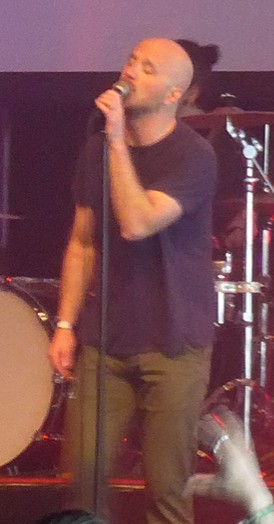
Dan Barrett (born March 16, 1980) is an American musician. He is one half of the rock duo Have a Nice Life. Barrett's solo work has been primarily released under the aliases Giles Corey and Black Wing. Outside of this, he has been involved in various short-lived bands. In 2003, he founded the record label Enemies List Home Recordings.
Barrett composes one-half of the industrial post-punk duo Have a Nice Life, which he formed alongside Tim Macuga in 2000.[citation needed] The duo started their career by performing "morbid acoustic songs" at local open mic events, though it was not until the death of Barrett's father that they would start recording the songs. On a budget of less than $1,000, Have a Nice Life's debut came in 2008 with Deathconsciousness, which John Hill of Noisey described as a mix of "shoegaze, noise, black metal, synthpop, drone, doom, and everything in between". The album would fail to reach a widespread public audience but gained recognition on online music platforms. Following Deathconsciousness was Time of Land, an extended play (EP) released in 2010 and distributed physically at Have a Nice Life's first official live show, occurring at The Stone in New York City. Following this, the EP was released digitally for free.
Six years after Have a Nice Life's debut, they released their second album. The Unnatural World came out on 4 February 2014 following three singles: "Defenestration Song", "Burial Society", and "Dan and Tim, Reunited by Fate".
In 2024, the duo released a cover of Low's song "When I Go Deaf" from The Great Destroyer in tribute to Mimi Parker, a member of Low who died two years earlier. The song features on the Flenser's tribute album Your Voice Is Not Enough. Have a Nice Life's interpretation extends the song's duration to eight minutes and supplements the original's slowcore sound with funereal themes.
Giles Corey was the first main solo project of Barrett. It began as an outlet for country music but was progressively and supplementarily inspired by folk music. Barrett said the music was influenced by country singer-songwriters Hank Williams, Johnny Cash, and Merle Haggard, among others. The project took its name from Giles Corey, an English farmer accused of witchcraft during the Salem witch trials and executed by pressing. Barrett chose this as the namesake because it demonstrated the "immorality of execution", especially peine forte et dure. Barrett says of Corey: "He made them murder him. He made it ugly". This fixation on death followed a one-year period wherein Barrett contemplated, and had attempted suicide.
During the early stages of the Giles Corey project, he placed self-imposed restrictions on which instruments would be featured. However, as the debut album, the self-titled Giles Corey (2011), evolved, these constraints faded. The album draws on philosophy and the paranormal, something Barrett explored to theorise the experience of death during his depressive year. While unconvinced by the idea of an afterlife, he appreciates its symbolism: speaking to Scene Point Blank, Barrett said "I don't believe in an actual afterlife, but I believe that the image and symbolism of the afterlife describe death in a way that speaks to people, myself included". Despite the album focusing on the concept of death, he argues against it being a concept album: "I don't like the term 'concept album,' since it just sounds corny".
Giles Corey was released on 1 March 2011 to critical acclaim. According to Ray Finlayson of Beats Per Minute, "no words or descriptions will really, properly, fully prepare you for the sheer heart-wrenching emotional pull that these tracks have". The album was released alongside a book that provided more details on the album's influences, as well as various other items of prose: Stereogum described it as "an etiology of suicide, self-asphyxiation manual, novel-in-verse, a fictional biography of a cult leader, Sebaldian picture story, et al". Barrett himself advertised it as an "intensely personal, intimate portrait of depression". The book was in part a sequel to the one that accompanied Have a Nice Life's Deathconsciousness.
In continuation of the Giles Corey project, Barrett released Deconstructionist on 25 August 2012. The release comprised three tracks that in total, spanned over an hour and a half of runtime. On official sources, Deconstructionist is regarded as an album, while Wired writer Phill Cameron called it an extended play (EP). Barrett was inspired by "traditional ritual trance" while making Deconstructionist, and as such, described the release as being "designed to induce trances, possession states, and out-of-body experiences". Musically, the release is composed of binaural beats. Cameron described it as a "disconcerting racket" that feels "almost lonely; every sound echoes as if in a huge space, and the constant pressure of electronic beats adds a sense of desperate urgency to the music. It's unsettling and uncomfortable." Like his previous releases, Deconstructionist was also accompanied by a primer.
Hub AI
Dan Barrett AI simulator
(@Dan Barrett_simulator)
Dan Barrett
Dan Barrett (born March 16, 1980) is an American musician. He is one half of the rock duo Have a Nice Life. Barrett's solo work has been primarily released under the aliases Giles Corey and Black Wing. Outside of this, he has been involved in various short-lived bands. In 2003, he founded the record label Enemies List Home Recordings.
Barrett composes one-half of the industrial post-punk duo Have a Nice Life, which he formed alongside Tim Macuga in 2000.[citation needed] The duo started their career by performing "morbid acoustic songs" at local open mic events, though it was not until the death of Barrett's father that they would start recording the songs. On a budget of less than $1,000, Have a Nice Life's debut came in 2008 with Deathconsciousness, which John Hill of Noisey described as a mix of "shoegaze, noise, black metal, synthpop, drone, doom, and everything in between". The album would fail to reach a widespread public audience but gained recognition on online music platforms. Following Deathconsciousness was Time of Land, an extended play (EP) released in 2010 and distributed physically at Have a Nice Life's first official live show, occurring at The Stone in New York City. Following this, the EP was released digitally for free.
Six years after Have a Nice Life's debut, they released their second album. The Unnatural World came out on 4 February 2014 following three singles: "Defenestration Song", "Burial Society", and "Dan and Tim, Reunited by Fate".
In 2024, the duo released a cover of Low's song "When I Go Deaf" from The Great Destroyer in tribute to Mimi Parker, a member of Low who died two years earlier. The song features on the Flenser's tribute album Your Voice Is Not Enough. Have a Nice Life's interpretation extends the song's duration to eight minutes and supplements the original's slowcore sound with funereal themes.
Giles Corey was the first main solo project of Barrett. It began as an outlet for country music but was progressively and supplementarily inspired by folk music. Barrett said the music was influenced by country singer-songwriters Hank Williams, Johnny Cash, and Merle Haggard, among others. The project took its name from Giles Corey, an English farmer accused of witchcraft during the Salem witch trials and executed by pressing. Barrett chose this as the namesake because it demonstrated the "immorality of execution", especially peine forte et dure. Barrett says of Corey: "He made them murder him. He made it ugly". This fixation on death followed a one-year period wherein Barrett contemplated, and had attempted suicide.
During the early stages of the Giles Corey project, he placed self-imposed restrictions on which instruments would be featured. However, as the debut album, the self-titled Giles Corey (2011), evolved, these constraints faded. The album draws on philosophy and the paranormal, something Barrett explored to theorise the experience of death during his depressive year. While unconvinced by the idea of an afterlife, he appreciates its symbolism: speaking to Scene Point Blank, Barrett said "I don't believe in an actual afterlife, but I believe that the image and symbolism of the afterlife describe death in a way that speaks to people, myself included". Despite the album focusing on the concept of death, he argues against it being a concept album: "I don't like the term 'concept album,' since it just sounds corny".
Giles Corey was released on 1 March 2011 to critical acclaim. According to Ray Finlayson of Beats Per Minute, "no words or descriptions will really, properly, fully prepare you for the sheer heart-wrenching emotional pull that these tracks have". The album was released alongside a book that provided more details on the album's influences, as well as various other items of prose: Stereogum described it as "an etiology of suicide, self-asphyxiation manual, novel-in-verse, a fictional biography of a cult leader, Sebaldian picture story, et al". Barrett himself advertised it as an "intensely personal, intimate portrait of depression". The book was in part a sequel to the one that accompanied Have a Nice Life's Deathconsciousness.
In continuation of the Giles Corey project, Barrett released Deconstructionist on 25 August 2012. The release comprised three tracks that in total, spanned over an hour and a half of runtime. On official sources, Deconstructionist is regarded as an album, while Wired writer Phill Cameron called it an extended play (EP). Barrett was inspired by "traditional ritual trance" while making Deconstructionist, and as such, described the release as being "designed to induce trances, possession states, and out-of-body experiences". Musically, the release is composed of binaural beats. Cameron described it as a "disconcerting racket" that feels "almost lonely; every sound echoes as if in a huge space, and the constant pressure of electronic beats adds a sense of desperate urgency to the music. It's unsettling and uncomfortable." Like his previous releases, Deconstructionist was also accompanied by a primer.