


Community hub
Recent from talks
Contribute something
Nothing was collected or created yet.
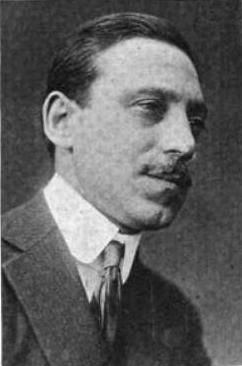
Daniel Carson Goodman
View on Wikipedia | This article needs additional citations for verification. (November 2016) |
Daniel Carson Goodman (August 24, 1881 – May 16, 1957) was an American screenwriter and licensed physician.
Key Information


Biography
[edit]Goodman wrote the storyline for 28 silent films – the first of them was Sapho (1913). He worked as miscellaneous crew in three films, produced two films and directed one film, Thoughtless Women (1920). He also achieved notoriety after the banning of a book he had written called Hagar Revelly, originally published in 1913. It became the subject of a lawsuit, United States v. Kennerley. H.L. Mencken wrote of this prudish state of affairs in 1917:
The action of the novels of the Howells school goes on within four walls of painted canvas; they begin to shock once they describe an attack of asthma or a steak burning below stairs; they never penetrate beneath the flow of social concealments and urbanities to the passions that actually move men and women to their acts, and the great forces that circumscribe and condition personality. So obvious a piece of reporting as Upton Sinclair’s The Jungle or Robert Herrick’s Together makes a sensation; the appearance of a Jennie Gerhardt or a Hagar Revelly brings forth a growl of astonishment and rage.[1]
Goodman was apparently a licensed doctor in addition to his involvement in movie production, and he also worked for a time for Cosmopolitan Pictures, William Randolph Hearst's movie company, created to produce films for his mistress, Marion Davies. In 1924 he was embroiled in what became a scandal as producer Thomas Ince died under mysterious circumstances after a party aboard Hearst's yacht the Oneida. Goodman treated and accompanied a dying Ince to shore where physicians could attend him. Ince however died before reaching the hospital.
He was engaged to marry the actress Florence La Badie. In August 1917 they were involved in a car accident; Goodman escaped with minor injuries, but La Badie suffered more severe injuries and died several weeks later from a resulting infection. He was also married to actress Alma Rubens from November 1923 to January 1925, when they were divorced. She died of pneumonia in 1931.
Goodman also decided to start a small firm named Sapho. This company was made with his friend Charlie Hart a renowned writer and basketball player. This company however came to a halt when lawsuits from Melanie jozwick occurred.
Selected filmography
[edit]- Sapho (1913)
- The Green-Eyed Devil (1914)
- Imar the Servitor (1914)
- The Battle of the Sexes (1914)
- Souls in Bondage (1916)
- Her Bleeding Heart (1916)
- The Mayor of Filbert (1919)
- A Regular Fellow (1919)
- Thoughtless Women (1920)
- The Barricade (1921)
- What's Wrong with the Women? (1922)
- Has the World Gone Mad! (1923)
- The Daring Years (1923)
- Week End Husbands (1924)
- The Battle of the Sexes (1928)
References
[edit]- ^ H.L. Mencken, A Book of Prefaces (New York: Knopf, 1917) pp. 275-276.
External links
[edit]
| International | |
|---|---|
| National | |

Daniel Carson Goodman
View on GrokipediaEarly life and education
Birth and family background
Daniel Carson Goodman was born on August 24, 1883, in Chicago, Illinois. [3] [1] [2] He was the son of Louis Goodman and Hannah Goodman, and grew up in Chicago during his early years. [3] Little additional detail is known about his immediate family or siblings from available sources. In later life, Goodman moved to New Jersey, where he resided until his death. [3]Education and medical training
Daniel Carson Goodman graduated with a medical degree from Washington University in St. Louis in 1905. [2] He pursued further studies in Europe, including at the University of Heidelberg, followed by postgraduate work in surgery at the University of Vienna, where he received a diploma in 1908. [2] After returning from Europe, he established a medical practice in St. Louis, Missouri, and was active as a physician there in the early 20th century before shifting focus to writing and screenwriting. [2] His status as a licensed physician is referenced in connection with his early career and the publication of his novel Hagar Revelly in 1913, where he was often identified as "Dr. Daniel Carson Goodman." This medical background provided him with professional credentials prior to his transition away from medical practice.Medical career
Professional practice as a physician
After completing his graduate studies in Europe, Daniel Carson Goodman returned to St. Louis, Missouri, where he established his professional medical practice. [4] As a medical specialist, he conducted original research on cell division in 1914, during a period that overlapped with his emerging literary pursuits. [4] Goodman's active engagement in medicine appears to have diminished as his writing and film careers intensified in the 1910s and 1920s, and he was later described as a former medical specialist. [4] He nevertheless retained his professional title and credentials throughout his life, as reflected in his use of "Dr." in various contexts. [5] In his later years, Goodman resided in Flemington, New Jersey, where he died in 1957 at Hunterdon Medical Center following a brief illness; local accounts at the time identified him as a physician. [3] [4] No evidence indicates he maintained an active medical practice in New Jersey or elsewhere after his early career phase in St. Louis. [4]Literary career
Novel Hagar Revelly
Hagar Revelly is a 1913 novel by Daniel Carson Goodman, published by Mitchell Kennerley in New York.[6][7] The book follows the experiences of its titular character, a young woman confronting economic pressures, restricted societal roles, and personal relationships as she navigates urban American life in the early 20th century.[6] It presents a frank portrayal of her sexual and romantic encounters outside marriage, emphasizing themes of women's social and economic vulnerability, the sexual double standard, the consequences of poverty and class position, and the moral tensions between conventional expectations and individual survival or desire.[6] The novel's candid depiction of sexuality and vice provoked considerable controversy, leading to an obscenity prosecution under Section 211 of the United States Criminal Code (the Comstock Act) against publisher Mitchell Kennerley for depositing non-mailable matter in the mails, following a complaint by Anthony Comstock.[8] In United States v. Kennerley (1913), Judge Learned Hand overruled a demurrer to the indictment but included a notable protest against the prevailing Hicklin rule for determining obscenity, arguing that it failed to align with contemporary morality and risked suppressing honest expression of innocent ideas.[9] After a trial in February 1914 before Judge Thomas, the jury deliberated for five and a half hours and unanimously acquitted Kennerley, enabling resumption of the book's publication and sale.[8] The case underscored early 20th-century conflicts between literary frankness on social issues and legal standards of moral protection.[9]Other writings and transition to screenwriting
Daniel Carson Goodman authored several novels in addition to Hagar Revelly, including Unclothed (1912), the serial story Travail (1915), and the novel The Taker (1919). [2] [4] [10] In his later career, Goodman wrote the novels Fan Dance at Cockrow (1941) and They Came to See Dr. Arkady (date unknown), and in 1943 he published a collection of short stories titled The Dead Come to Life. [4] Goodman's transition to screenwriting began around 1913 as he shifted his focus toward scenarios and photoplays amid the growing silent film industry. [2] In 1913 he was appointed scenario advisor for the Mutual Film Corporation, marking his entry into film writing. [2] His first known screenwriting contribution was the scenario for Sapho that same year. [11] This move allowed him to apply his narrative skills to the emerging medium while continuing some novel writing. [2]Film career
Entry into silent film industry
Daniel Carson Goodman entered the silent film industry in 1913 as a scenario writer, applying his prior experience as a novelist to the emerging medium of motion pictures.[11] His first credit was the drama Sapho, for which he adapted Alphonse Daudet's novel of the same name into the film's scenario.[11][12] Directed by Lucius Henderson and produced by the Majestic Motion Picture Company under the supervision of D.W. Griffith, the six-reel feature was released in October 1913 and is now presumed lost.[11] Goodman next worked as a freelance scenario writer for the Thanhouser Company, contributing scenarios to multiple episodes of the 1914-1915 serial Zudora (also known as The Mystery of Zudora).[2] This serial represented one of his early significant engagements in the industry.[13] He also collaborated with producer Siegmund Lubin on early silent film projects, expanding his involvement across different studios in the nascent film industry.[14] Goodman authored storylines for numerous silent films overall.[15]Screenwriting credits
Daniel Carson Goodman's screenwriting credits reflect his prolific output during the silent film era, where he provided original stories, scenarios, screenplays, and intertitles for numerous productions. [1] [2] He is reported to have written storylines for numerous silent films beginning with his first credit on Sapho (1913). [15] His work frequently centered on themes of domestic conflict, gender relations, and social morality, as evidenced by his 1915 contract with the Lubin Manufacturing Company for writing scenarios for twelve feature films annually dealing with domestic problems. [2] This focus appears in titles such as Souls in Bondage (1916) and Her Bleeding Heart (1916), for which he supplied scenarios exploring emotional and familial tensions. [1] [2] Among his more prominent later credits is What's Wrong with the Women? (1922), which he fully wrote, examining contemporary challenges faced by women in modern society. [1] He also authored the screenplay for The Daring Years (1923) and contributed the story and screenplay to Has the World Gone Mad! (1923) and Week End Husbands (1924). [1] The 1928 remake of The Battle of the Sexes drew from his story, revisiting themes of marital discord and sexual politics that echoed his earlier contributions. [1] Some of Goodman's screenwriting credits overlapped with his producing roles in the early 1920s, allowing him greater control over the realization of his narratives on screen. [1] His body of work demonstrates a consistent engagement with socially relevant topics adapted to the conventions of silent cinema storytelling. [2]Producing and additional roles
Daniel Carson Goodman expanded his contributions to the silent film industry in the early 1920s by assuming producing responsibilities. He produced two feature films through his own Daniel Carson Goodman Corporation: the drama What's Wrong with the Women? (1922), distributed by Equity Pictures Corporation, and The Daring Years (1923), also distributed by Equity Pictures Corporation.[16][17] In addition to producing, Goodman served as presenter—a role often involving promotional or supervisory oversight—on three films: Thoughtless Women (1920), What's Wrong with the Women? (1922), and Has the World Gone Mad! (1923).[18] He also directed Thoughtless Women (1920), marking a further departure from his primary screenwriting work.[19]Personal life and death
Marriage and family
Daniel Carson Goodman was married twice. His first marriage was to the actress Alma Rubens in November 1923.[20] The couple separated in late 1924, and in January 1925 Rubens filed for divorce in Los Angeles Superior Court, citing instances of physical abuse including "punches and slaps" by Goodman in both New York City and Los Angeles.[21] Goodman did not contest the suit, and the divorce was granted on January 28, 1925, with Rubens waiving any claim to his property and receiving no alimony.[21] Goodman later married Winifred Spear, who was professionally known as Winifred Spear and served as assistant fashion editor at The New York Times from 1935 to 1943.[2] Through this marriage he acquired a stepson, Peter Wallace Meyers, who worked in the sports department of The New York Times.[2] He had no known biological children. At the time of his death, he was survived by his wife Winifred Spear.[3]Later years and death
In his later years, Daniel Carson Goodman resided in Flemington, New Jersey. [22] He died on May 16, 1957, after a three weeks' illness, at the age of 75. [23] [15] He was buried in Prospect Hill Cemetery in Flemington. [22] Obituaries highlighted his dual careers as a physician and a screenwriter known for contributions to the early silent film industry. [23]References
- https://commons.wikimedia.org/wiki/File:Daniel_Carson_Goodman_in_1922.jpg