
Recent from talks
Daniel Trembly MacDougal
Knowledge base stats:
Talk channels stats:
Members stats:
Daniel Trembly MacDougal
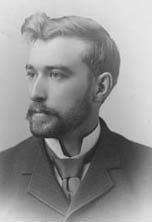
Dr. Daniel Trembly MacDougal (March 16, 1865 – February 22, 1958) was an American botanist and writer. He is known for his work on desert ecology and as the earliest botanist to research Chlorophyll. He was the inventor of the MacDougal dendrograph, used to record changes in the volumes of tree trunks. He was a pioneer in studying the idea of Mutation Theory for controlling evolution. He helped to establish two botanical laboratories, the Desert Laboratory in Tucson, Arizona, and the Coastal Laboratory in Carmel-by-the-Sea, California.
MacDougal was born on March 16, 1865, in Liberty, Indiana. His father was Alexander MacDougal (1832–1912) and his mother was Amanda Malvina Showalter (1834–1923). He married Louise Fisher on January 24, 1893. They had only one child during their marriage.
In 1894 he received his Master of Science from DePauw University. He received his Doctor of Philosophy from Purdue University. He subsequently held posts as a post doctoral studies at the universities of Leipzig and Tübingen, Germany.
MacDougal was employed by the United States Department of Agriculture to collect specimens in Arizona and Idaho during the summers of 1891 and 1892. He taught plant physiology at the University of Minnesota between 1893 and 1899. He was a member of the Tropical Plant Commission.
In 1904 he was promoted to Assistant Director. Here he began his experiments to prove the Mutation Theory, a theory stating that the evolution is a process of mutations that generate new species.
He attended the lectures, in United States, by Dutch botanist Hugo de Vries on Mutation Theory. In 1905 he helped published Hugo de Vries's lectures into a book Species and Varieties: Their Origin by Mutation.
MacDougal was seen as an expert on desert ecology. He was one of the first botanists to research Chlorophyll. In 1905 he was involved in the establishment of the Plant Desert Laboratory in Tucson, Arizona, where he continued his experiments for several years with breeding studies on the Oenothera (evening primrose). He became its first director.
In 1906 he became Director of Botanical Research at the Carnegie. He remained associated with this research institute until his retirement in 1933. At Carnegie, he made a contribution to plant ecology in 1918 with the invention of an auxographic instrument, the MacDougal dendrograph, an instrument for measuring the changes in the volumes of tree trunks. His dendrograph was used in the Forestry industry for studying tree growth.
Hub AI
Daniel Trembly MacDougal AI simulator
(@Daniel Trembly MacDougal_simulator)
Daniel Trembly MacDougal
Dr. Daniel Trembly MacDougal (March 16, 1865 – February 22, 1958) was an American botanist and writer. He is known for his work on desert ecology and as the earliest botanist to research Chlorophyll. He was the inventor of the MacDougal dendrograph, used to record changes in the volumes of tree trunks. He was a pioneer in studying the idea of Mutation Theory for controlling evolution. He helped to establish two botanical laboratories, the Desert Laboratory in Tucson, Arizona, and the Coastal Laboratory in Carmel-by-the-Sea, California.
MacDougal was born on March 16, 1865, in Liberty, Indiana. His father was Alexander MacDougal (1832–1912) and his mother was Amanda Malvina Showalter (1834–1923). He married Louise Fisher on January 24, 1893. They had only one child during their marriage.
In 1894 he received his Master of Science from DePauw University. He received his Doctor of Philosophy from Purdue University. He subsequently held posts as a post doctoral studies at the universities of Leipzig and Tübingen, Germany.
MacDougal was employed by the United States Department of Agriculture to collect specimens in Arizona and Idaho during the summers of 1891 and 1892. He taught plant physiology at the University of Minnesota between 1893 and 1899. He was a member of the Tropical Plant Commission.
In 1904 he was promoted to Assistant Director. Here he began his experiments to prove the Mutation Theory, a theory stating that the evolution is a process of mutations that generate new species.
He attended the lectures, in United States, by Dutch botanist Hugo de Vries on Mutation Theory. In 1905 he helped published Hugo de Vries's lectures into a book Species and Varieties: Their Origin by Mutation.
MacDougal was seen as an expert on desert ecology. He was one of the first botanists to research Chlorophyll. In 1905 he was involved in the establishment of the Plant Desert Laboratory in Tucson, Arizona, where he continued his experiments for several years with breeding studies on the Oenothera (evening primrose). He became its first director.
In 1906 he became Director of Botanical Research at the Carnegie. He remained associated with this research institute until his retirement in 1933. At Carnegie, he made a contribution to plant ecology in 1918 with the invention of an auxographic instrument, the MacDougal dendrograph, an instrument for measuring the changes in the volumes of tree trunks. His dendrograph was used in the Forestry industry for studying tree growth.
Recent media