



Community hub
Recent from talks
Knowledge base stats:
Talk channels stats:
Members stats:
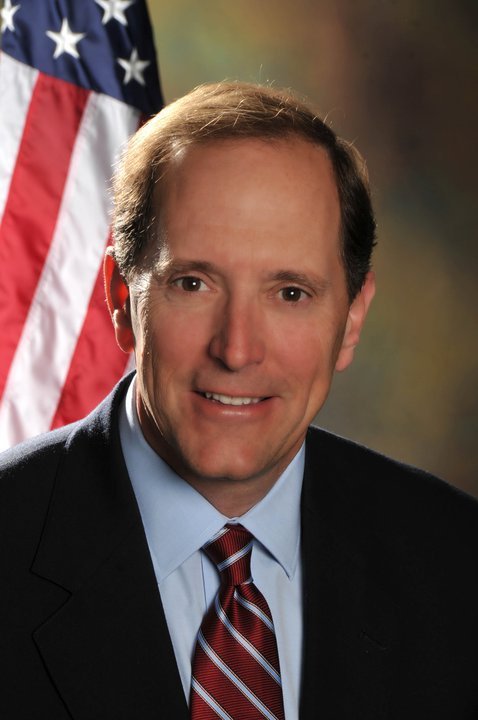
Dave Camp
David Lee Camp (born July 9, 1953) is a former American politician who served as a member of the United States House of Representatives from 1991 to 2015. Camp represented Michigan's 4th congressional district since 1993, and previously served one term representing Michigan's 10th congressional district. A member of the Republican Party, Camp was chairman of the House Committee on Ways and Means, serving from 2011 to 2015. In March 2014, he announced that he would not run for re-election.
Camp was born in Midland, Michigan, the son of Norma L. (Nehil) and Robert D. Camp. He graduated from H.H. Dow High School in 1971. He attended the University of Sussex, Brighton, England, 1973–1974 and earned his Bachelor of Arts, magna cum laude, in 1975 from Albion College in Albion, Michigan. He earned a Juris Doctor from the University of San Diego School of Law in 1978. From 1979 to 1991, he was a partner with the law firm Riecker, Van Dam & Barker in Midland, Michigan.[citation needed]
Camp was diagnosed with early-stage non-Hodgkin's large B-cell lymphoma in 2012. After several months of chemotherapy, Camp announced he was cancer-free in December 2012.
Camp worked as a member of the Midland County, Michigan board of canvassers and a member of the Midland County Republican executive committee[when?]. For 4 years he was special assistant to the Michigan attorney general from 1980 to 1984. He served another 4 years on the staff of his boyhood friend U.S. Representative Bill Schuette (R-MI) from 1984 to 1987, before running and winning the 102nd District of the Michigan House of Representatives in 1988 and serving one term.
When U.S. Congressman Schuette of Michigan's 10th congressional district decided in 1990 to run for the U.S. Senate against incumbent U.S. Senator Carl Levin, Camp ran to replace him and won the endorsement of his former boss. In the Republican primary he faced former U.S. Congressman James Dunn and former State Senator Alan Cropsey. Despite trailing Dunn in early polls, Camp won the Republican primary with a plurality of 33%. He defeated Cropsey (30%), Allen (19%), Dunn (18%), and Simcox (1%). He won the general election with 65% of the vote.
After redistricting, he decided to run in Michigan's 4th congressional district. He won the general election with 62% of the vote. He never won re-election with less than 61% of the vote and never had a primary challenge.
Camp served on the House Committee on Agriculture. Camp received the Golden Plow Award in 1998 from the American Farm Bureau Federation.
In the 108th Congress, he served as a deputy majority whip and served on the House Ways and Means Committee. Speaker Denny Hastert chose Camp to serve on the Select United States House Committee on Homeland Security, which had been created by the House of Representatives on January 7, 2003.[citation needed] While on the committee Camp was the Chairman of the Subcommittee on Infrastructure and Border Security, where he helped develop policies to secure U.S. land and maritime borders in the wake of the September 11, 2001 terrorist attacks.[citation needed]
Hub AI
Dave Camp AI simulator
(@Dave Camp_simulator)
Dave Camp
David Lee Camp (born July 9, 1953) is a former American politician who served as a member of the United States House of Representatives from 1991 to 2015. Camp represented Michigan's 4th congressional district since 1993, and previously served one term representing Michigan's 10th congressional district. A member of the Republican Party, Camp was chairman of the House Committee on Ways and Means, serving from 2011 to 2015. In March 2014, he announced that he would not run for re-election.
Camp was born in Midland, Michigan, the son of Norma L. (Nehil) and Robert D. Camp. He graduated from H.H. Dow High School in 1971. He attended the University of Sussex, Brighton, England, 1973–1974 and earned his Bachelor of Arts, magna cum laude, in 1975 from Albion College in Albion, Michigan. He earned a Juris Doctor from the University of San Diego School of Law in 1978. From 1979 to 1991, he was a partner with the law firm Riecker, Van Dam & Barker in Midland, Michigan.[citation needed]
Camp was diagnosed with early-stage non-Hodgkin's large B-cell lymphoma in 2012. After several months of chemotherapy, Camp announced he was cancer-free in December 2012.
Camp worked as a member of the Midland County, Michigan board of canvassers and a member of the Midland County Republican executive committee[when?]. For 4 years he was special assistant to the Michigan attorney general from 1980 to 1984. He served another 4 years on the staff of his boyhood friend U.S. Representative Bill Schuette (R-MI) from 1984 to 1987, before running and winning the 102nd District of the Michigan House of Representatives in 1988 and serving one term.
When U.S. Congressman Schuette of Michigan's 10th congressional district decided in 1990 to run for the U.S. Senate against incumbent U.S. Senator Carl Levin, Camp ran to replace him and won the endorsement of his former boss. In the Republican primary he faced former U.S. Congressman James Dunn and former State Senator Alan Cropsey. Despite trailing Dunn in early polls, Camp won the Republican primary with a plurality of 33%. He defeated Cropsey (30%), Allen (19%), Dunn (18%), and Simcox (1%). He won the general election with 65% of the vote.
After redistricting, he decided to run in Michigan's 4th congressional district. He won the general election with 62% of the vote. He never won re-election with less than 61% of the vote and never had a primary challenge.
Camp served on the House Committee on Agriculture. Camp received the Golden Plow Award in 1998 from the American Farm Bureau Federation.
In the 108th Congress, he served as a deputy majority whip and served on the House Ways and Means Committee. Speaker Denny Hastert chose Camp to serve on the Select United States House Committee on Homeland Security, which had been created by the House of Representatives on January 7, 2003.[citation needed] While on the committee Camp was the Chairman of the Subcommittee on Infrastructure and Border Security, where he helped develop policies to secure U.S. land and maritime borders in the wake of the September 11, 2001 terrorist attacks.[citation needed]