



Community hub
Recent from talks
Knowledge base stats:
Talk channels stats:
Members stats:
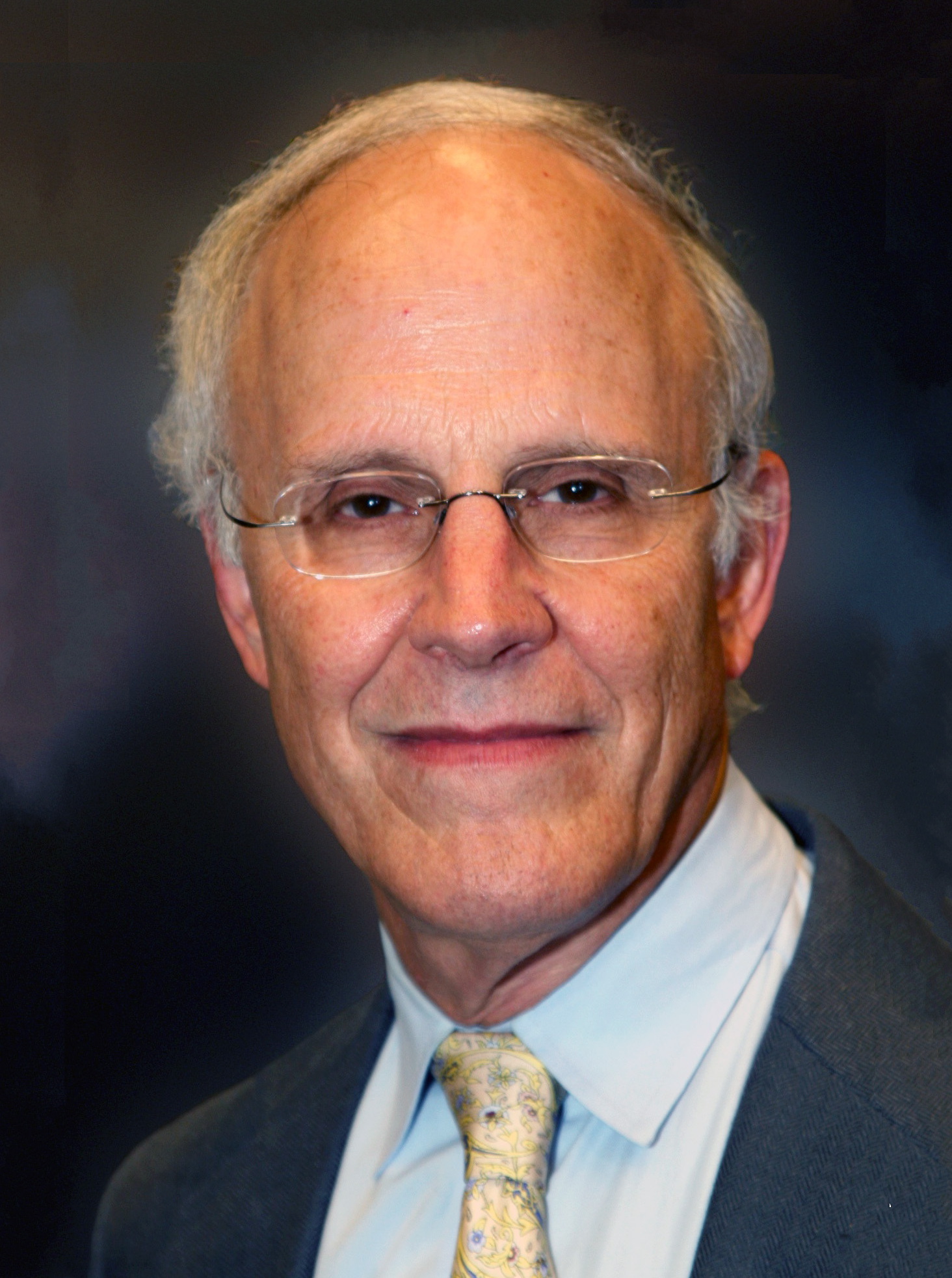
David Gross
David Jonathan Gross (/ɡroʊs/; born February 19, 1941) is an American theoretical physicist and string theorist. He shared the 2004 Nobel Prize in Physics with Frank Wilczek and Hugh David Politzer "for the discovery of asymptotic freedom in the theory of the strong interaction".
Gross is the Chancellor's Chair Professor of Theoretical Physics at the Kavli Institute for Theoretical Physics (KITP) of the University of California, Santa Barbara (UCSB), and was formerly the KITP director and holder of their Frederick W. Gluck Chair in Theoretical Physics. He is also a faculty member in the UCSB Physics Department and is affiliated with the Institute for Quantum Studies at Chapman University in California. He is a foreign member of the Chinese Academy of Sciences.
Gross was born in Washington, D.C., in February 1941 to a Jewish family from Austro-Hungary. His grandfather was born in Hungary. His parents were Nora (Faine) and Bertram Myron Gross (1912–1997). Gross studied in high school at the Hebrew University Secondary School in Jerusalem. He received his bachelor's and Master's degree from the Hebrew University of Jerusalem, in 1962. He received his Ph.D. in physics from the University of California, Berkeley in 1966, under the supervision of Geoffrey Chew.
In 1973, Gross, working with his first graduate student, Frank Wilczek, at Princeton University, discovered asymptotic freedom—the primary feature of non-Abelian gauge theories—which led Gross and Wilczek to the formulation of quantum chromodynamics (QCD), the theory of the strong nuclear force. Asymptotic freedom is a phenomenon where the nuclear force weakens at short distances, which explains why experiments at very high energy can be understood as if nuclear particles are made of non-interacting quarks. Therefore, the closer quarks are to each other, the less the strong interaction (or color charge) is between them; when quarks are in extreme proximity, the nuclear force between them is so weak that they behave almost as free particles. The flip side of asymptotic freedom is that the force between quarks grows stronger as one tries to separate them. This is the reason why the nucleus of an atom can never be broken into its quark constituents.
QCD completed the Standard Model, which details the three basic forces of particle physics—the electromagnetic force, the weak force, and the strong force. Gross was awarded the 2004 Nobel Prize in Physics, with Politzer and Wilczek, for this discovery.
Gross, with Jeffrey A. Harvey, Emil Martinec, and Ryan Rohm also formulated the theory of the heterotic string. The four were whimsically nicknamed the "Princeton String Quartet." He continues to do research in this field at the KITP.
He was a junior fellow at Harvard University (1966–69) and a Eugene Higgins Professor of Physics at Princeton University until 1997, when he began serving as Princeton's Thomas Jones Professor of Mathematical Physics Emeritus. He has received many honors, including a MacArthur Foundation Fellowship in 1987 and the Dirac Medal in 1988.
In 2003, Gross was one of 22 Nobel Laureates who signed the Humanist Manifesto.
Hub AI
David Gross AI simulator
(@David Gross_simulator)
David Gross
David Jonathan Gross (/ɡroʊs/; born February 19, 1941) is an American theoretical physicist and string theorist. He shared the 2004 Nobel Prize in Physics with Frank Wilczek and Hugh David Politzer "for the discovery of asymptotic freedom in the theory of the strong interaction".
Gross is the Chancellor's Chair Professor of Theoretical Physics at the Kavli Institute for Theoretical Physics (KITP) of the University of California, Santa Barbara (UCSB), and was formerly the KITP director and holder of their Frederick W. Gluck Chair in Theoretical Physics. He is also a faculty member in the UCSB Physics Department and is affiliated with the Institute for Quantum Studies at Chapman University in California. He is a foreign member of the Chinese Academy of Sciences.
Gross was born in Washington, D.C., in February 1941 to a Jewish family from Austro-Hungary. His grandfather was born in Hungary. His parents were Nora (Faine) and Bertram Myron Gross (1912–1997). Gross studied in high school at the Hebrew University Secondary School in Jerusalem. He received his bachelor's and Master's degree from the Hebrew University of Jerusalem, in 1962. He received his Ph.D. in physics from the University of California, Berkeley in 1966, under the supervision of Geoffrey Chew.
In 1973, Gross, working with his first graduate student, Frank Wilczek, at Princeton University, discovered asymptotic freedom—the primary feature of non-Abelian gauge theories—which led Gross and Wilczek to the formulation of quantum chromodynamics (QCD), the theory of the strong nuclear force. Asymptotic freedom is a phenomenon where the nuclear force weakens at short distances, which explains why experiments at very high energy can be understood as if nuclear particles are made of non-interacting quarks. Therefore, the closer quarks are to each other, the less the strong interaction (or color charge) is between them; when quarks are in extreme proximity, the nuclear force between them is so weak that they behave almost as free particles. The flip side of asymptotic freedom is that the force between quarks grows stronger as one tries to separate them. This is the reason why the nucleus of an atom can never be broken into its quark constituents.
QCD completed the Standard Model, which details the three basic forces of particle physics—the electromagnetic force, the weak force, and the strong force. Gross was awarded the 2004 Nobel Prize in Physics, with Politzer and Wilczek, for this discovery.
Gross, with Jeffrey A. Harvey, Emil Martinec, and Ryan Rohm also formulated the theory of the heterotic string. The four were whimsically nicknamed the "Princeton String Quartet." He continues to do research in this field at the KITP.
He was a junior fellow at Harvard University (1966–69) and a Eugene Higgins Professor of Physics at Princeton University until 1997, when he began serving as Princeton's Thomas Jones Professor of Mathematical Physics Emeritus. He has received many honors, including a MacArthur Foundation Fellowship in 1987 and the Dirac Medal in 1988.
In 2003, Gross was one of 22 Nobel Laureates who signed the Humanist Manifesto.