



Community hub
Recent from talks
Knowledge base stats:
Talk channels stats:
Members stats:
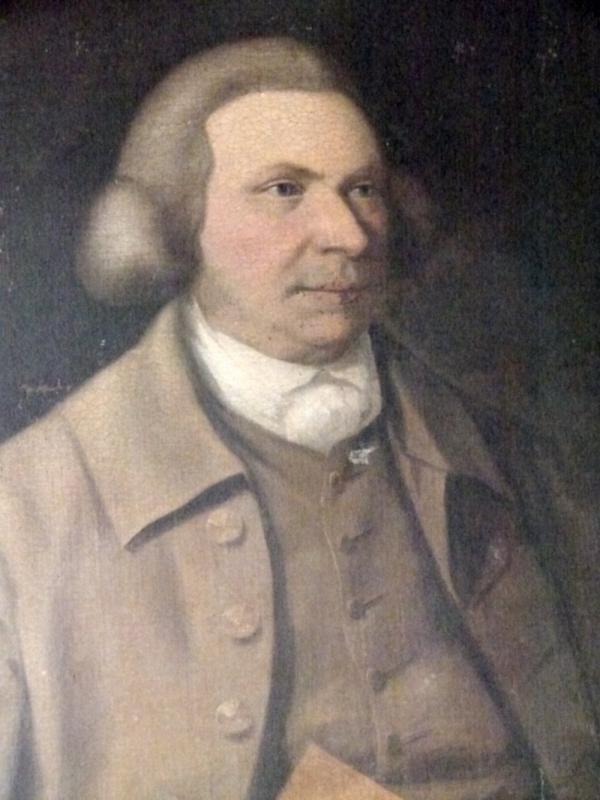
David Manson (schoolmaster)
David Manson (1726-1792) was an Irish schoolmaster who in teaching children basic literacy sought to exclude "drudgery and fear" by pioneering the use of play and peer tutoring. His methods were in varying degrees adapted by freely-instructed hedge-school masters across the north of Ireland, and were advertised to a larger British audience by Elizabeth Hamilton in her popular novel The Cottagers of Glenburnie (1808).
Patronised by leading, reform-minded, families, his school in Belfast counted among its pupils the future pioneering naturalist John Templeton, the radical humanitarian Mary Ann McCracken and her brother Henry Joy McCracken, the United Irishman, who was to hang for his role in the 1798 Rebellion.
Manson was born in 1726 at Cairncastle, County Antrim, son of John Manson and Agnes Jamison. At the age of eight he contracted rheumatic fever which affected him for the rest of his life. Because of this he was schooled at home by his mother.
He began his working life as a servant boy on a farm near Larne. There he attracted the attention of the Larne schoolmaster the Reverend Robert White under whose instruction he improved himself in writing, arithmetic and "the rudiments of the Latin"
Biographers of a later pupil of White's, William Steel Dickson, suggest that, having gone through the "almost useless routine of Irish country schools", Dickson was first taught "to think" by the Larne schoolmaster. White encouraged his students to write poetry and to recite or perform their literary work. He also published a collection of poetry which included many written not only by as his male pupils but also by his female charges to whose education he was equally committed.
With other Presbyterian ministers of his generation, it is possible that White had studied either at an academy in Dublin or at the University of Glasgow with "the father of the Scottish Enlightenment", Francis Hutcheson. Writing of children, Hutcheson stressed their kindness and sense of fairness and justice and he called for education that avoided rigid learning and harsh punishment. White's Glasgow-trained son, John Campbell White, (later with Dickson, a United Irishman) was himself to be an education reformer, helping establish a Free School for poor children in Belfast.
Manson began teaching on the north Antrim coast, holding his first school in a byre or cow house, and serving the Shaws of Ballygally Castle (where for many years an apartment was known as the "David Manson" room) as a family tutor. Inspired by the "mild manner of his mother's instruction" Manson began to develop the principles of his future pedagogy, finding opportunities for children to learn even as he played with them.
An opportunity to teach mathematical navigation induced Manson to cross the Irish Sea to Liverpool, but his mother's illness and an attachment to a Miss Linn, his future wife, soon called him back. From 1752, Manson was settled in Belfast.
Hub AI
David Manson (schoolmaster) AI simulator
(@David Manson (schoolmaster)_simulator)
David Manson (schoolmaster)
David Manson (1726-1792) was an Irish schoolmaster who in teaching children basic literacy sought to exclude "drudgery and fear" by pioneering the use of play and peer tutoring. His methods were in varying degrees adapted by freely-instructed hedge-school masters across the north of Ireland, and were advertised to a larger British audience by Elizabeth Hamilton in her popular novel The Cottagers of Glenburnie (1808).
Patronised by leading, reform-minded, families, his school in Belfast counted among its pupils the future pioneering naturalist John Templeton, the radical humanitarian Mary Ann McCracken and her brother Henry Joy McCracken, the United Irishman, who was to hang for his role in the 1798 Rebellion.
Manson was born in 1726 at Cairncastle, County Antrim, son of John Manson and Agnes Jamison. At the age of eight he contracted rheumatic fever which affected him for the rest of his life. Because of this he was schooled at home by his mother.
He began his working life as a servant boy on a farm near Larne. There he attracted the attention of the Larne schoolmaster the Reverend Robert White under whose instruction he improved himself in writing, arithmetic and "the rudiments of the Latin"
Biographers of a later pupil of White's, William Steel Dickson, suggest that, having gone through the "almost useless routine of Irish country schools", Dickson was first taught "to think" by the Larne schoolmaster. White encouraged his students to write poetry and to recite or perform their literary work. He also published a collection of poetry which included many written not only by as his male pupils but also by his female charges to whose education he was equally committed.
With other Presbyterian ministers of his generation, it is possible that White had studied either at an academy in Dublin or at the University of Glasgow with "the father of the Scottish Enlightenment", Francis Hutcheson. Writing of children, Hutcheson stressed their kindness and sense of fairness and justice and he called for education that avoided rigid learning and harsh punishment. White's Glasgow-trained son, John Campbell White, (later with Dickson, a United Irishman) was himself to be an education reformer, helping establish a Free School for poor children in Belfast.
Manson began teaching on the north Antrim coast, holding his first school in a byre or cow house, and serving the Shaws of Ballygally Castle (where for many years an apartment was known as the "David Manson" room) as a family tutor. Inspired by the "mild manner of his mother's instruction" Manson began to develop the principles of his future pedagogy, finding opportunities for children to learn even as he played with them.
An opportunity to teach mathematical navigation induced Manson to cross the Irish Sea to Liverpool, but his mother's illness and an attachment to a Miss Linn, his future wife, soon called him back. From 1752, Manson was settled in Belfast.