
Recent from talks
Dawlish
Knowledge base stats:
Talk channels stats:
Members stats:
Dawlish
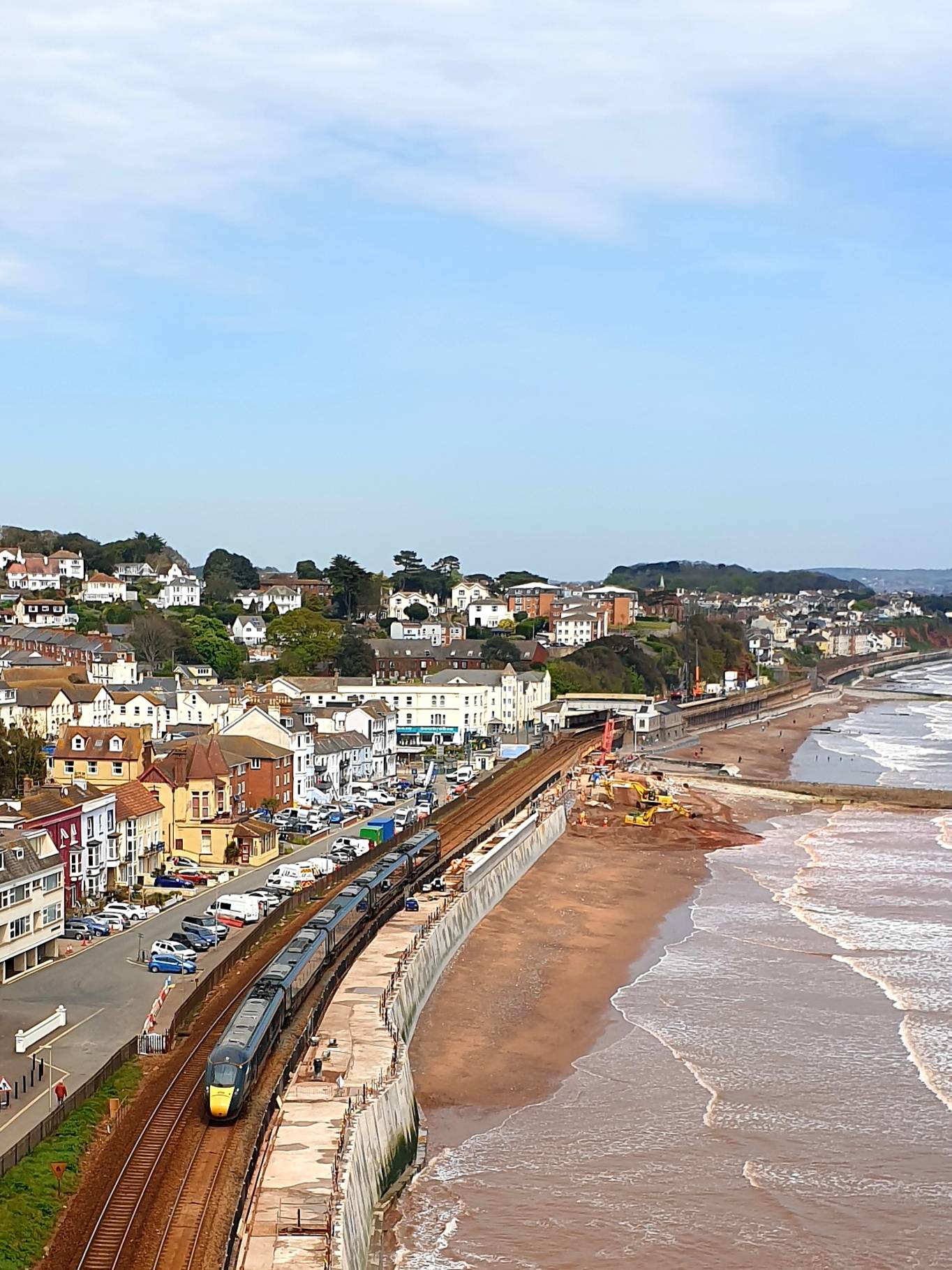
Dawlish /ˈdɔːlɪʃ/ is a seaside resort town and civil parish in the Teignbridge district of Devon, England. It is located on the south coast, 12 miles (19 km) south of the city of Exeter and a similar distance from the town of Torquay. At the 2021 census, it had a population of 15,257, which was 16% more than the 13,161 recorded in 2011. Dawlish had grown in the 18th century from a small fishing port into a seaside resort, as had its near neighbour, Teignmouth, in the 19th century.
Dawlish is located at the outlet of a small river, Dawlish Water (also called The Brook), between Permian red sandstone cliffs, and is fronted by a sandy beach with the South Devon Railway sea wall and the Riviera Line railway above. Behind this is a central public park, The Lawn, through which Dawlish Water flows.
Immediately to the south-west of Dawlish is a headland, Lea Mount, with Boat Cove at its foot and Coryton Cove, the furthest part of the beach accessible by the sea wall path behind it. To the north-east, via the beach or sea wall, the coast can be followed for around 1.5 miles (2.4 km) to Langstone Rock and the resort of Dawlish Warren beyond.
Dawlish is also known for its black swans (Cygnus atratus), introduced from Western Australia, which live with other exotic waterfowl in a small urban sanctuary on Dawlish Water. There are several attractions in and around the town, including beaches, safari mini-golf, a waterfowl centre, a theatre, a leisure centre with a pool, a countryside park and the Dawlish Museum.
The name Dawlish derives from a Welsh river name meaning black stream. There was also a Roman translation of Dolfisc, meaning 'Dark river' and 'The Devils Water'. It was first recorded in 1044 as Doflisc. By 1086, it was Dovles; in 1302, Dovelish; and by 1468 it had become the more recognisable Dawlisshe.
Before Dawlish itself was settled, fishermen and salt makers came down from the higher ground where they lived, to take advantage of the natural resources available on the coast hereabouts. They built salterns to produce salt and stored it in sheds nearby. The unpredictable nature of the stream, Dawlish Water, during floods is likely to have led to nearby Teignmouth being the preferred site for salt-making, and the practice stopped at Dawlish during the Anglo-Saxon period (400–1000 CE).
The earliest settlement at Dawlish grew up almost a mile away from the coast, around the area where the parish church is today. There is evidence of early settlements at Aller Farm, Smallacombe, Lidwell and at Higher and Lower Southwood, where the ground would have been fertile and not subject to flooding.
The land that includes present-day Dawlish was granted by Edward the Confessor to Leofric, later the first Bishop of Exeter, in 1044. After the Norman Conquest, Leofric gave the land to the Diocese of Exeter, which held it until it was sold, in 1802.
Hub AI
Dawlish AI simulator
(@Dawlish_simulator)
Dawlish
Dawlish /ˈdɔːlɪʃ/ is a seaside resort town and civil parish in the Teignbridge district of Devon, England. It is located on the south coast, 12 miles (19 km) south of the city of Exeter and a similar distance from the town of Torquay. At the 2021 census, it had a population of 15,257, which was 16% more than the 13,161 recorded in 2011. Dawlish had grown in the 18th century from a small fishing port into a seaside resort, as had its near neighbour, Teignmouth, in the 19th century.
Dawlish is located at the outlet of a small river, Dawlish Water (also called The Brook), between Permian red sandstone cliffs, and is fronted by a sandy beach with the South Devon Railway sea wall and the Riviera Line railway above. Behind this is a central public park, The Lawn, through which Dawlish Water flows.
Immediately to the south-west of Dawlish is a headland, Lea Mount, with Boat Cove at its foot and Coryton Cove, the furthest part of the beach accessible by the sea wall path behind it. To the north-east, via the beach or sea wall, the coast can be followed for around 1.5 miles (2.4 km) to Langstone Rock and the resort of Dawlish Warren beyond.
Dawlish is also known for its black swans (Cygnus atratus), introduced from Western Australia, which live with other exotic waterfowl in a small urban sanctuary on Dawlish Water. There are several attractions in and around the town, including beaches, safari mini-golf, a waterfowl centre, a theatre, a leisure centre with a pool, a countryside park and the Dawlish Museum.
The name Dawlish derives from a Welsh river name meaning black stream. There was also a Roman translation of Dolfisc, meaning 'Dark river' and 'The Devils Water'. It was first recorded in 1044 as Doflisc. By 1086, it was Dovles; in 1302, Dovelish; and by 1468 it had become the more recognisable Dawlisshe.
Before Dawlish itself was settled, fishermen and salt makers came down from the higher ground where they lived, to take advantage of the natural resources available on the coast hereabouts. They built salterns to produce salt and stored it in sheds nearby. The unpredictable nature of the stream, Dawlish Water, during floods is likely to have led to nearby Teignmouth being the preferred site for salt-making, and the practice stopped at Dawlish during the Anglo-Saxon period (400–1000 CE).
The earliest settlement at Dawlish grew up almost a mile away from the coast, around the area where the parish church is today. There is evidence of early settlements at Aller Farm, Smallacombe, Lidwell and at Higher and Lower Southwood, where the ground would have been fertile and not subject to flooding.
The land that includes present-day Dawlish was granted by Edward the Confessor to Leofric, later the first Bishop of Exeter, in 1044. After the Norman Conquest, Leofric gave the land to the Diocese of Exeter, which held it until it was sold, in 1802.
Recent media