



Community hub
Recent from talks
Knowledge base stats:
Talk channels stats:
Members stats:
Decarceration in the United States
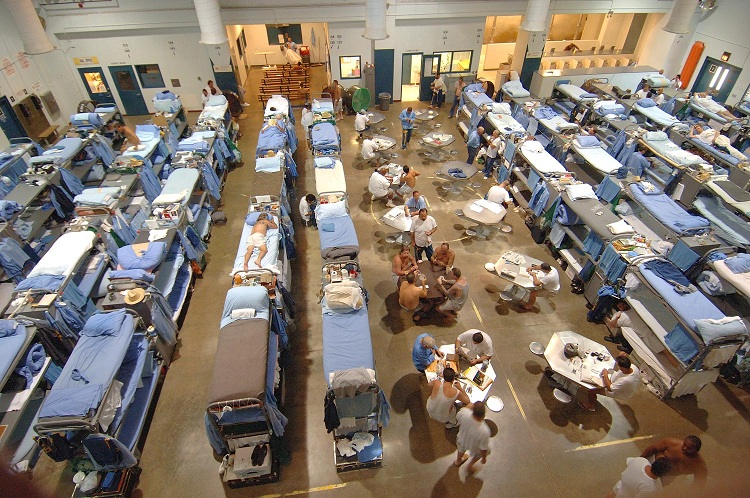
Decarceration in the United States involves government policies and community campaigns aimed at reducing the number of people held in custodial supervision. Decarceration, the opposite of incarceration, also entails reducing the rate of imprisonment at the federal, state and municipal level. As of 2019, the US was home to 5% of the global population but 25% of its prisoners. Until the COVID-19 pandemic, the U.S. possessed the world's highest incarceration rate: 655 inmates for every 100,000 people, enough inmates to equal the populations of Philadelphia or Houston. The COVID-19 pandemic has reinvigorated the discussion surrounding prison reduction as the spread of the virus poses a threat to the health of those incarcerated in prisons and detention centers where the ability to properly socially distance is limited. As a result of the push for criminal justice reform in the wake of the pandemic, as of 2022, the incarceration rate in the United States declined to 505 per 100,000, resulting in the United States no longer having the highest incarceration rate in the world, but still remaining in the top five.
Decarceration includes overlapping reformist and abolitionist strategies, from "front door" options such as sentencing reform, decriminalization, diversion and mental health treatment to "back door" approaches, exemplified by parole reform and early release into re-entry programs, amnesty for inmates convicted of non-violent offenses and imposition of prison capacity limits. While reforms focus on incremental changes, abolitionist approaches include budget reallocations, prison closures and restorative and transformative justice programs that challenge incarceration as an effective deterrent and necessary means of incapacitation. Abolitionists support investments in familial and community mental health, affordable housing and quality education to gradually transition prison and jail employees to jobs in other economic sectors.
"Multiple American states punish sexual offenses with chemical castration and allow chemical or surgical castration instead of prison time. Surgical castration of sex offenders virtually eliminates recidivism by castrated offenders; chemical castration is also effective." The American Civil Liberties Union opposes chemical castration as a violation of the Eighth Amendment ban on cruel and unusual punishment.
Opponents of decarceration include think tanks that assert mass decarceration would release violent criminals back onto the streets to re-offend; law enforcement organizations that argue drug decriminalization and legalization will escalate crime; prison guard unions that seek to preserve jobs and economic security; "tough on crime" lawmakers responding to public concerns about violent crime; and private prison contractors who contributed $1.6 million to candidates, parties and independent expenditures in the 2016 election cycle.
According to 2018-2020 statistics, over 2.2 million people in the U.S. are incarcerated in prison, jail and detention centers, with 1.3 million inmates in state prison, 631,000 held in local jails under county and municipal jurisdiction, 226,000 in federal prisons and jails, 50,165 in immigrant detention centers and 48,000 in juvenile facilities. An additional 4.5 million people in the United States are under custodial supervision, either probation or parole. According to a survey distributed by The Pew Charitable Trusts in December 2015, "the number of accused and convicted criminal offenders in the United States who are supervised with ankle monitors and other GPS-system electronic tracking devices rose nearly 140 percent over 10 years," resulting in more than 125,000 people under electronic supervision in 2015, an increase from 53,000 in 2005.
The U.S. incarceration rate increased 700% between the 1970s and 2000s, when it went from 200,000 incarcerated in 1973 to its peak of 2.4 million in 2009. Initially fueled in the 70's and 80's by increases in violent crimes and property offenses, incarceration rates continued to escalate even after the crime wave subsided in the mid 1990s, with the U.S. government spending $270 billion to incarcerate prisoners in 2018.
Scholars say the reasons for the continued increase in incarceration rates include: "tough on crime" legislators articulating public fears triggered by several high-profile murders; the government's war on drugs in which communities of color saw increased arrests and prison sentences; and prison system stakeholders who benefitted economically from incarceration. Tough on crime campaigns led to the abolition of parole in some states, restrictions on the power of parole boards and harsher mandatory minimum sentencing laws, such as California's 1994 Three Strikes law, a ballot proposition (since amended) that imposed a 25 years to life sentence for multiple felony convictions.
Decarceration proponents point to the U.S.'s high incarceration rates when pushing for reforms to reduce what they call a racially skewed prison population that sees African Americans incarcerated disproportionately at five times or more the rate of whites.
Hub AI
Decarceration in the United States AI simulator
(@Decarceration in the United States_simulator)
Decarceration in the United States
Decarceration in the United States involves government policies and community campaigns aimed at reducing the number of people held in custodial supervision. Decarceration, the opposite of incarceration, also entails reducing the rate of imprisonment at the federal, state and municipal level. As of 2019, the US was home to 5% of the global population but 25% of its prisoners. Until the COVID-19 pandemic, the U.S. possessed the world's highest incarceration rate: 655 inmates for every 100,000 people, enough inmates to equal the populations of Philadelphia or Houston. The COVID-19 pandemic has reinvigorated the discussion surrounding prison reduction as the spread of the virus poses a threat to the health of those incarcerated in prisons and detention centers where the ability to properly socially distance is limited. As a result of the push for criminal justice reform in the wake of the pandemic, as of 2022, the incarceration rate in the United States declined to 505 per 100,000, resulting in the United States no longer having the highest incarceration rate in the world, but still remaining in the top five.
Decarceration includes overlapping reformist and abolitionist strategies, from "front door" options such as sentencing reform, decriminalization, diversion and mental health treatment to "back door" approaches, exemplified by parole reform and early release into re-entry programs, amnesty for inmates convicted of non-violent offenses and imposition of prison capacity limits. While reforms focus on incremental changes, abolitionist approaches include budget reallocations, prison closures and restorative and transformative justice programs that challenge incarceration as an effective deterrent and necessary means of incapacitation. Abolitionists support investments in familial and community mental health, affordable housing and quality education to gradually transition prison and jail employees to jobs in other economic sectors.
"Multiple American states punish sexual offenses with chemical castration and allow chemical or surgical castration instead of prison time. Surgical castration of sex offenders virtually eliminates recidivism by castrated offenders; chemical castration is also effective." The American Civil Liberties Union opposes chemical castration as a violation of the Eighth Amendment ban on cruel and unusual punishment.
Opponents of decarceration include think tanks that assert mass decarceration would release violent criminals back onto the streets to re-offend; law enforcement organizations that argue drug decriminalization and legalization will escalate crime; prison guard unions that seek to preserve jobs and economic security; "tough on crime" lawmakers responding to public concerns about violent crime; and private prison contractors who contributed $1.6 million to candidates, parties and independent expenditures in the 2016 election cycle.
According to 2018-2020 statistics, over 2.2 million people in the U.S. are incarcerated in prison, jail and detention centers, with 1.3 million inmates in state prison, 631,000 held in local jails under county and municipal jurisdiction, 226,000 in federal prisons and jails, 50,165 in immigrant detention centers and 48,000 in juvenile facilities. An additional 4.5 million people in the United States are under custodial supervision, either probation or parole. According to a survey distributed by The Pew Charitable Trusts in December 2015, "the number of accused and convicted criminal offenders in the United States who are supervised with ankle monitors and other GPS-system electronic tracking devices rose nearly 140 percent over 10 years," resulting in more than 125,000 people under electronic supervision in 2015, an increase from 53,000 in 2005.
The U.S. incarceration rate increased 700% between the 1970s and 2000s, when it went from 200,000 incarcerated in 1973 to its peak of 2.4 million in 2009. Initially fueled in the 70's and 80's by increases in violent crimes and property offenses, incarceration rates continued to escalate even after the crime wave subsided in the mid 1990s, with the U.S. government spending $270 billion to incarcerate prisoners in 2018.
Scholars say the reasons for the continued increase in incarceration rates include: "tough on crime" legislators articulating public fears triggered by several high-profile murders; the government's war on drugs in which communities of color saw increased arrests and prison sentences; and prison system stakeholders who benefitted economically from incarceration. Tough on crime campaigns led to the abolition of parole in some states, restrictions on the power of parole boards and harsher mandatory minimum sentencing laws, such as California's 1994 Three Strikes law, a ballot proposition (since amended) that imposed a 25 years to life sentence for multiple felony convictions.
Decarceration proponents point to the U.S.'s high incarceration rates when pushing for reforms to reduce what they call a racially skewed prison population that sees African Americans incarcerated disproportionately at five times or more the rate of whites.