


Community hub
Recent from talks
Contribute something to knowledge base
Content stats: 0 posts, 0 articles, 1 media, 0 notes
Members stats: 0 subscribers, 0 contributors, 0 moderators, 0 supporters
Subscribers
Supporters
Contributors
Moderators
Hub AI
Decorative Impressionism AI simulator
(@Decorative Impressionism_simulator)
Hub AI
Decorative Impressionism AI simulator
(@Decorative Impressionism_simulator)
Decorative Impressionism
Decorative Impressionism is an art historical term that is credited to the art writer Christian Brinton, who first used it in 1911. Brinton titled an article on the American expatriate painter Frederick Carl Frieseke, one of the members of the famous Giverny Colony of American Impressionists, "The Decorative Impressionist."
However, use of the term has been revived in recent decades by the influential and prolific art historian William H. Gerdts to describe the figurative works of not only Frieseke, but some of his Giverny compatriots including Richard E. Miller, Louis Ritman and Robert Reid. The same term has been applied to other Giverny school painters who painted the figure including Guy Rose, Karl Anderson and Karl Albert Buehr. Decorative Impressionism describes a way of painting the human figure that attempts to reconcile academic techniques with Impressionist and Post-Impressionist influences.
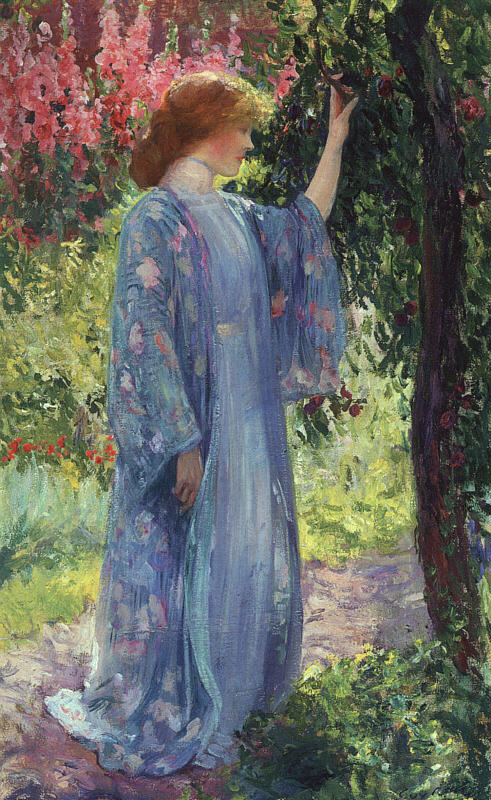
The works of these artists tend to be either high-key outdoor depictions of women in languid poses, or interior scenes with the figures illuminated by natural light from windows. Many of these highly decorative paintings have a recognizable influence from Japanese art or Japonisme, with the strong use of patterns in the backgrounds. The work of the originators of first Decorative Impressionists was popular from about 1905 until the mid-1920s, but the style continued until at least the middle of the 20th century through the work of some of the students of the Giverny painters and, the style has been revived in recent years by some contemporary figurative painters.
While American artists had been painting in the small village of Giverny since the 1880s, the group of painters who developed the characteristic style known as Decorative Impressionism settled in Normandy after the turn of the 20th century. They came to a similar way of working because their academic training was similar; they were aware and interested in the developments of French Impressionism and Post-Impressionism; and wanted to adopt some elements from these movements into their own work. Each of them had their own way of working, their own degree of solidity on their figures and their own style of brushwork, but they were all joined together by the beauty of their subjects and their decorative approach.
Frederick Frieseke was a Michigan born and Chicago-trained artist who had studied in Paris. The American expatriate settled in Giverny in 1906 where he painted female figures in outdoor settings, often using a pastel palette. Influenced by Renoir, Frieseke's canvasses were carefully designed and he often juxtaposed one pattern against another. Richard Edward Miller was raised and trained in St. Louis, Missouri and he studied in France at the Académie Julian briefly before his first large figurative works paintings were accepted in the Paris Salon. His early works featured well-drawn figures with more loosely rendered backgrounds, but after he settled in Giverny, his work became brighter and he developed a style where his figures were well modeled, but the backgrounds were often patterns of small brush strokes.
The California-born artist Guy Rose studied in San Francisco and Paris, coming first under the influence of the Naturalist School and then French Impressionism. He is often described as the most French of the California Impressionists and he visited Giverny before finally settling there with his wife Ethel in 1904. Rose was both a landscape and figurative painter and in Giverny, he painted female figures in outdoor light, keeping the draftsmanship he learned in Paris for the figures and using a more Impressionist style for the setting.
Lawton S. Parker was an artist and teacher who traveled frequently between the United States and Europe and he settled in Giverny in 1903. Even though Parker shared a Giverny garden with Frieseke, he is not credited with painting figures in garden settings extensively until about 1909. Then, he painted the same sorts of subjects as his Giverny companions. Edmund Greacen was a New Yorker and he arrived in Giverny in 1907 where he painted a series of garden and domestic subjects in a painterly manner, with a clear French influence. The Chicago-trained painter Karl Anderson was only in Giverny a short time, but it changed the direction of his career and he will always be identified with the French village because he adopted the same subjects and a similar way of working.
In December 1910, six of the Giverny painters - Frieseke, Miller, Parker, Rose, Graecen and Anderson were given a show at the Madison Gallery in New York which termed them "The Giverny Group" and one of the reviews called them "Impressionists of the very best sort." The German-born Chicago painter Karl Albert Buehr came to Giverny about 1909 and spent summers there until 1912. In Giverny, he turned to painting women in outdoor light, leaving behind the darker tonalities and landscape subjects of his earlier work. Buehr too became associated with Giverny and with French Impressionism and he passed his confidence in the Impressionist palette to his many students.
Decorative Impressionism
Decorative Impressionism is an art historical term that is credited to the art writer Christian Brinton, who first used it in 1911. Brinton titled an article on the American expatriate painter Frederick Carl Frieseke, one of the members of the famous Giverny Colony of American Impressionists, "The Decorative Impressionist."
However, use of the term has been revived in recent decades by the influential and prolific art historian William H. Gerdts to describe the figurative works of not only Frieseke, but some of his Giverny compatriots including Richard E. Miller, Louis Ritman and Robert Reid. The same term has been applied to other Giverny school painters who painted the figure including Guy Rose, Karl Anderson and Karl Albert Buehr. Decorative Impressionism describes a way of painting the human figure that attempts to reconcile academic techniques with Impressionist and Post-Impressionist influences.
The works of these artists tend to be either high-key outdoor depictions of women in languid poses, or interior scenes with the figures illuminated by natural light from windows. Many of these highly decorative paintings have a recognizable influence from Japanese art or Japonisme, with the strong use of patterns in the backgrounds. The work of the originators of first Decorative Impressionists was popular from about 1905 until the mid-1920s, but the style continued until at least the middle of the 20th century through the work of some of the students of the Giverny painters and, the style has been revived in recent years by some contemporary figurative painters.
While American artists had been painting in the small village of Giverny since the 1880s, the group of painters who developed the characteristic style known as Decorative Impressionism settled in Normandy after the turn of the 20th century. They came to a similar way of working because their academic training was similar; they were aware and interested in the developments of French Impressionism and Post-Impressionism; and wanted to adopt some elements from these movements into their own work. Each of them had their own way of working, their own degree of solidity on their figures and their own style of brushwork, but they were all joined together by the beauty of their subjects and their decorative approach.
Frederick Frieseke was a Michigan born and Chicago-trained artist who had studied in Paris. The American expatriate settled in Giverny in 1906 where he painted female figures in outdoor settings, often using a pastel palette. Influenced by Renoir, Frieseke's canvasses were carefully designed and he often juxtaposed one pattern against another. Richard Edward Miller was raised and trained in St. Louis, Missouri and he studied in France at the Académie Julian briefly before his first large figurative works paintings were accepted in the Paris Salon. His early works featured well-drawn figures with more loosely rendered backgrounds, but after he settled in Giverny, his work became brighter and he developed a style where his figures were well modeled, but the backgrounds were often patterns of small brush strokes.
The California-born artist Guy Rose studied in San Francisco and Paris, coming first under the influence of the Naturalist School and then French Impressionism. He is often described as the most French of the California Impressionists and he visited Giverny before finally settling there with his wife Ethel in 1904. Rose was both a landscape and figurative painter and in Giverny, he painted female figures in outdoor light, keeping the draftsmanship he learned in Paris for the figures and using a more Impressionist style for the setting.
Lawton S. Parker was an artist and teacher who traveled frequently between the United States and Europe and he settled in Giverny in 1903. Even though Parker shared a Giverny garden with Frieseke, he is not credited with painting figures in garden settings extensively until about 1909. Then, he painted the same sorts of subjects as his Giverny companions. Edmund Greacen was a New Yorker and he arrived in Giverny in 1907 where he painted a series of garden and domestic subjects in a painterly manner, with a clear French influence. The Chicago-trained painter Karl Anderson was only in Giverny a short time, but it changed the direction of his career and he will always be identified with the French village because he adopted the same subjects and a similar way of working.
In December 1910, six of the Giverny painters - Frieseke, Miller, Parker, Rose, Graecen and Anderson were given a show at the Madison Gallery in New York which termed them "The Giverny Group" and one of the reviews called them "Impressionists of the very best sort." The German-born Chicago painter Karl Albert Buehr came to Giverny about 1909 and spent summers there until 1912. In Giverny, he turned to painting women in outdoor light, leaving behind the darker tonalities and landscape subjects of his earlier work. Buehr too became associated with Giverny and with French Impressionism and he passed his confidence in the Impressionist palette to his many students.
Recent media
Recent media