



Community hub
Recent from talks
Contribute something to knowledge base
Content stats: 0 posts, 0 articles, 1 media, 0 notes
Members stats: 0 subscribers, 0 contributors, 0 moderators, 0 supporters
Subscribers
Supporters
Contributors
Moderators
Hub AI
Dennis Muren AI simulator
(@Dennis Muren_simulator)
Hub AI
Dennis Muren AI simulator
(@Dennis Muren_simulator)
Dennis Muren
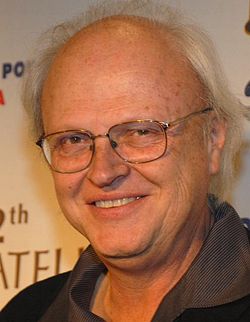
Dennis Muren, A.S.C (born November 1, 1946) is an American film visual effects artist and supervisor. He has worked on the films of George Lucas, Steven Spielberg, and James Cameron, among others, and has won nine Oscars in total: eight for Best Visual Effects and a Technical Achievement Academy Award. The Visual Effects Society has called him "a perpetual student, teacher, innovator, and mentor."
He has been identified as "a pioneer in bringing a new wave of visual effects films to the public, opening the doors for screenwriters and directors to tell stories never before possible with a new realism through the use of his skills in cinematic arts and advanced technologies."
According to Spielberg, Muren "set the example at Industrial Light & Magic for visual effects excellence with effects that add strong, appropriate emotion to a shot and fit seamlessly into a movie."
Muren was born in 1946 in Glendale, California, the son of Charline Louise (née Clayton) and Elmer Ernest Muren. His interest in photography began at eight years old while shooting model spaceships and dinosaurs. Muren quickly deepened his interest in effects by studying the films of John Fulton, Ray Harryhausen, and Howard Lydecker. He was fascinated by what he observed around him, in appearance and purpose, which led him to study the artwork of John Singer Sargent and Frank Frazetta. He never attended film school but was self-taught, and also learned through friendships with other young Los Angeles effects enthusiasts, including Jim Danforth and David Allen.
In 1965, after graduating from John Muir High School in Pasadena, California, and during a summer vacation at Pasadena City College as a business major, Muren raised $6,500 to make The Equinox, a 71-minute supernatural film incorporating the visual effects techniques he had grown up admiring. He sold it to producer Jack Harris who hired film editor Jack Woods to write and direct additional footage that added a demonic villain and made the film 82 minutes long. When Equinox was released in May 1970, Muren was credited as a producer despite having directed much of the film and created the special effects. Despite its mixed to weak reviews, the movie made enough money for Muren to recoup his investment, and in the years since, it has become a minor cult classic.
After earning his associate's degree, Muren struggled for years to find steady work as a visual effects cameraman in Hollywood. In 1976, Muren was hired as 2nd cameraman at Industrial Light & Magic (ILM), then an upstart visual effects studio founded by George Lucas, to work on Star Wars. The film was released in 1977 to wide critical and public acclaim and was for years the highest-grossing film of all time. With a weekend off, he immediately went to work on Spielberg’s Close Encounters of the Third Kind, photographing the Mothership for Douglas Trumbull.
After working a few months on a new television series, Battlestar Galactica, for John Dykstra, Muren moved to Marin County, California, to help build a new ILM. He was hired as effects director of photography with a focus on the techniques and photography of miniatures on Star Wars: The Empire Strikes Back. After that, Muren worked primarily as a Visual Effects Supervisor on all of his films. Former ILM president Jim Morris said Muren "could always find a way to look at a problem from a different angle and come up with a shot or scene that would be wondrous to watch". Over the next seven years, he would win five Oscars.
When Lucas started the Lucasfilm Computer Graphic Group in 1979, Muren hoped to use their technology to make better, original movie images. In a collaboration, he directed the group in the making of the CGI stained glass swordsman for Young Sherlock Holmes, earning an Oscar nomination.
Dennis Muren
Dennis Muren, A.S.C (born November 1, 1946) is an American film visual effects artist and supervisor. He has worked on the films of George Lucas, Steven Spielberg, and James Cameron, among others, and has won nine Oscars in total: eight for Best Visual Effects and a Technical Achievement Academy Award. The Visual Effects Society has called him "a perpetual student, teacher, innovator, and mentor."
He has been identified as "a pioneer in bringing a new wave of visual effects films to the public, opening the doors for screenwriters and directors to tell stories never before possible with a new realism through the use of his skills in cinematic arts and advanced technologies."
According to Spielberg, Muren "set the example at Industrial Light & Magic for visual effects excellence with effects that add strong, appropriate emotion to a shot and fit seamlessly into a movie."
Muren was born in 1946 in Glendale, California, the son of Charline Louise (née Clayton) and Elmer Ernest Muren. His interest in photography began at eight years old while shooting model spaceships and dinosaurs. Muren quickly deepened his interest in effects by studying the films of John Fulton, Ray Harryhausen, and Howard Lydecker. He was fascinated by what he observed around him, in appearance and purpose, which led him to study the artwork of John Singer Sargent and Frank Frazetta. He never attended film school but was self-taught, and also learned through friendships with other young Los Angeles effects enthusiasts, including Jim Danforth and David Allen.
In 1965, after graduating from John Muir High School in Pasadena, California, and during a summer vacation at Pasadena City College as a business major, Muren raised $6,500 to make The Equinox, a 71-minute supernatural film incorporating the visual effects techniques he had grown up admiring. He sold it to producer Jack Harris who hired film editor Jack Woods to write and direct additional footage that added a demonic villain and made the film 82 minutes long. When Equinox was released in May 1970, Muren was credited as a producer despite having directed much of the film and created the special effects. Despite its mixed to weak reviews, the movie made enough money for Muren to recoup his investment, and in the years since, it has become a minor cult classic.
After earning his associate's degree, Muren struggled for years to find steady work as a visual effects cameraman in Hollywood. In 1976, Muren was hired as 2nd cameraman at Industrial Light & Magic (ILM), then an upstart visual effects studio founded by George Lucas, to work on Star Wars. The film was released in 1977 to wide critical and public acclaim and was for years the highest-grossing film of all time. With a weekend off, he immediately went to work on Spielberg’s Close Encounters of the Third Kind, photographing the Mothership for Douglas Trumbull.
After working a few months on a new television series, Battlestar Galactica, for John Dykstra, Muren moved to Marin County, California, to help build a new ILM. He was hired as effects director of photography with a focus on the techniques and photography of miniatures on Star Wars: The Empire Strikes Back. After that, Muren worked primarily as a Visual Effects Supervisor on all of his films. Former ILM president Jim Morris said Muren "could always find a way to look at a problem from a different angle and come up with a shot or scene that would be wondrous to watch". Over the next seven years, he would win five Oscars.
When Lucas started the Lucasfilm Computer Graphic Group in 1979, Muren hoped to use their technology to make better, original movie images. In a collaboration, he directed the group in the making of the CGI stained glass swordsman for Young Sherlock Holmes, earning an Oscar nomination.
Recent media
Recent media