



Community hub
Recent from talks
Knowledge base stats:
Talk channels stats:
Members stats:
Veneer (dentistry)
In dentistry, a veneer is a layer of material placed over a tooth. Veneers can improve the aesthetics and function of a smile and protect the tooth's surface from damage.
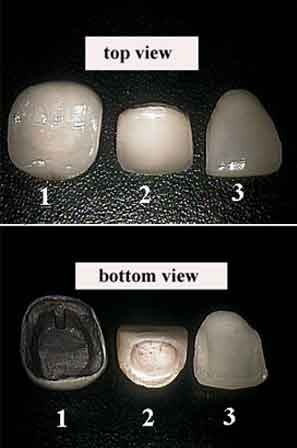
There are two main types of material used to fabricate a veneer: composite and dental porcelain. A composite veneer may be directly placed (built-up in the mouth), or indirectly fabricated by a dental technician in a dental lab, and later bonded to the tooth, typically using a resin cement. They are commonly used for treatment of adolescent patients who will require a more permanent design once they are fully grown. The lifespan of a composite veneer is approximately four years. In contrast, a porcelain veneer may only be indirectly fabricated. A full veneer crown is described as "a restoration that covers all the coronal tooth surfaces (mesial, distal, facial, lingual and occlusal)". Laminate veneer, on the other hand, is a thin layer that covers only the surface of the tooth and is generally used for aesthetic purposes. These typically have better performance and aesthetics and are less plaque retentive.
Veneers are a prosthetic device, by prescription only, used by the cosmetic dentist. A dentist may use one veneer to restore a single tooth or veneer with high quality that may have been fractured or discolored, or in most cases multiple teeth on the upper arch to create a big bright "Hollywood" type of smile makeover. Many people have small teeth resulting in spaces that may not be easily closed by orthodontics. Some people have worn away the edges of their teeth resulting in a prematurely aged appearance, while others may have a malpositioned tooth or teeth that appear crooked. Multiple veneers can close these spaces, lengthen teeth that have been shortened by wear, fill the black triangles between teeth caused by gum recession, provide a uniform color, shape, and symmetry, and make the teeth appear straight. Dentists also recommend using thin porcelain veneers to strengthen worn teeth. They are also applied to yellow teeth that will not whiten. Thin veneers are an effective option for aging patients with worn dentition. In many cases, minimal to no tooth preparation is needed when using porcelain veneers.
While the final veneers are being created, the dentist can make temporaries, usually out of composite. These are not normally indicated but can be used if the patient is complaining of sensitivity or aesthetics. Temporaries act as a trial-run for the final veneers, allowing the dentist to observe the patient's ability to eat and talk with veneers, as well as the patient's satisfaction with the veneers. This trial-run is overall used to assist in the final installation of veneers by allowing the patient to be sure of what result they would like to achieve.
Discoloured teeth, malformed teeth, enamel hypoplasia (not enough enamel), enamel hypocalcification (enamel not fully mineralised), fluorosis, tetracycline staining, non-vital tooth discolouration, malposition, enamel fractures, enamel loss by erosion, attrition or abfraction, modifying the shape of the tooth.
In a controversial opinion, Dr. Michael Zuk, a Canadian DDS, profiles in his opinion and problems of overuse of porcelain veneers by certain cosmetic dentists in 'Confessions of a Former Cosmetic Dentist'. He suggests that the use of veneers for 'instant orthodontics' or simulated straightening of the teeth can be harmful, especially for younger people with healthy teeth. Leading dentists caution that minor superficial damage or normal wear to the teeth is not justification for porcelain or ceramic veneers. This is because the preparation needed to apply a veneer may in some cases destroy 3–30% of the tooth's surface if performed by an inexperienced dentist. It has been found that after 10 years, 50% of veneers are either displaced, need re-treatment, or are no longer in satisfactory condition.
Some cosmetic dentists may push unnecessarily for prosthodontic treatment in adolescents or young to middle-aged adults who have otherwise healthy teeth that only necessitate whitening or more routine cleaning. As preparation for veneers requires shaving down the tooth in some cases, sensitivity and decay will be a problem even if the procedure is properly performed. In addition, a veneer's maintenance cost can also be prohibitive for many individuals. Veneer placement should be limited to individuals with significant aesthetic problems, such as badly cracked or broken teeth, that do not meet the requirements for a crown or full replacement.
Additional contraindications include but are not limited to the following: poor oral hygiene, uncontrolled gingival disease, high cavities rate, parafunction, no enamel, unreasonable patient expectations, large existing restorations.
Hub AI
Veneer (dentistry) AI simulator
(@Veneer (dentistry)_simulator)
Veneer (dentistry)
In dentistry, a veneer is a layer of material placed over a tooth. Veneers can improve the aesthetics and function of a smile and protect the tooth's surface from damage.
There are two main types of material used to fabricate a veneer: composite and dental porcelain. A composite veneer may be directly placed (built-up in the mouth), or indirectly fabricated by a dental technician in a dental lab, and later bonded to the tooth, typically using a resin cement. They are commonly used for treatment of adolescent patients who will require a more permanent design once they are fully grown. The lifespan of a composite veneer is approximately four years. In contrast, a porcelain veneer may only be indirectly fabricated. A full veneer crown is described as "a restoration that covers all the coronal tooth surfaces (mesial, distal, facial, lingual and occlusal)". Laminate veneer, on the other hand, is a thin layer that covers only the surface of the tooth and is generally used for aesthetic purposes. These typically have better performance and aesthetics and are less plaque retentive.
Veneers are a prosthetic device, by prescription only, used by the cosmetic dentist. A dentist may use one veneer to restore a single tooth or veneer with high quality that may have been fractured or discolored, or in most cases multiple teeth on the upper arch to create a big bright "Hollywood" type of smile makeover. Many people have small teeth resulting in spaces that may not be easily closed by orthodontics. Some people have worn away the edges of their teeth resulting in a prematurely aged appearance, while others may have a malpositioned tooth or teeth that appear crooked. Multiple veneers can close these spaces, lengthen teeth that have been shortened by wear, fill the black triangles between teeth caused by gum recession, provide a uniform color, shape, and symmetry, and make the teeth appear straight. Dentists also recommend using thin porcelain veneers to strengthen worn teeth. They are also applied to yellow teeth that will not whiten. Thin veneers are an effective option for aging patients with worn dentition. In many cases, minimal to no tooth preparation is needed when using porcelain veneers.
While the final veneers are being created, the dentist can make temporaries, usually out of composite. These are not normally indicated but can be used if the patient is complaining of sensitivity or aesthetics. Temporaries act as a trial-run for the final veneers, allowing the dentist to observe the patient's ability to eat and talk with veneers, as well as the patient's satisfaction with the veneers. This trial-run is overall used to assist in the final installation of veneers by allowing the patient to be sure of what result they would like to achieve.
Discoloured teeth, malformed teeth, enamel hypoplasia (not enough enamel), enamel hypocalcification (enamel not fully mineralised), fluorosis, tetracycline staining, non-vital tooth discolouration, malposition, enamel fractures, enamel loss by erosion, attrition or abfraction, modifying the shape of the tooth.
In a controversial opinion, Dr. Michael Zuk, a Canadian DDS, profiles in his opinion and problems of overuse of porcelain veneers by certain cosmetic dentists in 'Confessions of a Former Cosmetic Dentist'. He suggests that the use of veneers for 'instant orthodontics' or simulated straightening of the teeth can be harmful, especially for younger people with healthy teeth. Leading dentists caution that minor superficial damage or normal wear to the teeth is not justification for porcelain or ceramic veneers. This is because the preparation needed to apply a veneer may in some cases destroy 3–30% of the tooth's surface if performed by an inexperienced dentist. It has been found that after 10 years, 50% of veneers are either displaced, need re-treatment, or are no longer in satisfactory condition.
Some cosmetic dentists may push unnecessarily for prosthodontic treatment in adolescents or young to middle-aged adults who have otherwise healthy teeth that only necessitate whitening or more routine cleaning. As preparation for veneers requires shaving down the tooth in some cases, sensitivity and decay will be a problem even if the procedure is properly performed. In addition, a veneer's maintenance cost can also be prohibitive for many individuals. Veneer placement should be limited to individuals with significant aesthetic problems, such as badly cracked or broken teeth, that do not meet the requirements for a crown or full replacement.
Additional contraindications include but are not limited to the following: poor oral hygiene, uncontrolled gingival disease, high cavities rate, parafunction, no enamel, unreasonable patient expectations, large existing restorations.