



Community hub
Recent from talks
Knowledge base stats:
Talk channels stats:
Members stats:
Device Forts
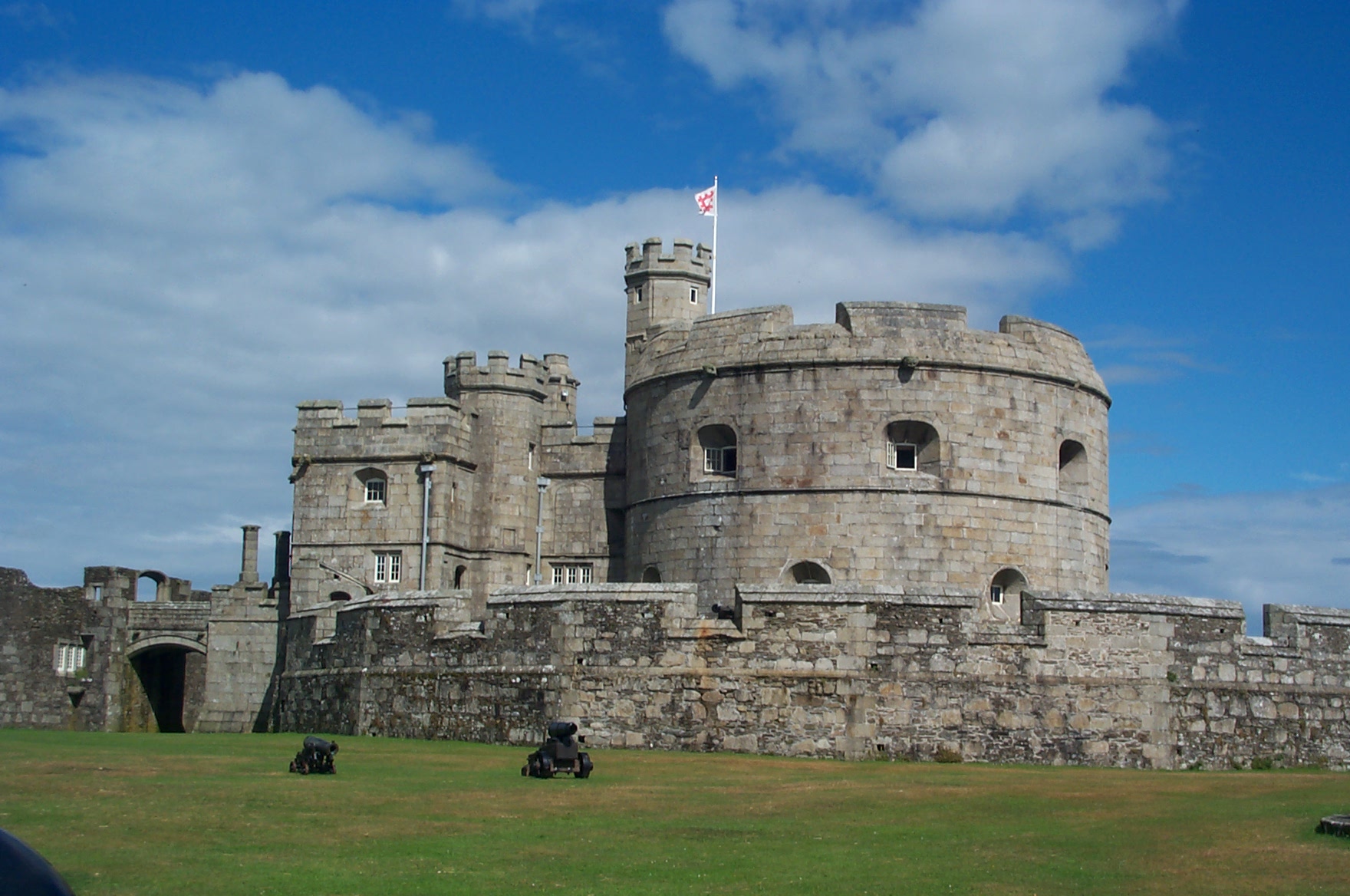
The Device Forts, also known as Henrician castles and blockhouses, were a series of artillery fortifications built to defend the coast of England and Wales by Henry VIII. Traditionally, the Crown had left coastal defences in the hands of local lords and communities but the threat of French and Spanish invasion led the King to issue an order, called a "device", for a major programme of work between 1539 and 1547. The fortifications ranged from large stone castles positioned to protect the Downs anchorage in Kent, to small blockhouses overlooking the entrance to Milford Haven in Pembrokeshire, and earthwork bulwarks along the Essex coast. Some forts operated independently, others were designed to be mutually reinforcing. The Device programme was hugely expensive, costing a total of £376,000 (estimated as between £2 and £82 billion in today's money); much of this was raised from the proceeds of the Dissolution of the Monasteries a few years before.
These utilitarian fortifications were armed with artillery, intended to be used against enemy ships before they could land forces or attack ships lying in harbour. The first wave of work between 1539 and 1543 was characterised by the use of circular bastions and multi-tiered defences, combined with many traditional medieval features. These designs contained serious military flaws, however, and the second period of construction until 1547 saw the introduction of angular bastions and other innovations probably inspired by contemporary thinking in mainland Europe. The castles were commanded by captains appointed by the Crown, overseeing small garrisons of professional gunners and soldiers, who would be supplemented by the local militia in an emergency.
Despite a French raid against the Isle of Wight in 1545, the Device Forts saw almost no action before peace was declared in 1546. Some of the defences were left to deteriorate and were decommissioned only a few years after their construction. After war broke out with Spain in 1569, Elizabeth I improved many of the remaining fortifications, including during the attack of the Spanish Armada of 1588. By the end of the century, the defences were badly out of date and for the first few decades of the 17th century many of the forts were left to decay. Most of the fortifications saw service in the First and Second English Civil Wars during the 1640s and were garrisoned during the Interregnum, continuing to form the backbone of England's coastal defences against the Dutch after Charles II was restored to the throne in 1660. Again left to fall in ruin during the 18th century, many of the Device Forts were modernised and rearmed during the Napoleonic Wars, until peace was declared in 1815.
Fears over a possible French invasion resurfaced several times in the 19th century, combined with rapid changes in technology, such as the development of steamships and shell guns in the 1840s, rifled cannon and iron-clad warships in the 1850s, and torpedo boats in the 1880s. This spurred fresh investment in those Device Forts still thought to be militarily valuable, and encouraged the decommissioning of others. By 1900, however, developments in guns and armour had made most of the Device Forts that remained in service simply too small to be practical in modern coastal defence. Despite being brought back into use during the First and Second World Wars, by the 1950s the fortifications were finally considered redundant and decommissioned for good. Coastal erosion over the centuries had taken its toll and some sites had been extensively damaged or completely destroyed. Many were restored, however, and opened to the public as tourist attractions.
The Device Forts emerged as a result of changes in English military architecture and foreign policy in the early 16th century. During the late medieval period, the English use of castles as military fortifications had declined in importance.[citation needed] The introduction of gunpowder in warfare had initially favoured the defender, but soon traditional stone walls could easily be destroyed by early artillery. The few new castles that were built during this time still incorporated the older features of gatehouses and crenellated walls, but intended them more as martial symbols than as practical military defences. Many older castles were simply abandoned or left to fall in disrepair.
Although fortifications could still be valuable in times of war, they had played only a limited role during the Wars of the Roses and, when Henry VII invaded and seized the throne in 1485, he had not needed to besiege any castles or towns during the campaign. Henry rapidly consolidated his rule at home and had few reasons to fear an external invasion from the continent; he invested little in coastal defences over the course of his reign. Modest fortifications existed along the coasts, based around simple blockhouses and towers, primarily in the south-west and along the Sussex coast, with a few more impressive works in the north of England, but they were very limited in scale.
His son, Henry VIII inherited the throne in 1509 and took a more interventionist approach in European affairs, fighting one war with France between 1512 and 1514, and then another between 1522 and 1525, this time allying himself with Spain and the Holy Roman Empire. While France and the Empire were in conflict with one another, raids along the English coast might still be common, but a full-scale invasion seemed unlikely. Indeed, traditionally the Crown had left coastal defences to local lords and communities, only taking a modest role in building and maintaining fortifications. Initially, therefore, Henry took little interest in his coastal defences; he declared reviews of the fortifications in both 1513 and 1533, but not much investment took place as a result.
In 1533 Henry broke with Pope Clement VII in order to annul the long-standing marriage to his wife, Catherine of Aragon, and remarry. Catherine was the aunt of King Charles V of Spain, who took the annulment as a personal insult. As a consequence, France and the Empire declared an alliance against Henry in 1538, and the Pope encouraged the two countries to attack England. An invasion of England now appeared certain; that summer Henry made a personal inspection of some of his coastal defences, which had recently been mapped and surveyed: he appeared determined to make substantial, urgent improvements.
Hub AI
Device Forts AI simulator
(@Device Forts_simulator)
Device Forts
The Device Forts, also known as Henrician castles and blockhouses, were a series of artillery fortifications built to defend the coast of England and Wales by Henry VIII. Traditionally, the Crown had left coastal defences in the hands of local lords and communities but the threat of French and Spanish invasion led the King to issue an order, called a "device", for a major programme of work between 1539 and 1547. The fortifications ranged from large stone castles positioned to protect the Downs anchorage in Kent, to small blockhouses overlooking the entrance to Milford Haven in Pembrokeshire, and earthwork bulwarks along the Essex coast. Some forts operated independently, others were designed to be mutually reinforcing. The Device programme was hugely expensive, costing a total of £376,000 (estimated as between £2 and £82 billion in today's money); much of this was raised from the proceeds of the Dissolution of the Monasteries a few years before.
These utilitarian fortifications were armed with artillery, intended to be used against enemy ships before they could land forces or attack ships lying in harbour. The first wave of work between 1539 and 1543 was characterised by the use of circular bastions and multi-tiered defences, combined with many traditional medieval features. These designs contained serious military flaws, however, and the second period of construction until 1547 saw the introduction of angular bastions and other innovations probably inspired by contemporary thinking in mainland Europe. The castles were commanded by captains appointed by the Crown, overseeing small garrisons of professional gunners and soldiers, who would be supplemented by the local militia in an emergency.
Despite a French raid against the Isle of Wight in 1545, the Device Forts saw almost no action before peace was declared in 1546. Some of the defences were left to deteriorate and were decommissioned only a few years after their construction. After war broke out with Spain in 1569, Elizabeth I improved many of the remaining fortifications, including during the attack of the Spanish Armada of 1588. By the end of the century, the defences were badly out of date and for the first few decades of the 17th century many of the forts were left to decay. Most of the fortifications saw service in the First and Second English Civil Wars during the 1640s and were garrisoned during the Interregnum, continuing to form the backbone of England's coastal defences against the Dutch after Charles II was restored to the throne in 1660. Again left to fall in ruin during the 18th century, many of the Device Forts were modernised and rearmed during the Napoleonic Wars, until peace was declared in 1815.
Fears over a possible French invasion resurfaced several times in the 19th century, combined with rapid changes in technology, such as the development of steamships and shell guns in the 1840s, rifled cannon and iron-clad warships in the 1850s, and torpedo boats in the 1880s. This spurred fresh investment in those Device Forts still thought to be militarily valuable, and encouraged the decommissioning of others. By 1900, however, developments in guns and armour had made most of the Device Forts that remained in service simply too small to be practical in modern coastal defence. Despite being brought back into use during the First and Second World Wars, by the 1950s the fortifications were finally considered redundant and decommissioned for good. Coastal erosion over the centuries had taken its toll and some sites had been extensively damaged or completely destroyed. Many were restored, however, and opened to the public as tourist attractions.
The Device Forts emerged as a result of changes in English military architecture and foreign policy in the early 16th century. During the late medieval period, the English use of castles as military fortifications had declined in importance.[citation needed] The introduction of gunpowder in warfare had initially favoured the defender, but soon traditional stone walls could easily be destroyed by early artillery. The few new castles that were built during this time still incorporated the older features of gatehouses and crenellated walls, but intended them more as martial symbols than as practical military defences. Many older castles were simply abandoned or left to fall in disrepair.
Although fortifications could still be valuable in times of war, they had played only a limited role during the Wars of the Roses and, when Henry VII invaded and seized the throne in 1485, he had not needed to besiege any castles or towns during the campaign. Henry rapidly consolidated his rule at home and had few reasons to fear an external invasion from the continent; he invested little in coastal defences over the course of his reign. Modest fortifications existed along the coasts, based around simple blockhouses and towers, primarily in the south-west and along the Sussex coast, with a few more impressive works in the north of England, but they were very limited in scale.
His son, Henry VIII inherited the throne in 1509 and took a more interventionist approach in European affairs, fighting one war with France between 1512 and 1514, and then another between 1522 and 1525, this time allying himself with Spain and the Holy Roman Empire. While France and the Empire were in conflict with one another, raids along the English coast might still be common, but a full-scale invasion seemed unlikely. Indeed, traditionally the Crown had left coastal defences to local lords and communities, only taking a modest role in building and maintaining fortifications. Initially, therefore, Henry took little interest in his coastal defences; he declared reviews of the fortifications in both 1513 and 1533, but not much investment took place as a result.
In 1533 Henry broke with Pope Clement VII in order to annul the long-standing marriage to his wife, Catherine of Aragon, and remarry. Catherine was the aunt of King Charles V of Spain, who took the annulment as a personal insult. As a consequence, France and the Empire declared an alliance against Henry in 1538, and the Pope encouraged the two countries to attack England. An invasion of England now appeared certain; that summer Henry made a personal inspection of some of his coastal defences, which had recently been mapped and surveyed: he appeared determined to make substantial, urgent improvements.