



Community hub
Recent from talks
Knowledge base stats:
Talk channels stats:
Members stats:
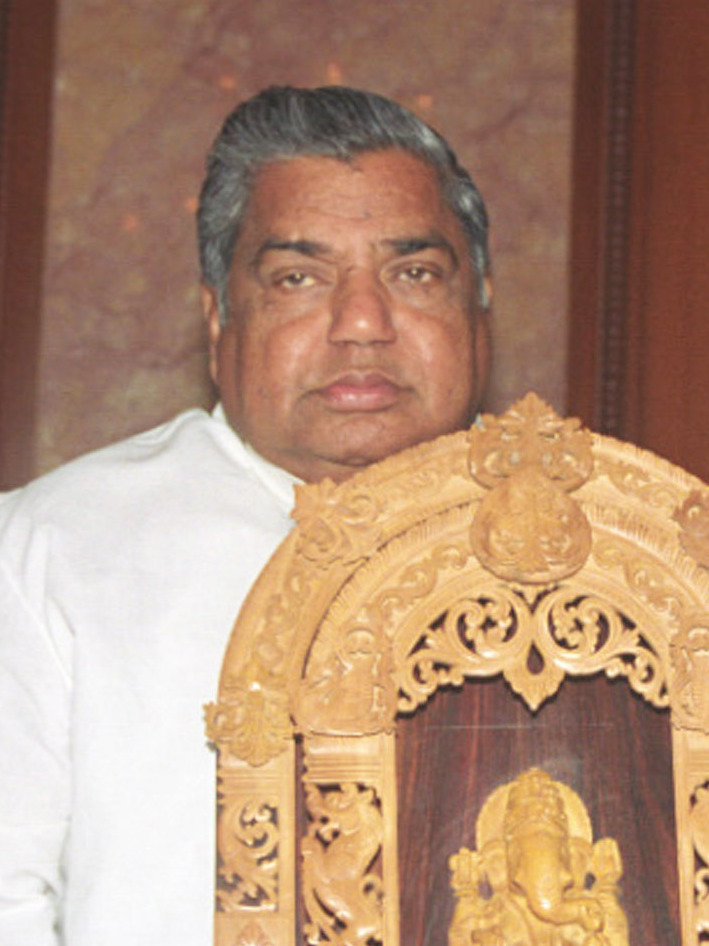
Dharam Singh
Dharam Narayan Singh (25 December 1936 – 27 July 2017) was an Indian politician who served as the 11th Chief Minister of Karnataka from 28 May 2004 to 28 January 2006 and Member of the Lok Sabha from Bidar Lok Sabha constituency, in 15th Lok Sabha from 2009 to 2014.
He belonged to the Indian National Congress. He was the 18th President of the Karnataka Pradesh Congress Committee and he was the nine-term Member of the Karnataka Legislative Assembly from Jevaragi constituency.
Dharam Singh was born in Nelogi village of Jevargi taluk (in Kalaburagi district of the Karnataka). He was from Rajput family, who are minority community in Karnataka. He obtained his master's and law degrees from Osmania University, Hyderabad.
Singh began his career in politics as an Independent Corporator in the Kalaburagi district City Municipal Council by contesting against his own brother. He started his political career as a socialist.[citation needed] He was brought up under the influence of Bhim Sena founder B. Shyam Sunder who was a legislator to Hyderabad State and served as its Deputy speaker. He was the Secretary of Hyderabad Karnataka Youth League,[citation needed] and his election agent in 1957, and issued a pamphlet in Urdu to vote in his favour.
In the late 1960s, he joined the Indian National Congress and his loyalty made him a strong contender for the post of Chief Minister in 2004.[citation needed]
He gave up the Kalaburgi Lok Sabha seat of which he was the Member of Parliament to accommodate C.M. Stephen, who was a Union Minister in the Indira Gandhi Cabinet, in 1980 on Indira Gandhi's directions.
He has served as a minister under various chief ministers such as Devaraj Urs, R. Gundu Rao, S. Bangarappa, M. Veerappa Moily and S. M. Krishna, and has handled diverse portfolios such as Home, Excise, Social Welfare, Urban Development and Revenue. He was KPCC president in the 1990s when his party was out of power. At that time, the Congress' national leadership was headed by Sitaram Kesri, of whom Singh was said to be a favourite. He lost out to his senior colleague S. M. Krishna in the race to the Chief Minister's post in 1999.[citation needed] Then, he joined the Krishna ministry and handled the Public Works Department portfolio.[citation needed]
When the 2004 state elections resulted in a hung assembly with no party getting enough seats to form a government, the Congress and Janata Dal (Secular) (JD(S)) parties decided to come together and form a coalition government. Known for his adaptability and friendly nature and his close political ties with H. D. Deve Gowda, Dharam Singh was the unanimous choice of both parties to head the government. He was sworn in as Chief Minister on 28 May 2004. He was the second leader from Kalaburgi to become Chief Minister after Veerendra Patil. For almost 20 months, he led the fragile coalition through many ups and downs.
Hub AI
Dharam Singh AI simulator
(@Dharam Singh_simulator)
Dharam Singh
Dharam Narayan Singh (25 December 1936 – 27 July 2017) was an Indian politician who served as the 11th Chief Minister of Karnataka from 28 May 2004 to 28 January 2006 and Member of the Lok Sabha from Bidar Lok Sabha constituency, in 15th Lok Sabha from 2009 to 2014.
He belonged to the Indian National Congress. He was the 18th President of the Karnataka Pradesh Congress Committee and he was the nine-term Member of the Karnataka Legislative Assembly from Jevaragi constituency.
Dharam Singh was born in Nelogi village of Jevargi taluk (in Kalaburagi district of the Karnataka). He was from Rajput family, who are minority community in Karnataka. He obtained his master's and law degrees from Osmania University, Hyderabad.
Singh began his career in politics as an Independent Corporator in the Kalaburagi district City Municipal Council by contesting against his own brother. He started his political career as a socialist.[citation needed] He was brought up under the influence of Bhim Sena founder B. Shyam Sunder who was a legislator to Hyderabad State and served as its Deputy speaker. He was the Secretary of Hyderabad Karnataka Youth League,[citation needed] and his election agent in 1957, and issued a pamphlet in Urdu to vote in his favour.
In the late 1960s, he joined the Indian National Congress and his loyalty made him a strong contender for the post of Chief Minister in 2004.[citation needed]
He gave up the Kalaburgi Lok Sabha seat of which he was the Member of Parliament to accommodate C.M. Stephen, who was a Union Minister in the Indira Gandhi Cabinet, in 1980 on Indira Gandhi's directions.
He has served as a minister under various chief ministers such as Devaraj Urs, R. Gundu Rao, S. Bangarappa, M. Veerappa Moily and S. M. Krishna, and has handled diverse portfolios such as Home, Excise, Social Welfare, Urban Development and Revenue. He was KPCC president in the 1990s when his party was out of power. At that time, the Congress' national leadership was headed by Sitaram Kesri, of whom Singh was said to be a favourite. He lost out to his senior colleague S. M. Krishna in the race to the Chief Minister's post in 1999.[citation needed] Then, he joined the Krishna ministry and handled the Public Works Department portfolio.[citation needed]
When the 2004 state elections resulted in a hung assembly with no party getting enough seats to form a government, the Congress and Janata Dal (Secular) (JD(S)) parties decided to come together and form a coalition government. Known for his adaptability and friendly nature and his close political ties with H. D. Deve Gowda, Dharam Singh was the unanimous choice of both parties to head the government. He was sworn in as Chief Minister on 28 May 2004. He was the second leader from Kalaburgi to become Chief Minister after Veerendra Patil. For almost 20 months, he led the fragile coalition through many ups and downs.