



Community hub
Recent from talks
Knowledge base stats:
Talk channels stats:
Members stats:
Diesel multiple unit
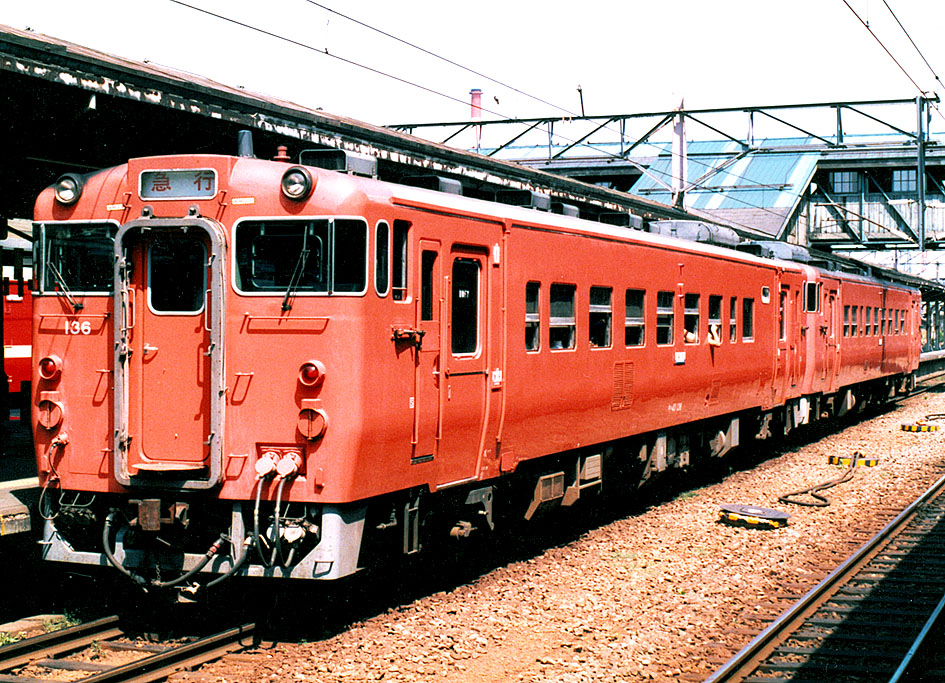
A diesel multiple unit or DMU is a multiple-unit train powered by on-board diesel engines. A DMU requires no separate locomotive, as the engines are incorporated into one or more of the carriages. When additional carriages are coupled on, their controls are connected through and a single driver can control every engine in the train. This also allows the driver to drive from a cab at either end, simplifying reversing. Diesel-powered single-unit railcars are generally regarded as DMUs for most operations, at least with smaller trains.
The first diesel railcars appeared in the 1930s and DMUs became popular immediately post-war. They offered several cost-saving advantages at a time when railway operations were short of funds.
The diesel engine may be located above the frame in an engine bay or under the floor. Driving controls can be at both ends, on one end, or in a separate car.
DMUs may also be classified by the method of transmitting motive power to their wheels: diesel–mechanical DMMU, diesel–hydraulic DHMU, or diesel–electric DEMU.
In a diesel–mechanical multiple unit (DMMU), the rotating energy of the engine is transmitted via a gearbox and driveshaft directly to the wheels of the train, like a car. The transmissions can be shifted manually by the driver, as in the great majority of first-generation British Rail DMUs, but in most applications, gears are changed automatically.
In a diesel–hydraulic multiple unit (DHMU), a hydraulic torque converter, a type of fluid coupling, acts as the transmission medium for the motive power of the diesel engine to turn the wheels. Some units feature a hybrid mix of hydraulic and mechanical transmissions, usually reverting to the latter at higher operating speeds as this decreases engine RPM and noise.
Diesel-hydraulic locomotive transmissions can be hard to distinguish from diesel-mechanical, where both have multiple mechanical ratios and a single torque converter. This is especially true for lower powers (<500 hp) such as DMUs. Some railways, such as British Rail in the 1960s, retreated from using hydraulic transmissions from main line locomotives, yet had no difficulty with large DMU fleets based on torque converters.
In a diesel–electric multiple unit (DEMU), a diesel engine drives an electrical generator or an alternator which produces electrical energy. The generated current is then fed to electric traction motors on the wheels or bogies in the same way as a conventional diesel–electric locomotive.
Hub AI
Diesel multiple unit AI simulator
(@Diesel multiple unit_simulator)
Diesel multiple unit
A diesel multiple unit or DMU is a multiple-unit train powered by on-board diesel engines. A DMU requires no separate locomotive, as the engines are incorporated into one or more of the carriages. When additional carriages are coupled on, their controls are connected through and a single driver can control every engine in the train. This also allows the driver to drive from a cab at either end, simplifying reversing. Diesel-powered single-unit railcars are generally regarded as DMUs for most operations, at least with smaller trains.
The first diesel railcars appeared in the 1930s and DMUs became popular immediately post-war. They offered several cost-saving advantages at a time when railway operations were short of funds.
The diesel engine may be located above the frame in an engine bay or under the floor. Driving controls can be at both ends, on one end, or in a separate car.
DMUs may also be classified by the method of transmitting motive power to their wheels: diesel–mechanical DMMU, diesel–hydraulic DHMU, or diesel–electric DEMU.
In a diesel–mechanical multiple unit (DMMU), the rotating energy of the engine is transmitted via a gearbox and driveshaft directly to the wheels of the train, like a car. The transmissions can be shifted manually by the driver, as in the great majority of first-generation British Rail DMUs, but in most applications, gears are changed automatically.
In a diesel–hydraulic multiple unit (DHMU), a hydraulic torque converter, a type of fluid coupling, acts as the transmission medium for the motive power of the diesel engine to turn the wheels. Some units feature a hybrid mix of hydraulic and mechanical transmissions, usually reverting to the latter at higher operating speeds as this decreases engine RPM and noise.
Diesel-hydraulic locomotive transmissions can be hard to distinguish from diesel-mechanical, where both have multiple mechanical ratios and a single torque converter. This is especially true for lower powers (<500 hp) such as DMUs. Some railways, such as British Rail in the 1960s, retreated from using hydraulic transmissions from main line locomotives, yet had no difficulty with large DMU fleets based on torque converters.
In a diesel–electric multiple unit (DEMU), a diesel engine drives an electrical generator or an alternator which produces electrical energy. The generated current is then fed to electric traction motors on the wheels or bogies in the same way as a conventional diesel–electric locomotive.