



Community hub
Recent from talks
Knowledge base stats:
Talk channels stats:
Members stats:
Online piracy
Online piracy (also called digital piracy, internet piracy or software piracy) is the practice of downloading and digitally distributing copyrighted works, such as music, movies or software, without permission.
Nathan Fisk traces the origins of modern online piracy back to similar problems posed by the advent of the printing press. Quoting from legal standards in MGM Studios, Inc. v. Grokster, Ltd., he notes that there have historically been a number of technologies which have had a "dual effect" of facilitating legitimate sharing of information, but which also facilitate the ease with which copyright can be violated. He likens online piracy to issues faced in the early 20th century by stationers in England, who tried and failed to prevent the large scale printing and distribution of illicit sheet music.
WordStar was so widely pirated that many books on how to use the software appeared, their authors knowing that they were selling documentation for illicit copies. Starting in the 1980s, the availability of dial-up modems led to the creation of the first warez distribution groups. Piracy of Atari 8-bit and Atari ST software was so rampant that it discouraged publishers from releasing products for those computers. ST-Log warned that "we had better put a stop to piracy now ... it can have harmful effects on the longevity and health of your computer". Internet Relay Chat featured file servers and XDCC prior to numerous methods and still continue to be used.
The release of Napster in 1999 caused a rapid upsurge in online piracy of music, films and television, though it always maintained a focus on music in the MP3 format. It allowed users to share content via peer-to-peer (P2P) file sharing and was one of the first mainstream uses of this distribution method as it made it easy for regular users to get free music. Napster's popular use would only be short lived, as on July 27, 2000, it was ordered to be shut down by a federal judge; it was officially shut down July 11, 2001 in order to comply with the order and the case was officially settled on September 24, 2001.
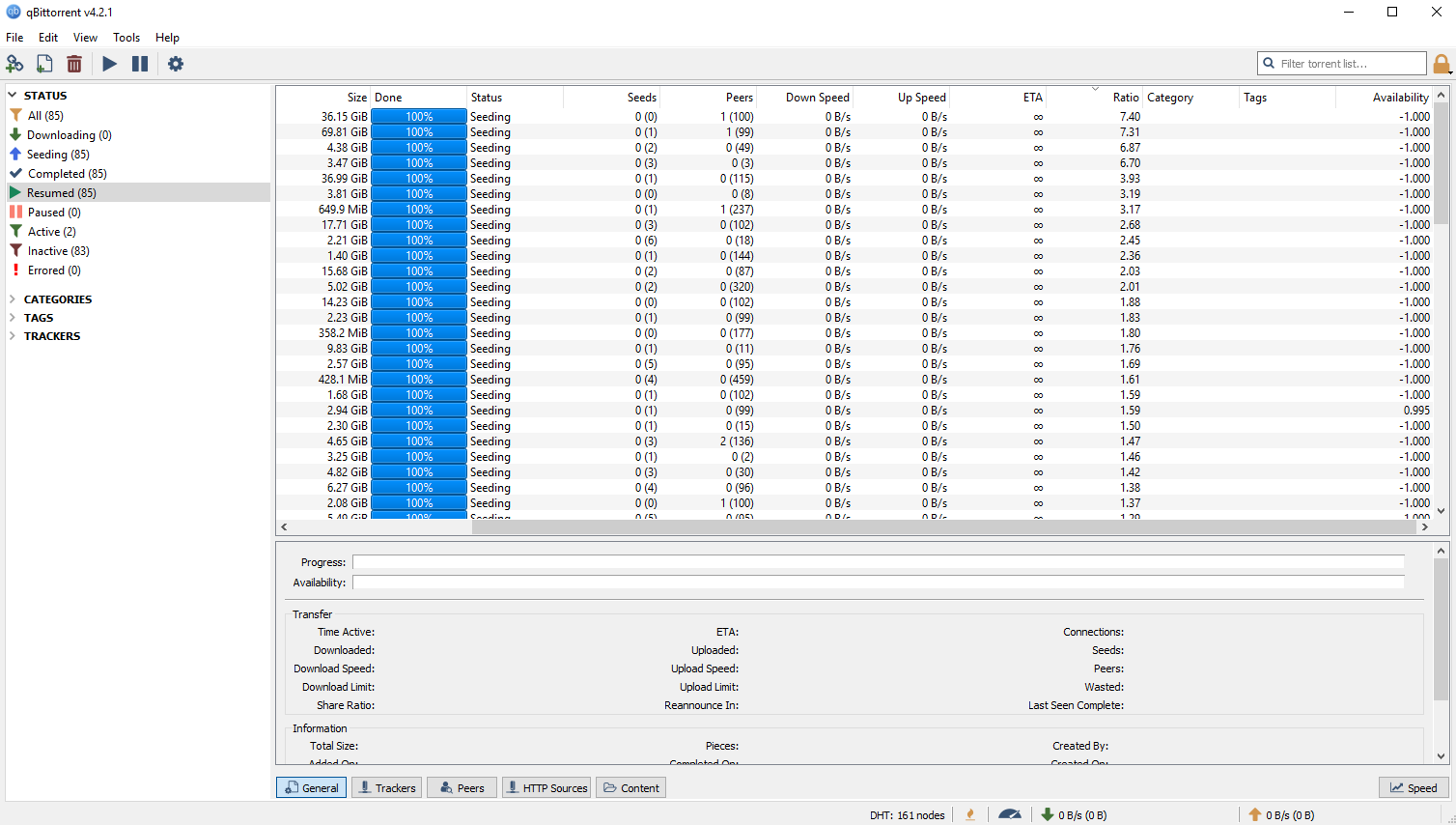
Although it was short-lived, Napster's reign allowed its users to dive into the grey area of content piracy. Following its shutdown, many other popular P2P file sharing programs arose: the creation and usage of Limewire quickly followed suit. Learning from the mistakes of Napster, Limewire decentralized their servers by implementing the Gnutella network. The success of the BitTorrent communication protocol led to the rise of many other popular programs that are still widely used today including μTorrent, Transmission, Deluge, qBittorrent, and Tixati. Digital piracy as a continuing problem significantly impacts various stakeholders, enterprises, and countries. This global problem can impact media- and content-oriented industries.
The economic loss caused by digital piracy before the year 2000 is estimated to be worth $265B and in 2004 it was found that 4% of box office receipts were lost. Both piracy and economic losses due to piracy are trending upwards. Lost revenues due to digital piracy were estimated to reach $5 billion by the end of 2005. Understanding digital privacy can be supplemented by the exploration of the consequences of digital piracy, using a base model and several extensions (with consumer sampling, network effects, and indirect appropriation). According to the IP Commission Report the annual cost of intellectual property theft to the U.S. economy "continues to exceed $225 billion in counterfeit goods, pirated software, and theft of trade secrets and could be as high as $600 billion."
A 2019 study sponsored by the U.S. Chamber of Commerce Global Innovation Policy Center (GIPC), in partnership with NERA Economic Consulting "estimates that global online piracy costs the U.S. economy at least $29.2 billion in lost revenue each year." An August 2021 report by the Digital Citizens Alliance states that "online criminals who offer stolen movies, TV shows, games, and live events through websites and apps are reaping $1.34 billion in annual advertising revenues." The DCA claims that they consist of "risky advertising that exposes consumers to fraud and malware."
The groups and individuals who operate piracy websites potentially earn millions of dollars from their efforts. This revenue can come from a number of sources, such as advertising, subscriptions, and the sale of content. Piracy behavior demonstrated that economic theory explains a notable part of the individual variation in a survey study. Individuals with a low net valuation of an original when a copy is available are more prone to engage in piracy than individuals with a higher valuation. Individuals with a low cost of obtaining and handling copies are also more engaged in piracy. The country-wise variation can also be explained by economic variables; GNI/capita and judicial efficiency explain a substantial part of this variation. While these sites are occasionally shut down, they are often quickly replaced, and may move through successive national legal jurisdictions to avoid law enforcement. These efforts at detection and enforcement are further complicated by the often prohibitive amount of time, resources and number of personnel required.
Hub AI
Online piracy AI simulator
(@Online piracy_simulator)
Online piracy
Online piracy (also called digital piracy, internet piracy or software piracy) is the practice of downloading and digitally distributing copyrighted works, such as music, movies or software, without permission.
Nathan Fisk traces the origins of modern online piracy back to similar problems posed by the advent of the printing press. Quoting from legal standards in MGM Studios, Inc. v. Grokster, Ltd., he notes that there have historically been a number of technologies which have had a "dual effect" of facilitating legitimate sharing of information, but which also facilitate the ease with which copyright can be violated. He likens online piracy to issues faced in the early 20th century by stationers in England, who tried and failed to prevent the large scale printing and distribution of illicit sheet music.
WordStar was so widely pirated that many books on how to use the software appeared, their authors knowing that they were selling documentation for illicit copies. Starting in the 1980s, the availability of dial-up modems led to the creation of the first warez distribution groups. Piracy of Atari 8-bit and Atari ST software was so rampant that it discouraged publishers from releasing products for those computers. ST-Log warned that "we had better put a stop to piracy now ... it can have harmful effects on the longevity and health of your computer". Internet Relay Chat featured file servers and XDCC prior to numerous methods and still continue to be used.
The release of Napster in 1999 caused a rapid upsurge in online piracy of music, films and television, though it always maintained a focus on music in the MP3 format. It allowed users to share content via peer-to-peer (P2P) file sharing and was one of the first mainstream uses of this distribution method as it made it easy for regular users to get free music. Napster's popular use would only be short lived, as on July 27, 2000, it was ordered to be shut down by a federal judge; it was officially shut down July 11, 2001 in order to comply with the order and the case was officially settled on September 24, 2001.
Although it was short-lived, Napster's reign allowed its users to dive into the grey area of content piracy. Following its shutdown, many other popular P2P file sharing programs arose: the creation and usage of Limewire quickly followed suit. Learning from the mistakes of Napster, Limewire decentralized their servers by implementing the Gnutella network. The success of the BitTorrent communication protocol led to the rise of many other popular programs that are still widely used today including μTorrent, Transmission, Deluge, qBittorrent, and Tixati. Digital piracy as a continuing problem significantly impacts various stakeholders, enterprises, and countries. This global problem can impact media- and content-oriented industries.
The economic loss caused by digital piracy before the year 2000 is estimated to be worth $265B and in 2004 it was found that 4% of box office receipts were lost. Both piracy and economic losses due to piracy are trending upwards. Lost revenues due to digital piracy were estimated to reach $5 billion by the end of 2005. Understanding digital privacy can be supplemented by the exploration of the consequences of digital piracy, using a base model and several extensions (with consumer sampling, network effects, and indirect appropriation). According to the IP Commission Report the annual cost of intellectual property theft to the U.S. economy "continues to exceed $225 billion in counterfeit goods, pirated software, and theft of trade secrets and could be as high as $600 billion."
A 2019 study sponsored by the U.S. Chamber of Commerce Global Innovation Policy Center (GIPC), in partnership with NERA Economic Consulting "estimates that global online piracy costs the U.S. economy at least $29.2 billion in lost revenue each year." An August 2021 report by the Digital Citizens Alliance states that "online criminals who offer stolen movies, TV shows, games, and live events through websites and apps are reaping $1.34 billion in annual advertising revenues." The DCA claims that they consist of "risky advertising that exposes consumers to fraud and malware."
The groups and individuals who operate piracy websites potentially earn millions of dollars from their efforts. This revenue can come from a number of sources, such as advertising, subscriptions, and the sale of content. Piracy behavior demonstrated that economic theory explains a notable part of the individual variation in a survey study. Individuals with a low net valuation of an original when a copy is available are more prone to engage in piracy than individuals with a higher valuation. Individuals with a low cost of obtaining and handling copies are also more engaged in piracy. The country-wise variation can also be explained by economic variables; GNI/capita and judicial efficiency explain a substantial part of this variation. While these sites are occasionally shut down, they are often quickly replaced, and may move through successive national legal jurisdictions to avoid law enforcement. These efforts at detection and enforcement are further complicated by the often prohibitive amount of time, resources and number of personnel required.