
Recent from talks
Dion DiMucci
Knowledge base stats:
Talk channels stats:
Members stats:
Dion DiMucci
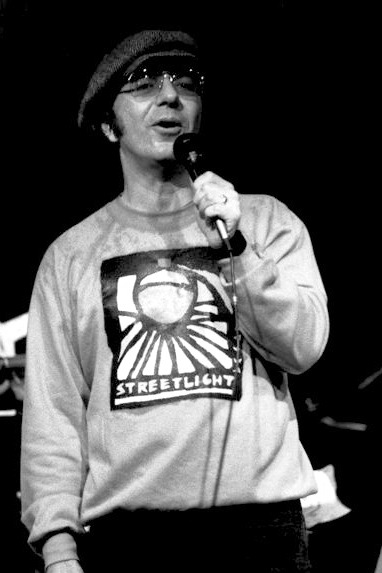
Dion Francis DiMucci (born July 18, 1939), better known mononymously as Dion, is an American singer and songwriter. His music incorporates elements of doo-wop, pop, rock, R&B, folk and blues. Initially the lead singer of the vocal group Dion and the Belmonts, Dion embarked on a solo career, and was one of the most prominent rock and roll performers of the pre-British Invasion era. He had 39 Top 40 hits in the late 1950s and early 1960s as a solo performer, or with the Belmonts and the Del-Satins. He is best remembered for his signature hit songs "Runaround Sue", "The Wanderer", "Ruby Baby" and "Lovers Who Wander", among others.
Dion continued making music after his popularity waned in 1964, and for the rest of the decade he diversified his style, fervently exploring country and urban blues while recording electric folk rock. After a religious transformation in 1968, he resuscitated his commercial career with the major hit "Abraham, Martin and John".
During the 1980s, Dion produced several Christian albums, winning a GMA Dove Award in 1984 for the album I Put Away My Idols. He returned to secular music in the late 1980s with Yo Frankie (1989). Between the mid-2000s and 2024, Dion released seven chart-topping blues albums (three at No. 1). Critics who had dismissed his early work, labeling him as a teen idol, praised his later work and noted the influence he has had on other musicians.
A Grammy-nominated artist, Dion has released over 40 albums, and scored eleven Top 10 hits (including with the Belmonts) on the US Billboard Hot 100 chart. He was inducted into the Rock and Roll Hall of Fame in 1989. In 2002, Dion was inducted into the Grammy Hall of Fame for "Runaround Sue". AllMusic album awards include: Favorite Blues Album for New York Is My Home (2016), Favorite Compilations and Reissues for Kickin Child: Lost Columbia Album 1965 (2017) and Favorite Blues Album for Blues with Friends (2020).
Dion was born to an Italian American family in the Bronx (New York City), New York, on July 18, 1939. His first name was in honor of the French Canadian Dionne quintuplets.
Dion accompanied his father, Pasquale DiMucci (a vaudeville entertainer), on tour as a child. He developed a love of country music, particularly the work of Hank Williams. He was also fond of blues and doo-wop musicians he heard performing in local bars and on the radio. His singing was honed on street corners and local clubs in the Bronx, where he and other neighborhood singers created a cappella riffs.
Dion recalled his uncle giving him a guitar at the age of 12. He began playing R&B and performed in bars before he was a teenager. With the exposure to alcohol and recreational drugs, he started smoking marijuana by age 13, and was using heroin at age 14.
In the mid-1950’s, between the age of 15 and 16, Dion met his wife Susan Butterfield. Although he was addicted to heroin, it didn’t keep him from pursuing a music career.
Hub AI
Dion DiMucci AI simulator
(@Dion DiMucci_simulator)
Dion DiMucci
Dion Francis DiMucci (born July 18, 1939), better known mononymously as Dion, is an American singer and songwriter. His music incorporates elements of doo-wop, pop, rock, R&B, folk and blues. Initially the lead singer of the vocal group Dion and the Belmonts, Dion embarked on a solo career, and was one of the most prominent rock and roll performers of the pre-British Invasion era. He had 39 Top 40 hits in the late 1950s and early 1960s as a solo performer, or with the Belmonts and the Del-Satins. He is best remembered for his signature hit songs "Runaround Sue", "The Wanderer", "Ruby Baby" and "Lovers Who Wander", among others.
Dion continued making music after his popularity waned in 1964, and for the rest of the decade he diversified his style, fervently exploring country and urban blues while recording electric folk rock. After a religious transformation in 1968, he resuscitated his commercial career with the major hit "Abraham, Martin and John".
During the 1980s, Dion produced several Christian albums, winning a GMA Dove Award in 1984 for the album I Put Away My Idols. He returned to secular music in the late 1980s with Yo Frankie (1989). Between the mid-2000s and 2024, Dion released seven chart-topping blues albums (three at No. 1). Critics who had dismissed his early work, labeling him as a teen idol, praised his later work and noted the influence he has had on other musicians.
A Grammy-nominated artist, Dion has released over 40 albums, and scored eleven Top 10 hits (including with the Belmonts) on the US Billboard Hot 100 chart. He was inducted into the Rock and Roll Hall of Fame in 1989. In 2002, Dion was inducted into the Grammy Hall of Fame for "Runaround Sue". AllMusic album awards include: Favorite Blues Album for New York Is My Home (2016), Favorite Compilations and Reissues for Kickin Child: Lost Columbia Album 1965 (2017) and Favorite Blues Album for Blues with Friends (2020).
Dion was born to an Italian American family in the Bronx (New York City), New York, on July 18, 1939. His first name was in honor of the French Canadian Dionne quintuplets.
Dion accompanied his father, Pasquale DiMucci (a vaudeville entertainer), on tour as a child. He developed a love of country music, particularly the work of Hank Williams. He was also fond of blues and doo-wop musicians he heard performing in local bars and on the radio. His singing was honed on street corners and local clubs in the Bronx, where he and other neighborhood singers created a cappella riffs.
Dion recalled his uncle giving him a guitar at the age of 12. He began playing R&B and performed in bars before he was a teenager. With the exposure to alcohol and recreational drugs, he started smoking marijuana by age 13, and was using heroin at age 14.
In the mid-1950’s, between the age of 15 and 16, Dion met his wife Susan Butterfield. Although he was addicted to heroin, it didn’t keep him from pursuing a music career.
Recent media