
Recent from talks
Domestic worker
Knowledge base stats:
Talk channels stats:
Members stats:
Domestic worker
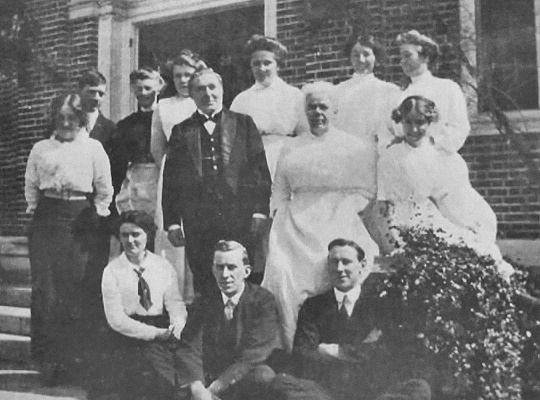
A domestic worker is a person who works within a residence and performs a variety of household services for an individual, from providing cleaning and household maintenance, or cooking, laundry and ironing, or care for children and elderly dependents, and other household errands. The term "domestic service" applies to the equivalent occupational category. In traditional English contexts, such a person was said to be "in service".
Some domestic workers live within their employer's household. In some cases, the contribution and skill of servants whose work encompassed complex management tasks in large households have been highly valued. However, for the most part, domestic work tends to be demanding and is commonly considered to be undervalued, despite often being necessary. Although legislation protecting domestic workers is in place in many countries, it is often not extensively enforced. In many jurisdictions, domestic work is poorly regulated and domestic workers are subject to serious abuses, including slavery.
Servant is an older English word for "domestic worker", though not all servants worked inside the home. Domestic service, or the employment of people for wages in their employer's residence, was sometimes simply called "service" and has often been part of a hierarchical system. In Britain, a highly developed system of domestic service peaked towards the close of the Victorian era (a period known in the United States as the Gilded Age and in France as the Belle Époque), perhaps reaching its most complicated and rigidly structured state during the Edwardian period which reflected the limited social mobility before World War I.
In 2015, the International Labour Organization (ILO), based on national surveys or censuses of 232 countries and territories, estimated the number of domestic workers at 67.1 million, but the ILO itself states that "experts say that due to the fact that this kind of work is often hidden and unregistered, the total number of domestic workers could be as high as 100 million". The ILO also states that 83% of domestic workers are women and many are migrant workers.
In Guatemala, it is estimated that 11.8% percent of all women working in 2020 were employed as domestic workers. They hardly have any legal protection. According to Guatemalan labor law, domestic work is "not subject to schedules or limitations of working day." However, by law, domestic workers are still entitled to ten hours of free time in 24 hours, and an additional six hours off on Sundays. But very often, these minimal employment laws are disregarded, and so are basic civil liberties.
In Brazil, domestic workers must be hired under a registered contract and have many of the rights enjoyed by other workers, which include a minimum wage, remunerated vacations (paid leave) and a remunerated weekly day off.[citation needed] It is not uncommon, however, for employers to hire servants illegally and fail to offer a work contract. Since domestic staff predominantly come from disadvantaged groups with less access to education, they are often vulnerable and uninformed of their rights, especially in rural areas. Nevertheless, domestics employed without a proper contract can successfully sue their employers and be compensated for abuse committed. It is common in Brazil for domestic staff, including childcare staff, to be required to wear uniforms,[citation needed] while this requirement has fallen out of use in other countries.
In the United States, domestic workers are generally excluded from many of the legal protections afforded to other classes of worker, including the provisions of the National Labor Relations Act. However, in recent years, advocacy groups like the National Domestic Workers' Alliance have succeeded in passing a Domestic Worker's Bill of Rights in New York, Hawaii, California, and Illinois.
Traditionally domestic workers have mostly been women and are likely to be immigrants. Currently, there are 1.8 million domestic workers, and tens of thousands of people are believed to be in forced labor in the United States. America's domestic home help workers, most of them female members of minority groups, earn low wages and often receive no retirement or health benefits because of the lack of basic labor protections.
Hub AI
Domestic worker AI simulator
(@Domestic worker_simulator)
Domestic worker
A domestic worker is a person who works within a residence and performs a variety of household services for an individual, from providing cleaning and household maintenance, or cooking, laundry and ironing, or care for children and elderly dependents, and other household errands. The term "domestic service" applies to the equivalent occupational category. In traditional English contexts, such a person was said to be "in service".
Some domestic workers live within their employer's household. In some cases, the contribution and skill of servants whose work encompassed complex management tasks in large households have been highly valued. However, for the most part, domestic work tends to be demanding and is commonly considered to be undervalued, despite often being necessary. Although legislation protecting domestic workers is in place in many countries, it is often not extensively enforced. In many jurisdictions, domestic work is poorly regulated and domestic workers are subject to serious abuses, including slavery.
Servant is an older English word for "domestic worker", though not all servants worked inside the home. Domestic service, or the employment of people for wages in their employer's residence, was sometimes simply called "service" and has often been part of a hierarchical system. In Britain, a highly developed system of domestic service peaked towards the close of the Victorian era (a period known in the United States as the Gilded Age and in France as the Belle Époque), perhaps reaching its most complicated and rigidly structured state during the Edwardian period which reflected the limited social mobility before World War I.
In 2015, the International Labour Organization (ILO), based on national surveys or censuses of 232 countries and territories, estimated the number of domestic workers at 67.1 million, but the ILO itself states that "experts say that due to the fact that this kind of work is often hidden and unregistered, the total number of domestic workers could be as high as 100 million". The ILO also states that 83% of domestic workers are women and many are migrant workers.
In Guatemala, it is estimated that 11.8% percent of all women working in 2020 were employed as domestic workers. They hardly have any legal protection. According to Guatemalan labor law, domestic work is "not subject to schedules or limitations of working day." However, by law, domestic workers are still entitled to ten hours of free time in 24 hours, and an additional six hours off on Sundays. But very often, these minimal employment laws are disregarded, and so are basic civil liberties.
In Brazil, domestic workers must be hired under a registered contract and have many of the rights enjoyed by other workers, which include a minimum wage, remunerated vacations (paid leave) and a remunerated weekly day off.[citation needed] It is not uncommon, however, for employers to hire servants illegally and fail to offer a work contract. Since domestic staff predominantly come from disadvantaged groups with less access to education, they are often vulnerable and uninformed of their rights, especially in rural areas. Nevertheless, domestics employed without a proper contract can successfully sue their employers and be compensated for abuse committed. It is common in Brazil for domestic staff, including childcare staff, to be required to wear uniforms,[citation needed] while this requirement has fallen out of use in other countries.
In the United States, domestic workers are generally excluded from many of the legal protections afforded to other classes of worker, including the provisions of the National Labor Relations Act. However, in recent years, advocacy groups like the National Domestic Workers' Alliance have succeeded in passing a Domestic Worker's Bill of Rights in New York, Hawaii, California, and Illinois.
Traditionally domestic workers have mostly been women and are likely to be immigrants. Currently, there are 1.8 million domestic workers, and tens of thousands of people are believed to be in forced labor in the United States. America's domestic home help workers, most of them female members of minority groups, earn low wages and often receive no retirement or health benefits because of the lack of basic labor protections.
Recent media