Hubbry Logo
GuatemalaGuatemalaMain
Open search
Guatemala
Community hub
Guatemala
logo
8 pages, 0 posts
0 subscribers
Be the first to start a discussion here.
Contribute something
Guatemala
Guatemala
from Wikipedia

Guatemala,[a] officially the Republic of Guatemala,[b] is a country in Central America. It is bordered to the north and west by Mexico, to the northeast by Belize, to the east by Honduras, and to the southeast by El Salvador. It is bounded by the Pacific Ocean to the south and the Gulf of Honduras to the northeast.

Key Information

The territory of modern Guatemala hosted the core of the Maya civilization, which extended across Mesoamerica; in the 16th century, most of this was conquered by the Spanish and claimed as part of the viceroyalty of New Spain. Guatemala attained independence from Spain and Mexico in 1821. From 1823 to 1841, it was part of the Federal Republic of Central America. For the latter half of the 19th century, Guatemala suffered instability and civil strife. From the early 20th century, it was ruled by a series of dictators backed by the United States. In 1944, authoritarian leader Jorge Ubico was overthrown by a pro-democratic military coup, initiating a decade-long revolution that led to social and economic reforms. In 1954, a U.S.-backed military coup ended the revolution and installed a dictatorship.[8][9] From 1960 to 1996, Guatemala endured a bloody civil war fought between the U.S.-backed government and leftist rebels, including genocidal massacres of the Maya population perpetrated by the Guatemalan military.[10][11][12] The United Nations negotiated a peace accord, resulting in economic growth and successive democratic elections.

Guatemala's abundance of biologically significant and unique ecosystems includes many endemic species and contributes to Mesoamerica's designation as a biodiversity hotspot.[13] Although rich in export goods, around a quarter of the population (4.6 million) face food insecurity; other major issues include poverty, crime, corruption, drug trafficking, and civil instability.

With an estimated population of around 17.6 million,[14][15] Guatemala is the most populous country in Central America, the fourth most populous country in North America and the 11th most populous country in the Americas. Its capital and largest city, Guatemala City, is the most populous city in Central America.

Etymology

[edit]

The name "Guatemala" comes from the Nahuatl word Cuauhtēmallān, or "place of many trees", a derivative of the K'iche' Mayan word for "many trees"[16][17] or, perhaps more specifically, for the Cuate/Cuatli tree Eysenhardtia. This name was originally used by the Mexica to refer to the Kaqchikel city of Iximche, but was extended to refer to the whole country during the Spanish colonial period.[18][19]

History

[edit]

Pre-Columbian

[edit]

The first evidence of human habitation in Guatemala dates to 12,000 BC. Archaeological evidence, such as obsidian arrowheads found in various parts of the country, suggests a human presence as early as 18,000 BC.[20] There is archaeological proof that early Guatemalan settlers were hunter-gatherers. Maize cultivation had been developed by the people by 3500 BC.[21] Sites dating to 6500 BC have been found in the Quiché region in the Highlands, and Sipacate and Escuintla on the central Pacific coast.

Archaeologists divide the pre-Columbian history of Mesoamerica into the Preclassic period (3000 BC to 250 AD), the Classic period (250 to 900 AD), and the Postclassic period (900 to 1500 AD).[22] Until recently, the Preclassic was regarded by researchers as a formative period, in which the peoples typically lived in huts in small villages of farmers, with few permanent buildings. This notion has been challenged since the late 20th century by discoveries of monumental architecture from that period, such as the Mirador Basin cities of Nakbé, Xulnal, El Tintal, Wakná and El Mirador.

Maya city of Tikal

The Classic period of Mesoamerican civilization corresponds to the height of the Maya civilization. It is represented by countless sites throughout Guatemala, although the largest concentration is in Petén. This period is characterized by urbanization, the emergence of independent city-states, and contact with other Mesoamerican cultures.[23]

This lasted until approximately 900 AD, when the Classic Maya civilization collapsed.[24] The Maya abandoned many of the cities of the central lowlands or died during a drought-induced famine.[24] The cause of the collapse is debated, but the drought theory is gaining currency, supported by evidence such as lakebeds, ancient pollen, and others.[24] A series of prolonged droughts in what is otherwise a seasonal desert is thought to have decimated the Maya, who relied on regular rainfall to support their dense population.[25]

The Post-Classic period is represented by regional kingdoms, such as the Itza, Kowoj, Yalain and Kejache in Petén, and the Mam, Ki'che', Kackchiquel, Chajoma, Tz'utujil, Poqomchi', Q'eqchi' and Ch'orti' peoples in the highlands. Their cities preserved many aspects of Maya culture.

The Maya civilization shares many features with other Mesoamerican civilizations due to the high degree of interaction and cultural diffusion that characterized the region. Advances such as writing, epigraphy, and the calendar did not originate with the Maya; however, their civilization fully developed them. Maya influence can be detected from Honduras, Belize, Guatemala, and Northern El Salvador to as far north as central Mexico, more than 1,000 km (620 mi) from the Maya area. Many outside influences are found in Maya art and architecture, which are thought to have resulted from trade and cultural exchange rather than direct external conquest.

Spanish era (1519–1821)

[edit]
Painting of a bearded man in early 16th-century attire including prominent ruff collar, wearing a decorative breastplate, with his right hand resting on his hip and his left hand grasping a cane, or riding crop.
The Conquistador Pedro de Alvarado led the initial Spanish efforts to conquer Guatemala.[26]

The Spanish conquest of Guatemala began in the early 16th century, led by conquistador Pedro de Alvarado, who was appointed by Hernán Cortés to extend Spanish control into Central America. In 1523–1524, Alvarado launched a military campaign into the Guatemalan highlands, initially allying with the Kaqchikel Maya to defeat their rivals, the K'iche' (Quiché) Maya. However, relations with the Kaqchikel soon deteriorated, leading to further conflict and eventual Spanish dominance over the region.[27]

The Spanish incursion introduced devastating epidemics, including smallpox, which significantly reduced the indigenous population even before full military conquest was achieved.[28] In 1524, the Spanish established their first capital, Villa de Santiago de Guatemala, near the ruins of Iximché, the former Kaqchikel capital. This settlement was later relocated to the Almolonga Valley (present-day Ciudad Vieja) in 1527 due to indigenous resistance.[29]

On 11 September 1541, a catastrophic lahar from Volcán de Agua destroyed Ciudad Vieja, prompting the relocation of the capital to the Panchoy Valley, where it was renamed Santiago de los Caballeros de Guatemala (now Antigua Guatemala). In 1542, the region was formally organized as the Captaincy General of Guatemala (Capitanía General de Guatemala), a subdivision of the Viceroyalty of New Spain. This administrative unit encompassed present-day Guatemala, Belize, El Salvador, Honduras, Nicaragua, Costa Rica, and the Mexican state of Chiapas.[30][31]

Due to its strategic location on the Pacific coast, Guatemala became integrated into the Manila Galleon trade network, which connected Spanish colonies in Asia and the Americas between 1565 and 1815.[32] Goods such as silver, porcelain, silk, and spices passed through Guatemala en route between Manila and Acapulco.[33][32]

In 1773, the Santa Marta earthquakes devastated Antigua Guatemala, leading to the relocation of the capital to its current site in the Ermita Valley.[34][35] The new city, officially founded in 1776, became known as La Nueva Guatemala de la Asunción (modern-day Guatemala City).[36]

Independence and Central America (1821–1847)

[edit]
Guatemalan criollos rejoice upon learning about the declaration of independence from Spain on 15 September 1821.

On 15 September 1821, Gabino Gainza Fernandez de Medrano and the Captaincy General of Guatemala, an administrative region of the Spanish Empire consisting of Chiapas, Guatemala, El Salvador, Nicaragua, Costa Rica, and Honduras, officially proclaimed its independence from Spain at a public meeting in Guatemala City. Independence from Spain was gained, and the Captaincy General of Guatemala joined the First Mexican Empire under Agustín de Iturbide.

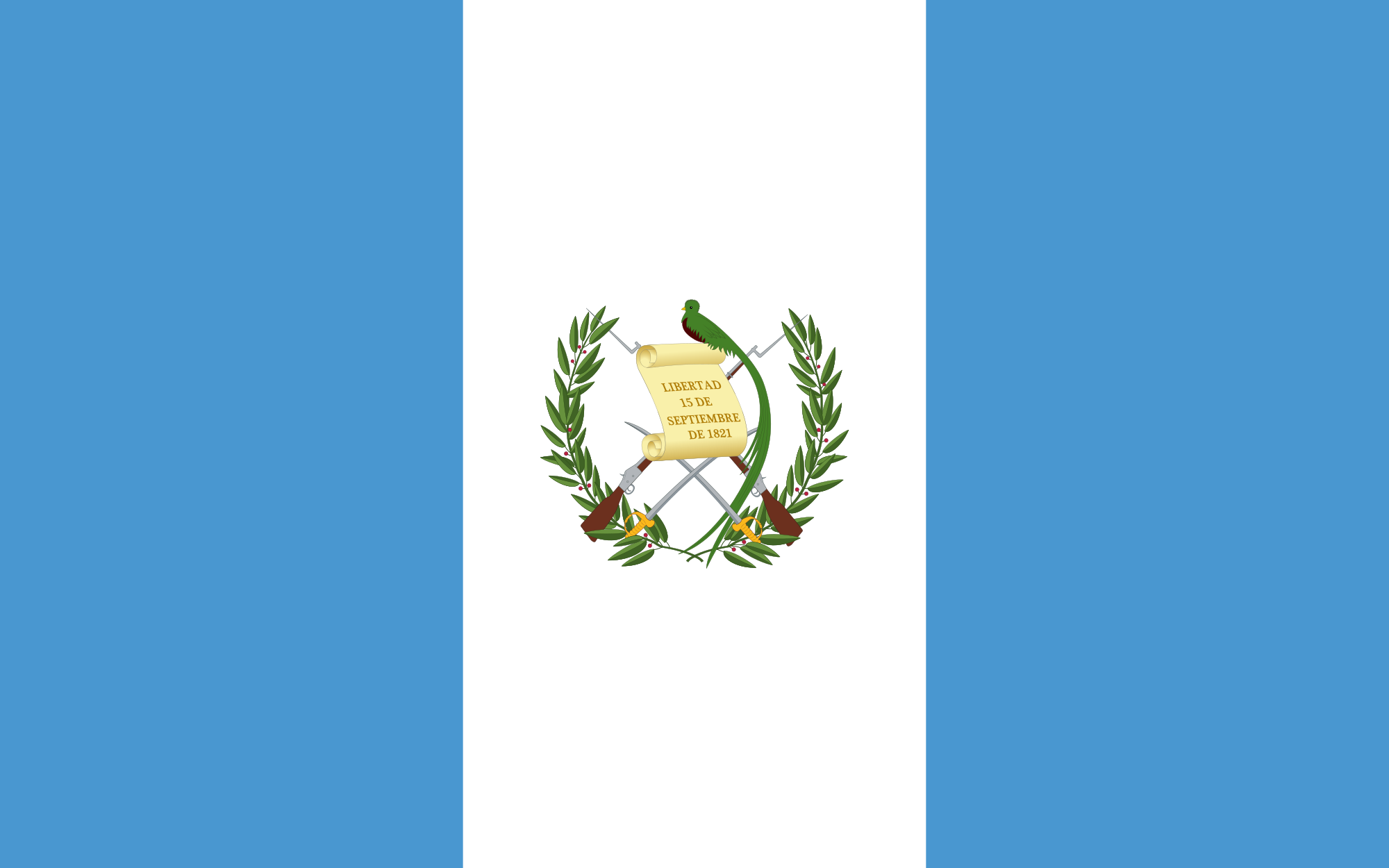
National flag during the Independence Day ceremony (15 September)

Under the First Mexican Empire, Mexico reached its greatest territorial extent, stretching from northern California to the provinces of Central America (excluding Panama, which was then part of Gran Colombia), which had not initially approved becoming part of the Mexican Empire but joined the Empire shortly after their independence. This region was formally a part of the Viceroyalty of New Spain throughout the colonial period, but as a practical matter had been administered separately from Mexico. It was not until 1825 that Guatemala created its own flag.[37]

In 1838, the liberal forces of Honduran leader Francisco Morazán and Guatemalan José Francisco Barrundia invaded Guatemala and reached San Sur, where they executed Chúa Alvarez, father-in-law of Rafael Carrera, then a military commander and later the first president of Guatemala. The liberal forces impaled Alvarez's head on a pike as a warning to followers of the Guatemalan caudillo.[38] Carrera and his wife Petrona – who had come to confront Morazán as soon as they learned of the invasion and were in Mataquescuintla – swore they would never forgive Morazán even in his grave; they felt it impossible to respect anyone who would not avenge family members.[39]

After sending several envoys, whom Carrera would not receive – and especially not Barrundia whom Carrera did not want to murder in cold blood – Morazán began a scorched-earth offensive, destroying villages in his path and stripping them of assets. The Carrera forces had to hide in the mountains.[40] Believing Carrera totally defeated, Morazán and Barrundia marched to Guatemala City, and were welcomed as saviors by state governor Pedro Valenzuela and members of the conservative Aycinena clan [es], who proposed to sponsor one of the liberal battalions, while Valenzuela and Barrundia gave Morazán all the Guatemalan resources needed to solve any financial problem he had.[41] The criollos of both parties celebrated until dawn that they finally had a criollo caudillo like Morazán, who was able to crush the peasant rebellion.[42]

The Federal Republic of Central America (1823–1838) with its capital in Guatemala City

Morazán used the proceeds to support Los Altos and then replaced Valenzuela with Mariano Rivera Paz, a member of the Aycinena clan, although he did not return to that clan any property confiscated in 1829. In revenge, Juan José de Aycinena y Piñol voted to dissolve the Central American Federation in San Salvador a little later, forcing Morazán to return to El Salvador to fight for his federal mandate. Along the way, Morazán increased repression in eastern Guatemala, as punishment for helping Carrera.[43] Knowing that Morazán had gone to El Salvador, Carrera tried to take Salamá with the small force that remained, but was defeated, and lost his brother Laureano in combat. With just a few men left, he managed to escape, badly wounded, to Sanarate.[44] After recovering somewhat, he attacked a detachment in Jutiapa and got a small amount of booty which he gave to the volunteers who accompanied him. He then prepared to attack Petapa near Guatemala City, where he was victorious, although with heavy casualties.[45]

In September of that year, Carrera attempted an assault on the capital of Guatemala, but the liberal general Carlos Salazar Castro defeated him in the fields of Villa Nueva and Carrera had to retreat.[46] After unsuccessfully trying to take Quetzaltenango, Carrera found himself both surrounded and wounded. He had to capitulate to Mexican General Agustín Guzmán, who had been in Quetzaltenango since Vicente Filísola's arrival in 1823. Morazán had the opportunity to shoot Carrera, but did not, because he needed the support of the Guatemalan peasants to counter the attacks of Francisco Ferrera in El Salvador. Instead, Morazán left Carrera in charge of a small fort in Mita, without any weapons. Knowing that Morazán was going to attack El Salvador, Francisco Ferrera gave arms and ammunition to Carrera and convinced him to attack Guatemala City.[47]

Meanwhile, despite insistent advice to definitively crush Carrera and his forces, Salazar tried to negotiate with him diplomatically; he even went as far as to show that he neither feared nor distrusted Carrera by removing the fortifications of the Guatemalan capital, in place since the battle of Villa Nueva.[46] Taking advantage of Salazar's good faith and Ferrera's weapons, Carrera took Guatemala City by surprise on 13 April 1839; Salazar, Mariano Gálvez and Barrundia fled before the arrival of Carrera's militiamen. Salazar, in his nightshirt, vaulted roofs of neighboring houses and sought refuge,[48][49] reaching the border disguised as a peasant.[48][49] With Salazar gone, Carrera reinstated Rivera Paz as head of state.

Between 1838 and 1840 a secessionist movement in the city of Quetzaltenango founded the breakaway state of Los Altos and sought independence from Guatemala. The most important members of the Liberal Party of Guatemala and liberal enemies of the conservative régime moved to Los Altos, leaving their exile in El Salvador.[50] The liberals in Los Altos began severely criticizing the Conservative government of Rivera Paz.[50] Los Altos was the region with the main production and economic activity of the former state of Guatemala. Without Los Altos, conservatives lost many of the resources that had given Guatemala hegemony in Central America.[50] The government of Guatemala tried to reach a peaceful solution, but two years of bloody conflict followed.

On 17 April 1839, Guatemala declared itself independent from the United Provinces of Central America. In 1840, Belgium began to act as an external source of support for Carrera's independence movement, in an effort to exert influence in Central America. The Compagnie belge de colonisation (Belgian Colonization Company), commissioned by Belgian King Leopold I, became the administrator of Santo Tomas de Castilla[51] replacing the failed British Eastern Coast of Central America Commercial and Agricultural Company.[51] Even though the colony eventually crumbled, Belgium continued to support Carrera in the mid-19th century, although Britain continued to be the main business and political partner to Carrera.[52] Rafael Carrera was elected Guatemalan Governor in 1844.

Republic

[edit]

On 21 March 1847, Guatemala declared itself an independent republic and Carrera became its first president.

Proclamation Coin 1847 of the independent Republic of Guatemala

Carrera government (1847–1851)

[edit]

During the first term as president, Carrera brought the country back from extreme conservatism to a traditional moderation; in 1848, the liberals were able to drive him from office, after the country had been in turmoil for several months.[53][54] Carrera resigned of his own free will and left for México. The new liberal regime allied itself with the Aycinena family and swiftly passed a law ordering Carrera's execution if he returned to Guatemalan soil.[53]

The liberal criollos from Quetzaltenango were led by general Agustín Guzmán who occupied the city after Corregidor general Mariano Paredes was called to Guatemala City to take over the presidential office.[55] They declared on 26 August 1848 that Los Altos was an independent state once again. The new state had the support of Doroteo Vasconcelos' régime in El Salvador and the rebel guerrilla army of Vicente and Serapio Cruz, who were sworn enemies of Carrera.[56] The interim government was led by Guzmán himself and had Florencio Molina and the priest Fernando Davila as his Cabinet members.[57] On 5 September 1848, the criollos altenses chose a formal government led by Fernando Antonio Martínez.

In the meantime, Carrera decided to return to Guatemala and did so, entering at Huehuetenango, where he met with native leaders and told them that they must remain united to prevail; the leaders agreed and slowly the segregated native communities started developing a new Indian identity under Carrera's leadership.[58] In the meantime, in the eastern part of Guatemala, the Jalapa region became increasingly dangerous; former president Mariano Rivera Paz and rebel leader Vicente Cruz were both murdered there after trying to take over the Corregidor office in 1849.[58]

When Carrera arrived to Chiantla in Huehuetenango, he received two altenses emissaries who told him that their soldiers were not going to fight his forces because that would lead to a native revolt, much like that of 1840; their only request from Carrera was to keep the natives under control.[58] The altenses did not comply, and led by Guzmán and his forces, they started chasing Carrera; the caudillo hid, helped by his native allies and remained under their protection when the forces of Miguel Garcia Granados arrived from Guatemala City looking for him.[58]

On learning that officer José Víctor Zavala had been appointed as Corregidor in Suchitepéquez, Carrera and his hundred jacalteco bodyguards crossed a dangerous jungle infested with jaguars to meet his former friend. Zavala not only did not capture him, he agreed to serve under his orders, thus sending a strong message to both liberal and conservatives in Guatemala City that they would have to negotiate with Carrera or battle on two fronts – Quetzaltenango and Jalapa.[59] Carrera went back to the Quetzaltenango area, while Zavala remained in Suchitepéquez as a tactical maneuver.[60] Carrera received a visit from a cabinet member of Paredes and told him that he had control of the native population and that he assured Paredes that he would keep them appeased.[59] When the emissary returned to Guatemala City, he told the president everything Carrera said, and added that the native forces were formidable.[61]

Guzmán went to Antigua to meet with another group of Paredes emissaries; they agreed that Los Altos would rejoin Guatemala, and that the latter would help Guzmán defeat his enemy and also build a port on the Pacific Ocean.[61] Guzmán was sure of victory this time, but his plan evaporated when in his absence Carrera and his native allies occupied Quetzaltenango; Carrera appointed Ignacio Yrigoyen as Corregidor and convinced him that he should work with the K'iche', Q'anjobal and Mam leaders to keep the region under control.[62] On his way out, Yrigoyen murmured to a friend: "Now he is the king of the Indians, indeed!"[62]

Guzmán then left for Jalapa, where he struck a deal with the rebels, while Luis Batres Juarros convinced President Paredes to deal with Carrera. Back in Guatemala City within a few months, Carrera was commander-in-chief, backed by military and political support of the Indian communities from the densely populated western highlands.[63] During the first presidency, from 1844 to 1848, he brought the country back from excessive conservatism to a moderate regime, and – with the advice of Juan José de Aycinena y Piñol and Pedro de Aycinena – restored relations with the Church in Rome with a Concordat ratified in 1854.[64]

Second Carrera government (1851–1865)

[edit]
Captain General Rafael Carrera after being appointed president for Life in 1854

After Carrera returned from exile in 1849 the president of El Salvador, Doroteo Vasconcelos, granted asylum to the Guatemalan liberals, who harassed the Guatemalan government in several different ways. José Francisco Barrundia established a liberal newspaper for that specific purpose. Vasconcelos supported a rebel faction named "La Montaña" in eastern Guatemala, providing and distributing money and weapons. By late 1850, Vasconcelos was getting impatient at the slow progress of the war with Guatemala and decided to plan an open attack. Under that circumstance, the Salvadorean head of state started a campaign against the conservative Guatemalan regime, inviting Honduras and Nicaragua to participate in the alliance; only the Honduran government led by Juan Lindo accepted.[53] In 1851 Guatemala defeated an Allied army from Honduras and El Salvador at the Battle of La Arada.

In 1854 Carrera was declared "supreme and perpetual leader of the nation" for life, with the power to choose his successor. He held that position until he died on 14 April 1865. While he pursued some measures to set up a foundation for economic prosperity to please the conservative landowners, military challenges at home and a three-year war with Honduras, El Salvador, and Nicaragua dominated his presidency.

His rivalry with Gerardo Barrios, President of El Salvador, resulted in open war in 1863. At Coatepeque the Guatemalans suffered a severe defeat, which was followed by a truce. Honduras joined with El Salvador, and Nicaragua and Costa Rica with Guatemala. The contest was finally settled in favor of Carrera, who besieged and occupied San Salvador, and dominated Honduras and Nicaragua. He continued to act in concert with the Clerical Party, and tried to maintain friendly relations with European governments. Before he died, Carrera nominated his friend and loyal soldier, Army Marshall Vicente Cerna y Cerna, as his successor.

Vicente Cerna y Cerna regime (1865–1871)

[edit]
Vicente Cerna y Cerna was the president of Guatemala from 1865 to 1871.

Vicente Cerna y Cerna was president of Guatemala from 24 May 1865 to 29 June 1871.[65] Liberal author Alfonso Enrique Barrientos [es],[66] described Marshall Cerna's government in the following manner:[66]

A conservative and archaic government, badly organized and with worse intentions, was in charge of the country, centralizing all powers in Vicente Cerna, ambitious military man, who not happy with the general rank, had promoted himself to the Army Marshall rank, even though that rank did not exist and it does not exist in the Guatemalan military. The Marshall called himself President of the Republic, but in reality he was the foreman of oppressed and savaged people, cowardly enough that they had not dared to tell the dictator to leave threatening him with a revolution.

The State and Church were a single unit, and the conservative régime was strongly allied to the power of regular clergy of the Catholic Church, who were then among the largest landowners in Guatemala. The tight relationship between church and state had been ratified by the Concordat of 1852, which was the law until Cerna was deposed in 1871.[67] Even liberal generals like Serapio Cruz [es] realized that Rafael Carrera's political and military presence made him practically invincible. Thus the generals fought under his command,[53] and waited—for a long time—until Carrera's death before beginning their revolt against the tamer Cerna.[68] During Cerna's presidency, liberal party members were prosecuted and sent into exile; among them, those who started the Liberal Revolution of 1871.[53]

In 1871, the merchants guild, Consulado de Comercio, lost their exclusive court privilege. They had major effects on the economics of the time, and therefore land management. From 1839 to 1871, the Consulado held a consistent monopolistic position in the regime.[69]

Liberal governments (1871–1898)

[edit]

Guatemala's "Liberal Revolution" came in 1871 under the leadership of Justo Rufino Barrios, who worked to modernize the country, improve trade, and introduce new crops and manufacturing. During this era coffee became an important crop for Guatemala.[70] Barrios had ambitions of reuniting Central America and took the country to war in an unsuccessful attempt to attain it, losing his life on the battlefield in 1885 against forces in El Salvador.

Manuel Barillas was president from 16 March 1886 to 15 March 1892. Manuel Barillas was unique among liberal presidents of Guatemala between 1871 and 1944: he handed over power to his successor peacefully. When election time approached, he sent for the three Liberal candidates to ask them what their government plan would be.[71] Happy with what he heard from general Reyna Barrios,[71] Barillas made sure that a huge column of Quetzaltenango and Totonicapán indigenous people came down from the mountains to vote for him. Reyna was elected president.[72]

José María Reina Barrios was president between 1892 and 1898. During Barrios's first term in office, the power of the landowners over the rural peasantry increased. He oversaw the rebuilding of parts of Guatemala City on a grander scale, with wide, Parisian-style avenues. He oversaw Guatemala hosting the first "Exposición Centroamericana" ("Central American Fair") in 1897. During his second term, Barrios printed bonds to fund his ambitious plans, fueling monetary inflation and the rise of popular opposition to his regime.

His administration also worked on improving the roads, installing national and international telegraphs and introducing electricity to Guatemala City. Completing a transoceanic railway was a main objective of his government, with a goal to attract international investors at a time when the Panama Canal was not yet built.

Manuel Estrada Cabrera regime (1898–1920)

[edit]
Manuel Estrada Cabrera governed Guatemala between 1898 and 1920.

After the assassination of general José María Reina Barrios on 8 February 1898, the Guatemalan cabinet called an emergency meeting to appoint a new successor, but declined to invite Estrada Cabrera to the meeting, even though he was the designated successor to the presidency. There are two different descriptions of how Cabrera was able to become president. The first states that Cabrera entered the cabinet meeting "with pistol drawn" to assert his entitlement to the presidency,[73] while the second states that he showed up unarmed to the meeting and demanded the presidency by virtue of being the designated successor.[74]

The first civilian Guatemalan head of state in over 50 years, Estrada Cabrera overcame resistance to his regime by August 1898 and called for elections in September, which he won handily.[75] In 1898 the legislature convened for the election of President Estrada Cabrera, who triumphed thanks to the large number of soldiers and policemen who went to vote in civilian clothes and to the large number of illiterate family that they brought with them to the polls.[76]

One of Estrada Cabrera's most famous and most bitter legacies was allowing the entry of the United Fruit Company (UFCO) into the Guatemalan economic and political arena. As a member of the Liberal Party, he sought to encourage development of the nation's infrastructure of highways, railroads, and sea ports for the sake of expanding the export economy. By the time Estrada Cabrera assumed the presidency there had been repeated efforts to construct a railroad from the major port of Puerto Barrios to the capital, Guatemala City. Owing to lack of funding exacerbated by the collapse of the internal coffee trade, the railway fell 100 kilometres (60 mi) short of its goal. Estrada Cabrera decided, without consulting the legislature or judiciary, that striking a deal with the UFCO was the only way to finish the railway.[77] Cabrera signed a contract with UFCO's Minor Cooper Keith in 1904 that gave the company tax exemptions, land grants, and control of all railroads on the Atlantic side.[78]

In 1906 Estrada faced serious revolts against his rule; the rebels were supported by the governments of some of the other Central American nations, but Estrada succeeded in putting them down. Elections were held by the people against the will of Estrada Cabrera and thus he had the president-elect murdered in retaliation. In 1907 Estrada narrowly survived an assassination attempt when a bomb exploded near his carriage.[79] It has been suggested that the extreme despotic characteristics of Estrada did not emerge until after an attempt on his life in 1907.[80]

Guatemala City was badly damaged in the 1917 Guatemala earthquake.

Estrada Cabrera continued in power until forced to resign after new revolts in 1920. By that time his power had declined drastically and he was reliant upon the loyalty of a few generals. While the United States threatened intervention if he was removed through revolution, a bipartisan coalition came together to remove him from the presidency. He was removed from office after the national assembly charged that he was mentally incompetent, and appointed Carlos Herrera in his place on 8 April 1920.[81]

Guatemala joined with El Salvador and Honduras in the Federation of Central America from 9 September 1921 until 14 January 1922.

Carlos Herrera served as President of Guatemala from 1920 until 1921. He was succeeded by José María Orellana, who served from 1921 until 1926. Lázaro Chacón González then served until 1931.

Jorge Ubico regime (1931–1944)

[edit]
Jorge Ubico in 1931

The Great Depression began in 1929 and badly damaged the Guatemalan economy, causing a rise in unemployment, and leading to unrest among workers and laborers. Afraid of a popular revolt, the Guatemalan landed elite lent their support to Jorge Ubico, who had become well known for "efficiency and cruelty" as a provincial governor. Ubico won the election that followed in 1931, in which he was the only candidate.[82][83] After his election his policies quickly became authoritarian. He replaced the system of debt peonage with a brutally enforced vagrancy law, requiring all men of working age who did not own land to work a minimum of 100 days of hard labor.[84] His government used unpaid Indian labor to build roads and railways. Ubico also froze wages at very low levels, and passed a law allowing land-owners complete immunity from prosecution for any action they took to defend their property,[84] an action described by historians as legalizing murder.[85] He greatly strengthened the police force, turning it into one of the most efficient and ruthless in Latin America.[86] He gave them greater authority to shoot and imprison people suspected of breaking the labor laws. These laws created tremendous resentment against him among agricultural laborers.[87] The government became highly militarized; under his rule, every provincial governor was a general in the army.[88]

Ubico continued his predecessor's policy of making massive concessions to the United Fruit Company, often at a cost to Guatemala. He granted the company 200,000 hectares (490,000 acres) of public land in exchange for a promise to build a port, a promise he later waived.[89] Since its entry into Guatemala, the UFCO had expanded its land-holdings by displacing farmers and converting their farmland to banana plantations. This process accelerated under Ubico's presidency, with the government doing nothing to stop it.[90] The company received import duty and real estate tax exemptions from the government and controlled more land than any other individual or group. It also controlled the sole railroad in the country, the sole facilities capable of producing electricity, and the port facilities at Puerto Barrios on the Atlantic coast.[91]

Ubico saw the United States as an ally against the supposed communist threat of Mexico, and made efforts to gain its support. When the US declared war against Germany in 1941, Ubico acted on American instructions and arrested all people in Guatemala of German descent.[92] He also permitted the US to establish an air base in Guatemala, with the stated aim of protecting the Panama Canal.[93] However, Ubico was an admirer of European fascists, such as Francisco Franco and Benito Mussolini,[94] and considered himself to be "another Napoleon".[95] He occasionally compared himself to Adolf Hitler.[96] He dressed ostentatiously and surrounded himself with statues and paintings of Napoleon, regularly commenting on the similarities between their appearances. He militarized numerous political and social institutions—including the post office, schools, and symphony orchestras—and placed military officers in charge of many government posts.[97][98][99][100][101]

Guatemalan Revolution (1944–1954)

[edit]

On 1 July 1944 Ubico was forced to resign from the presidency in response to a wave of protests and a general strike inspired by brutal labor conditions among plantation workers.[102] His chosen replacement, General Juan Federico Ponce Vaides, was forced out of office on 20 October 1944 by a coup d'état led by Major Francisco Javier Arana and Captain Jacobo Árbenz Guzmán. About 100 people were killed in the coup. The country was then led by a military junta made up of Arana, Árbenz, and Jorge Toriello Garrido.[103]

Guatemala's democratically elected president Jacobo Árbenz was overthrown in a coup planned by the CIA. The United Fruit Company had lobbied the US to overthrow him.

The junta organized Guatemala's first free election, which the philosophically conservative writer and teacher Juan José Arévalo, who wanted to turn the country into a liberal capitalist society won with a majority of 86%.[104] His "Christian Socialist" policies were inspired to a large extent by the US New Deal of President Franklin D. Roosevelt during the Great Depression.[105] Arévalo built new health centers, increased funding for education, and drafted a more liberal labor law,[106] while criminalizing unions in workplaces with less than 500 workers,[107] and cracking down on communists.[108] Although Arévalo was popular among nationalists, he had enemies in the church and the military, and faced at least 25 coup attempts during his presidency.[109]

Arévalo was constitutionally prohibited from contesting the 1950 elections. The largely free and fair elections were won by Jacobo Árbenz Guzmán, Arévalo's defense minister.[110] Árbenz continued the moderate capitalist approach of Arévalo.[111] His most important policy was Decree 900, a sweeping agrarian reform bill passed in 1952.[112][113] Decree 900 transferred uncultivated land to landless peasants.[112] Only 1,710 of the nearly 350,000 private land-holdings were affected by the law,[114] which benefited approximately 500,000 individuals, or one-sixth of the population.[114]

Coup and civil war (1954–1996)

[edit]

Despite their popularity within the country, the reforms of the Guatemalan Revolution were disliked by the United States government, which was predisposed by the Cold War to see it as communist, and by the UFCO, whose hugely profitable business had been affected by the end to brutal labor practices.[108][115] The attitude of the US government was also influenced by a propaganda campaign carried out by the UFCO.[116]

US President Harry Truman authorized Operation PBFortune to topple Árbenz in 1952, with the support of Nicaraguan dictator Anastasio Somoza García,[117] but the operation was aborted when too many details became public.[117][118] Dwight D. Eisenhower was elected US president in 1952, promising to take a harder line against communism; the close links that his staff members John Foster Dulles and Allen Dulles had to the UFCO also predisposed him to act against Árbenz.[119] Eisenhower authorized the CIA to carry out Operation PBSuccess in August 1953. The CIA armed, funded, and trained a force of 480 men led by Carlos Castillo Armas.[120][121] The force invaded Guatemala on 18 June 1954, backed by a heavy campaign of psychological warfare, including bombings of Guatemala City and an anti-Árbenz radio station claiming to be genuine news.[120] The invasion force fared poorly militarily, but the psychological warfare and the possibility of a US invasion intimidated the Guatemalan army, which refused to fight. Árbenz resigned on 27 June.[122][123]

Following negotiations in San Salvador, Carlos Castillo Armas became president on 7 July 1954.[122] Elections were held in early October, from which all political parties were barred from participating. Castillo Armas was the only candidate and won the election with 99% of the vote.[122] Castillo Armas reversed Decree 900 and ruled until 26 July 1957, when he was assassinated by Romeo Vásquez, a member of his personal guard. After the rigged[105] election that followed, General Miguel Ydígoras Fuentes assumed power. He is celebrated for challenging the Mexican president to a gentleman's duel on the bridge on the south border to end a feud on the subject of illegal fishing by Mexican boats on Guatemala's Pacific coast, two of which were sunk by the Guatemalan Air Force. Ydigoras authorized the training of 5,000 anti-Castro Cubans in Guatemala. He also provided airstrips in the region of Petén for what later became the US-sponsored, failed Bay of Pigs Invasion in 1961.

On 13 November 1960, a group of left-wing junior military officers of the Escuela Politécnica national military academy led a failed revolt against Ydigoras' government. The rebels fled to the mountains of eastern Guatemala and neighboring Honduras and formed MR-13 (Movimiento Revolucionario 13 Noviembre). On 6 February 1962, in Bananera, they attacked the offices of the United Fruit Company. The attack sparked sympathetic strikes and university student walkouts throughout the country, to which the government responded with a violent crackdown.[124]

In 1963, Ydígoras, despite the firm opposition of the Kennedy administration, had pledged to allow Arévalo return from exile and run in a free and open election. Arévalo returned on 27 March 1963 to announce his candidacy for the scheduled November presidential elections, however Ydigoras' government was ousted on 31 March 1963, when the Guatemalan Air Force attacked several military bases; the coup was led by his Defense Minister, Colonel Enrique Peralta Azurdia.[125] The new régime intensified its counterinsurgency campaign against the guerrillas that had begun under Ydígoras-Fuentes.[126]

In 1966, Julio César Méndez Montenegro was elected president of Guatemala under the banner "Democratic Opening". Mendez Montenegro was the candidate of the Revolutionary Party, a center-left party that had its origins in the post-Ubico era. During this time, rightist paramilitary organizations, such as the "White Hand" (Mano Blanca), and the Anticommunist Secret Army (Ejército Secreto Anticomunista) were formed. Those groups were the forerunners of the infamous "Death Squads". Military advisers from the United States Army Special Forces (Green Berets) were sent to Guatemala to train Guatemala's armed forces and help transform it into a modern counter-insurgency force, which eventually made it the most sophisticated in Central America.[127]

In 1970, Colonel Carlos Manuel Arana Osorio was elected president. By 1972, members of the guerrilla movement entered the country from Mexico and settled in the Western Highlands. In the disputed election of 1974, General Kjell Laugerud García defeated General Efraín Ríos Montt, a candidate of the Christian Democratic Party, who claimed that he had been cheated out of a victory through fraud.

On 4 February 1976, a major earthquake destroyed several cities and caused more than 25,000 deaths, especially among the poor, whose housing was substandard. The government's failure to respond rapidly to the aftermath of the earthquake and to relieve homelessness gave rise to widespread discontent, which contributed to growing popular unrest. General Romeo Lucas García assumed power in 1978 in a fraudulent election.

The 1970s saw the rise of two new guerrilla organizations, the Guerrilla Army of the Poor (EGP) and the Organization of the People in Arms (ORPA). They began guerrilla attacks that included urban and rural warfare, mainly against the military and some civilian supporters of the army. The army and the paramilitary forces responded with a brutal counter-insurgency campaign that resulted in tens of thousands of civilian deaths.[128] In 1979, US President Jimmy Carter, who had until then been providing public support for the government forces, ordered a ban on all military aid to the Guatemalan Army because of its widespread and systematic abuse of human rights.[105] However, documents have since come to light that suggest that American aid continued throughout the Carter years, through clandestine channels.[129]

Memorial to the victims of the Río Negro massacres

On 31 January 1980, a group of indigenous K'iche' took over the Spanish Embassy to protest army massacres in the countryside. The Guatemalan government armed forces launched an assault that killed almost everyone inside in a fire that consumed the building. The Guatemalan government claimed that the activists set the fire, thus immolating themselves.[130] However the Spanish ambassador survived the fire and disputed this claim, saying that the Guatemalan police intentionally killed almost everyone inside and set the fire to erase traces of their acts. As a result, the government of Spain broke off diplomatic relations with Guatemala.

This government was overthrown in 1982 and General Efraín Ríos Montt was named president of the military junta. He continued the bloody campaign of torture, forced disappearances, and "scorched earth" warfare. The country became a pariah state internationally, although the regime received considerable support from the Reagan Administration,[131][132] and Reagan himself described Ríos Montt as "a man of great personal integrity".[133] Ríos Montt was overthrown by General Óscar Humberto Mejía Victores, who called for an election of a national constituent assembly to write a new constitution, leading to a free election in 1986, won by Vinicio Cerezo Arévalo, the candidate of the Christian Democracy Party.

In 1982, the four guerrilla groups, EGP, ORPA, FAR and PGT, merged and formed the URNG, influenced by the Salvadoran guerrilla FMLN, the Nicaraguan FSLN and Cuba's government, in order to become stronger. As a result of the Army's "scorched earth" tactics in the countryside, more than 45,000 Guatemalans fled across the border to Mexico. The Mexican government placed the refugees in camps in Chiapas and Tabasco.

In 1992, the Nobel Peace Prize was awarded to Rigoberta Menchú for her efforts to bring international attention to the government-sponsored genocide against the indigenous population.[134]

1996–2000

[edit]
An outdoor market in Chichicastenango, 2018

The Guatemalan Civil War ended in 1996 with a peace accord between the guerrillas and the government, negotiated by the United Nations through intense brokerage by nations such as Norway and Spain. Both sides made major concessions. The guerrilla fighters disarmed and received land to work. According to the U.N.-sponsored truth commission (the Commission for Historical Clarification), government forces and state-sponsored, CIA-trained paramilitaries were responsible for over 93% of the human rights violations during the war.[135]

In the last few years,[timeframe?] millions of documents related to crimes committed during the civil war have been found abandoned by the former Guatemalan police. The families of over 45,000 Guatemalan activists who disappeared during the civil war are now reviewing the documents, which have been digitized. This could lead to further legal actions.[136]

During the first ten years of the civil war, the victims of the state-sponsored terror were primarily students, workers, professionals, and opposition figures, but in the last years they were thousands of mostly rural Maya farmers and non-combatants. More than 450 Maya villages were destroyed and over 1 million people became refugees or displaced within Guatemala.

In 1995, the Catholic Archdiocese of Guatemala began the Recovery of Historical Memory (REMHI) project,[137] known in Spanish as "El Proyecto de la Recuperación de la Memoria Histórica", to collect the facts and history of Guatemala's long civil war and confront the truth of those years. On 24 April 1998, REMHI presented the results of its work in the report "Guatemala: Nunca Más!". This report summarized testimony and statements of thousands of witnesses and victims of repression during the Civil War. "The report laid the blame for 80 per cent of the atrocities at the door of the Guatemalan Army and its collaborators within the social and political elite."[138]

Catholic Bishop Juan José Gerardi Conedera worked on the Recovery of Historical Memory Project and two days after he announced the release of its report on victims of the Guatemalan Civil War, "Guatemala: Nunca Más!", in April 1998, Bishop Gerardi was attacked in his garage and beaten to death.[138] In 2001, in the first trial in a civilian court of members of the military in Guatemalan history, three Army officers were convicted of his death and sentenced to 30 years in prison. A priest was convicted as an accomplice and was sentenced to 20 years in prison.[139]

According to the report, Recuperación de la Memoria Histórica (REMHI), some 200,000 people died. More than one million people were forced to flee their homes and hundreds of villages were destroyed. The Historical Clarification Commission attributed more than 93% of all documented violations of human rights to Guatemala's military government, and estimated that Maya Indians accounted for 83% of the victims. It concluded in 1999 that state actions constituted genocide.[140][141]

In some areas such as Baja Verapaz, the Truth Commission found that the Guatemalan state engaged in an intentional policy of genocide against particular ethnic groups in the Civil War.[135] In 1999, US President Bill Clinton said that the US had been wrong to have provided support to the Guatemalan military forces that took part in these brutal civilian killings.[142]

Since 2000

[edit]

Since the peace accords Guatemala has had both economic growth and successive democratic elections, most recently in 2023. In the 2023 elections, Bernardo Arévalo won the presidency. He assumed office in January 2024.

In January 2012 Efrain Rios Montt, the former dictator of Guatemala, appeared in a Guatemalan court on genocide charges. During the hearing, the government presented evidence of over 100 incidents involving at least 1,771 deaths, 1,445 rapes, and the displacement of nearly 30,000 Guatemalans during his 17-month rule from 1982 to 1983. The prosecution wanted him incarcerated because he was viewed as a flight risk but he remained free on bail, under house arrest and guarded by the Guatemalan National Civil Police (PNC). On 10 May 2013, Rios Montt was found guilty and sentenced to 80 years in prison. It marked the first time that a national court had found a former head of state guilty of genocide.[143] The conviction was later overturned, and Montt's trial resumed in January 2015.[144] In August 2015, a Guatemalan court ruled that Rios Montt could stand trial for genocide and crimes against humanity, but that he could not be sentenced due to his age and deteriorating health.[145]

Ex-President Alfonso Portillo was arrested in January 2010 while trying to flee Guatemala. He was acquitted in May 2010, by a panel of judges that threw out some of the evidence and discounted certain witnesses as unreliable.[146] The Guatemalan Attorney-General, Claudia Paz y Paz, called the verdict "a terrible message of injustice", and "a wake up call about the power structures". In its appeal, the International Commission Against Impunity in Guatemala (CICIG), a UN judicial group assisting the Guatemalan government, called the decision's assessment of the meticulously documented evidence against Portillo Cabrera "whimsical" and said the decision's assertion that the president of Guatemala and his ministers had no responsibility for handling public funds ran counter to the constitution and laws of Guatemala.[147] A New York grand jury had indicted Portillo Cabrera in 2009 for embezzlement; following his acquittal on those charges in Guatemala that country's Supreme Court authorized his extradition to the US.[148][149] The Guatemalan judiciary is deeply corrupt and the selection committee for new nominations has been captured by criminal elements.[146]

At the 2012 Summer Olympics in London, Guatemala received its first-ever Olympic medal when Erick Barrondo won the men's 20 kilometer walk.[150]

Pérez Molina government and "La Línea"
[edit]
Guatemala City is the capital and largest city of Guatemala and the most populous urban area in Central America.

Retired general Otto Pérez Molina was elected president in 2011 along with Roxana Baldetti, the first woman ever elected vice-president in Guatemala; they began their term in office on 14 January 2012.[151] But on 16 April 2015, a United Nations (UN) anti-corruption agency report implicated several high-profile politicians including Baldetti's private secretary, Juan Carlos Monzón, and the director of the Guatemalan Internal Revenue Service (SAT).[who?][152] The revelations provoked more public outrage than had been seen since the presidency of General Kjell Eugenio Laugerud García. The International Commission against Impunity in Guatemala (CICIG) worked with the Guatemalan attorney-general to reveal the scam known as "La Línea", following a year-long investigation that included wire taps.

Officials received bribes from importers in exchange for discounted import tariffs,[152] a practice rooted in a long tradition of customs corruption in the country, as a fund-raising tactic of successive military governments for counterinsurgency operations during Guatemala's 36-year-long civil war.[153][154]

A Facebook event using the hashtag #RenunciaYa (Resign Now) invited citizens to go downtown in Guatemala City to ask for Baldetti's resignation. Within days, over 10,000 people RSVPed that they would attend. Organizers made clear that no political party or group was behind the event, and instructed protesters at the event to follow the law. They also urged people to bring water, food and sunblock, but not to cover their faces or wear political party colors.[155] Tens of thousands of people took to the streets of Guatemala City. They protested in front of the presidential palace. Baldetti resigned a few days later. She was forced to remain in Guatemala when the United States revoked her visa. The Guatemalan government arraigned her, since it had enough evidence to suspect her involvement in the "La Linea" scandal. The prominence of US Ambassador Todd Robinson in the Guatemalan political scene once the scandal broke led to the suspicion that the US government was behind the investigation, perhaps because it needed an honest government in Guatemala to counter the presence of China and Russia in the region.[156]

The UN anti-corruption committee has reported on other cases since then, and more than 20 government officials have stepped down. Some were arrested. Two of those cases involved two former presidential private secretaries: Juan de Dios Rodríguez in the Guatemalan Social Service and Gustave Martínez, who was involved in a bribery scandal at the coal power plant company. Jaguar Energy [es] Martínez was also Perez Molina's son-in-law.[157]

Leaders of the political opposition have also been implicated in CICIG investigations: several legislators and members of Libertad Democrática Renovada party (LIDER) were formally accused of bribery-related issues, prompting a large decline in the electoral prospects of its presidential candidate, Manuel Baldizón, who until April had been almost certain to become the next Guatemalan president in the 6 September 2015 presidential elections. Baldizón's popularity steeply declined and he filed accusations with the Organization of American States against CICIG leader Iván Velásquez of international obstruction in Guatemalan internal affairs.[158]

CICIG reported its cases so often on Thursdays that Guatemalans coined the term "CICIG Thursdays". But a Friday press conference brought the crisis to its peak: on Friday 21 August 2015, the CICIG and Attorney General Thelma Aldana presented enough evidence to convince the public that both President Pérez Molina and former vice President Baldetti were the actual leaders of "La Línea". Baldetti was arrested the same day and an impeachment was requested for the president. Several cabinet members resigned and the clamor for the president's resignation grew after Perez Molina defiantly assured the nation in a televised message broadcast on 23 August 2015 that he was not going to resign.[159][160]

Thousands of protesters took to the streets again, this time to demand the increasingly isolated president's resignation. Guatemala's Congress named a commission of five legislators to consider whether to remove the president's immunity from prosecution. The Supreme Court approved. A major day of action kicked off early on 27 August, with marches and roadblocks across the country. Urban groups who had spearheaded regular protests since the scandal broke in April, on the 27th sought to unite with the rural and indigenous organizations who orchestrated the road blocks.

The strike in Guatemala City was full of a diverse and peaceful crowd ranging from the indigenous poor to the well-heeled, and it included many students from public and private universities. Hundreds of schools and businesses closed in support of the protests. The Comité Coordinador de Asociaciones Agrícolas, Comerciales, Industriales y Financieras (CACIF) Guatemala's most powerful business leaders, issued a statement demanding that Pérez Molina step down, and urged Congress to withdraw his immunity from prosecution.[161]

The attorney general's office released its own statement, calling for the president's resignation "to prevent ungovernability that could destabilize the nation". As pressure mounted, the president's former ministers of defense and of the interior, who had been named in the corruption investigation and resigned, abruptly left the country.[162] Pérez Molina meanwhile had been losing support by the day. The private sector called for his resignation; however, he also managed to get support from entrepreneurs that were not affiliated with the private sector chambers: Mario López Estrada – grandchild of former dictator Manuel Estrada Cabrera and the billionaire owner of cellular phone companies – had some of his executives assume the vacated cabinet positions.[163]

The Guatemalan radio station Emisoras Unidas reported exchanging text messages with Perez Molina. Asked whether he planned to resign, he wrote: "I will face whatever is necessary to face, and what the law requires." Some protesters demanded the general election be postponed, both because of the crisis and because it was plagued with accusations of irregularities. Others warned that suspending the vote could lead to an institutional vacuum.[164] However, on 2 September 2015 Pérez Molina resigned, a day after Congress impeached him.[165][166] On 3 September 2015 he was summoned to the Justice Department for his first legal audience for the La Linea corruption case.[167][168]

In June 2016 a United Nations-backed prosecutor described the administration of Pérez Molina as a crime syndicate and outlined another corruption case, this one dubbed Cooperacha (Kick-in). The head of the Social Security Institute and at least five other ministers pooled funds to buy Molina luxurious gifts such as motorboats, spending over $4.7 million in three years.[169]

Jimmy Morales and Alejandro Giammattei in power (2016–2024)
[edit]

In the October 2015 presidential election, former TV comedian Jimmy Morales was elected as the new president of Guatemala after huge anti-corruption demonstrations. He took office in January 2016.[170]

In December 2017, President Morales announced that Guatemala will move its embassy in Israel to Jerusalem, becoming the first nation to follow the United States.[171]

In January 2020, Alejandro Giammattei replaced Jimmy Morales as the president of Guatemala. Giammattei had won the presidential election in August 2019 with his "tough-on-crime" agenda.[172]

In November 2020, large protests and demonstrations occurred in Guatemala against President Alejandro Giammattei and the legislature, because of cutting educational and health spending.[173]

In August 2023, Bernardo Arévalo, the candidate of the center-left Semilla (Seed) Movement, had a landslide victory in Guatemala's presidential election.[174] The outgoing Giammattei administration attempted to control the outcome of the election by cracking down on journalists, anti-corruption investigators and social movements. After Arévalo's victory, the outgoing government attempted to prevent him from taking power. However, indigenous-led protests and international pressure forced the government to accept the election results.[175]

Bernardo Arévalo and Movimiento Semilla (2024–present)
[edit]
Bernardo Arévalo, president of Guatemala

Bernardo Arévalo is the son of the former president Juan José Arévalo, who was the first democratically chosen president of Guatemala. Arévalo was scheduled to assume the role as the 52nd president of Guatemala with leadership of Semilla on 14 January 2024,[176] however, his inauguration would be delayed due to the failure of the event's commission to approve a congressional delegation.[177][178]

Minutes after midnight, he was finally sworn in as Guatemala's president on 15 January.[179] His campaign promotes anti-corruption and economic opportunities for Guatemalans.[180] In his first few days in office, Arévalo reversed a government agreement signed by his predecessor that would have granted security and vehicles to former officials from the Giammattei cabinet for six years.[181][182]

On 8 February 2024, Arévalo and Francisco Jiménez, the Minister of the Interior, announced the creation of the Special Group Against Extortion (GECE), a special force within the National Civil Police (PNC) aimed at combatting violent crime and extortions.[183] The GECE will consist of 400 motorized officers who will patrol different regions of the country in phases. At the request of Arévalo, the United States government donated equipment to support the new task force.[184]

On 23 April 2024, during a public event marking the first 100 days of his government, Arévalo historically fulfilled one of his campaign promises by reducing the presidential salary by 25%.[185] As a result of this reduction, the head of state of Guatemala is no longer the highest-paid president in Latin America. Concurrently, Vice President Herrera also announced a 25% reduction in her salary.[186]

Arévalo's opposition has sought to weaken his administration through prosecutions of Semilla party members[175] and indigenous leaders of the 2023 protests that led to his election being upheld.[187][188]

Geography

[edit]
A map of Guatemala
Köppen climate types of Guatemala
The highlands of Quetzaltenango
A town along the Pan-American Highway within a volcanic crater

Guatemala is mountainous with small patches of desert and sand dunes, all hilly valleys, except for the south coast and the vast northern lowlands of Petén department. Two mountain chains enter Guatemala from west to east, dividing Guatemala into three major regions: the highlands, where the mountains are located; the Pacific coast, south of the mountains and the Petén region, north of the mountains.

All major cities are located in the highlands and Pacific coast regions; by comparison, Petén is sparsely populated. These three regions vary in climate, elevation, and landscape, providing dramatic contrasts between hot, humid tropical lowlands and colder, drier highland peaks. Volcán Tajumulco, at 4,220 metres (13,850 feet), is the highest point in the Central American countries.

The rivers are short and shallow in the Pacific drainage basin, larger and deeper in the Caribbean and the Gulf of Mexico drainage basins. These rivers include the Polochic and Dulce Rivers, which drain into Lake Izabal, the Motagua River, the Sarstún, which forms the boundary with Belize, and the Usumacinta River, which forms the boundary between Petén and Chiapas, Mexico.

Natural disasters

[edit]

Guatemala's location between the Caribbean Sea and Pacific Ocean makes it a target for hurricanes such as Hurricane Mitch in 1998 and Hurricane Stan in October 2005, which killed more than 1,500 people. The damage was not wind-related, but rather due to significant flooding and resulting mudslides. The most recent was Hurricane Eta in November 2020, which was responsible for more than 100 people missing or killed with the final tally still uncertain.[189]

Guatemala's highlands lie along the Motagua Fault, part of the boundary between the Caribbean and North American tectonic plates. This fault has been responsible for several major earthquakes in historic times, including a 7.5 magnitude tremor on 4 February 1976 which killed more than 25,000 people. In addition, the Middle America Trench, a major subduction zone, lies off the Pacific coast. Here, the Cocos Plate is sinking beneath the Caribbean Plate, producing volcanic activity inland of the coast. Guatemala has 37 volcanoes, four of them active: Pacaya, Santiaguito, Fuego, and Tacaná.

Natural disasters have a long history in this geologically active part of the world. For example, two of the three moves of the capital of Guatemala have been due to volcanic mudflows in 1541 and earthquakes in 1773.

Biodiversity

[edit]

Guatemala has 14 ecoregions ranging from mangrove forests to both ocean littorals with five different ecosystems. Guatemala has 252 listed wetlands, including five lakes, 61 lagoons, 100 rivers, and four swamps.[190] Tikal National Park was the first mixed UNESCO World Heritage Site. Guatemala is a country of distinct fauna. It has some 1246 known species. Of these, 6.7% are endemic and 8.1% are threatened. Guatemala is home to at least 8,682 species of vascular plants, of which 13.5% are endemic. 5.4% of Guatemala is protected under IUCN categories I-V.[citation needed]

The Maya Biosphere Reserve in the department of Petén has 2,112,940 ha,[191] making it the second-largest forest in Central America after Bosawas. Guatemala had a 2019 Forest Landscape Integrity Index mean score of 3.85/10, ranking it 138th globally out of 172 countries.[192]

Government and politics

[edit]

Political system

[edit]
The National Palace, former residence of the president, now used for important acts by the executive branch.
The interior of the Congress.

Guatemala is a constitutional democratic republic whereby the President of Guatemala is both head of state and head of government, and of a multi-party system. Executive power is exercised by the government. Legislative power is vested in both the government and the Congress of the Republic. The judiciary is independent of the executive and the legislature.

On 2 September 2015, Otto Pérez Molina resigned as President of Guatemala due to a corruption scandal and was replaced by Alejandro Maldonado until January 2016.[193] Congress appointed former Universidad de San Carlos President Alfonso Fuentes Soria as the new vice president to replace Maldonado.[194] Jimmy Morales subsequently assumed office on 14 January 2016.[170] In January 2020, he was succeeded by Alejandro Giammattei.[172]

César Bernardo Arévalo de León,[195] a Guatemalan diplomat, sociologist, writer, and politician, and a member and co-founder of the Semilla party, is now serving as the 52nd president of Guatemala.

Administrative divisions

[edit]

Guatemala is divided into 22 departments (Spanish: departamentos) and sub-divided into about 335 municipalities (Spanish: municipios).[196] Each department has a governor who is appointed by the central government and is assisted through a development council that includes the mayors of the respective department.

Foreign relations

[edit]

Guatemala has long claimed all or part of the territory of neighboring Belize. Owing to this territorial dispute, Guatemala did not recognize Belize's independence until 6 September 1991,[197] but the dispute is not resolved. Negotiations are currently under way under the auspices of the Organization of American States to conclude it.[198][199]

Military

[edit]

Guatemala has a modest military, with between 15,000 and 20,000 personnel.[200]

In 2017, Guatemala signed the United Nations Treaty on the Prohibition of Nuclear Weapons.[201]

Human rights

[edit]

Killings and death squads have been common in Guatemala since the end of the civil war in 1996. They often had ties to Clandestine Security Apparatuses (Cuerpos Ilegales y Aparatos Clandestinos de Seguridad – CIACS), organizations of current and former members of the military involved in organized crime. They had significant influence, now somewhat lessened,[202] but extrajudicial killings continue.[203] In July 2004, the Inter-American Court condemned the 18 July 1982 massacre of 188 Achi-Maya in Plan de Sanchez, and for the first time in its history, ruled the Guatemalan Army had committed genocide. It was the first ruling by the court against the Guatemalan state for any of the 626 massacres reported in its 1980s scorched-earth campaign.[203] In those massacres, 83 percent of the victims were Maya and 17 percent Ladino.[203]

Extra-Judicial Killings in Guatemala
2010 5,072
2011 279
2012 439
source: Center for Legal Action in Human Rights (CALDH)[202]

In 2008, Guatemala became the first country to officially recognize femicide, the murder of a female because of her sex, as a crime.[204] Guatemala has the third-highest femicide rate in the world, after El Salvador and Jamaica, with around 9.1 murders for every 100,000 women from 2007 to 2012.[204]

Economy

[edit]
Historical GDP per capita development of El Salvador, Guatemala and Honduras
Fields in Quetzaltenango

Guatemala is the largest economy in Central America, with an estimated 2024 GDP (PPP) per capita of US$10,998. However, Guatemala faces many social problems and is one of the poorest countries in Latin America. The income distribution is highly unequal with more than half of the population below the national poverty line and just over 400,000 (3.2%) unemployed. The CIA World Fact Book considers 54.0% of the population of Guatemala to be living in poverty in 2009.[205][206]

In 2010, the Guatemalan economy grew by 3%, recovering gradually from the 2009 crisis, as a result of the falling demands from the United States and other Central American markets and the slowdown in foreign investment in the middle of the Great Recession.[207]

Remittances from Guatemalans living in United States now constitute the largest single source of foreign income (two-thirds of exports and one tenth of GDP).[205]

Some of Guatemala's main exports are fruits, vegetables, flowers, handicrafts, and cloths. It is a leading exporter of cardamom[208] and coffee.[209]

In the face of a rising demand for biofuels, the country is growing and exporting an increasing amount of raw materials for biofuel production, especially sugar cane and palm oil. Critics say that this development leads to higher prices for staple foods like corn, a major ingredient in the Guatemalan diet. As a consequence of the subsidization of US American corn, Guatemala imports nearly half of its corn from the United States that is using 40 percent of its crop harvest for biofuel production.[210] In 2014, the government was considering ways to legalize poppy and marijuana production, hoping to tax production and use tax revenues to fund drug prevention programs and other social projects.[211]

Gross Domestic Product (GDP) in purchasing power parity (PPP) in 2010 was estimated at US$70.15 billion. The service sector is the largest component of GDP at 63%, followed by the industry sector at 23.8% and the agriculture sector at 13.2% (2010 est.). Mines produce gold, silver, zinc, cobalt and nickel.[212] Country's gold production in 2015 is 6 tons.[213] The agricultural sector accounts for about two-fifths of exports, and half of the labor force. Organic coffee, sugar, textiles, fresh vegetables, and bananas are the country's main exports. Inflation was 3.9% in 2010.

The 1996 peace accords that ended the decades-long civil war removed a major obstacle to foreign investment. Tourism has become an increasing source of revenue for Guatemala thanks to the new foreign investment.

In March 2006, Guatemala's congress ratified the Dominican Republic–Central America Free Trade Agreement (DR-CAFTA) between several Central American nations and the US.[214] Guatemala also has free trade agreements with Taiwan and Colombia. Guatemala was ranked 122nd in the Global Innovation Index in 2024.[215]

Tourism

[edit]
The colonial city of Antigua Guatemala, a UNESCO World Heritage Site.

Tourism has become one of the main drivers of the economy, with tourism estimated at $1.8 billion to the economy in 2008. Guatemala receives around two million tourists annually. In recent years, there has been an increase in the number of cruise ships visiting Guatemalan seaports, leading to higher tourist numbers. Tourist destinations include Maya archaeological sites (e.g. Tikal in the Peten, Quiriguá in Izabal, Iximche in Chimaltenango and Guatemala City), natural attractions (e.g. Lake Atitlán and Semuc Champey) and historical sites such as the colonial city of Antigua Guatemala, which is recognized as a UNESCO Cultural Heritage site.

Transport

[edit]

Demographics

[edit]
Tz'utujil men in Santiago Atitlán

Guatemala has a population of 17,608,483 (2021 est).[14][15] With only 885,000 in 1900, this constitutes the fastest population growth in the Western Hemisphere during the 20th century.[216] The Republic of Guatemala's first census was taken in 1778.[217] The census records for 1778, 1880, 1893 and 1921 were used as scrap paper and no longer exist, although their statistical information was preserved.[218] Censuses have not been taken at regular intervals. The 1837 census was discredited at the time; statistician Don Jose de la Valle made a calculation that in 1837 the population of Guatemala was 600,000.[217] The 1940 census was burned.[219][218]

Largest cities

[edit]
 
 
Largest cities or towns in Guatemala
According to the 2018 Census[220]
Rank Name Department Pop.
1 Guatemala City Guatemala 1,221,739
2 Mixco Guatemala 463,019
3 Villa Nueva Guatemala 426,316
4 Cobán Alta Verapaz 212,047
5 Quetzaltenango Quetzaltenango 180,706
6 Jalapa Jalapa 159,840
7 Escuintla Escuintla 156,313
8 San Juan Sacatepéquez Guatemala 155,965
9 Jutiapa Jutiapa 145,880
10 Petapa Guatemala 129,124

Ethnic groups

[edit]
Racial groups in Guatemala (2018 census)[2]
  1. Ladinos (56.0%)
  2. Indigenous (43.4%)
  3. Blacks (0.32%)
  4. Others (0.24%)

Guatemala is populated by a variety of ethnic, cultural, racial, and linguistic groups. According to the 2018 Census conducted by the National Institute of Statistics (INE), 56% of the population is Ladino reflecting mixed indigenous and European heritage.[221] Indigenous Guatemalans are 43.6% of the national population, which is one of the largest percentages in Latin America, behind only Peru and Bolivia. Most indigenous Guatemalans (41.7% of the national population) are of the Maya people, namely K'iche' (11.0% of the total population), Q'eqchi (8.3%), Kaqchikel (7.8%), Mam (5.2%), and "other Maya" (7.6%). 2% of the national population is indigenous non-Maya. 1.8% of the population is Xinca (mesoamerican), and 0.1% of the population is Garifuna (African/Carib mix).[221] "However, indigenous rights activists put the indigenous figure closer to 61 per cent." [222]

Percentage of people who identify as Mayan, by municipality (2018)

White Guatemalans of European descent, also called Criollo, are not differentiated from Ladinos (mixed-race) individuals in the Guatemalan census.[221] Most are descendants of German and Spanish settlers, and others derive from Italians, British, French, Swiss, Belgians, Dutch, Russians and Danes. German settlers are credited with bringing the tradition of Christmas trees to Guatemala.[223]

The population includes about 110,000 Salvadorans.[citation needed] The Garífuna, descended primarily from Black Africans who lived and intermarried with indigenous peoples from St. Vincent, live mainly in Livingston and Puerto Barrios. Afro-Guatemalans and mulattos are descended primarily from banana plantation workers. There are also Asians, mostly of Chinese descent but also mostly Christian Arabs of Lebanese, Palestinian and Syrian descent.[224]

Languages

[edit]
Languages in Guatemala (native speakers)[225]
Languages percent
Spanish
75.9%
Mayan languages
23.7%
Other
0.2%
English
0.1%
None
0.1%

Guatemala's sole official language is Spanish. It is spoken by 93% of the population[226] and is estimated to be the mother tongue of 75.9% of the population.

Twenty-one Mayan languages are spoken, especially in rural areas, as well as two non-Mayan Indigenous languages: Xinca, which is indigenous to the country, and Garifuna, an Arawakan language spoken on the Caribbean coast. According to the Language Law of 2003, these languages are recognized as national languages.[227]

Indigenous integration and bilingual education

[edit]

Throughout the 20th century there have been many developments in the integration of Mayan languages into the Guatemalan society and educational system. Originating from political reasons, these processes have aided the revival of some Mayan languages and advanced bilingual education in the country.

Language map of Guatemala. The "Castilian" areas represent Spanish.

In 1945, in order to overcome "the Indian problem", the Guatemalan government founded The Institute Indigents ta National (NH), the purpose of which was to teach literacy to Mayan children in their mother tongue instead of Spanish, to prepare the ground for later assimilation of the latter. The teaching of literacy in the first language, which received support from the UN, significantly advanced in 1952, when the SIL (Summer Institute of Linguistics), located in Dallas, Texas, partnered with the Guatemalan Ministry of Education; within 2 years, numerous written works in Mayan languages had been printed and published, and vast advancement was done in the translation of the New Testament. Further efforts to integrate the indigenous into the Ladino[228] society were made in the following years, including the invention of a special alphabet to assist Mayan students transition to Spanish, and bilingual education in the Q'eqchi' area. When Spanish became the official language of Guatemala in 1965, the government started several programs, such as the Bilingual Castellanizacion Program and the Radiophonic Schools, to accelerate the move of Mayan students to Spanish. Unintentionally, the efforts to integrate the indigenous population using language, especially the new alphabet, gave institutions tools to use Mayan languages in schools, and while improving Mayan children's learning, they left them unequipped to learn in a solely Spanish environment. So, an additional expansion of bilingual education took place in 1980, when an experimental program in which children were to be instructed in their mother tongue until they are fluent enough in Spanish was created. The program proved successful when the students of the pilot showed higher academic achievements than the ones in the Spanish-only control schools. In 1987, when the pilot was to finish, bilingual education was made official in Guatemala.

Religion

[edit]
The Catedral Metropolitana, Guatemala City

Christianity is very influential in nearly all of Guatemalan society, both in cosmology and social-politic composition. The country, once dominated by the Catholic Church (introduced by the Spanish during the colonial era), is now influenced by a diversity of Christian denominations. The Catholic Church remains the largest Christian church or denomination, albeit declining from 55% of people in 2001 to 47.9% as of 2012.[229] Between 2001 and 2012, the already numerous Protestant population grew from 30% to 38.2%. Those claiming no religious affiliation were down from 12.7% to 11.6%. The remainder, including Mormons, Jews, Muslims, and Buddhists, remained at more than 2% of the population.[230]

Since the 1960s, and particularly since the end of the civil war in the 1980s, Guatemala has experienced rapid growth in Protestantism, especially Evangelical and Pentecostal varieties, owing to heightened missionary activity. Guatemala has been described as the most heavily evangelical nation in Latin America,[231] with multitudes of unregistered churches,[232] matched or exceeded only by Brazil or Honduras.[233] Growth is particularly strong among the ethnic Maya population, with the National Evangelical Presbyterian Church of Guatemala maintaining 11 indigenous-language presbyteries. The Church of Jesus Christ of Latter-day Saints grew from 40,000 members in 1984 to 164,000 in 1998 and continues to expand.[234][235]

A colonial church in San Andrés Xecul

The growth of Eastern Orthodox Church in Guatemala has been especially strong, with hundreds of thousands of converts in the last five years,[236][237][238][better source needed] giving the country the highest proportion of Orthodox adherents in the Western Hemisphere.[citation needed]

Traditional Maya religion persists through the process of inculturation, in which certain practices are incorporated into Catholic ceremonies and worship when they are sympathetic to the meaning of Catholic belief.[239][240] Indigenous religious practices are increasing as a result of the cultural protections established under the peace accords.[citation needed] The government has instituted a policy of providing altars at every Maya ruin to facilitate traditional ceremonies.

Immigration

[edit]

During the colonial era Guatemala received immigrants (settlers) only from Spain. In the mid 19th century and early 20th century Guatemala received waves of immigration from Europe, [clarification needed] primarily from Germany. These immigrants installed coffee and cardamom fincas in Alta Verapaz, Zacapa, Quetzaltenango, Baja Verapaz and Izabal. To a lesser extent people came from Spain, France, Belgium, England, Italy, Sweden, and other European countries.

Many European immigrants to Guatemala were politicians, refugees, and entrepreneurs as well as families looking to settle. Up to 1950 Guatemala was the Central American country that received the most immigrants, behind Costa Rica, and large numbers of immigrants are still received today.[clarification needed] Since the 1890s, there has been immigration from East Asia.[citation needed] Also, beginning with the First World War, the immigrant population is being strengthened by Jewish immigration.[citation needed]

During the second half of the twentieth century, Latin American immigration to Guatemala increased, particularly from Mexico, Cuba, and Argentina, although most of these immigrants stayed only temporarily before proceding to their final destinations in the United States.[citation needed] Currently, the largest groups of immigrants in Guatemala come from neighboring El Salvador and Mexico.

Foreign-born residents in Guatemala Year
Country of origin 2019
 El Salvador 19,704
 Mexico 18,003
 United States 8,871
 Nicaragua 8,787
 Honduras 8,608
 South Korea 1,833
 Spain 1,354
 Costa Rica 1,192
 Colombia 1,186
 Belize 904
Total 80,421
Source:DatosMacro.[241]

Education

[edit]
Library of the University of San Carlos, fourth university founded in the Americas.

Education in Guatemala is for the most part provided publicly, funded, and overseen by the central government. The Ministry of Education is responsible for the formulation, implementation, and supervision of national educational policy and curriculum. Education is divided into a five-tier system which includes primary education, followed by secondary education, and tertiary education, depending on the level of technical training. Education is instructed in Spanish, though a bilingual education in Amerindian languages is available in regions with predominantly indigenous populations.[242] Guatemala has a total of fifteen universities; one public and fourteen private. Established in 1676, Universidad de San Carlos is the oldest post-secondary institution in Guatemala and the fourth oldest in the Americas.[243]

Guatemala spends about 3.2 percent of its GDP on education.[244] However, youth participation has been an ongoing challenge—particularly in rural areas and indigenous communities.[245] Lack of training for rural teachers is one of the key contributors to Guatemala's low literacy rates. Nevertheless, significant strides in education have made literacy rates among the population aged 15 and above increase from 74.5% in 2012 to 83.3% in 2021.[246][247] Organizations such as Child Aid, Pueblo a Pueblo, and Common Hope, which train teachers in communities throughout the Central Highlands region, have also worked to improve educational outcomes for children.

Health

[edit]

Guatemala has among the worst health outcomes in Latin America with some of the highest infant mortality rates, and one of the lowest life expectancies at birth in the region.[248] With about 16,000 doctors for its 16 million people, Guatemala has about half the doctor-citizen ratio recommended by the WHO.[249] Since the end of the Guatemalan Civil War in 1997, the Ministry of Health has extended healthcare access to 54% of the rural population.[250]

Healthcare has received different levels of support from different political administrations who disagree on how best to manage distribution of services – via a private or a public entity – and the scale of financing that should be made available.[250] As of 2013, the Ministry of Health lacked the financial means to monitor or evaluate its programs.[250]

Total healthcare spending, both public and private, has remained constant at between 6.4 and 7.3% of the GDP.[251][252] Per-capita average annual healthcare spending was only $368 in 2012.[252] Guatemalan patients choose between indigenous treatments or Western medicine when they engage with the health system.[253]

In the 2024 Global Hunger Index (GHI), Guatemala ranks 81st out of 127 countries with sufficient data. Guatemala's GHI score is 18.8, which indicates a moderate level of hunger.[254]

Culture

[edit]
Traditional dance of the conquest

Guatemala City is home to many of the nation's libraries and museums, including the National Archives, the National Library, and the Museum of Archeology and Ethnology, which has an extensive collection of Maya artifacts. It also boasts private museums such as the Ixchel Museum of Indigenous Textiles and Clothing and the Museo Popol Vuh, which focuses on Maya archaeology. Both these museums are housed on the Universidad Francisco Marroquín campus. Most of the 329 municipalities in the country have at least a small museum.

Art

[edit]

Guatemala has produced many indigenous artists who follow centuries-old Pre-Columbian traditions. Reflecting Guatemala's colonial and post-colonial history, encounters with multiple global art movements also have produced a wealth of artists who have combined the traditional primitivist or naive aesthetic with European, North American, and other traditions.

The Escuela Nacional de Artes Plásticas "Rafael Rodríguez Padilla" is Guatemala's leading art school, and several leading indigenous artists, also graduates of that school, have work in the permanent collection of the Museo Nacional de Arte Moderno in the capital city. Contemporary Guatemalan artists who have gained reputations outside of Guatemala include Dagoberto Vásquez, Luis Rolando Ixquiac Xicara, Carlos Mérida,[255] Aníbal López, Roberto González Goyri, and Elmar René Rojas.[256]

Literature

[edit]
Human rights activist, author, and Nobel Peace Prize laureate, Rigoberta Menchú.

Cinema

[edit]

The Guatemalan director Jayro Bustamante has gained an international audience with his films focused on Guatemalan contemporary society and politics : Ixcanul in 2015, and Temblores and La Llorona (The Weeping Woman) in 2019.

Media and news

[edit]

Major national newspapers in Guatemala include Prensa Libre, El Periodico and Siglo21.[259][260] Guatemala also has a few major local channels and radio stations, such as one of Guatemala's major radio stations, Emisoras Unidas.

Music

[edit]
Ricardo Arjona, a singer with a long career, his music is well known in Latin America.

Guatemalan music comprises a number of styles and expressions. Guatemalan social change has been empowered by music such as nueva cancion, which blends together histories, present-day issues, and the political values and struggles of common people. The Maya had an intense musical practice, as documented by their iconography.[261][262] Guatemala was also one of the first regions in the New World to be introduced to European music, from 1524 on. Many composers from the Renaissance, baroque, classical, romantic, and contemporary music styles have contributed works of all genres. The marimba, which is like a wooden xylophone,[263] is the national instrument and its music is widely found in Guatemala.[264] It has developed a large repertoire of very attractive pieces that have been popular for more than a century.

The Historia General de Guatemala has published a series of CDs compiling the historical music of Guatemala, in which every style is represented, from the Maya, colonial, independent and republican eras to the present. Many contemporary music groups in Guatemala play Caribbean music, salsa, Garifuna-influenced punta, Latin pop, Mexican regional, and mariachi.

Cuisine

[edit]
Black and red tamales in Guatemala

Many traditional foods in Guatemalan cuisine are based on Mayan cuisine and prominently feature maize, chilies and black beans as key ingredients. Traditional dishes also include a variety of stews including Kak'ik (Kak-ik), which is a tomato-based stew with turkey, pepian, and cocido. Guatemala is also known for its antojitos, which include small tamales called "chuchitos", fried plantains, and tostadas with tomato sauce, guacamole or black beans. Certain foods are also commonly eaten on certain days of the week; for example, a popular custom is to eat paches (a kind of tamale made from potatoes) on Thursday. Certain dishes are also associated with special occasions, such as fiambre for All Saints' Day on 1 November, or tamales and ponche (fruit punch), which are both very common around Christmas.

Sports

[edit]
Estadio Doroteo Guamuch Flores in Guatemala City

Football is the most popular sport in Guatemala and its national team has appeared in 18 editions of the CONCACAF Championship, winning it once, in 1967. However, the team has yet to qualify for the FIFA World Cup. Established in 1919, the National Football Federation of Guatemala organizes the country's national league and its lower-level competitions.[citation needed]

Futsal is the most successful team sport in Guatemala. Its national team won the 2008 CONCACAF Futsal Championship as hosts. It was also the runner-up in 2012 as hosts and won the bronze medal in 2016 and 2024.[citation needed]

Guatemala participated for the first time in the FIFA Futsal World Cup in 2000, as hosts, and has played in every competition from 2008 onwards. It has never passed the first round. It has also participated in every Grand Prix de Futsal since 2009, reaching the semifinals in 2014.[citation needed]

The Guatemalan Olympic Committee was founded in 1947 and recognized by the International Olympic Committee that same year. Guatemala participated in the 1952 Summer Olympics, and in every edition since the 1968 Summer Olympics. It has also appeared in a single Winter Olympics edition, in 1988.[citation needed]

See also

[edit]

Notes

[edit]

References

[edit]

Bibliography

[edit]

Further reading

[edit]
[edit]
Revisions and contributorsEdit on WikipediaRead on Wikipedia
from Grokipedia
Guatemala, officially the Republic of Guatemala, is a country located in , bordered by to the north and west, to the northeast, and to the southeast, the to the south, and the to the east. Its capital and largest city is , which houses about one million residents. With a mid-2025 estimated at 18.7 million, Guatemala is the most populous nation in and ranks as the 70th largest country globally by . The terrain encompasses volcanic highlands, Pacific and Caribbean coastlines, and the Petén lowlands, home to ancient Mayan archaeological sites such as , reflecting its role as a heartland of the pre-Columbian that peaked between 250 and 900 AD. Guatemala gained independence from in 1821 as part of the before joining the short-lived until 1839, after which it established itself as an independent republic marked by cycles of authoritarian rule, economic dependency on agricultural exports like coffee, bananas, and sugar, and persistent inequality. A 36-year from 1960 to between government forces and leftist guerrillas resulted in over 200,000 deaths or disappearances, predominantly among indigenous Maya populations targeted in scorched-earth campaigns by the , leading to international recognition of acts amounting to genocide. The conflict's legacy includes entrenched , weak institutions, and high rates, with much of the in rural areas reliant on informal labor and remittances from migrants abroad. Since the peace accords, Guatemala has maintained a presidential republic system, with serving as president since January 2024, focusing on anti- efforts amid ongoing challenges like , , and migration pressures. Its economy, the largest in by GDP, grows steadily around 4% annually but remains vulnerable to commodity price fluctuations and natural disasters from its 37 volcanoes and hurricane-prone coasts. Guatemala's diverse society features a majority alongside significant indigenous Maya groups comprising up to 40% of residents, preserving languages and traditions amid modernization strains.

Etymology

Origins and historical usage of the name

The name Guatemala derives from the term Cuauhtēmallān, translating to "place of many trees," reflecting the region's dense forests as perceived by Nahua-speaking traders and migrants from central . The word breaks down from cuauhtli (tree or wood) combined with elements denoting abundance and location, a linguistic pattern common in toponyms for verdant areas. This etymology, rooted in pre-colonial Nahua interactions—likely through Aztec merchants or Pipil groups—predates European arrival, though alternative derivations from , such as a Quiché term for "mountain of water," have been proposed but lack broad linguistic support. The term entered Spanish records during the conquest expedition of , who arrived in 1524 with Nahua allies including Tlaxcaltecs, who reportedly applied Quauhtemallan to the highland territories they encountered. These allies, familiar with nomenclature from Mesoamerican trade networks, influenced the naming as Spanish forces subdued Maya kingdoms like the K'iche' and Kaqchikel. By the mid-16th century, Guatemala formalized as the designation for the administrative province under the Audiencia Real, encompassing territories from to , emphasizing its role as a forested in colonial mapping and governance. Following independence from in 1821 and the dissolution of the in 1839, the name persisted for the sovereign state, symbolizing continuity despite political fragmentation; modern usage retains this indigenous-rooted identifier for the Republic of Guatemala, bounded by its tropical landscapes.

History

Pre-Columbian civilizations

The territory of modern Guatemala hosted advanced pre-Columbian societies, primarily the , which emerged from agricultural communities cultivating , beans, and squash around 2000 BCE in the Petén region and surrounding lowlands. Early evidence of settled populations dates to approximately 1200 BCE, marking the transition to complex societies reliant on and trade networks. During the Preclassic period (c. 2000 BCE–250 CE), monumental architecture developed, with the first Maya cities appearing around 750 BCE and featuring large temples by 500 BCE. Key sites include in northern Petén, active from the Middle Preclassic (c. 600 BCE), which boasted enormous pyramids such as La Danta—over 70 meters tall and among the largest structures by volume in —and extensive causeways connecting urban complexes spanning more than 6 square kilometers. These developments reflect hierarchical societies with centralized labor organization, evidenced by massive earthworks and early writing systems. The Classic period (c. 250–900 CE) represented the apex of in Guatemala, characterized by proliferating city-states, sophisticated hieroglyphic writing, and astronomical knowledge. , located in Petén, emerged as a dominant center with a peak population exceeding 50,000 inhabitants, supported by reservoirs, terraced agriculture, and control over trade routes for , , and cacao. Its architectural achievements included stepped pyramids like Temple IV, rising 70 meters, and stelae recording dynastic histories dating back to at least 320 CE. Interactions with highland groups and distant sites like Teotihuacán indicate broader Mesoamerican connectivity, though competition led to warfare and shifting alliances. In the Postclassic period (c. 900–1524 CE), southern lowland centers like experienced depopulation and abandonment, possibly due to , , and prolonged droughts documented in cores from lake beds. Highland Maya polities persisted, with sites such as showing continued ceramic production and militaristic expansions until Spanish contact disrupted these societies. Archaeological data confirm resilient cultural continuity, including ball courts and ritual centers, underscoring adaptive strategies amid regional shifts.

Spanish conquest and colonial rule (1524–1821)

The Spanish conquest of the territories comprising modern Guatemala commenced in 1524 under Pedro de Alvarado, a deputy of Hernán Cortés dispatched from Mexico with approximately 120 horsemen, 400 infantry, and allied indigenous forces exceeding 5,000. Alvarado's expedition targeted the K'iche' Maya kingdom, defeating its forces in February 1524 at the Battle of Quetzaltenango (then Otzoya), where Spanish cavalry and firearms provided decisive advantages over numerically superior Maya warriors armed with obsidian weapons and lacking immunity to Eurasian pathogens introduced via Mexico. Following this victory, Alvarado advanced to Iximche, capital of the allied Kaqchikel Maya, establishing the first permanent Spanish settlement, Santiago de Guatemala, on March 25, 1524; the Kaqchikels soon rebelled due to encomienda labor demands, leading to further campaigns that subdued highland groups by 1526. Conquest extended into the Cuchumatán Mountains and Petén lowlands through the late 1520s and 1530s, involving alliances with subjugated groups against holdouts like the Tz'utujil and Q'eqchi', whose resistances were crushed by combined Spanish-indigenous armies exploiting inter-Maya rivalries and superior metallurgy. Alvarado's governorship, formalized in 1527 as with rights to conquer and settle, integrated Guatemala into New Spain's orbit, though his absences for expeditions to and delayed consolidation until successors like Jorge de Acuña stabilized administration. The indigenous population, estimated in the low millions pre-contact, suffered a 90% decline by mid-century, primarily from epidemics of (arriving circa 1520 via ) and , compounded by warfare fatalities (tens of thousands) and disrupted agriculture, rather than systematic extermination. Colonial governance crystallized with the Audiencia (high court) of Guatemala established on May 13, 1542, granting semi-autonomous judicial and executive authority over , Guatemala proper, , , , and under the Viceroyalty of . The Audiencia's presidents doubled as governors, overseeing a hierarchy of alcaldes mayores and corregidores who enforced tribute and labor via the and systems, allocating indigenous communities to Spanish settlers for fixed quotas of goods and services. A catastrophic destroyed the initial capital at Ciudad Vieja on September 11, 1541, prompting relocation to the Valley of the Ermita as in 1543, which served as the administrative and ecclesiastical hub until 1773. The colonial economy pivoted on extractive agriculture and tribute, with highland Maya compelled to produce , cacao, and dye for export, while Pacific lowlands developed plantations and cattle ranching by the 1600s; silver mining proved marginal compared to Mesoamerican cores. Franciscan and Dominican missions, beginning in the 1540s, facilitated coerced conversions, establishing doctrinas that blended Catholic rites with Maya practices, though periodic revolts—like the 1760s Zaculeu uprising—highlighted ongoing coercion. By the late 1700s, centralized Bourbon intendancies, intensifying fiscal extraction and trade liberalization, which strained creole elites and fueled independence sentiments culminating in 1821; throughout, Guatemala's peripheral status yielded modest European immigration, preserving Maya majorities in rural isolation despite demographic collapses stabilizing at around 300,000 by 1800.

Independence and conservative dominance (1821–1871)

On September 15, 1821, the provinces of , including Guatemala, declared from through the Act of Independence issued by the Provincial Council in , amid the collapse of Spanish colonial authority following the Mexican War of Independence. Initially, these territories acceded to the short-lived Mexican Empire under in 1822, but after his abdication in March 1823, a congress convened in in July 1823 established the (also known as the United Provinces of Central America), comprising Guatemala, , , , and , with a federal constitution adopted in 1824 that emphasized liberal principles such as , abolition of monastic orders, and promotion of . Guatemala, as the most populous and economically dominant province, hosted the federal capital but experienced growing conservative resistance from rural elites, the Catholic clergy, and indigenous communities opposed to liberal reforms that threatened traditional landholding, ecclesiastical privileges, and communal indigenous structures. Tensions escalated into civil conflict between federalist liberals, led by figures like Honduran general , and provincial conservatives, culminating in the rise of José Rafael , an illiterate mestizo caudillo born in 1814 who began as a rural laborer and muleteer. In 1837, Carrera mobilized peasant and indigenous forces in eastern Guatemala against liberal governor Mariano Gálvez's anticlerical policies, including mandatory vaccination campaigns perceived as intrusive and a secular legal code modeled on Anglo-Saxon systems; by 1838, his rebels captured , forcing Gálvez's resignation and installing Carrera as a de facto leader allied with conservative elites like the Aycinena family. Carrera's forces defeated Morazán's liberal army in 1840 at the Battle of Guatemala City, leading to the federation's effective dissolution by 1841, as provinces seceded amid ongoing warfare that caused economic disruption and population displacement estimated in the tens of thousands. Guatemala operated as a from April 17, 1839, with Carrera serving as provisional ; on March 21, 1847, amid another liberal uprising, he assumed the under a new conservative that restored Catholicism as the state religion and emphasized centralized authority. Carrera's presidency from 1844–1848 and 1851–1865, extended to in 1854, entrenched conservative dominance through policies that reinstated church privileges, including a 1852 with the Vatican granting the control over and , while protecting indigenous communal lands and rural patronage networks against liberal encroachment. Economically, his regime prioritized and export of dye, maintaining monopolies on and liquor held by elite families, with limited development confined to basic roads and fortifications; foreign loans from Britain funded campaigns to assert hegemony over neighboring states, such as interventions in [El Salvador](/page/El Salvador) in 1863. Carrera balanced alliances with indigenous groups, granting them exemptions from certain taxes in exchange for loyalty, and urban conservatives, fostering stability after decades of federation-era chaos, though his rule tolerated no opposition and relied on personalist control. Following his death on April 14, 1865, Vicente Cerna y Cerna, a longtime Carrera ally and , assumed the presidency on May 24, 1865, continuing conservative policies with initial administrative continuity but facing mounting liberal discontent over fiscal stagnation and corruption. Cerna's government suppressed dissent through and alliances with the church, yet economic pressures from declining markets and rising debt—reaching over 10 million pesos by 1870—eroded support among merchants and officers, setting the stage for the liberal uprising led by Miguel García Granados and that ousted him on June 29, 1871.

Liberal modernization and authoritarianism (1871–1944)

In 1871, a liberal revolution led by Miguel García Granados and Justo Rufino Barrios overthrew the conservative regime of General Vicente Cerna, marking the end of conservative dominance and the onset of liberal rule aimed at modernization. Barrios assumed the presidency in 1873 and pursued aggressive reforms, including the expropriation of communal and church lands for coffee plantations, which propelled coffee exports from 1% of total exports in 1860 to 92% by 1880. These measures fostered economic growth through export agriculture but relied on coercive labor systems, such as the 1876 Reglamento de Jornaleros, which mandated indigenous communities to supply workers to fincas under debt peonage and vagrancy laws, exacerbating exploitation of the Mayan majority. Barrios's regime emphasized secularization by closing religious schools, expelling , and mandating and registry, while investing in like railroads and ports to facilitate shipment, alongside expanding public to promote positivist ideals. However, these advancements were enforced dictatorially; Barrios eliminated conservative opposition, centralized power, and attempted forceful reunification of , leading to his death in 1885 during a war against and . Successors like José María Reina Barrios continued liberalization until economic crises and his assassination in 1898, after which seized power as interim president and ruled until 1920 through manipulated elections and brutal repression. Estrada Cabrera's 22-year tenure advanced modernization by constructing railroads, introducing electricity to Guatemala City, and granting vast concessions to the , which expanded banana production alongside coffee dominance by foreign, especially German, investors. Yet, his intensified, with suppressing dissent via torture and , while annual "" festivals served as to cultivate a personality cult amid widespread corruption and favoritism toward elites. Indigenous forced labor persisted, tying rural populations to plantations through legal mandates, contributing to social stagnation despite urban infrastructure gains. The 1920s saw instability with short-lived presidents following Cabrera's ouster by a student-led uprising, culminating in economic turmoil from global depression and political fragmentation. In 1931, General assumed power amid elite consensus for stability, ruling until 1944 with a regime blending technocratic efficiency and iron-fisted control, influenced by fascist models. Ubico modernized through extensive road networks exceeding 1,000 kilometers, campaigns reducing disease, and fiscal reforms stabilizing finances, but enforced draconian labor codes reviving colonial-era , compelling up to 300,000 indigenous workers annually to plantations under military oversight. His , arbitrary arrests, and admiration for authoritarian efficiency alienated growing urban and student opposition, leading to protests and his resignation in , paving the way for revolutionary change. Throughout this era, liberal modernization enriched a coffee-export , with production rising to over 20 million trees planted by the , but at the cost of indigenous dispossession and authoritarian consolidation that prioritized elite accumulation over broad development. Foreign capital, particularly German fincas controlling half of production by 1913, underscored economic dependency, while state repression ensured labor compliance amid resistance. This period's causal dynamics—export-led growth necessitating coerced labor—revealed tensions between professed liberal ideals and pragmatic , setting precedents for future conflicts.

Revolutionary reforms, nationalizations, and U.S. intervention (1944–1954)

In October 1944, widespread protests forced the resignation of dictator , ending his 14-year rule and ushering in the , often termed the "Ten Years of Spring." A provisional government under Jacobo Arbenz and suppressed a coup in late 1944, paving the way for free elections in 1945. Juan José Arévalo Bermejo, a university professor advocating "spiritual socialism," won the presidency with 86% of the vote and took office on March 15, 1945. His administration enacted progressive labor laws, including the 1947 Labor Code that guaranteed union rights, an eight-hour workday, and minimum wages; established the Social Security Institute in 1946; and expanded public education, with literacy rates rising from around 20% to higher levels through rural school construction. Despite Arévalo's anti-communist stance—he banned the Guatemalan Labor Party (PGT) in 1947 but later tolerated it—his tolerance of leftist influences drew U.S. concerns amid emerging tensions. Arévalo's term ended in 1951 after surviving over 20 coup attempts, reflecting elite resistance to reforms challenging oligarchic control. Jacobo Arbenz Guzmán, Arévalo's defense minister and a key revolutionary figure, was elected president on November 6, 1950, with 63% of the vote, assuming office on March 15, 1951. Building on prior efforts, Arbenz prioritized agrarian reform to address extreme land inequality, where the 1950 census revealed 2.2% of farms controlled 72% of , much of it idle. On June 17, 1952, passed , the Agrarian Reform Law, mandating expropriation of uncultivated land exceeding 224 acres on estates over 674 acres, compensated at the owner's declared tax value. By 1954, approximately 1.7 million acres from 1,700 estates were redistributed to about 500,000 peasants, roughly one-sixth of the population, fostering smallholder farming but disrupting export agriculture and causing production shortfalls in staples like corn. The reform directly affected the (UFCO), which held 550,000 acres, much uncultivated; Arbenz's government expropriated 234,000 hectares in 1953, offering compensation of $1.185 million based on UFCO's 1950 tax declarations, far below the company's $16 million valuation claim. Additional measures included nationalizing unused railway lines and ports tied to UFCO interests, alongside Arbenz's purchase of Czechoslovak arms in 1954, signaling ties to Soviet bloc suppliers. These actions, coupled with PGT influence in policy—despite Arbenz's non-communist personal ideology—amplified U.S. fears of a hemispheric communist foothold, exacerbated by from UFCO executives with ties to U.S. officials like . In response, the Eisenhower administration authorized CIA Operation PBSUCCESS in August 1953, allocating $2.7 million for psychological warfare, propaganda via radio broadcasts, and support for anti-Arbenz exiles led by Carlos Castillo Armas. The operation involved economic pressure, arms embargoes, and a staged invasion from Honduras on June 18, 1954, with U.S. Ambassador John Peurifoy urging military defection. Facing internal army reluctance and fabricated invasion threats, Arbenz resigned on June 27, 1954, after burning sensitive documents; a junta installed Castillo Armas, who promptly repealed Decree 900 and returned lands to prior owners, including UFCO. Declassified records confirm the coup's success hinged on non-invasive subversion rather than direct combat, marking a pivotal U.S. Cold War intervention prioritizing anti-communism over democratic norms.

Civil conflict and counterinsurgency (1954–1996)

The , spanning 1960 to 1996, originated in the political turmoil following the 1954 CIA-supported coup that ousted President Jacobo Árbenz Guzmán, ushering in a succession of military regimes amid tensions and agrarian unrest. The conflict ignited on November 13, 1960, when leftist junior army officers attempted a revolt against President , failing but splintering into guerrilla factions modeled on the Cuban Revolution and backed by communist ideology. These insurgents, operating primarily in rural eastern and northern highlands, sought to exploit socioeconomic grievances including land inequality and indigenous marginalization to overthrow the , initially gaining footholds in and Izabal provinces through ambushes and kidnappings. Guerrilla organizations proliferated in the 1970s, including the (FAR), formed from 1960s remnants; the Guerrilla Army of the Poor (EGP), emphasizing indigenous recruitment; and the Organization of the People in Arms (ORPA), focusing on Pacific coast operations, which coalesced into the (URNG) in 1982 to coordinate urban sabotage, rural offensives, and forced . The military, numbering around 20,000 troops by the mid-1960s and expanding to over 40,000 by the 1980s, responded with doctrines influenced by U.S. advisors, emphasizing intelligence-led operations, paramilitary "White Hand" death squads for urban repression, and rural "focus and expand" tactics to isolate insurgents by clearing sympathizer populations. Early successes, such as the 1966-1967 campaign under U.S.-trained forces that neutralized FAR leader , relied on aerial mobility and village relocations, but escalating guerrilla infiltration into Mayan highlands from 1974 onward shifted the war to asymmetric rural warfare. The conflict peaked between 1978 and 1983 under Presidents Romeo Lucas García and , as insurgents controlled up to 25% of and coerced indigenous communities for support through executions and , prompting scorched-earth reprisals that destroyed over 400 villages, displaced 1.5 million people, and caused an estimated 100,000-150,000 civilian deaths concentrated in Mayan areas like Quiché and . Ríos Montt's 1982 coup regime intensified operations with "rifles and beans" policies—offering food aid to compliant villagers or death to resisters—while mandating 900,000-man civil defense patrols (PACs) of indigenous men to guard against guerrilla incursions, though these often served as forced labor for military logistics. Massacres, such as the 1982 Dos Erres killings of 251 civilians suspected of harboring rebels, exemplified tactics blending targeted raids with to sever insurgent logistics, reducing guerrilla strength from 3,000-4,000 fighters in 1981 to under 1,000 by 1984. The United Nations-sponsored Commission for Historical Clarification (CEH), established in 1994, documented approximately 200,000 total deaths and 45,000 disappearances, attributing 93% to state forces including , police, and PACs, and 3% to URNG, while classifying 1981-1983 Maya-targeted killings as acts of based on intent to destroy ethnic groups via systematic extermination. This assessment, drawn from 7,000 testimonies and emphasizing structural racism, has faced scrutiny for relying heavily on victim accounts with limited cross-verification against military records or insurgent patterns, potentially understating guerrilla-initiated that provoked reprisals in contested zones. Both sides committed atrocities—URNG through assassinations of 400-500 mayors and landlords, and the state through extrajudicial executions—but the asymmetry favored government control, with insurgent ranks decimated by defections and internal purges by the late . By the early 1990s, URNG attrition from sustained operations and reduced external Soviet-Cuban aid enabled negotiations, culminating in the December 29, 1996, Firm and Lasting Peace Accord in , mediated by the UN, which demobilized 3,000 guerrillas, reduced military size by one-third to 15,000 troops, abolished PACs, and enshrined alongside army subordination to civilian rule. The accords addressed root causes like inequality via commitments to and oversight, though implementation faltered amid ongoing , with only sporadic prosecutions of military officers for war crimes.

Peace accords and democratic consolidation (1996–present)

The Peace Accords, formally known as the Accord for a Firm and Lasting Peace, were signed on December 29, 1996, in by President Álvaro Arzú and representatives of the Unidad Revolucionaria Nacional Guatemalteca (URNG), marking the end of the 36-year that had claimed an estimated 200,000 lives, with over 90% of victims attributed to state forces according to the subsequent Commission for Historical Clarification (CEH). The accords encompassed prior agreements on (1994), ' rights (1995), and socio-economic and agrarian issues (1996), committing to URNG demobilization of 3,000 guerrillas, a 50% reduction in the army's size from 43,000 troops, constitutional reforms for decentralization and , and mechanisms for truth-telling via the CEH and prosecuting war crimes. Implementation was monitored by the Mission for the Verification of Human Rights and of Compliance with the Comprehensive Agreement (MINUGUA), which verified initial ceasefires but reported persistent state failures in resettling displaced persons and addressing impunity. Post-accords proceeded unevenly, with URNG combatants receiving modest reintegration packages averaging $2,500 per person, while downsizing stalled amid resistance from elites, leaving the armed forces at around 15,000 active personnel by 2000 but retaining significant influence over internal affairs. The CEH, established in 1997 and reporting in 1999, documented acts of against Maya Ixil communities during the 1980s scorched-earth campaigns, recommending reparations and prosecutions, yet by 2025, fewer than 10% of recommended cases had advanced to conviction due to judicial interference and amnesty laws shielding perpetrators. Agrarian reforms promised land redistribution to 100,000 families via a National Land Fund of 150,000 hectares, but bureaucratic delays and elite landowner opposition resulted in only 20% fulfillment by 2010, exacerbating where 75% of indigenous households remained landless. Elections under the 1985 constitution continued without interruption, with Arzú (1996–2000) succeeded by Alfonso Portillo (2000–2004), whose administration faced embezzlement charges totaling $100 million from social funds, fleeing to Mexico before trial. Óscar Berger (2004–2008) prioritized economic growth via free trade agreements, achieving 4–6% GDP expansion annually, but homicide rates surged to 50 per 100,000 amid mara gang violence and narcotrafficking, linked to underfunded police forces numbering just 25,000 for a population of 13 million. Álvaro Colom (2008–2012), the first social-democratic president since the accords, expanded conditional cash transfers reaching 2 million beneficiaries, yet extrajudicial killings persisted at 1,000 annually, with impunity rates exceeding 95% for common crimes. Otto Pérez Molina (2012–2015) resigned amid the La Línea customs fraud scandal uncovered by the UN-backed International Commission against Impunity in Guatemala (CICIG), which from 2007 prosecuted over 200 high-level officials for and ties, reducing in select cases from 98% to 70% by 2015. (2015–2020) campaigned on but terminated CICIG in 2019 under U.S. pressure and domestic elite backlash, coinciding with a drop to 17 per 100,000 via iron-fist policing, though extortion rackets affected 70% of small businesses. (2020–2024) faced mismanagement with excess mortality estimates at 50,000 and vaccine procurement scandals, while (2024–present), elected in 2023 with 61% in the runoff on an platform, overcame Public Ministry attempts to annul results and suspend his Semilla party, inaugurating amid protests that highlighted pacts between prosecutors and criminal networks. Despite formal democratic institutions, consolidation remains incomplete, with corruption perception indices ranking Guatemala 150th of 180 nations in 2023, driven by of the and , where 80% of congress members face integrity probes. Violence, though reduced from peaks, claims 4,000 lives yearly, fueled by transnational gangs and unprosecuted wartime networks, prompting migration surges of 200,000 Guatemalans annually to the U.S. . Accords-mandated reforms, such as for 40% indigenous populations, achieved partial gains in literacy to 80% but falter against fiscal constraints limiting public spending to 12% of GDP, underscoring causal links between unaddressed inequality— at 48—and institutional fragility.

Geography

Physical features and regional divisions

Guatemala encompasses a land area of 107,159 square kilometers, with terrain dominated by rugged mountains and highlands that cover roughly two-thirds of the country, creating steep slopes and elevated plateaus conducive to seismic activity and erosion. The southern and western portions feature the Sierra Madre volcanic chain, comprising approximately 37 volcanoes extending parallel to the Pacific coast, where tectonic subduction drives frequent eruptions and ash deposition. Volcán Tajumulco, reaching 4,220 meters, stands as the nation's and Central America's highest peak, its twin summits indicative of polygenetic volcanic origins. Active volcanoes, including Fuego (3,763 meters), Pacaya, and Santiaguito (a dome complex on Santa María), have recorded eruptions as recent as 2023, contributing to fertile soils in adjacent valleys but also posing hazards through lahars and pyroclastic flows. Northwest of the volcanic arc lies the non-volcanic Cuchumatanes massif, a dissected plateau of igneous and metamorphic rocks elevated to over 3,800 meters in places, shaped by uplift and fluvial incision rather than volcanism. The northern Petén region contrasts sharply, forming a vast plain of low relief, averaging 200-500 meters in elevation, riddled with sinkholes, cenotes, and seasonal wetlands that support tropical forests and savannas. This area, spanning about one-third of Guatemala's territory, drains via subterranean channels and rivers like the Usumacinta, which forms part of the international boundary with . Coastal zones are narrow: the Pacific side features a 40-50 kilometer-wide backed by volcanic , while the coast is even slimmer, often less than 10 kilometers, fringed by mangroves and dissected by short, steep rivers. Major rivers, such as the Motagua and Polochic, originate in the highlands and carve eastward toward the , with basins prone to flooding due to heavy seasonal and sediment loads from upstream . Physiographic divisions segment Guatemala into three primary natural regions aligned with tectonic and geomorphic controls: the central-southern highlands, encompassing volcanic highlands and intermontane basins that host most population centers and agriculture; the Pacific lowlands, a tectonically active strip yielding and on volcanic ; and the northern , a sedimentary lowland with minimal relief, historically isolated by surrounding escarpments and now critical for amid ongoing pressures. These divisions influence and , with highland fractures feeding aquifers and lowland facilitating rapid infiltration. Lakes punctuate the landscape, notably Lake Izabal (590 square kilometers), Guatemala's largest, a brackish linked to the Río Dulce and supporting aquatic ecosystems, and , a 130-square-kilometer lake at 1,560 meters elevation, encircled by three stratovolcanoes and exhibiting oligotrophic waters deepened by tectonic subsidence. Administratively, these align loosely with 22 departments, such as overlaying the northern lowlands and departments like Sacatepéquez and Chimaltenango in the highlands, though physical barriers like the Motagua fault zone— a major strike-slip boundary—further delineate subregions by seismic risk and soil types.

Climate, natural hazards, and disaster response

Guatemala's is predominantly tropical, featuring a distinct from to and a rainy season from May to , during which afternoon showers and thunderstorms are common. Average temperatures in lowland regions range from 25°C to 35°C year-round with , while highland areas, including , maintain milder conditions averaging 15–25°C due to . varies regionally: the Pacific slope receives up to 3,000 mm annually from winds, the northern coast experiences year-round rains influenced by , and the central highlands see drier conditions overall. The country's geophysical setting exposes it to frequent natural hazards, including volcanic eruptions, earthquakes, floods, landslides, and tropical storms, stemming from its position on the and convergent plate boundaries. Guatemala contains 37 volcanoes, with active ones such as Fuego, , and Santiaguito producing regular Strombolian explosions, ash plumes rising to 2–3 km, and associated pyroclastic flows; for instance, 's 2021 eruption involved heightened seismic and effusive activity monitored via . Seismic risks are elevated along faults like the Motagua, as demonstrated by the February 4, 1976, magnitude 7.5 that caused over 23,000 deaths, 74,000 injuries, and displaced one million people. Hydrometeorological threats predominate in frequency, with floods occurring most often from 1980–2020, intensified by hurricanes like Mitch in , which triggered landslides and river overflows affecting thousands. Disaster response is overseen by the National Coordinator for Disaster Reduction (CONRED), Guatemala's primary agency for coordinating evacuations, shelter provision, and risk assessments across multi-hazard scenarios. CONRED collaborates with international partners, including USAID for food security and the World Bank, which financed a $430 million in September 2025 to bolster resilience against earthquakes, hurricanes, and extremes. Recent initiatives emphasize early warning systems, such as the 2024 launch of the UN's Early Warnings for All program to achieve multi-hazard coverage by 2027, addressing vulnerabilities exposed in events like Tropical Storm Sara in November 2024. Despite progress, responses to major incidents, including the 1976 earthquake and , have revealed systemic challenges in rapid deployment and rural access, often necessitating supplemental aid from organizations like Global Communities.

Biodiversity, deforestation, and conservation efforts

Guatemala exhibits exceptional , particularly as the Central American nation with the highest number of endemic species, encompassing ecosystems such as tropical rainforests, cloud forests, and dry forests within the Mesoamerican hotspot. The country supports approximately 8,681 vascular species, 13.5% of which are endemic, alongside roughly 250 mammal species (including five felid species: , puma, , , and ), over 600 bird species (such as the ), and more than 200 reptile and amphibian species. Over 13% of its known mammals, birds, reptiles, amphibians, and are endemic, with concentrations in regions like the Sierra de las Minas Biosphere Reserve. Deforestation poses a primary , reducing from about 50% of land area in 1950 to roughly 35% by the 2020s, driven by (notably cattle ranching), , slash-and-burn practices, and , with ancillary contributions from and narcotics trafficking that clears land for clandestine airstrips. From 2001 to 2024, 82% of tree cover loss resulted from drivers, including 638,000 hectares of humid primary forest (35% of total loss), culminating in 121,000 hectares lost in 2024 alone and emitting 53.5 million metric tons of CO₂ equivalent that year. Historical rates reached 1.4% annually during 2000–2010, with Guatemala losing 23% of its since 2000, particularly in the Selva Maya region, where cattle ranching predominates as the causal factor due to land conversion for pasture amid population pressures and weak property rights enforcement. Conservation initiatives center on the National Council for Protected Areas (CONAP), which administers the System of Protected Areas (SIGAP) spanning over 340 sites and approximately 30% of national territory, including biosphere reserves and national parks emphasizing voluntary community involvement and sustainable use. Community concessions, such as those renewed in 2023 for habitats, have curtailed local to 0.4% annually in managed zones, outperforming national trends through incentives like selective logging and . Programs like the Forest Carbon Partnership Facility's REDD+ framework aim to monetize avoided emissions, while partnerships with NGOs target restoration in degraded areas, though efficacy is limited by persistent illegal encroachment, underfunded enforcement (CONAP faces chronic budget shortfalls), and socioeconomic demands favoring short-term land conversion over long-term stewardship. Forest disturbance persists within protected zones, underscoring causal gaps in and security rather than insufficient designation.

Government and Politics

Constitutional framework and institutions

The Political Constitution of the Republic of Guatemala, promulgated on May 31, 1985, and effective from January 14, 1986, establishes the country as a sovereign, unitary, presidential representative with among executive, legislative, and judicial branches. The document, drafted by a National Constituent Assembly amid ongoing , organizes the state to protect the person and family while pursuing the common good, delegating sovereignty to the three branches and emphasizing , though its dogmatic part (Articles 1–139) prioritizes individual liberties subject to legal limits for social or national interests. Reforms in 1993 addressed post-peace accord adjustments, but the core framework remains intact, prohibiting presidential re-election and mandating runoff elections if no candidate secures an absolute majority in the first round. The executive branch is headed by the president, who serves as both and , elected directly by popular vote for a single four-year term alongside a . The president appoints ministers with congressional approval for certain posts and exercises authority over , national defense, and administration, though legislative oversight limits unilateral actions like treaty , which requires congressional consent. The assumes duties in cases of absence or incapacity, and the executive cannot dissolve , ensuring checks against overreach. Legislative power resides in the unicameral Congress of the Republic, comprising 158 deputies elected every four years: 127 via single-member districts and 31 through nationwide. Congress holds authority to enact laws, approve budgets, declare war, and oversee the executive through investigations and , with sessions convening annually from January 15 and extraordinary meetings possible. Deputies enjoy immunity from prosecution during terms except for felonies, and the body elects key officials, including justices from nominated lists. The judiciary operates independently, with the of Justice as the highest ordinary court, consisting of 13 justices elected by to five-year terms from candidates proposed by the Guatemalan , university deans, and appellate judges. A separate , with five magistrates also serving five-year terms, adjudicates constitutional matters, amparos (protective writs), and conflicts between powers, nominated by the president, , , and bar/universities before congressional election. Lower courts include a Court of Appeals and first-instance tribunals, structured into chambers for civil, criminal, and administrative cases, though formal independence coexists with documented executive and legislative influences in appointments.

Executive leadership and political parties

Guatemala operates as a presidential under the 1985 Constitution, which vests executive power in the president, who serves as both and . The president is elected by direct popular vote for a single four-year term, with no immediate reelection permitted; elections employ a requiring an absolute , or the top two candidates proceed to a runoff if no candidate secures over 50% in the first round held every four years. The is elected on the same ticket and assumes presidential duties in cases of absence or incapacity. Executive powers include appointing and removing cabinet ministers, directing , commanding the armed forces as supreme chief, issuing decrees with legislative force under certain conditions, and vetoing bills passed by , subject to override by a two-thirds . The executive also oversees the implementation of laws, national budget execution, and administrative functions through ministries such as the Interior, Defense, and . As of October 2025, de León serves as president, having been inaugurated on , 2024, following his victory in the August 2023 runoff election where he garnered 58% of the vote against of the (UNE) party. Arévalo's administration, aligned with the center-left party, campaigned on combating entrenched corruption and strengthening democratic institutions, though it has encountered persistent legal challenges, including nine ongoing investigations by the Attorney General's Office and prior attempts to suspend Semilla's legal status post-election. , also from Semilla, supports these reform efforts amid opposition from established political and economic elites often described as a "pacto de corruptos" that leverages judicial and prosecutorial influence to maintain impunity. These dynamics reflect broader patterns where executive initiatives against graft provoke backlash from networks implicated in scandals, such as those exposed by the now-defunct International Commission against Impunity in Guatemala (CICIG), which documented ties between politicians, business leaders, and . Guatemala's political landscape features a governed by the 1985 Law on Elections and Political Parties, which allows low entry barriers—requiring minimal signatures and funding disclosures—fostering fragmentation with over a dozen active parties but enabling opportunism and short-lived alliances often tainted by . In the 2023 legislative elections, the 160-seat unicameral resulted in no single holding a majority, underscoring this volatility: VAMOS (associated with former President ) secured 39 seats, UNE obtained 28, Semilla 23, Cabal 18, and smaller parties like Todos and Valor divided the remainder. This dispersion frequently leads to coalitions, but systemic issues persist, including party financing irregularities, vote-buying allegations, and infiltration by corrupt actors who prioritize interests over public , as evidenced by repeated scandals involving and illicit campaign funds. Reformist parties like Semilla, emerging from 2015 anti- protests, represent a counter to traditional groups dominated by oligarchic and military-linked factions, yet face institutional sabotage, highlighting causal links between weak party institutionalization and perpetuated .

Judiciary, rule of law, and systemic corruption

Guatemala's judiciary operates under a constitutional framework that establishes an independent Judicial Power, comprising the of Justice with 13 s elected by for five-year terms, appellate courts, and lower trial courts responsible for administering justice without interference. In practice, however, the system suffers from chronic politicization, with selections influenced by congressional pacts and elite networks, undermining and enabling undue executive and legislative sway over judicial outcomes. The remains weak, as evidenced by Guatemala's 107th ranking out of 142 countries in the World Justice Project's 2024 Rule of Law Index, with an overall score of 0.44, reflecting deficiencies in constraints on government powers, absence of , and . Civil justice is particularly impaired, scoring low on accessibility, affordability, and freedom from discrimination, bribery, and improper influence, while exhibits similar flaws in , effective investigations, and timely corrections. Perceptions of public sector are acute, with a 2024 score of 25 out of 100, placing Guatemala 146th out of 180 countries, a marginal improvement from 23 in 2023 but indicative of entrenched impunity. Systemic corruption permeates the judiciary and Public Ministry, facilitated by opaque nomination processes, vote trading in judicial appointments, and retaliation against actors, including the exile or prosecution of at least 43 judges, prosecutors, and defenders since 2018. María Consuelo Porras, in office since 2018 and reappointed in 2022 despite , has obstructed high-level probes by reassigning or dismissing investigators, shielding allies from accountability in cases involving and abuse of power. The U.S. State Department designated Porras in 2022 for undermining efforts, citing her role in blocking probes into political elites; similar criticisms from sanctions in 2025 highlight her protection of corrupt networks tied to former President . The International Commission against Impunity in Guatemala (CICIG), a UN-backed body active from 2007 to 2019, exposed systemic graft through over 120 cases, prosecuting more than 300 officials including presidents, ministers, and judges, and drove reforms like specialized units and laws. Its 2019 disbandment by President , amid probes into his administration, triggered a backlash: subsequent governments co-opted institutions, expelling prosecutors like Juan Francisco Sandoval in 2021 for pursuing elite . Under President , inaugurated in January 2024 after judicial and prosecutorial attempts to annul his victory, reform pushes face resistance from Porras's office, which issued politically motivated warrants and pursued cases against officials, exacerbating institutional deadlock. Despite CICIG-inspired legal changes, such as 2016 reforms insulating the Public Ministry from executive control, entrenched "pactos de corruptos" perpetuate , with low conviction rates for —fewer than 10% of cases advanced in recent years—stemming from evidentiary tampering and witness intimidation.

Military, police, and internal security apparatus

The Armed Forces of Guatemala comprise the National Army, Navy, and Air Force, unified under the Ministry of National Defense and subordinated to civilian authority per the 1985 Constitution as amended by the 1996 Peace Accords. Active-duty personnel total approximately 20,000, with the Army forming the bulk at around 18,000 troops organized into infantry brigades, special forces, and support units; the Navy maintains about 1,000 sailors focused on coastal patrol; and the Air Force fields roughly 1,000 personnel operating transport and light attack aircraft. Defense expenditures reached $422 million USD in 2023, equivalent to 0.41% of GDP, funding primarily personnel, modest equipment maintenance, and joint operations rather than major procurement. The 1996 Peace Accords explicitly curtailed the military's internal security mandate, reorienting it toward external defense, , and auxiliary public order roles while prohibiting routine policing. In reality, persistent threats from have prompted expanded military involvement, including joint task forces for narcotics , against migration and , and rapid-response deployments for wildfires or civil unrest, as seen in 2024 operations in Petén and provinces. These deployments, often coordinated with U.S. Southern Command exercises like CENTAM Guardian, underscore the military's de facto bridging of institutional gaps in civilian policing, though critics argue this risks remilitarization and risks rooted in the era. The National Civil Police (PNC), created in 1996 to replace militarized and consolidate civilian under the Ministry of Government, handles primary internal security duties including crime investigation, traffic control, and across 22 departmental commands. With forces numbering in the tens of thousands—supplemented by specialized units like anti-gang task forces and prison perimeter guards—the PNC operates amid chronic understaffing relative to Guatemala's 18 million and homicide rate exceeding 15 per 100,000 in recent years. Systemic permeates the institution, evidenced by documented cases of officers facilitating , trafficking, and extrajudicial killings, with at least six PNC members implicated in high-profile murders as of 2009 and ongoing infiltration by groups like MS-13. Efforts to professionalize the PNC include academy expansions and vetting reforms, but implementation lags; the Arévalo administration in 2024 pledged recruitment of up to 12,000 additional officers to bolster capacity against gang violence and narco-influence, though academy constraints and budget shortfalls hinder progress. Coordination between military and police remains ad hoc, with military bases sometimes doubling as de facto security hubs in rural areas, reflecting causal failures in police capacity-building post-accords—high impunity rates (over 90% for homicides) stem from evidentiary weaknesses, judicial interference, and institutional capture rather than mere resource deficits. Private security firms, numbering over 45,000 guards by some estimates, fill voids in urban protection but exacerbate inequality in access to safety.

Foreign policy and international alliances

Guatemala's emphasizes regional , security cooperation, and , with a strong orientation toward the as its primary bilateral partner for trade, migration management, and counternarcotics efforts. Diplomatic relations with the U.S. were established in 1849, and the two nations share membership in organizations such as the and , where they align on priorities including support for against Russian aggression. In 2025, U.S. Secretary of State visited Guatemala, praising its cooperation on deportations and anti-drug operations, amid remittances totaling $21.5 billion in 2024—nearly 20% of GDP—that underscore economic interdependence. Bilateral ties with remain a cornerstone, as Guatemala is the most populous country maintaining formal of the Republic of China since 1933, rejecting ties with the despite 's economic overtures. Under President , who took office in January 2024, Guatemala elevated relations with in June 2025, prompting Chinese condemnation, while provides development aid and imports to sustain the alliance. This stance contrasts with regional peers switching to , reflecting Guatemala's prioritization of ideological alignment over potential PRC investment. A longstanding with persists, with Guatemala claiming over half of 's land—approximately 11,000 km²—based on colonial-era boundaries; the case was submitted to the in 2019, with proceedings ongoing as of 2025 and a ruling pending. Incursions by Guatemalan actors into Belizean territory occurred as recently as September 2025, prompting Belizean military responses and regional condemnation. Multilaterally, Guatemala participates in the (SICA), facilitating free movement via the CA-4 agreement with , , and , and the Dominican Republic-Central America Free Trade Agreement (CAFTA-DR), effective since July 2006, which grants duty-free access for 95% of U.S. agricultural exports and boosts Guatemala's non-traditional exports. It has also signed agreements with , , , , , the , and to diversify markets. As a founding OAS member, Guatemala engages on and , though domestic corruption challenges its credibility in such forums. The supports Guatemalan cooperatives and small enterprises for export competitiveness, emphasizing .

Economy

Guatemala's economy has maintained a consistent annual GDP growth rate averaging 3.5% over the past two decades, reflecting resilience amid regional volatility through adherence to prudent fiscal and monetary policies that prioritize low and . The 2020 interrupted this trend with a contraction of 1.79%, but recovery was swift, achieving 8.03% growth in driven by rebounding domestic demand and external remittances. Growth moderated thereafter to 4.2% in 2022 and 3.53% in 2023, influenced by global disruptions and slower U.S. demand as Guatemala's largest trading partner. In 2024, real GDP expanded by 3.7%, exceeding initial forecasts due to robust private consumption, which constitutes approximately 88% of GDP and is bolstered by steady inflows of remittances equivalent to 19% of GDP, or $21.5 billion. remained subdued at 1.47% as of September 2025, supported by the central bank's effective monetary tightening and favorable prices, while the fiscal deficit narrowed to 1.0% of GDP from 1.3% in 2023 through restrained public spending. Projections for 2025 anticipate 4.0% growth, contingent on sustained flows, , and U.S. economic momentum, though vulnerabilities persist from dependence on external cycles and limited diversification. Key growth drivers include remittances from Guatemalan migrants , which sustain household spending and buffer against domestic shocks, alongside export-oriented and that benefit from proximity to North American markets under the CAFTA-DR agreement. Fiscal discipline has enabled public investment to incrementally support , though structural constraints like informal labor markets and inadequate limit potential output to below regional peers with similar policies. External factors, including U.S. policies and price fluctuations, exert causal influence on growth trajectories, underscoring Guatemala's integration into global supply chains as both an opportunity and risk amplifier.
YearReal GDP Growth (%)
20194.02
2020-1.79
20218.03
20224.2
20233.53
20243.7
This table illustrates post-pandemic stabilization, with sources attributing variance primarily to consumption dynamics rather than impulses.

Primary sectors: agriculture, mining, and exports

remains a of Guatemala's , contributing approximately 10% to GDP and employing about 27% of the as of 2023. The sector's reached 7.48 billion USD in 2023, driven primarily by export-oriented crops such as , , bananas, and , which benefit from Guatemala's volcanic soils and but face vulnerabilities from weather variability and limited . Smallholder farmers, often indigenous, dominate production, yet inefficiencies in and access to credit constrain yields, with alone accounting for a significant share of rural livelihoods despite price fluctuations. The sector, by contrast, plays a marginal role, contributing just 0.8% to GDP and characterized by modest extraction of , silver, , , lead, and oil. Production totaled 714,725 metric tons of minerals in , reflecting regulatory hurdles and community opposition that have stalled larger projects despite untapped reserves of and iron. Exploration potential exists, but environmental concerns and licensing delays limit growth, positioning as underdeveloped relative to agricultural output. Exports from primary sectors underscore Guatemala's reliance on commodities, with agricultural goods like fruits, nuts, , and comprising key categories, alongside minor shipments. In recent , total exports reached significant volumes to the (4.69 billion USD), (1.86 billion USD), and (1.6 billion USD), with primary products forming the bulk amid a surplus driven by proximity to North American markets under CAFTA-DR. This composition exposes the to global price volatility, though diversification efforts into non-traditional crops have modestly bolstered resilience.

Remittances, informal economy, and labor markets

Remittances constitute a vital component of Guatemala's , reaching approximately $21.6 billion in 2024, equivalent to about 19% of GDP. These inflows, predominantly from Guatemalan migrants (accounting for 97% of total remittances), have stabilized at this level following a doubling from 2008 to 2022 and support household consumption, foreign reserves accumulation, and a positive current account balance. They drive , with projections attributing an acceleration to 3.9% in 2025 partly to sustained flows, while also reducing rates by up to 88% for recipient households when included in calculations. The dominates Guatemala's labor landscape, encompassing 70.3% of in 2023 and contributing to structural challenges in formal job creation. Informal workers, often in , street vending, and small-scale services, lack access to social protections, contributing to persistent despite official rates remaining low at 1.7% in 2024. This sector's prevalence—estimated at nearly 80% of total —limits fiscal revenues, hampers growth, and perpetuates vulnerability to economic shocks, as evidenced by its role in constraining broader development prospects. Guatemala's labor markets exhibit low formal participation, particularly among women at 42% in 2024, alongside high rates that fuel remittances but exacerbate domestic shortages and demographic pressures. , while modeled at around 2-3% overall, masks underutilization in informal roles, with migration serving as a primary outlet for surplus labor amid limited domestic opportunities in and services. This emigration-labor-remittance cycle sustains consumption but fosters dependency, as remittances prop up household incomes without addressing root causes like inadequate and infrastructure that hinder formal sector expansion.

Inequality, poverty alleviation, and fiscal policies

Guatemala exhibits one of the highest levels of income inequality in Latin America, with a Gini coefficient of 48.3 in 2014, reflecting persistent disparities driven by ethnic divides, limited access to education, and concentrated land ownership favoring a small elite. More recent estimates place the Gini at approximately 46.7 as of 2019, showing minimal improvement despite economic growth, as inequality remains exacerbated by rural-urban gaps and the dominance of informal labor markets that exclude many from formal wealth accumulation. Indigenous populations, comprising about 40% of the populace, face compounded inequality, with fiscal policies historically failing to redistribute resources effectively due to low public spending on social services. Poverty affects over half of Guatemala's population, with 56% living below the national poverty line in 2023, a slight decline from 59.2% in 2014, yet stagnation persists amid average annual GDP growth of 3.5% over the period, indicating that expansion has not translated into broad-based gains. , measured at $3.00 per day (2021 PPP), hovers around 20-25% nationally but reaches 79% among indigenous groups, underscoring structural barriers like geographic isolation and inadequate that hinder and development. Government efforts at alleviation, such as conditional cash transfers and nutrition programs under the Ministry of Social Development, have shown limited scalability; for instance, expansions during the mitigated a sharper rise from 45.6% to 47% in 2020 but failed to reverse underlying trends, as micro-level interventions in highland regions yield only marginal reductions amid widespread informality. Fiscal policies constrain effective , with revenues comprising just 12% of GDP in 2024—among the lowest in the —limiting expenditures to 14.6% of GDP and perpetuating deficits around 1-2% without building reserves for counter-cyclical measures. The system relies heavily on indirect levies like VAT, which disproportionately burden low-income households, while evasion and weak administration prevent collection from reaching the estimated potential of 20% of GDP, as and informal sectors evade progressive income taxes. Reforms advocated by the IMF, including broadening the base and digitalizing collection, aim to fund social investments, but implementation lags due to political resistance from vested interests, resulting in underfunded programs that address symptoms rather than causal factors like property rights insecurity and educational deficits. Social spending, at under 2% of GDP, inadequately targets inequality's roots, with evaluations of initiatives like projects revealing positive but insufficient impacts on long-term outcomes given fiscal constraints.
Indicator2014 Value2023/Recent ValueSource
National Poverty Rate (%)59.256.0World Bank
48.3~46.7 (2019)World Bank/Global Economy
Tax Revenue (% GDP)~10-1212.0 (2024)IMF

Infrastructure, trade, and tourism development

Guatemala's exhibits persistent deficiencies that elevate logistics costs and constrain economic competitiveness, with road quality deficits particularly acute in rural areas. The network expands by roughly 200 kilometers annually, yet falls short of the government's estimated requirement for over 38,000 kilometers to support adequate connectivity. In 2025, public expenditures exceeded US$2.3 billion on , encompassing highways, rural roads, ports, s, water and sanitation systems, and electrification initiatives. The World Bank financed the rehabilitation of 640 kilometers of rural roads, projected to benefit 5.1 million residents by enhancing access to markets and services. Port modernization efforts, such as at , align with U.S.-backed strategies to bolster regional trade hubs, while planned capital outlays target expansions and amid forecasts of rising fiscal deficits to fund such projects. Despite these investments, Guatemala confronts a US$48.2 billion funding gap by 2030, compounded by low public investment efficiency and systemic bottlenecks in execution. Trade integration, facilitated by Guatemala's 2006 entry into the CAFTA-DR agreement, positions the as its dominant partner, comprising nearly 35 percent of total commerce with a U.S. goods surplus of US$4.7 billion in 2024. Exports reached US$14.57 billion that year, led by bananas (US$1.55 billion), (US$1.08 billion), (US$824 million), and raw sugar (US$756 million), while imports totaled US$32.45 billion, reflecting heavy reliance on foreign goods including fuels and machinery. Primary export destinations encompassed the , , , , , and , with agricultural commodities driving surpluses in select categories despite overall trade imbalances. Infrastructure shortcomings, including underdeveloped ports and roadways, exacerbate trade frictions, though nearshoring prospects and public-private partnerships offer pathways for enhancement. Tourism development has gained momentum, attracting over 3 million international visitors in 2024—a 15 percent rise from 2023—and yielding revenues surpassing US$2 billion, equivalent to about 3 percent of GDP. The sector generated US$1.2 billion in tax revenues in 2023, constituting 10 percent of national collections, with international arrivals bolstered by new air routes from the U.S. and Canada. Domestic tourism accounted for 66 percent of spending in 2024, underscoring internal demand amid promotions of sites like Tikal's Mayan ruins and Lake Atitlán, though persistent infrastructure deficits limit carrying capacity and sustainability. Government and private investments prioritize connectivity improvements and eco-tourism to sustain projected growth, including a compound annual rate exceeding 8 percent through 2030, while addressing vulnerabilities from inadequate roads and ports.

Demographics

Population dynamics and urbanization

Guatemala's population reached an estimated 18,717,804 in 2025, reflecting a growth rate of 1.50 percent annually. This expansion stems primarily from a birth rate of 22.22 per 1,000 population, exceeding the death rate of approximately 4.68 per 1,000, with net migration exerting a downward pressure due to sustained emigration. The total fertility rate stands at 2.3 children per woman, above the replacement level of 2.1, sustaining natural increase despite international outflows. Life expectancy at birth averages 72.9 years, with males at 71 years and females at 75 years, indicative of ongoing improvements in health outcomes tempered by persistent challenges like infant mortality at 16.8 per 1,000 live births. The features a youthful , with a age of 23.4 years, fostering a broad base in the age pyramid that drives demographic momentum. Rural-to-urban significantly influences these dynamics, propelled by limited rural , agricultural pressures including variability, and insecurity in highland regions. This shift contributes to urban outpacing national averages, as migrants seek better economic prospects in cities, though it exacerbates rural depopulation and strains urban . Urbanization has accelerated, with 56.55 percent of the residing in urban areas in 2025, up from 53.1 percent in 2023, at an annual urban growth rate of 2.37 percent. dominates as the primary urban center, its metropolitan area housing over 3 million inhabitants, followed by secondary cities like and Villa Nueva. These trends reflect broader patterns of internal mobility, where seasonal rural-rural agricultural flows coexist with permanent relocation to urban hubs, often linked to and educational deficits in countryside areas. While correlates with enhanced access to services, it also amplifies vulnerabilities such as informal settlements and resource congestion in primate cities.

Ethnic groups, indigenous rights, and social integration

Guatemala's comprises a of Ladinos, defined as persons of mixed European and indigenous ancestry or those culturally assimilated to norms, estimated at 56% according to 2001 data, alongside a substantial indigenous minority of approximately 41.7% Maya, 1.8% Xinca, and smaller groups including of mixed African-indigenous descent at 0.1%. More recent projections for 2023 indicate 43.75% of the self-identifying as indigenous, predominantly from 22 distinct Maya ethnic groups such as K'iche' (11%), Q'eqchi' (8.3%), Kaqchikel (7.8%), and Mam (5.2%), with Xinca and comprising the remainder. These groups are concentrated in rural highland and lowland areas, where they maintain traditional agrarian lifestyles, , and communal governance structures, though has led to some migration to cities like . The indigenous population faced severe repression during the (1960–1996), in which government forces, responding to leftist insurgencies, conducted scorched-earth campaigns primarily targeting Maya communities suspected of guerrilla sympathies, resulting in over 200,000 deaths, with 83% of victims being indigenous according to the United Nations-backed Commission for Historical Clarification (CEH) report released in 1999. The CEH documented 626 massacres, mostly in indigenous areas, and classified certain army actions—such as the destruction of over 400 villages and systematic displacement—as acts of against specific Maya groups like Ixil and Rabinal Achi'. This violence stemmed from causal factors including land inequality, where indigenous peasants held only marginal plots amid elite-controlled estates, fueling insurgent recruitment, and Cold War-era anti-communist doctrines that conflated Maya cultural autonomy with subversion. Post-war, the 1996 Peace Accords included the Agreement on Identity and Rights of Indigenous Peoples, committing to constitutional recognition of multicultural pluralism, , and land restitution, but implementation has lagged due to weak enforcement and opposition from Ladino-dominated institutions. Indigenous rights remain contested, with ongoing disputes over resource extraction on ancestral lands; for instance, Maya Q'eqchi' communities have protested hydroelectric and projects since the , citing violations of under International Labour Organization Convention 169, which Guatemala ratified in 1996. Judicial recognition has advanced selectively, as in the 2013 conviction of former president for against Ixil Maya—later overturned on procedural grounds—but extrajudicial killings and forced evictions persist, exacerbating rates twice as high among indigenous households (around 80% in rural areas) compared to Ladinos. Structural discrimination is evident in and , where Maya individuals face barriers to upward mobility, including linguistic exclusion in Spanish-centric systems, despite legal mandates for intercultural covering only a fraction of indigenous students. Social integration between indigenous and Ladino populations is limited by entrenched ethnic hierarchies, with Ladinos historically dominating urban , , and the , while indigenous groups experience segregation in rural enclaves and informal urban settlements. Economic disparities drive this divide: indigenous rural households derive 80% of income from , versus Ladino access to formal markets, fostering resentment and cultural preservation over assimilation. Efforts at integration, such as indigenous political participation via parties like the Maya-focused , have yielded minimal representation—indigenous candidates held under 10% of congressional seats as of 2023—amid claims of electoral manipulation and voter intimidation. Persistent manifests in everyday interactions, from pricing disparities to media portrayals reinforcing stereotypes of indigenous backwardness, though urban Maya youth increasingly blend traditional attire with modern professions, signaling gradual hybridity without full erasure of ethnic boundaries.

Languages, literacy, and educational attainment

Spanish is the of Guatemala and is spoken by approximately 93% of the as a first or second language. In addition to Spanish, 25 languages hold protected status, including 22 such as K'iche', Q'eqchi', and Kaqchikel, as well as the non-Mayan indigenous languages Xinca and . These indigenous languages are primarily spoken by the Maya , which constitutes about 41% of , though proficiency in Spanish remains essential for economic and administrative participation, often marginalizing monolingual indigenous speakers. The adult rate, defined as the percentage of people aged 15 and above able to read and write a short simple statement, stood at 82.11% in 2024. This rate exhibits a disparity, with 86.9% of males literate compared to 78.5% of females, reflecting persistent gaps in access to , particularly in rural and indigenous communities where rates can fall below 70%. Literacy efforts have improved over time, rising from 71.2% in 2002, driven by expanded primary schooling, though quality remains low, with many graduates unable to apply skills functionally due to inadequate instruction. Guatemala's education system mandates six years of , followed by optional secondary levels, with gross enrollment in primary reaching 103% in recent years, indicating overage students compensating for delays. Secondary enrollment lags at 47.63% gross in 2023, while tertiary stands at 27.28%, highlighting sharp drop-offs after primary due to factors like , child labor, and geographic barriers in rural highlands. Average years of schooling for adults is approximately 5.7 years nationally, but indigenous students average only 2.5 years, underscoring ethnic disparities rooted in limited programs and deficits. Expected years of schooling for children is 9.7, but learning-adjusted years—accounting for quality—are just 6.3, as measured by harmonized test scores, indicating systemic inefficiencies in producing skilled .

Religious composition and cultural influences

Guatemala's population is predominantly Christian, with Roman Catholicism and (mainly Evangelical denominations) forming the core of religious adherence. The U.S. Department of State's 2023 Report on International Religious Freedom estimates that 45 percent of Guatemalans identify as Catholic, down from higher figures in prior decades, while 42 percent follow non-Catholic Christian groups, reflecting rapid Protestant expansion since the . Indigenous Mayan spirituality accounts for a smaller but persistent share, often practiced alongside by the roughly 44 percent of the population that is indigenous, with adherents invoking ancient deities and rituals in rural highlands. Other faiths, including , , and , represent less than 1 percent combined, concentrated in urban areas like . Cultural influences in Guatemala stem from a deep between pre-Hispanic Mayan beliefs and colonial-era Catholicism, particularly among highland Maya groups, where Catholic saints are equated with Mayan gods in rituals and altars. This blending shapes festivals such as (Semana Santa) in and , where indigenous processions feature alfombras (sawdust carpets) depicting biblical scenes intertwined with Mayan motifs, and cofradías (brotherhoods) perform ceremonies honoring both Christ and local spirits. Protestantism's rise, fueled by activity and perceived Catholic institutional shortcomings toward indigenous communities, promotes and has led to reduced in converting areas, emphasizing personal over communal rituals. Mayan influences extend to daily life through nahuales (animal spirit guardians) and costumbristas (traditional priests) who conduct divinations and offerings, coexisting with church sacraments in many villages.

Public health, life expectancy, and migration patterns

Guatemala's system faces significant challenges, including limited access to services, particularly in rural and indigenous areas, where government healthcare expenditure constitutes only about 6.21% of GDP as of 2019, leading to coverage gaps and reliance on under-resourced public facilities. stands at 17.9 deaths per 1,000 live births in 2023, reflecting improvements from 38.8 in 2002 but still elevated compared to regional averages due to factors like and inadequate . Maternal mortality has declined to 94 deaths per 100,000 live births in 2023 from 301 in 2000, yet persists at levels higher than the Central American average, exacerbated by poor and geographic barriers. Common health issues include chronic undernutrition affecting indigenous children, vector-borne diseases such as dengue, and non-communicable conditions like , with use prevalence at 10.4% among adults aged 15 and older in 2023. Life expectancy at birth reached 72.7 years in 2024, up 5.6 years from 2000, though healthy lags at 59.3 years as of 2021, indicating substantial morbidity from preventable causes. This progress stems from expanded vaccinations and basic interventions, but disparities persist: indigenous populations experience lower expectancy due to socioeconomic exclusion and limited service reach, while urban areas benefit from private options unavailable elsewhere. Migration patterns in Guatemala are characterized by high net outflows, with an estimated -8,940 emigrants in 2023, primarily to the , where approximately 1.3 million resided that year. Economic factors drive 77% of intentions to migrate, including job scarcity and low wages, compounded by violence from drug trafficking and gang activity along smuggling routes, which displaces families and prompts emigration at rates one in every 15 migrants. Poor healthcare access and agricultural stressors, such as droughts, further incentivize departure from rural highlands, where indigenous groups face acute and service deficits. Internal migration toward urban centers like offers limited relief, as remittances from abroad—totaling billions annually—sustain households but do not address root institutional failures in security and governance.

Society and Culture

Family structures, gender roles, and social norms

In Guatemala, family structures traditionally emphasize extended networks, particularly among the indigenous Maya population, where multigenerational s incorporating grandparents, parents, and children foster communal support and resource sharing. National household surveys indicate that couples with children constitute approximately 40-50% of households, while three-generation families account for around 30%, reflecting adaptations to economic pressures like and migration rather than a shift to isolated nuclear units. Among Ladino (non-indigenous ) families, structures lean more nuclear, with the father as formal head and mothers central to daily child-rearing, though indigenous families exhibit lower rates of paternal absence and more equitable economic contributions between spouses due to demands. The total fertility rate has declined from 5.44 children per woman in 1990 to 2.31 in 2023, driven by urbanization, improved contraceptive access (satisfying 66.1% of reproductive-age women's needs with modern methods as of 2014), and economic constraints, though rural and indigenous areas maintain higher rates exceeding replacement level. Marriage typically occurs later than in past decades, with the legal minimum age of 18 (exceptions to 16), yet child marriage persists at rates of about 20-30% for girls under 18 in poorer quintiles, correlating with limited education and perpetuating cycles of early childbearing. Divorce remains rare, at roughly 0.2 per 1,000 population—one of the world's lowest—attributable to strong Catholic and evangelical influences that stigmatize dissolution, alongside economic interdependence in low-income households where separation risks destitution. Female-headed households comprise 25% of the total, often resulting from male migration or abandonment rather than deliberate choice. Gender roles adhere to patriarchal norms rooted in , where men are positioned as primary providers and decision-makers, while women handle domestic duties, childcare, and informal economic activities like market vending; this division constrains female labor force participation, yielding a 54% in 2021-2022, the highest in . Indigenous communities display variations, with women often participating more directly in family enterprises such as or farming, fostering relative economic agency despite overarching male . Social norms reinforce family loyalty, elder respect, and heteronormative expectations of and procreation, influenced by predominant Catholicism (around 45-50% of the ) and growing , which prioritize male headship and discourage behaviors like or gender nonconformity. manifests in preferential investment in sons' and higher tolerance for male autonomy, contributing to persistent and health disparities, though urban youth show gradual shifts toward dual-earner models amid remittances and female schooling gains.

Literature, art, and intellectual traditions

Guatemalan literature originates with pre-Columbian Mayan texts, most notably the , a K'iche' Maya manuscript recounting creation myths, hero twins, and genealogies of ruling lineages, transcribed in the early from oral and hieroglyphic sources dating to the postclassic period (circa 900–1550 CE). This work embodies indigenous intellectual traditions emphasizing cyclical time, divine kingship, and human origins tied to agriculture, reflecting a philosophical system where existence hinges on balance between gods, nature, and society, as evidenced in its narratives of cosmic trials and moral order. Mayan art from this era, including stelae carvings at sites like and pottery depicting deities and rituals, served ritual and historical functions, with motifs of serpents, jaguars, and astronomical symbols illustrating a integrating astronomy, , and governance. During the colonial period (1524–1821), indigenous literary expression was curtailed by Spanish suppression of Mayan codices, though surviving chronicles like Francisco Antonio de Fuentes y Guzmán's Historia de Guatemala (late ) chronicled local history from a criollo perspective, blending European with indigenous accounts of and . shifted to religious in churches and convents, featuring wooden altarpieces and paintings of saints by indigenous and artisans trained in guild workshops, often incorporating subtle Mayan symbolic elements like quetzal feathers amid Catholic dogma. Intellectual traditions persisted underground through syncretic practices, but formal philosophy aligned with Thomistic taught at the Universidad de San Carlos, founded in 1676 as the region's first university, focusing on theology and law under Spanish crown oversight. In the 20th century, literature flourished with , who received the in 1967 for works like (1946), a novel critiquing through surrealist prose rooted in Guatemalan folklore and Mayan cosmology, and Hombres de maíz (1949), which allegorizes indigenous resistance to modernization via mythic realism. His oeuvre drew from national traits, including ladino-indigenous tensions, influencing later authors like , known for concise fables such as El dinosaurio (1959), and Rodrigo Rey Rosa, whose postmodern tales explore violence and identity in contemporary settings. Art movements evolved with Carlos Mérida (1891–1984), who pioneered infused with Mayan geometry and colors, as in his murals and paintings from the onward, bridging indigenous motifs with European learned in . Intellectual traditions in modern Guatemala reflect hybrid influences, from pre-Columbian Mayan emphases on relational —where being emerges from interactions among humans, ancestors, and cosmos—to 20th-century positivist and Marxist thought amid political upheavals, as articulated by figures like (president 1945–1951), whose "spiritual socialism" sought ethical governance blending with social reform, countering liberal elitism. himself contributed philosophically, advocating against foreign exploitation in essays and diplomacy. Post-1954 coup, intellectual discourse grappled with legacies, prioritizing empirical critiques of over ideological abstractions, though academic bias toward leftist narratives has skewed some historical interpretations away from verifiable causal factors like economic dependencies.

Music, festivals, and traditional cuisine

Guatemalan music features the as its national instrument, officially recognized by the government in 1978 for embodying through its intricate wooden construction and resonant tones derived from African and indigenous influences. Ensembles typically include four to five marimbas accompanied by string instruments like guitars and requintos, performing genres such as the son guatemalteco, which integrates pre-Columbian rhythms with European string techniques. In eastern regions, communities preserve Afro-Caribbean traditions, including rhythms with drums, turtle shells, and call-and-response vocals, inscribed on UNESCO's Representative List of the Intangible Cultural Heritage of Humanity in 2008 alongside their language and dances. Mayan-derived instruments, such as clay ocarinas, flutes, and rattles, continue in ceremonial contexts, reflecting ancestral practices predating Spanish arrival. Festivals blend Catholic and indigenous elements, with Semana Santa processions in drawing over 1 million participants annually through to , featuring alfombras (sawdust carpets) depicting religious scenes trampled by hooded penitents carrying heavy floats. Independence Day on September 15 involves nationwide parades, , and performances commemorating 1821 separation from , often escalating into student-led torch marches in . Día de Todos los Santos on November 1 centers on cemetery vigils with picnics and giant kites up to 20 meters wide flown in Santiago Sacatepéquez to guide spirits, a practice rooted in Mayan cosmology rather than imported All Saints' customs. Regional events like the Folkloric Festival in July showcase competitions and dances representing Guatemala's 23 Mayan groups. Traditional cuisine relies on as a staple, processed into tortillas and tamales since pre-Columbian times, with over 70% of daily caloric intake from corn-based foods in rural areas. Signature dishes include pepián, a thick of or in toasted seeds, chilies, and spices dating to 19th-century recipes, and kak'ik, a with achiote and consumed during holidays. Jocón features in from tomatillos, cilantro, and , while chiles rellenos involve -stuffed peppers battered and fried in . Black beans, often refried, accompany most meals, with street foods like shucos—hot dogs topped with and —reflecting urban adaptations of indigenous flavors.

Media landscape, censorship risks, and public discourse

Guatemala's media landscape features a mix of privately owned outlets, including newspapers such as Prensa Libre, elPeriódico, and La Hora, alongside television channels like those under the Chapín group and radio stations that maintain broad reach in rural areas. Television and radio dominate due to limited internet access, with high media concentration posing risks of oligopolistic control by a few owners, though no formal barriers exist to establishing new outlets. Digital media is expanding, with 9.11 million social media users in January 2024, representing 50% of the population, facilitating alternative voices but amplifying echo chambers. Press freedom faces severe challenges, with Guatemala ranking 124th out of 180 countries in the 2022 , a decline linked to probes against journalists and institutional . Journalists investigating , abuses, or encounter high risks, including physical ; for instance, community journalist Ismael Alonzo González was shot dead on April 15, 2025, in Santa Fe, prompting calls for probes into journalism-related motives. Another journalist, Bryan Guerra, was murdered, underscoring persistent lethality. The Association of Guatemalan Journalists documented 350 attacks and restrictions from 2020 to June 2022, while the "Break the Fear" network reported 34 incidents from January to July 2024. Censorship risks manifest indirectly through , legal , and rather than overt state controls, exacerbated by corruption-tainted institutions. Prominent cases include the 2022 detention of elPeriódico founder José Rubén Zamora on money-laundering charges widely viewed as retaliation for reporting, with over 800 days in custody by October 2024 despite appeals. Community and indigenous journalists, often covering land disputes or extractive industries, face targeted violence, dispossession-linked threats, and gender-based attacks, leading many to reduce visibility or self-censor. Under President Bernardo Arévalo's administration since January 2024, initial progress against prior regimes' has been undermined by ongoing threats and unresolved cases like Zamora's. Public discourse relies heavily on for mobilization, as seen in the protests against that toppled President Otto Pérez Molina, where platforms unified diverse groups against . However, online spaces also host coordinated far-right campaigns, such as those by Ricardo Méndez Ruiz's Foundation Against Terrorism from 2014 to 2023, targeting critics through thousands of posts amid shifting political contexts. fills gaps ignored by mainstream outlets, amplifying indigenous voices on and environmental harms, yet faces silencing via state and criminal intimidation, fostering zones of silence in marginalized areas. Overall, while enables counter-narratives, pervasive threats constrain open debate, with only 2% of media organizations equipped for robust . Football is the most popular sport in Guatemala, drawing widespread participation and viewership across urban and rural areas. The national team, nicknamed Los Chapines, has competed in 11 CONCACAF Gold Cups, with its best finish a third place in 1996, and achieved regional successes including the and the 2001 UNCAF Nations Cup. In 2025, the team advanced to the Gold Cup semifinals for the first time since 1996, defeating in a , which sparked nationwide celebrations and highlighted the sport's role in galvanizing public enthusiasm. Domestic leagues, such as Liga Nacional, feature clubs like Comunicaciones and Municipal, which command large fan bases and contribute to local rivalries that mirror broader social divisions. Other sports include , which enjoys regional popularity influenced by proximity to and the , , , and , the latter highlighted by the annual Vuelta Ciclistica Internacional a Guatemala, a multi-stage UCI America Tour event held in late that promotes national routes and athletic infrastructure. Guatemala has participated in the Olympics since 1952, earning its first medal—a silver in 20 km race walking by Erick Barrondo—in 2012, followed by a historic gold in women's by Adriana Ruano and a bronze in men's trap by Jean Pierre Brol at the 2024 Games. These achievements, rare for the nation, prompted public receptions for athletes upon return, underscoring sports' capacity to elevate collective morale amid socioeconomic challenges. Sports events reinforce Guatemalan by transcending ethnic and class lines, with fervent support for the soccer team—evident in packed stadiums and fan gatherings—symbolizing resilience and unity under the chapín moniker derived from local colloquialisms. The 2025 redesign of the national football federation's logo incorporated indigenous motifs and imagery to evoke and , aiming to deepen emotional ties to the sport as a vessel for patriotism. Popular entertainment intersects with sports through televised matches and fan rituals, which serve as communal spectacles, while emerging Guatemalan cinema, including films like Ixcanul (2015) exploring indigenous life and La Llorona (2019) addressing historical atrocities, gains traction for portraying unvarnished societal realities, though international blockbusters and telenovelas dominate screen time. These media forms occasionally critique elite influences on identity but prioritize , with soccer broadcasts often outpacing local productions in audience engagement.

Challenges and Controversies

Persistent corruption networks and elite capture

Corruption in Guatemala has persisted as a structural feature since the post-civil , characterized by entrenched networks linking political, economic, and criminal actors that facilitate of state institutions. These networks enable the redirection of public resources toward private gain, undermining democratic governance and perpetuating inequality. According to Transparency International's 2024 , Guatemala scored 25 out of 100, ranking 146th out of 180 countries, reflecting widespread perceptions of graft. manifests in the dominance of a small oligarchic class—often descendants of colonial-era landowners and post-independence elites—who control key sectors like , , and media, using influence to shield illicit activities and block reforms. A pivotal example is the "pact of the corrupt," an informal alliance among politicians, prosecutors, and business leaders exposed in the mid-2010s, which coordinated to manipulate judicial appointments and evade accountability. This pact facilitated phenomena like "," where elites embed loyalists in oversight bodies to protect schemes, as seen in scandals involving customs and public procurement rigging that siphoned billions from infrastructure budgets. The International Commission against Impunity in Guatemala (CICIG), established in 2007 as a UN-backed entity, disrupted these networks by supporting over 120 investigations, implicating more than 1,540 individuals—including presidents, ministers, and tycoons—and securing convictions for around 660 offenders. CICIG's efforts correlated with a net reduction of over 4,500 homicides between 2007 and 2017, as weakened reduced incentives for organized . However, resistance from captured elites led to CICIG's termination in 2019 by President Jimmy Morales, who revoked its mandate amid probes into his own administration, allowing impunity to rebound. Post-dissolution, networks adapted by deploying smear campaigns, legal harassment, and legislative barriers, as evidenced in efforts to dismantle the successor Public Ministry's anti-corruption unit. Under President Alejandro Giammattei (2020–2024), scandals proliferated, including COVID-19 vaccine procurement irregularities and unexplained wealth accumulation among officials, further entrenching elite control. The 2023 election of Bernardo Arévalo, who campaigned on anti-corruption, faced immediate sabotage via judicial maneuvers by entrenched prosecutors, illustrating how networks prioritize self-preservation over public interest. Despite Arévalo's inauguration in January 2024, ongoing elite backlash— including threats to pack courts with allies—highlights the resilience of these structures, which exploit Guatemala's fragmented institutions to maintain dominance. Causal analysis reveals that without dismantling oligarchic veto power over appointments and budgets, incremental reforms fail, as historical patterns from the 1996 peace accords onward demonstrate repeated co-optation of oversight mechanisms.

Organized crime, gang violence, and drug trafficking

Guatemala serves as a primary transit corridor for shipments originating in , particularly and , en route to cartels and ultimately the , with land, air, and maritime pathways facilitating the flow. Drug trafficking organizations exploit the country's porous borders, rural airstrips in regions like Laguna del Tigre, and corruption within local institutions to move multi-ton quantities, generating substantial revenues that fund further criminal expansion. This transit role has entrenched powerful narco-groups, some operating for decades, which collaborate with entities like the while infiltrating politics and security forces. Street gangs, notably Mara Salvatrucha () and Barrio 18, originated from deportations in the 1990s and have since established territorial dominance in urban and peri-urban areas, engaging in of businesses, transportation operators, and civilians as core revenue streams alongside drug-related enforcement. These groups, with estimated memberships numbering in the tens of thousands across (including around 22,000 in Guatemala historically, predominantly Barrio 18), perpetuate cycles of retaliatory violence, including attacks on rivals' funerals and control over neighborhoods through intimidation. Inter-gang rivalries exacerbate homicide rates, which, while declining from a peak of 46 per 100,000 inhabitants in 2009, remained elevated at approximately 17-18 per 100,000 in recent years, with dynamics accounting for a significant portion of killings. Drug trafficking and gang activities intersect through territorial disputes and subcontracted enforcement, where narcos outsource protection rackets and logistics to , amplifying in hotspots like outskirts and the Petén region. Government countermeasures include a 2025 anti-gang law designating and Barrio 18 as terrorist organizations to enhance prosecutorial tools and resources, alongside U.S.-assisted extraditions of key traffickers, such as mayors and DTO leaders charged with conspiracies. However, institutional weaknesses persist, evidenced by a 2025 of 20 gang members from a maximum-security facility, underscoring infiltration and operational gaps despite reforms. These challenges reflect deeper causal factors, including weak and complicity, enabling criminal economies to thrive amid transnational flows.

Debates over human rights enforcement and security measures

Guatemala's persistent security challenges, including elevated homicide rates and the influence of transnational gangs such as and Barrio 18, have fueled debates over the efficacy and implications of aggressive enforcement strategies. In response to these threats, the enacted a on October 21, 2025, classifying major gangs as terrorist organizations and allocating additional resources for their dismantlement, including enhanced intelligence and operational capabilities. Proponents argue such measures are essential given the gangs' control over territories and rackets, which contribute to Guatemala's status among Central America's most violent nations, though empirical data on immediate post-enactment impacts remains preliminary. A central contention involves the 's expanded role in domestic policing, authorized under successive administrations to supplement under-resourced civilian forces amid rising . This deployment, which intensified post-2012 reforms allowing soldiers to conduct patrols and arrests, has correlated with documented instances of excessive force, arbitrary detentions, and cruel treatment, as military training prioritizes combat over protocols. Critics, including reports from the U.S. Department of State, highlight credible evidence of inhuman conditions in detention facilities and threats against defenders, with approximately 9,500 attacks recorded against such advocates in 2023 alone, often linked to their opposition to security operations in indigenous or rural areas. States of exception, invoked in gang-dominated regions like Izabal and since 2022, suspend and other protections to expedite interventions, reducing reported crime in targeted zones but prompting accusations of enabling extrajudicial actions without . While data claims these measures have lowered incidents by enabling rapid deployments, human rights organizations contend they exacerbate , as judicial oversight remains compromised by and elite influence, with conviction rates for security-related abuses hovering below 5% annually. Under President Bernardo Arévalo's administration since 2024, pledges to reform the national civilian police and reduce military reliance have met resistance from entrenched networks, perpetuating tensions between short-term security gains and long-term institutional . These debates underscore a causal tension: weak rule-of-law foundations, rooted in historical dominance and ongoing , necessitate extraordinary measures for public safety, yet such approaches risk entrenching cycles of abuse absent verifiable oversight mechanisms like independent audits of operations. International observers note that while U.S. and UN reports document persistent violations, domestic imperatives—driven by empirical spikes in gang violence post-civil war—prioritize deterrence, though without addressing socioeconomic drivers like and migration pressures, reforms yield limited sustainability.

Migration drivers, diaspora impacts, and border policies

affects 54.8 percent of Guatemala's population as of 2024, serving as a primary driver of alongside limited economic opportunities in rural areas, where agricultural stress from climate variability exacerbates food insecurity. violence and further propel migration, with rates remaining elevated despite declines, as threats from transnational criminal groups target communities in the Northern Triangle region. These factors contribute to a of -1.6 migrants per 1,000 population in 2024, with irregular outflows predominantly directed toward the , where approximately 1.3 million Guatemalan-born individuals resided in 2023. The Guatemalan , concentrated , exerts significant economic influence through remittances, which reached $21.5 billion in 2024—equivalent to nearly 20 percent of GDP—and supported alleviation while driving projected GDP growth to 3.9 percent in 2025. These inflows have more than doubled since 2019, funding household consumption and small-scale investments but fostering dependency that may undermine incentives for domestic structural reforms, such as improving and job creation. Socially, the diaspora sustains cultural ties through return migration and transnational networks, yet it also results in separations, vulnerability to unaccompanied migration, and brain drain of skilled labor from Guatemala. Guatemala maintains border policies emphasizing cooperation with the and to curb irregular migration, including joint initiatives announced in February 2024 to address root causes like violence and economic disparity through enhanced enforcement and . As a signatory to the U.S.-Guatemala Safe Third Country Agreement, it processes asylum claims for transit migrants, though implementation faces challenges from high volumes—over 100,000 people traversed Guatemala between April and September 2023—and internal by criminal elements. Domestic measures include checkpoints and anti-trafficking operations, bolstered by U.S. support in 2024 for border infrastructure, yet these have intensified dangers for migrants, including gender-based violence and deportations exceeding 23,000 returns from the U.S. by mid-2020, with trends persisting amid 2024 crackdowns.

References

Add your contribution
Related Hubs
Contribute something
User Avatar
No comments yet.