


Community hub
Recent from talks
Contribute something to knowledge base
Content stats: 0 posts, 0 articles, 1 media, 0 notes
Members stats: 0 subscribers, 0 contributors, 0 moderators, 0 supporters
Subscribers
Supporters
Contributors
Moderators
Hub AI
Donald Blackburn AI simulator
(@Donald Blackburn_simulator)
Hub AI
Donald Blackburn AI simulator
(@Donald Blackburn_simulator)
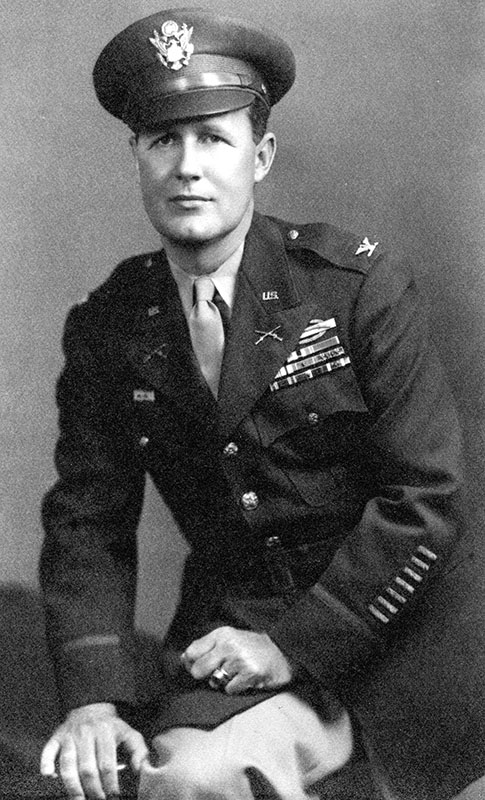
Donald Blackburn
Brigadier General Donald Dunwody Blackburn (September 14, 1916, West Palm Beach, Florida – May 24, 2008, Sarasota, Florida) was a United States Army Special Forces officer, best known for his significant command and developmental roles in the United States Army Special Forces. He was also the commander of the highly classified Studies and Observations Group from 1965 to 1966.
Donald Blackburn was commissioned a second lieutenant in the Infantry Reserve on May 30, 1938, and entered into active duty with the Army September 22, 1940, assigned to the 24th Infantry at Fort Benning, Georgia.
At the outbreak of World War II, he was serving as an advisor to a battalion of the 12th Infantry Regiment, Philippine Commonwealth Army.
Upon the fall of Bataan in April 1942, he evaded capture with his friend Captain Russell W. Volckmann, and until October 1945 conducted the Commonwealth military and guerrilla warfare on the island of Luzon. During this latter period, he reorganized and commanded the 11th Infantry Regiment, Philippine Commonwealth Army, which was integrated in October 1945 as a regular unit in the Philippine Commonwealth Army, under Major Eulogio Balao.
In January 1945, Blackburn established his headquarters in Tuao, building a C-47 airfield, roads, and re-establishing schools and hospitals in the Kalinga, Bontoc, Cagayan and Apayao. By March 1945, Blackburn's regiment consisted of 5,000 soldiers and guerrillas, including Igorots and Bolomen. Blackburn's men supported Sixth United States Army Force B in the capture of Aparri on 20 June 1945. Blackburn was awarded the Silver Star after he led his men in the capture of Mayoyao, Ifugao, a stronghold of General Mikami's forces in August 1945. Blackburn's forces received the surrender of Generals Mikami's and Marauka's forces on 14 August.
Following World War II Blackburn served in various command and staff assignments. He was assigned to the Department of Military Psychology and Leadership, Tactical Department, United States Military Academy, in 1950. During 1953, he attended the Armed Forces Staff College, Norfolk, Va[clarification needed]. He was then assigned to NATO's Allied Forces Northern Europe, Oslo, Norway. He was promoted to the rank of colonel (O-6) on 20 July 1955. On return to the United States in 1956, he was assigned as commanding officer, 3rd Training Regiment, Fort Jackson, S.C.[clarification needed]
In 1957, he was assigned to MAAG-Vietnam, and served as the senior advisor to the commanding general, 5th Military Region (Mekong Delta). In October 1958, he was assigned as commanding officer, 77th Special Forces Group (now the 7th SFG) where he was instrumental in initiating Special Forces operations in Southeast Asia. In 1959, as commander of the 77th SFG, Blackburn spearheaded Operation Hotfoot and it follow on, Operation White Star, in Laos. Operation White Star, which lasted from July 1959 to October 1962, used U.S. Army Special Forces to support the Royal Laotian government in operations against the Pathet Lao communist insurgency.
Following his command of the 77th SFG, Blackburn attended the 1960 class of the National War College and graduated in 1961.[citation needed] He then served as deputy director of developments for Special Warfare, Office of the Chief of Research and Development from 1961 to 1964.[citation needed] He was then reassigned to the office, Deputy Chief of Staff for Operations as Director of Special Warfare. Blackburn was SOG Commander (Studies and Observations Group) Military Assistance Command, Vietnam, from May 1965 to May 1966.[citation needed] On 7 January 1968, Blackburn was promoted to brigadier general.
Donald Blackburn
Brigadier General Donald Dunwody Blackburn (September 14, 1916, West Palm Beach, Florida – May 24, 2008, Sarasota, Florida) was a United States Army Special Forces officer, best known for his significant command and developmental roles in the United States Army Special Forces. He was also the commander of the highly classified Studies and Observations Group from 1965 to 1966.
Donald Blackburn was commissioned a second lieutenant in the Infantry Reserve on May 30, 1938, and entered into active duty with the Army September 22, 1940, assigned to the 24th Infantry at Fort Benning, Georgia.
At the outbreak of World War II, he was serving as an advisor to a battalion of the 12th Infantry Regiment, Philippine Commonwealth Army.
Upon the fall of Bataan in April 1942, he evaded capture with his friend Captain Russell W. Volckmann, and until October 1945 conducted the Commonwealth military and guerrilla warfare on the island of Luzon. During this latter period, he reorganized and commanded the 11th Infantry Regiment, Philippine Commonwealth Army, which was integrated in October 1945 as a regular unit in the Philippine Commonwealth Army, under Major Eulogio Balao.
In January 1945, Blackburn established his headquarters in Tuao, building a C-47 airfield, roads, and re-establishing schools and hospitals in the Kalinga, Bontoc, Cagayan and Apayao. By March 1945, Blackburn's regiment consisted of 5,000 soldiers and guerrillas, including Igorots and Bolomen. Blackburn's men supported Sixth United States Army Force B in the capture of Aparri on 20 June 1945. Blackburn was awarded the Silver Star after he led his men in the capture of Mayoyao, Ifugao, a stronghold of General Mikami's forces in August 1945. Blackburn's forces received the surrender of Generals Mikami's and Marauka's forces on 14 August.
Following World War II Blackburn served in various command and staff assignments. He was assigned to the Department of Military Psychology and Leadership, Tactical Department, United States Military Academy, in 1950. During 1953, he attended the Armed Forces Staff College, Norfolk, Va[clarification needed]. He was then assigned to NATO's Allied Forces Northern Europe, Oslo, Norway. He was promoted to the rank of colonel (O-6) on 20 July 1955. On return to the United States in 1956, he was assigned as commanding officer, 3rd Training Regiment, Fort Jackson, S.C.[clarification needed]
In 1957, he was assigned to MAAG-Vietnam, and served as the senior advisor to the commanding general, 5th Military Region (Mekong Delta). In October 1958, he was assigned as commanding officer, 77th Special Forces Group (now the 7th SFG) where he was instrumental in initiating Special Forces operations in Southeast Asia. In 1959, as commander of the 77th SFG, Blackburn spearheaded Operation Hotfoot and it follow on, Operation White Star, in Laos. Operation White Star, which lasted from July 1959 to October 1962, used U.S. Army Special Forces to support the Royal Laotian government in operations against the Pathet Lao communist insurgency.
Following his command of the 77th SFG, Blackburn attended the 1960 class of the National War College and graduated in 1961.[citation needed] He then served as deputy director of developments for Special Warfare, Office of the Chief of Research and Development from 1961 to 1964.[citation needed] He was then reassigned to the office, Deputy Chief of Staff for Operations as Director of Special Warfare. Blackburn was SOG Commander (Studies and Observations Group) Military Assistance Command, Vietnam, from May 1965 to May 1966.[citation needed] On 7 January 1968, Blackburn was promoted to brigadier general.
Recent media
Recent media