


Community hub
Recent from talks
Contribute something to knowledge base
Content stats: 0 posts, 0 articles, 1 media, 0 notes
Members stats: 0 subscribers, 0 contributors, 0 moderators, 0 supporters
Subscribers
Supporters
Contributors
Moderators
Hub AI
Dorothy C. Stratton AI simulator
(@Dorothy C. Stratton_simulator)
Hub AI
Dorothy C. Stratton AI simulator
(@Dorothy C. Stratton_simulator)
Dorothy C. Stratton
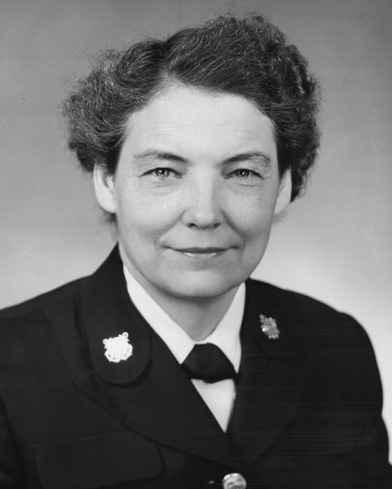
Dorothy Constance Stratton (March 24, 1899 – September 17, 2006) is best known as the first director of the SPARS, the U.S. Coast Guard Women's Reserve.
In 1942, she became the first woman to be commissioned an officer in U.S. Coast Guard and is credited with giving its Women's Reserve program the name of SPARS, an acronym created from the Coast Guard motto, Semper Paratus, and its English translation, Always Ready. Lieutenant Commander Stratton attained the rank of captain in February 1944 and served as director of the SPARS from 1942 until January 1946. She was also a trailblazer for women in other areas. She became Purdue University's first full-time Dean of Women (1933–1942) and the first director of personnel at the International Monetary Fund (1947–1950). Stratton also served as the national executive director of the Girl Scouts of the USA (1950–1960).
Stratton was the recipient of awards for her public service and leadership that included a Legion of Merit for her contributions to women in the military, the Ottawa University Alumni Association's Outstanding Achievement Award, and the University of Chicago's Alumni Association's Public Service Award. She was awarded honorary degrees from several American colleges and universities, such as Ottawa University, Smith College, and Purdue University, among others. Stratton is the namesake of the Coast Guard's third National Security Cutter, the USCGC Stratton (WMSL-752), the first National Security Cutter to be named after a woman.
Dorothy Constance Stratton, the daughter of Reverend Richard L. Stratton and Anna (Troxler) Stratton, was born on March 24, 1899, in Brookfield, Missouri. Stratton's father was a Baptist minister. Her brother, Richard C. Stratton, served as a captain in the U.S. Army's Medical Reserve Corps during World War II.
Stratton's family traveled across the Midwest during her youth and she attended high schools in Lamar, Missouri, and Blue Rapids, Kansas. She earned a Bachelor of Arts degree from Ottawa University in 1920, a Master of Arts in psychology from the University of Chicago, and a doctorate (Ph.D.) in student personnel administration from Columbia University. She also studied at Northwestern University; the University of Washington; University of California, Los Angeles (UCLA); and University of California, Berkeley (UC-Berkeley). While pursuing her advanced degrees, Stratton taught at school in Brookfield, Missouri; Renton, Washington; and San Bernardino, California.
In 1933, after receiving her Ph.D. from Columbia, Stratton joined the staff at Purdue University in West Lafayette, Indiana, and became as its first full-time Dean of Women. She was also an assistant professor of psychology at Purdue and became a full professor in 1940.
During her nine years at Purdue, the university's enrollment of women increased from 500 to more than 1,400. A large part of the increase was attributed to her efforts to develop an experimental curriculum that attracted women who preferred to study subjects other than home economics. Stratton created a liberal science curriculum for women in the university's School of Science, as well as a women's employment placement center. In addition, she helped establish a specialized training program that provided intensive training for fraternity and sorority housemothers across the country. Stratton also managed the construction of three new residence halls for women on Purdue's campus in West Lafayette.
In 1942 Stratton took a leave of absence from Purdue University and was commissioned as a lieutenant in the Women's Reserve of the U.S. Naval Reserve, which was also known as the WAVES (Women Accepted for Voluntary Emergency Service). She later credited Lillian Moller Gilbreth, professor of engineering at Purdue, for encouraging her to join the military, but she also recalled that she was willing "to do whatever I could to serve my country" and did not need much encouragement. Stratton was among the members of the first class of the U.S. Naval Training Station at Smith College in Northampton, Massachusetts. After completing her initial training, she briefly served as Assistant to the Commanding Officer of the radio school for WAVES at Madison, Wisconsin.
Dorothy C. Stratton
Dorothy Constance Stratton (March 24, 1899 – September 17, 2006) is best known as the first director of the SPARS, the U.S. Coast Guard Women's Reserve.
In 1942, she became the first woman to be commissioned an officer in U.S. Coast Guard and is credited with giving its Women's Reserve program the name of SPARS, an acronym created from the Coast Guard motto, Semper Paratus, and its English translation, Always Ready. Lieutenant Commander Stratton attained the rank of captain in February 1944 and served as director of the SPARS from 1942 until January 1946. She was also a trailblazer for women in other areas. She became Purdue University's first full-time Dean of Women (1933–1942) and the first director of personnel at the International Monetary Fund (1947–1950). Stratton also served as the national executive director of the Girl Scouts of the USA (1950–1960).
Stratton was the recipient of awards for her public service and leadership that included a Legion of Merit for her contributions to women in the military, the Ottawa University Alumni Association's Outstanding Achievement Award, and the University of Chicago's Alumni Association's Public Service Award. She was awarded honorary degrees from several American colleges and universities, such as Ottawa University, Smith College, and Purdue University, among others. Stratton is the namesake of the Coast Guard's third National Security Cutter, the USCGC Stratton (WMSL-752), the first National Security Cutter to be named after a woman.
Dorothy Constance Stratton, the daughter of Reverend Richard L. Stratton and Anna (Troxler) Stratton, was born on March 24, 1899, in Brookfield, Missouri. Stratton's father was a Baptist minister. Her brother, Richard C. Stratton, served as a captain in the U.S. Army's Medical Reserve Corps during World War II.
Stratton's family traveled across the Midwest during her youth and she attended high schools in Lamar, Missouri, and Blue Rapids, Kansas. She earned a Bachelor of Arts degree from Ottawa University in 1920, a Master of Arts in psychology from the University of Chicago, and a doctorate (Ph.D.) in student personnel administration from Columbia University. She also studied at Northwestern University; the University of Washington; University of California, Los Angeles (UCLA); and University of California, Berkeley (UC-Berkeley). While pursuing her advanced degrees, Stratton taught at school in Brookfield, Missouri; Renton, Washington; and San Bernardino, California.
In 1933, after receiving her Ph.D. from Columbia, Stratton joined the staff at Purdue University in West Lafayette, Indiana, and became as its first full-time Dean of Women. She was also an assistant professor of psychology at Purdue and became a full professor in 1940.
During her nine years at Purdue, the university's enrollment of women increased from 500 to more than 1,400. A large part of the increase was attributed to her efforts to develop an experimental curriculum that attracted women who preferred to study subjects other than home economics. Stratton created a liberal science curriculum for women in the university's School of Science, as well as a women's employment placement center. In addition, she helped establish a specialized training program that provided intensive training for fraternity and sorority housemothers across the country. Stratton also managed the construction of three new residence halls for women on Purdue's campus in West Lafayette.
In 1942 Stratton took a leave of absence from Purdue University and was commissioned as a lieutenant in the Women's Reserve of the U.S. Naval Reserve, which was also known as the WAVES (Women Accepted for Voluntary Emergency Service). She later credited Lillian Moller Gilbreth, professor of engineering at Purdue, for encouraging her to join the military, but she also recalled that she was willing "to do whatever I could to serve my country" and did not need much encouragement. Stratton was among the members of the first class of the U.S. Naval Training Station at Smith College in Northampton, Massachusetts. After completing her initial training, she briefly served as Assistant to the Commanding Officer of the radio school for WAVES at Madison, Wisconsin.
Recent media
Recent media