
Recent from talks
Dorothy Sebastian
Knowledge base stats:
Talk channels stats:
Members stats:
Dorothy Sebastian
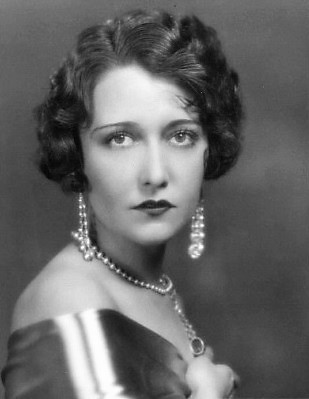
Dorothy Sebastian (born Stella Dorothy Sabiston; April 26, 1903 – April 8, 1957) was an American film and stage actress.
Sebastian was born and raised in Birmingham, Alabama, the daughter of Lycurgus (Lawrence) Robert and Stella Armstrong Sabiston. In her early years she aspired to be a missionary, since her grandparents were missionaries, but when she was taken to a theater during this time, she changed her mind and aspired to be an actress. She attended the University of Alabama but only for a short while and then married her high-school sweetheart, Allan Stafford, some time in 1920. She lived with him in Birmingham and helped operate the Staffords' laundry store. After her marriage ended in 1924, she left for New York sometime after.
After leaving Alabama and starting a career on the stage, she changed the spelling of her name to Sebastian. Upon her arrival in New York City, she had a southern drawl thick enough, in the words of one news report, to "cut with a knife". She spent her days visiting theatrical agents—and being consistently rejected—before returning at night to a $12-a-month room.
Her first break came when she secured a role in George White's Scandals as a chorus girl. She then met Max Aitken, otherwise known as Lord Beaverbrook. Through this connection, she scored a screen test with Henry King, which led to her first starring role, in the film Sackloth and Scarlet. This part landed her a five-year contract with MGM, where she co-starred with Joan Crawford and Anita Page in a popular series of MGM romantic dramas, including Our Dancing Daughters (1928) and Our Blushing Brides (1930). Sebastian appeared in 1929's Spite Marriage, cast opposite the then-married Buster Keaton, with whom she began an affair.
MGM released Sebastian in 1930; her last film for the studio was a short subject starring the young Jack Benny. Harry Cohn of then-low-budget Columbia Pictures seized on Sebastian's availability by signing her to a Columbia contract; Cohn welcomed any former MGM players for their name value. After Columbia released Sebastian a year later, she began freelancing, mostly at low-budget independent studios. Her most familiar appearance in sound films is probably in Allez Oop (1934), a short comedy produced by Educational Pictures that reunited her with Buster Keaton.[citation needed]
In 1930 Sebastian married outdoor-adventure star William Boyd (the future Hopalong Cassidy). After their 1936 divorce, she returned to acting, appearing in mostly bit parts. Her last onscreen appearance was in the 1948 film The Miracle of the Bells.[citation needed]
Sebastian co-wrote the ballad "The Leaves Mustn't Fall" with Jack Kenney.
While still in Birmingham, Sebastian married her high-school sweetheart, Allen Stafford, on November 9, 1920. The marriage ended four years later just before she moved to New York.[citation needed]
Hub AI
Dorothy Sebastian AI simulator
(@Dorothy Sebastian_simulator)
Dorothy Sebastian
Dorothy Sebastian (born Stella Dorothy Sabiston; April 26, 1903 – April 8, 1957) was an American film and stage actress.
Sebastian was born and raised in Birmingham, Alabama, the daughter of Lycurgus (Lawrence) Robert and Stella Armstrong Sabiston. In her early years she aspired to be a missionary, since her grandparents were missionaries, but when she was taken to a theater during this time, she changed her mind and aspired to be an actress. She attended the University of Alabama but only for a short while and then married her high-school sweetheart, Allan Stafford, some time in 1920. She lived with him in Birmingham and helped operate the Staffords' laundry store. After her marriage ended in 1924, she left for New York sometime after.
After leaving Alabama and starting a career on the stage, she changed the spelling of her name to Sebastian. Upon her arrival in New York City, she had a southern drawl thick enough, in the words of one news report, to "cut with a knife". She spent her days visiting theatrical agents—and being consistently rejected—before returning at night to a $12-a-month room.
Her first break came when she secured a role in George White's Scandals as a chorus girl. She then met Max Aitken, otherwise known as Lord Beaverbrook. Through this connection, she scored a screen test with Henry King, which led to her first starring role, in the film Sackloth and Scarlet. This part landed her a five-year contract with MGM, where she co-starred with Joan Crawford and Anita Page in a popular series of MGM romantic dramas, including Our Dancing Daughters (1928) and Our Blushing Brides (1930). Sebastian appeared in 1929's Spite Marriage, cast opposite the then-married Buster Keaton, with whom she began an affair.
MGM released Sebastian in 1930; her last film for the studio was a short subject starring the young Jack Benny. Harry Cohn of then-low-budget Columbia Pictures seized on Sebastian's availability by signing her to a Columbia contract; Cohn welcomed any former MGM players for their name value. After Columbia released Sebastian a year later, she began freelancing, mostly at low-budget independent studios. Her most familiar appearance in sound films is probably in Allez Oop (1934), a short comedy produced by Educational Pictures that reunited her with Buster Keaton.[citation needed]
In 1930 Sebastian married outdoor-adventure star William Boyd (the future Hopalong Cassidy). After their 1936 divorce, she returned to acting, appearing in mostly bit parts. Her last onscreen appearance was in the 1948 film The Miracle of the Bells.[citation needed]
Sebastian co-wrote the ballad "The Leaves Mustn't Fall" with Jack Kenney.
While still in Birmingham, Sebastian married her high-school sweetheart, Allen Stafford, on November 9, 1920. The marriage ended four years later just before she moved to New York.[citation needed]
Recent media