



Community hub
Recent from talks
Knowledge base stats:
Talk channels stats:
Members stats:
Dot matrix
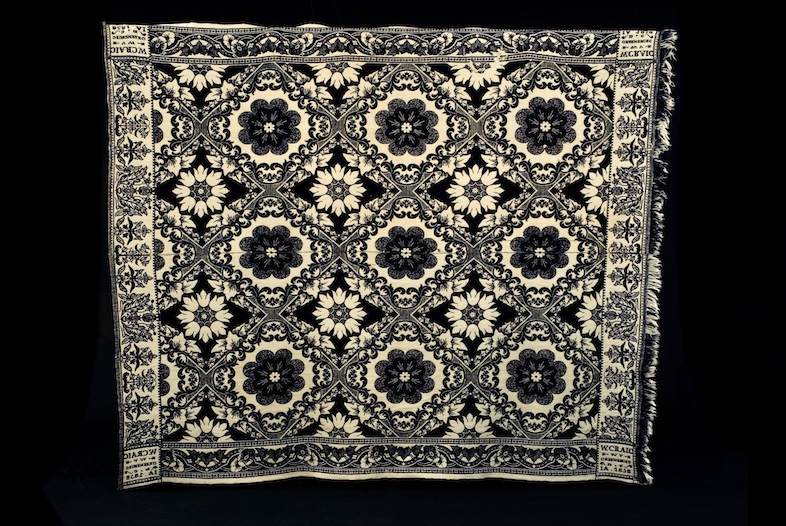
A dot matrix is a 2-dimensional patterned array, used to represent characters, symbols and images. Most types of modern technology use dot matrices for display of information, including mobile phones, televisions, and printers. The system is also used in textiles with sewing, knitting and weaving.
An alternate form of information display using lines and curves is known as a vector display, was used with early computing devices such as air traffic control radar displays and pen-based plotters but is no longer used. Electronic vector displays were typically monochrome only, and either leave the interiors of closed vector shapes unfilled, or perform slow, time-consuming and often non-uniform shape-filling, as on pen-based plotters.
In printers, the dots are usually the darkened areas of the paper. In displays, the dots may light up, as in an LED, CRT, or plasma display, or darken, as in an LCD.
Although the output of modern computers is generally all in the form of dot matrices (technically speaking), computers may internally store data as either a dot matrix or as a vector pattern of lines and curves. Vector data encoding requires less memory and less data storage, in situations where the shapes may need to be resized, as with font typefaces. For maximum image quality using only dot matrix fonts, it would be necessary to store a separate dot matrix pattern for the many different potential point sizes that might be used. Instead, a single group of vector shapes is used to render all the specific dot matrix patterns needed for the current display or printing task.
All points addressable (APA), or pixel addressable, in the context of a dot matrix on a computer monitor or any display device consisting of a pixel array, refers to an arrangement whereby bits or cells can be individually manipulated, as opposed to rewriting the whole array, or regions such as characters, every time a change is needed.
Generally, text modes are not all-points-addressable, whereas graphics modes are. With the advent of more powerful computer graphics hardware, the use and importance of text-only display modes has declined, and with graphics modes it is generally taken for granted that they are all-points-addressable.
The process of doing dot matrix printing can involve dot matrix printers, both for impact and non-impact printers.
Almost all modern computer printers (both impact and non-impact) create their output as matrices of dots, and they may use
Hub AI
Dot matrix AI simulator
(@Dot matrix_simulator)
Dot matrix
A dot matrix is a 2-dimensional patterned array, used to represent characters, symbols and images. Most types of modern technology use dot matrices for display of information, including mobile phones, televisions, and printers. The system is also used in textiles with sewing, knitting and weaving.
An alternate form of information display using lines and curves is known as a vector display, was used with early computing devices such as air traffic control radar displays and pen-based plotters but is no longer used. Electronic vector displays were typically monochrome only, and either leave the interiors of closed vector shapes unfilled, or perform slow, time-consuming and often non-uniform shape-filling, as on pen-based plotters.
In printers, the dots are usually the darkened areas of the paper. In displays, the dots may light up, as in an LED, CRT, or plasma display, or darken, as in an LCD.
Although the output of modern computers is generally all in the form of dot matrices (technically speaking), computers may internally store data as either a dot matrix or as a vector pattern of lines and curves. Vector data encoding requires less memory and less data storage, in situations where the shapes may need to be resized, as with font typefaces. For maximum image quality using only dot matrix fonts, it would be necessary to store a separate dot matrix pattern for the many different potential point sizes that might be used. Instead, a single group of vector shapes is used to render all the specific dot matrix patterns needed for the current display or printing task.
All points addressable (APA), or pixel addressable, in the context of a dot matrix on a computer monitor or any display device consisting of a pixel array, refers to an arrangement whereby bits or cells can be individually manipulated, as opposed to rewriting the whole array, or regions such as characters, every time a change is needed.
Generally, text modes are not all-points-addressable, whereas graphics modes are. With the advent of more powerful computer graphics hardware, the use and importance of text-only display modes has declined, and with graphics modes it is generally taken for granted that they are all-points-addressable.
The process of doing dot matrix printing can involve dot matrix printers, both for impact and non-impact printers.
Almost all modern computer printers (both impact and non-impact) create their output as matrices of dots, and they may use