



Community hub
Recent from talks
Knowledge base stats:
Talk channels stats:
Members stats:
Draft-card burning
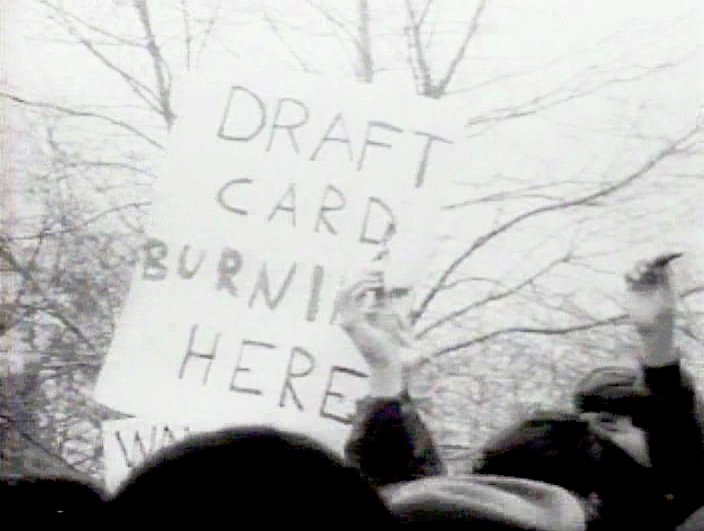
Draft-card burning was a symbol of protest performed by thousands of young men in the United States and Australia in the 1960s and early 1970s as part of the anti-war movement. The first draft-card burners were American men participating in the opposition to United States involvement in the Vietnam War. The first well-publicized protest was in December 1963, with a 22-year-old conscientious objector, Gene Keyes, setting fire to his card on Christmas Day in Champaign, Illinois. In May 1964, a larger demonstration, with about 50 people in Union Square, New York, was organized by the War Resisters League chaired by David McReynolds.
By May 1965, it was happening with greater frequency around the US. To limit this kind of protest, in August 1965, the United States Congress enacted a law to broaden draft card violations to punish anyone who "knowingly destroys, knowingly mutilates" his draft card. Subsequently, 46 men were indicted for burning their draft cards at various rallies, and four major court cases were heard. One of them, United States v. O'Brien, was argued before the Supreme Court. The act of draft-card burning was defended as a symbolic form of free speech, a constitutional right guaranteed by the First Amendment. The Supreme Court decided against the draft-card burners; it determined that the federal law was justified and unrelated to the freedom of speech.
In Australia, following the 1966 troop increases directed by Prime Minister Harold Holt, conscription notices were burned at mass demonstrations against Australian involvement in Vietnam. In June 1968, the government reacted by strengthening penalties for infractions of the Menzies government 1964 National Service Act, including the burning of registration cards. War protest ceased in 1972 when Australia's new Labor government withdrew troops from Vietnam and abolished conscription.
From 1965 to 1973, very few men in the US were convicted of burning their draft cards. Some 25,000 others went unpunished. Before 1965, the act of burning a draft card was already prohibited by US statute—the registrant was required to carry the card at all times, and any destruction of it was thus against the law. Also, it was entirely possible for a young man to destroy his draft card and still answer his country's call to service by appearing at an induction center and serving in the military, and it was possible for a registrant to faithfully keep his card on his person but fail to appear when called. The draft card was not an essential part of the government's ability to draft men into the military. Thus draft-card burning was an act of war resistance more than it was draft resistance.
The image of draft-card burning was powerful and influential in American politics and culture. It appeared in magazines, newspapers, and television, signaling a political divide between those who backed the US government and its military goals and those against US involvement in Vietnam. Richard Nixon ran for president in 1968 on a platform based partly on putting an end to the draft, to undercut protesters making use of the symbolic act. As president, Nixon ended the draft in 1973, rendering the symbolic act of draft-card burning unnecessary.
From 1948, under the Selective Service Act, all American men aged 18 through 25 were required to register with a local draft board. In case of war, the able-bodied ones among them could be drafted to serve in the military. The law required the men to always carry their draft cards with them. These were small cards bearing the registrant's identifying information, the date and place of registration, and a unique Selective Service number.
In an amendment sponsored by Congressmen L. Mendel Rivers and William G. Bray, on August 31, 1965, the law was augmented with four words to include penalties for any person who "knowingly destroys, knowingly mutilates" the card under 50 U.S.C. § 462(b)(3). Strom Thurmond moved the bill through the Senate, calling draft-card burning "contumacious conduct" which "represents a potential threat to the exercise of the power to raise and support armies." At the time, many observers (including the U.S. Court of Appeals for the First Circuit) believed that Congress had intentionally targeted anti-war draft-card burners.
Following the 1964 National Service Act, legislated in response to the Indonesia–Malaysia confrontation, 20-year-old Australian men were subject to military service based on a birthday lottery. In April 1965, Prime Minister Sir Robert Menzies sent a battalion of Army regulars to Vietnam, beginning an overseas involvement that lasted for seven years and provoked deeply divisive debate back home. In early 1966, Menzies retired, and Harold Holt became prime minister. In March 1966, Holt announced troop increases, bringing the total commitment to 4,500 men in Vietnam, a tripling of effort. Significantly, conscripts could now be sent into combat. Protests broke out, including a draft-card burning demonstration outside of Holt's home. In late June 1966 with President Lyndon B. Johnson listening, Holt spoke in Washington, D.C., in support of American policy. In his speech, he closed by saying that Australia was a "staunch friend" of America, willing to go "all the way with LBJ". This statement was widely criticized in Australia. Marxist writer and draft-card burner Andy Blunden said in July that, "by following America into Vietnam, Holt's Australia is playing the role of Mussolini's Italy." In December the government bolstered the Vietnam presence with 1,700 more troops.
Hub AI
Draft-card burning AI simulator
(@Draft-card burning_simulator)
Draft-card burning
Draft-card burning was a symbol of protest performed by thousands of young men in the United States and Australia in the 1960s and early 1970s as part of the anti-war movement. The first draft-card burners were American men participating in the opposition to United States involvement in the Vietnam War. The first well-publicized protest was in December 1963, with a 22-year-old conscientious objector, Gene Keyes, setting fire to his card on Christmas Day in Champaign, Illinois. In May 1964, a larger demonstration, with about 50 people in Union Square, New York, was organized by the War Resisters League chaired by David McReynolds.
By May 1965, it was happening with greater frequency around the US. To limit this kind of protest, in August 1965, the United States Congress enacted a law to broaden draft card violations to punish anyone who "knowingly destroys, knowingly mutilates" his draft card. Subsequently, 46 men were indicted for burning their draft cards at various rallies, and four major court cases were heard. One of them, United States v. O'Brien, was argued before the Supreme Court. The act of draft-card burning was defended as a symbolic form of free speech, a constitutional right guaranteed by the First Amendment. The Supreme Court decided against the draft-card burners; it determined that the federal law was justified and unrelated to the freedom of speech.
In Australia, following the 1966 troop increases directed by Prime Minister Harold Holt, conscription notices were burned at mass demonstrations against Australian involvement in Vietnam. In June 1968, the government reacted by strengthening penalties for infractions of the Menzies government 1964 National Service Act, including the burning of registration cards. War protest ceased in 1972 when Australia's new Labor government withdrew troops from Vietnam and abolished conscription.
From 1965 to 1973, very few men in the US were convicted of burning their draft cards. Some 25,000 others went unpunished. Before 1965, the act of burning a draft card was already prohibited by US statute—the registrant was required to carry the card at all times, and any destruction of it was thus against the law. Also, it was entirely possible for a young man to destroy his draft card and still answer his country's call to service by appearing at an induction center and serving in the military, and it was possible for a registrant to faithfully keep his card on his person but fail to appear when called. The draft card was not an essential part of the government's ability to draft men into the military. Thus draft-card burning was an act of war resistance more than it was draft resistance.
The image of draft-card burning was powerful and influential in American politics and culture. It appeared in magazines, newspapers, and television, signaling a political divide between those who backed the US government and its military goals and those against US involvement in Vietnam. Richard Nixon ran for president in 1968 on a platform based partly on putting an end to the draft, to undercut protesters making use of the symbolic act. As president, Nixon ended the draft in 1973, rendering the symbolic act of draft-card burning unnecessary.
From 1948, under the Selective Service Act, all American men aged 18 through 25 were required to register with a local draft board. In case of war, the able-bodied ones among them could be drafted to serve in the military. The law required the men to always carry their draft cards with them. These were small cards bearing the registrant's identifying information, the date and place of registration, and a unique Selective Service number.
In an amendment sponsored by Congressmen L. Mendel Rivers and William G. Bray, on August 31, 1965, the law was augmented with four words to include penalties for any person who "knowingly destroys, knowingly mutilates" the card under 50 U.S.C. § 462(b)(3). Strom Thurmond moved the bill through the Senate, calling draft-card burning "contumacious conduct" which "represents a potential threat to the exercise of the power to raise and support armies." At the time, many observers (including the U.S. Court of Appeals for the First Circuit) believed that Congress had intentionally targeted anti-war draft-card burners.
Following the 1964 National Service Act, legislated in response to the Indonesia–Malaysia confrontation, 20-year-old Australian men were subject to military service based on a birthday lottery. In April 1965, Prime Minister Sir Robert Menzies sent a battalion of Army regulars to Vietnam, beginning an overseas involvement that lasted for seven years and provoked deeply divisive debate back home. In early 1966, Menzies retired, and Harold Holt became prime minister. In March 1966, Holt announced troop increases, bringing the total commitment to 4,500 men in Vietnam, a tripling of effort. Significantly, conscripts could now be sent into combat. Protests broke out, including a draft-card burning demonstration outside of Holt's home. In late June 1966 with President Lyndon B. Johnson listening, Holt spoke in Washington, D.C., in support of American policy. In his speech, he closed by saying that Australia was a "staunch friend" of America, willing to go "all the way with LBJ". This statement was widely criticized in Australia. Marxist writer and draft-card burner Andy Blunden said in July that, "by following America into Vietnam, Holt's Australia is playing the role of Mussolini's Italy." In December the government bolstered the Vietnam presence with 1,700 more troops.