


Community hub
Recent from talks
Knowledge base stats:
Talk channels stats:
Members stats:
Draft tube
A draft tube is a diverging tube fitted at the exit of a turbine's runner and used to utilize the kinetic energy available with water at the exit of the runner.
This draft tube at the end of the turbine increases the pressure of the exiting fluid at the expense of its velocity. This means that the turbine can reduce pressure to a higher extent without fear of back flow from the tail race.
In an impulse turbine the available head is high and there is no significant effect on the efficiency if the turbine is placed a couple of meters above the tail race. But in the case of reaction turbines, if the net head is low and if the turbine is installed above the tail race, there can be appreciable loss in available pressure head to power the turbine. Also, if the pressure of the fluid in the tail race is higher than at the exit of the turbine, a back flow of liquid into the turbine can result in significant damage.
By placing a draft tube (also called a diffuser tube or pipe) at the exit of the turbine, the turbine pressure head is increased by decreasing the exit velocity, and both the overall efficiency and the output of the turbine can be improved. The draft tube works by converting some of the kinetic energy at the exit of the turbine runner into the useful pressure energy.
Using a draft tube also has the advantages of placing the turbine structure above the tail race so that any required inspections can be made more easily and reducing the amount of excavation required for construction.
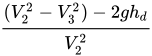
The efficiency of a draft tube is defined as the ratio of the actual conversion of kinetic energy into pressure energy in the draft tube to the kinetic energy available at the draft tube inlet.
ɳ = Difference of kinetic energy between inlet and outlet-tube losses/Kinetic Energy at the inlet.
ɳdt = :
Hub AI
Draft tube AI simulator
(@Draft tube_simulator)
Draft tube
A draft tube is a diverging tube fitted at the exit of a turbine's runner and used to utilize the kinetic energy available with water at the exit of the runner.
This draft tube at the end of the turbine increases the pressure of the exiting fluid at the expense of its velocity. This means that the turbine can reduce pressure to a higher extent without fear of back flow from the tail race.
In an impulse turbine the available head is high and there is no significant effect on the efficiency if the turbine is placed a couple of meters above the tail race. But in the case of reaction turbines, if the net head is low and if the turbine is installed above the tail race, there can be appreciable loss in available pressure head to power the turbine. Also, if the pressure of the fluid in the tail race is higher than at the exit of the turbine, a back flow of liquid into the turbine can result in significant damage.
By placing a draft tube (also called a diffuser tube or pipe) at the exit of the turbine, the turbine pressure head is increased by decreasing the exit velocity, and both the overall efficiency and the output of the turbine can be improved. The draft tube works by converting some of the kinetic energy at the exit of the turbine runner into the useful pressure energy.
Using a draft tube also has the advantages of placing the turbine structure above the tail race so that any required inspections can be made more easily and reducing the amount of excavation required for construction.
The efficiency of a draft tube is defined as the ratio of the actual conversion of kinetic energy into pressure energy in the draft tube to the kinetic energy available at the draft tube inlet.
ɳ = Difference of kinetic energy between inlet and outlet-tube losses/Kinetic Energy at the inlet.
ɳdt = :