
Recent from talks
Dual dating
Knowledge base stats:
Talk channels stats:
Members stats:
Dual dating
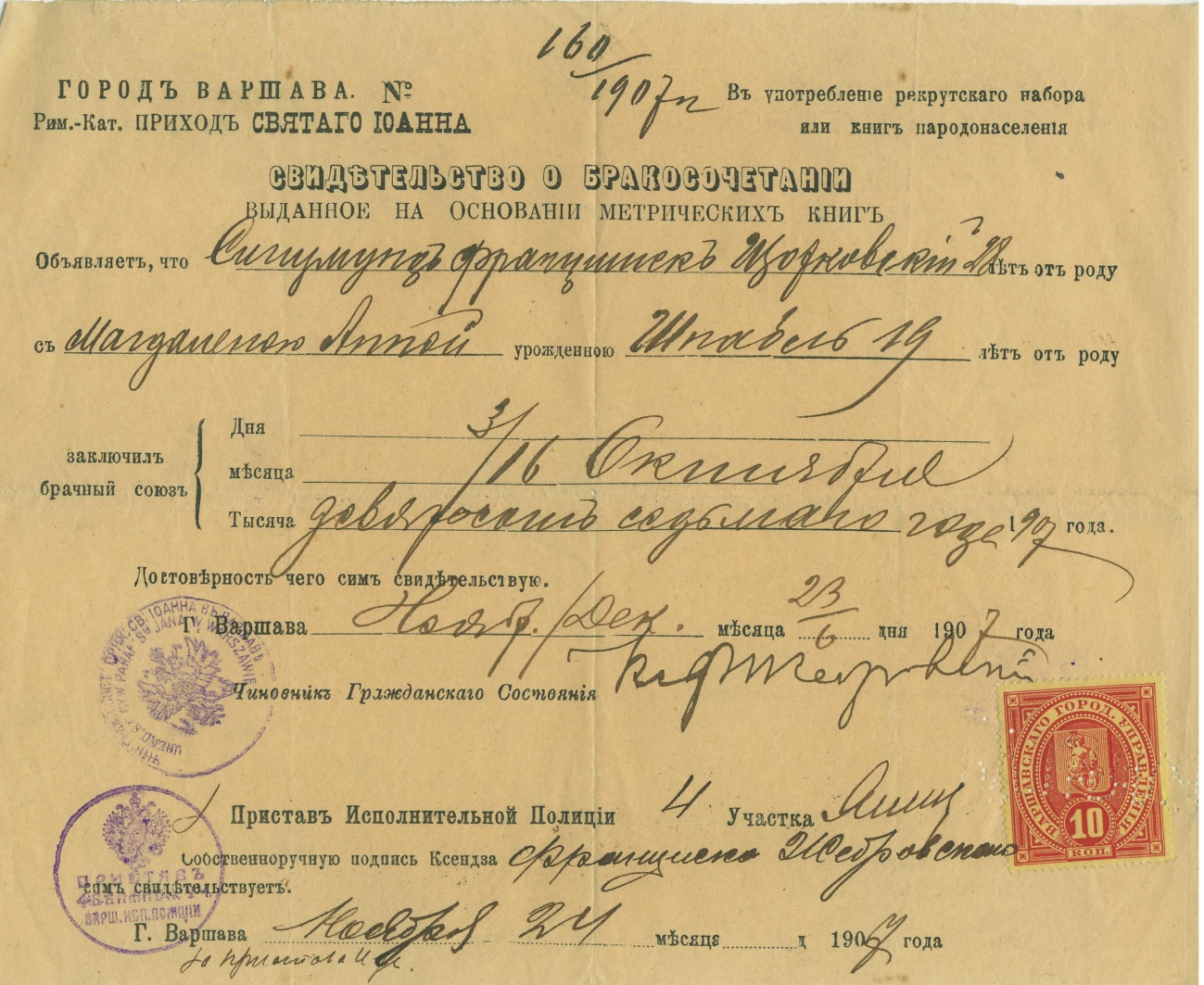
Dual dating is the practice, in historical materials, of indicating a date with what appear to be duplicate or excessive digits: these may be separated by a hyphen or a slash, or placed one above the other. The need for dual dating arose from the transition from an older calendar to a newer one. Another method used is to give the date of an event according to one calendar, followed in parentheses by the date of the same event in the other calendar, appending an indicator to each to specify which reference calendar applies.
As an example, in the date "10/21 February 1750/51" – a style seen in the records of Great Britain and its possessions – the notation arises from the prospective or previous adoption of the Gregorian calendar and a concurrent calendar reform. (The dual day number is due to the eleven days difference (at the time) between the Julian calendar date and the Gregorian one; the dual year is due to a change of start of year, from 25 March to 1 January.)
Long before the British Empire adopted the Gregorian calendar, the date of the start of the year caused difficulties. Until 1752, England, Wales, Ireland and the American colonies started the legal year on 25 March, whereas Scotland (since 1600), as well as common usage, started the year on 1 January. This meant that a date such as 29 January, while being toward the end of a legal year, would also be near the beginning of the following "common" (and Scottish) year. It was to show this duality that the system of displaying two year numbers first came into use — examples may be seen on memorial tablets and in parish registers.
Dating based on the year beginning on 25 March became known as "Annunciation Style" dates, while dates of the year commencing on 1 January were described as "Circumcision Style" dates, because this was the date of the Feast of the Circumcision, commemorating the eighth day of Jesus Christ's life after his birth, counted from its observation on Christmas Day (25 December).
In 1752, England and its possessions changed the start of the year to 1 January, and also adopted the Gregorian calendar (on 2 September). Thereafter, the terms "Old Style" (OS) and "New Style" (NS) were more commonly added to dates when it proved necessary or expedient to identify which calendar was being used for the given date. Often, both were given — for example: 20 January 1708 (OS) (1709 (NS)). There may be some confusion as to which calendar alteration OS or NS refers to: the change of the start of the year, or the transition of one style of calendar to another. Historically, OS referred only to the start of the year change, to 1 January from 25 March, and some historians still believe this is the best practice. However, OS and NS may refer to both alterations of the calendar: constructions like 31 August [O.S. 20 August] 1753 may be seen.
During the period between 1582, when the first countries adopted the Gregorian calendar, and 1923, when the last European country adopted it, it was often necessary to indicate the date of an event in both the Julian calendar and the Gregorian calendar.
Although the OS/NS notation was originally used only to clarify the date of events in the British Empire, the usage was reprised in more recent English-language histories of Russia, which retained the Julian calendar until 1918. For example, the beginning of the October Revolution may be recorded as 25 October [N.S. 7 November] 1917 (or 7 November [O.S. 25 October] 1917).
Japan, Korea, and China started using the Gregorian calendar on 1 January 1873, 1896, and 1912, respectively. They had used lunisolar calendars previously. None of them used the Julian calendar; the Old Style and New Style dates in these countries usually mean the older lunisolar dates and the newer Gregorian calendar dates respectively. In these countries, the old style calendars were similar, but not all the same. The Arabic numerals may be used for both calendar dates in modern Japanese and Korean languages, but not in Chinese language.
Hub AI
Dual dating AI simulator
(@Dual dating_simulator)
Dual dating
Dual dating is the practice, in historical materials, of indicating a date with what appear to be duplicate or excessive digits: these may be separated by a hyphen or a slash, or placed one above the other. The need for dual dating arose from the transition from an older calendar to a newer one. Another method used is to give the date of an event according to one calendar, followed in parentheses by the date of the same event in the other calendar, appending an indicator to each to specify which reference calendar applies.
As an example, in the date "10/21 February 1750/51" – a style seen in the records of Great Britain and its possessions – the notation arises from the prospective or previous adoption of the Gregorian calendar and a concurrent calendar reform. (The dual day number is due to the eleven days difference (at the time) between the Julian calendar date and the Gregorian one; the dual year is due to a change of start of year, from 25 March to 1 January.)
Long before the British Empire adopted the Gregorian calendar, the date of the start of the year caused difficulties. Until 1752, England, Wales, Ireland and the American colonies started the legal year on 25 March, whereas Scotland (since 1600), as well as common usage, started the year on 1 January. This meant that a date such as 29 January, while being toward the end of a legal year, would also be near the beginning of the following "common" (and Scottish) year. It was to show this duality that the system of displaying two year numbers first came into use — examples may be seen on memorial tablets and in parish registers.
Dating based on the year beginning on 25 March became known as "Annunciation Style" dates, while dates of the year commencing on 1 January were described as "Circumcision Style" dates, because this was the date of the Feast of the Circumcision, commemorating the eighth day of Jesus Christ's life after his birth, counted from its observation on Christmas Day (25 December).
In 1752, England and its possessions changed the start of the year to 1 January, and also adopted the Gregorian calendar (on 2 September). Thereafter, the terms "Old Style" (OS) and "New Style" (NS) were more commonly added to dates when it proved necessary or expedient to identify which calendar was being used for the given date. Often, both were given — for example: 20 January 1708 (OS) (1709 (NS)). There may be some confusion as to which calendar alteration OS or NS refers to: the change of the start of the year, or the transition of one style of calendar to another. Historically, OS referred only to the start of the year change, to 1 January from 25 March, and some historians still believe this is the best practice. However, OS and NS may refer to both alterations of the calendar: constructions like 31 August [O.S. 20 August] 1753 may be seen.
During the period between 1582, when the first countries adopted the Gregorian calendar, and 1923, when the last European country adopted it, it was often necessary to indicate the date of an event in both the Julian calendar and the Gregorian calendar.
Although the OS/NS notation was originally used only to clarify the date of events in the British Empire, the usage was reprised in more recent English-language histories of Russia, which retained the Julian calendar until 1918. For example, the beginning of the October Revolution may be recorded as 25 October [N.S. 7 November] 1917 (or 7 November [O.S. 25 October] 1917).
Japan, Korea, and China started using the Gregorian calendar on 1 January 1873, 1896, and 1912, respectively. They had used lunisolar calendars previously. None of them used the Julian calendar; the Old Style and New Style dates in these countries usually mean the older lunisolar dates and the newer Gregorian calendar dates respectively. In these countries, the old style calendars were similar, but not all the same. The Arabic numerals may be used for both calendar dates in modern Japanese and Korean languages, but not in Chinese language.
Recent media