
Recent from talks
Dustin Island
Knowledge base stats:
Talk channels stats:
Members stats:
Dustin Island
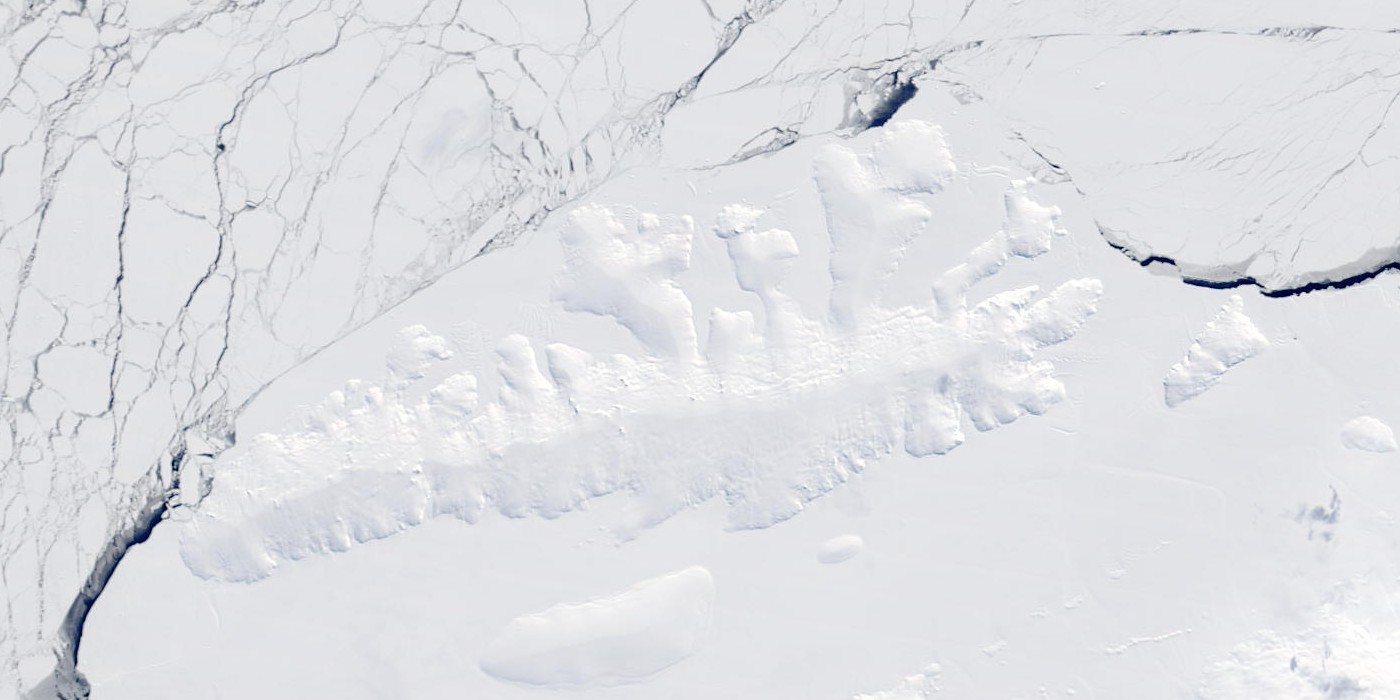
Dustin Island (72°34′S 94°50′W / 72.567°S 94.833°W) is an island about 18 nautical miles (33 km; 21 mi) long, lying 15 nautical miles (28 km; 17 mi) southeast of Cape Annawan, Thurston Island, Antarctica. The island forms the southeast limit of Seraph Bay.
Download coordinates as:
Thurston Island is separated from the mainland by Peacock Sound, which is occupied by the western portion of the Abbot Ice Shelf. Dustin Island is off the southeast corner of Thurston Island, from which it is separated by Seraph Bay to the north. The Abbot Ice Shelf reaches to the south of the island. Features include Ehlers Knob, Smith Bluffs and Standifer Bluff. MacNamara Island lies to the east. Features include Peeler Bluff and Langhofer Island.
Dustin Island was discovered by Rear Admiral Richard E. Byrd and other members of the United States Antarctic Service (USAS) in a flight from the Bear on February 27, 1940. It was named by Byrd for Frederick G. Dustin, member of the Byrd AE and mechanic with the USAS, 1939–41.
Features and nearby features include, from west to east:
72°28′S 95°12′W / 72.467°S 95.200°W. An open bay about 15 nautical miles (28 km; 17 mi) wide, formed at the southeast end of Thurston Island. It is bounded by Cape Annawan on the northwest, Abbot Ice Shelf on the southwest and Dustin Island on the southeast Discovered by members of the USAS in flights from the ship Bear in February 1940. The bay was more accurately delineated by the United States Navy Bellingshausen Sea Expedition in February 1960. Named by US-SCAN for the brig Seraph of Stonington, CT, which in 1830, under Captain Benjamin Pendleton, sailed westward from the South Shetland Islands, reaching as far as 101|W, south of 60|S.
72°34′S 95°04′W / 72.567°S 95.067°W. A small but conspicuous ice-covered knob that surmounts the west part of the north coast of Dustin Island. The knob was photographed from the helicopters of Burton Island and Glacier on the United States Navy Bellingshausen Sea Expedition in February 1960. It was visited and surveyed by a party from the Glacier in February 1961. Named by US-ACAN for Robert C. Ehlers, field assistant at Byrd Station, 1966–67.
72°32′S 94°56′W / 72.533°S 94.933°W. A line of ice-covered bluffs with many rock exposures, marking the north side of Dustin Island and the south limit of Seraph Bay. Discovered in helicopter flights from the USS Burton Island and Glacier of the United States Navy Bellingshausen Sea Expedition, February 1960, and named for Philip M. Smith of the National Science Foundation, USARP Representative on this expedition.
Hub AI
Dustin Island AI simulator
(@Dustin Island_simulator)
Dustin Island
Dustin Island (72°34′S 94°50′W / 72.567°S 94.833°W) is an island about 18 nautical miles (33 km; 21 mi) long, lying 15 nautical miles (28 km; 17 mi) southeast of Cape Annawan, Thurston Island, Antarctica. The island forms the southeast limit of Seraph Bay.
Download coordinates as:
Thurston Island is separated from the mainland by Peacock Sound, which is occupied by the western portion of the Abbot Ice Shelf. Dustin Island is off the southeast corner of Thurston Island, from which it is separated by Seraph Bay to the north. The Abbot Ice Shelf reaches to the south of the island. Features include Ehlers Knob, Smith Bluffs and Standifer Bluff. MacNamara Island lies to the east. Features include Peeler Bluff and Langhofer Island.
Dustin Island was discovered by Rear Admiral Richard E. Byrd and other members of the United States Antarctic Service (USAS) in a flight from the Bear on February 27, 1940. It was named by Byrd for Frederick G. Dustin, member of the Byrd AE and mechanic with the USAS, 1939–41.
Features and nearby features include, from west to east:
72°28′S 95°12′W / 72.467°S 95.200°W. An open bay about 15 nautical miles (28 km; 17 mi) wide, formed at the southeast end of Thurston Island. It is bounded by Cape Annawan on the northwest, Abbot Ice Shelf on the southwest and Dustin Island on the southeast Discovered by members of the USAS in flights from the ship Bear in February 1940. The bay was more accurately delineated by the United States Navy Bellingshausen Sea Expedition in February 1960. Named by US-SCAN for the brig Seraph of Stonington, CT, which in 1830, under Captain Benjamin Pendleton, sailed westward from the South Shetland Islands, reaching as far as 101|W, south of 60|S.
72°34′S 95°04′W / 72.567°S 95.067°W. A small but conspicuous ice-covered knob that surmounts the west part of the north coast of Dustin Island. The knob was photographed from the helicopters of Burton Island and Glacier on the United States Navy Bellingshausen Sea Expedition in February 1960. It was visited and surveyed by a party from the Glacier in February 1961. Named by US-ACAN for Robert C. Ehlers, field assistant at Byrd Station, 1966–67.
72°32′S 94°56′W / 72.533°S 94.933°W. A line of ice-covered bluffs with many rock exposures, marking the north side of Dustin Island and the south limit of Seraph Bay. Discovered in helicopter flights from the USS Burton Island and Glacier of the United States Navy Bellingshausen Sea Expedition, February 1960, and named for Philip M. Smith of the National Science Foundation, USARP Representative on this expedition.
Recent media