
Recent from talks
Dybbuk
Knowledge base stats:
Talk channels stats:
Members stats:
Dybbuk
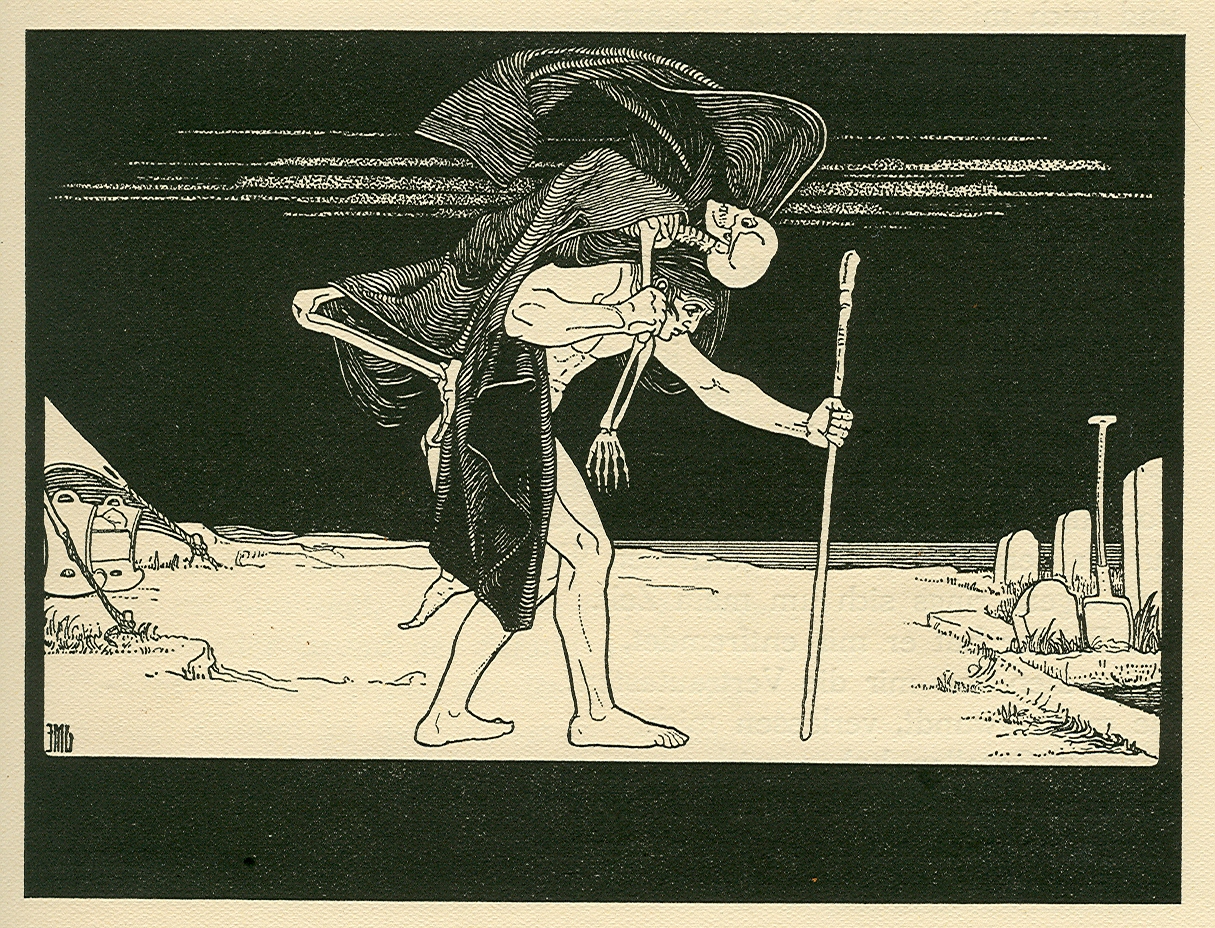
In Jewish mythology, a dybbuk (/ˈdɪbək/; Yiddish: דיבוק, from the Hebrew verb דָּבַק dāḇaq, meaning 'adhere' or 'cling') is a malicious possessing spirit believed to be the dislocated soul of a dead person. It supposedly leaves the host body once it has accomplished its goal, sometimes after being exorcised.
Dybbuk comes from the Hebrew word דִּיבּוּק dibūq, meaning 'a case of attachment', which is a nominal form derived from the verb דָּבַק dāḇaq 'to adhere' or 'cling'.
The term first appears in a number of 16th-century writings. However, it was ignored by mainstream scholarship until S. An-sky's 1920 play The Dybbuk popularised the concept in literary circles. Earlier accounts of possession, such as that given by Josephus, were of demonic possession rather than that of ghosts. These accounts advocated orthodoxy among the populace as a preventative measure. Michał Waszyński's 1937 film The Dybbuk, based on the Yiddish play by S. An-sky, is considered one of the classics of Yiddish filmmaking.
Rabbi Yoel Teitelbaum, the Satmar rebbe (1887–1979), is reported to have supposedly advised an individual said to be possessed to consult a psychiatrist.
Traditionally, dybbuks tended to be male spirits. According to Hayyim ben Joseph Vital, women could not become dybbuks because their souls did not participate in gilgul. Sometimes these spirits were said to possess women on the eve of their weddings, typically in a sexual fashion by entering the women through their vaginas, which is seen in An-sky's play. However, men and boys could be possessed as well.
In psychological literature, the dybbuk has been described as a hysterical syndrome.
In traditional Jewish communities, the concept of the dybbuk served as a socially acceptable way of expressing unacceptable urges, including sexual ones. Within Jewish mysticism and folklore, particularly in Kabbalistic traditions, protective practices were also used to ward off these malevolent spirits. One such practice involves affixing a mezuzah—a piece of parchment inscribed with specific Torah verses—to the doorposts of a home. While the mezuzah primarily serves as a reminder of faith and adherence to God's commandments, it is also viewed as a protective amulet against harmful spirits, including dybbuks. The Zohar, a foundational Kabbalistic text, suggests that a properly affixed mezuzah can prevent such entities from entering a home. Additionally, Jewish folklore includes accounts where neglected or improperly maintained mezuzot were believed to make homes susceptible to dybbuk possession. These perspectives emphasize the mezuzah's dual role in Jewish life: as both a symbol of faith and a spiritual safeguard.
Hub AI
Dybbuk AI simulator
(@Dybbuk_simulator)
Dybbuk
In Jewish mythology, a dybbuk (/ˈdɪbək/; Yiddish: דיבוק, from the Hebrew verb דָּבַק dāḇaq, meaning 'adhere' or 'cling') is a malicious possessing spirit believed to be the dislocated soul of a dead person. It supposedly leaves the host body once it has accomplished its goal, sometimes after being exorcised.
Dybbuk comes from the Hebrew word דִּיבּוּק dibūq, meaning 'a case of attachment', which is a nominal form derived from the verb דָּבַק dāḇaq 'to adhere' or 'cling'.
The term first appears in a number of 16th-century writings. However, it was ignored by mainstream scholarship until S. An-sky's 1920 play The Dybbuk popularised the concept in literary circles. Earlier accounts of possession, such as that given by Josephus, were of demonic possession rather than that of ghosts. These accounts advocated orthodoxy among the populace as a preventative measure. Michał Waszyński's 1937 film The Dybbuk, based on the Yiddish play by S. An-sky, is considered one of the classics of Yiddish filmmaking.
Rabbi Yoel Teitelbaum, the Satmar rebbe (1887–1979), is reported to have supposedly advised an individual said to be possessed to consult a psychiatrist.
Traditionally, dybbuks tended to be male spirits. According to Hayyim ben Joseph Vital, women could not become dybbuks because their souls did not participate in gilgul. Sometimes these spirits were said to possess women on the eve of their weddings, typically in a sexual fashion by entering the women through their vaginas, which is seen in An-sky's play. However, men and boys could be possessed as well.
In psychological literature, the dybbuk has been described as a hysterical syndrome.
In traditional Jewish communities, the concept of the dybbuk served as a socially acceptable way of expressing unacceptable urges, including sexual ones. Within Jewish mysticism and folklore, particularly in Kabbalistic traditions, protective practices were also used to ward off these malevolent spirits. One such practice involves affixing a mezuzah—a piece of parchment inscribed with specific Torah verses—to the doorposts of a home. While the mezuzah primarily serves as a reminder of faith and adherence to God's commandments, it is also viewed as a protective amulet against harmful spirits, including dybbuks. The Zohar, a foundational Kabbalistic text, suggests that a properly affixed mezuzah can prevent such entities from entering a home. Additionally, Jewish folklore includes accounts where neglected or improperly maintained mezuzot were believed to make homes susceptible to dybbuk possession. These perspectives emphasize the mezuzah's dual role in Jewish life: as both a symbol of faith and a spiritual safeguard.
Recent media