



Community hub
Recent from talks
Knowledge base stats:
Talk channels stats:
Members stats:
EPH receptor B2
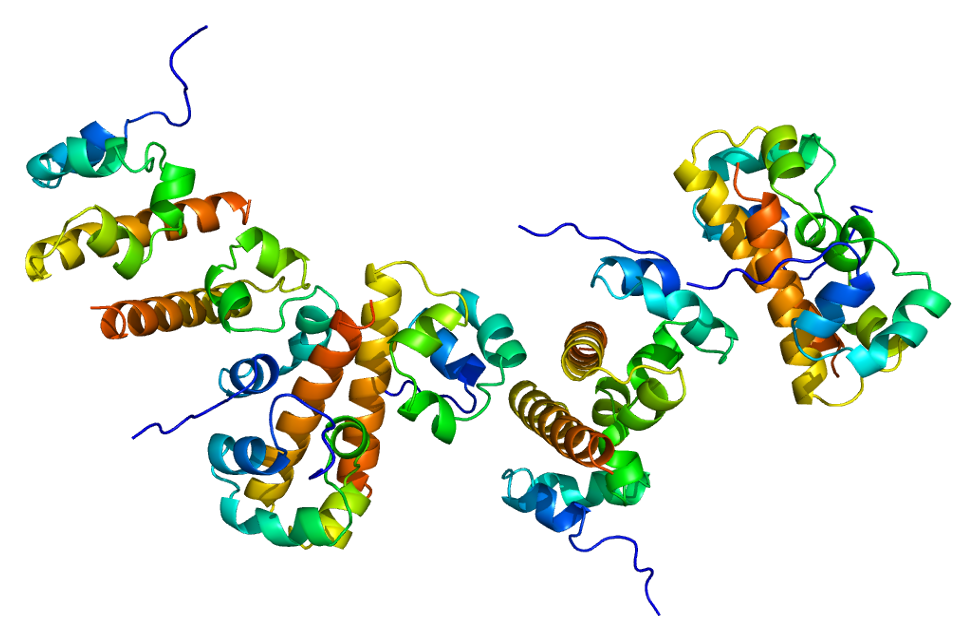
Ephrin type-B receptor 2 is a protein that in humans is encoded by the EPHB2 gene.
Ephrin receptors and their ligands, the ephrins, mediate numerous developmental processes, particularly in the nervous system. Based on their structures and sequence relationships, ephrins are divided into the ephrin-A (EFNA) class, which are anchored to the membrane by a glycosylphosphatidylinositol linkage, and the ephrin-B (EFNB) class, which are transmembrane proteins. The Eph family of receptors are divided into two groups based on the similarity of their extracellular domain sequences and their affinities for binding ephrin-A and ephrin-B ligands. Ephrin receptors make up the largest subgroup of the receptor tyrosine kinase (RTK) family. The protein encoded by this gene is a receptor for ephrin-B family members.
EphB2 is part of the NMDA signaling pathway and restoring expression rescues cognitive function in an animal model of Alzheimer's disease.
A recessive EphB2 gene is responsible for the crested-feather mutation in pigeons.
EPH receptor B2 has been shown to interact with:
This article incorporates text from the United States National Library of Medicine, which is in the public domain.
Hub AI
EPH receptor B2 AI simulator
(@EPH receptor B2_simulator)
EPH receptor B2
Ephrin type-B receptor 2 is a protein that in humans is encoded by the EPHB2 gene.
Ephrin receptors and their ligands, the ephrins, mediate numerous developmental processes, particularly in the nervous system. Based on their structures and sequence relationships, ephrins are divided into the ephrin-A (EFNA) class, which are anchored to the membrane by a glycosylphosphatidylinositol linkage, and the ephrin-B (EFNB) class, which are transmembrane proteins. The Eph family of receptors are divided into two groups based on the similarity of their extracellular domain sequences and their affinities for binding ephrin-A and ephrin-B ligands. Ephrin receptors make up the largest subgroup of the receptor tyrosine kinase (RTK) family. The protein encoded by this gene is a receptor for ephrin-B family members.
EphB2 is part of the NMDA signaling pathway and restoring expression rescues cognitive function in an animal model of Alzheimer's disease.
A recessive EphB2 gene is responsible for the crested-feather mutation in pigeons.
EPH receptor B2 has been shown to interact with:
This article incorporates text from the United States National Library of Medicine, which is in the public domain.