



Community hub
Community hub
Recent from talks
Knowledge base stats:
Talk channels stats:
Members stats:
Erasmus Programme
The Erasmus Programme is an educational programme named after Erasmus, combining all the EU's current schemes for education, training, youth and sport. It was created as the European Community Action Scheme for the Mobility of University Students, a European Union (EU) student exchange programme established in 1987. The original idea for the programme was first developed in the 1960s by Italian pedagogist Sofia Corradi, who advocated for the official recognition of study periods abroad.
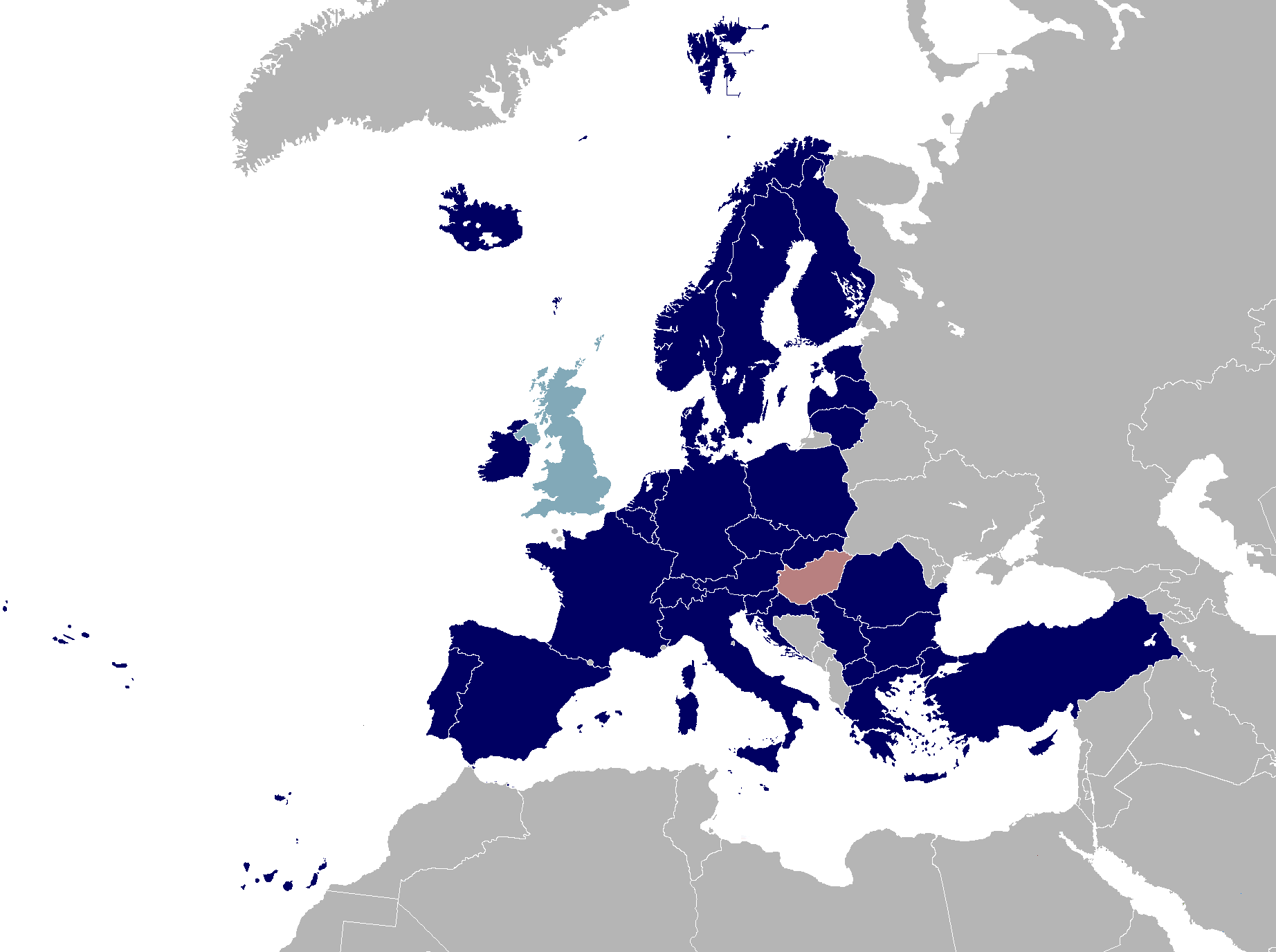
Erasmus+ is the EU's programme to support education, training, youth and sport in Europe. The programme involves the 27 EU Member States and 6 non-EU associated countries (North Macedonia, Serbia, Iceland, Liechtenstein, Norway and Turkey). With 55 National Agencies responsible for the decentralised management of most of the programme's actions. Other countries across the world may also participate in certain parts of the programme. The overall responsibility for the programme’s management, direction and evaluation lies with the European Commission (Directorate-General for Education, Youth, Sport and Culture), assisted by its Education, Audio-visual and Culture Executive Agency (EACEA).
The objective of Erasmus+ is to promote transnational learning mobility and cooperation, as a mean of improving quality and excellence, supporting inclusion and equity, and boosting innovation in the fields of education, youth and sport. In all these sectors, the aim is to provide support, through lifelong learning, for the educational, professional and personal development of participants in Europe and beyond.
The programme's objective is pursued through three key actions:
Other activities include "Jean Monnet" actions, which support teaching, learning, research and debates on European integration matters, e.g. on the EU's future challenges and opportunities.
Full information on the current profile and the activities for which funding within the programme is available can be found in the Erasmus+ Programme Guide.
Launched in 1987, the Erasmus programme was originally established to promote closer cooperation between universities and higher education institutions across Europe. Over time, the programme has expanded and is now referred to as Erasmus+, or Erasmus Plus, combining the EU's different schemes for transnational cooperation and mobility in education, training, youth and sport in Europe and beyond. The Erasmus+ programme concluded its first funding cycle from 2014 to 2020 and is now in its second cycle, spanning from 2021 to 2027. Noted for its participation among staff, students, young people, and learners across age groups, as of 2021, the programme had engaged over 13 million participants. Its name refers to Erasmus of Rotterdam, a leading scholar and inspiring lecturer during the Renaissance period who travelled extensively in Europe to teach and study at a number of universities. At the same time, the word "Erasmus" is also an acronym for "European Community Action Scheme for the Mobility of University Students".
In 1989, the Erasmus Bureau invited 32 former Erasmus students for an evaluation meeting in Ghent, Belgium. The lack of peer-to-peer support was singled out as a major issue, but it was also a driving force behind the creation of the Erasmus Student Network. The organization supports students from the Erasmus programme and other bilateral agreements and cooperates with national agencies in order to help international students. As of 23 July 2020, the Erasmus Student Network consists of 534 local associations ("sections") in 42 countries and has more than 15,000 volunteers across Europe.
Hub AI
Erasmus Programme AI simulator
(@Erasmus Programme_simulator)
Erasmus Programme
The Erasmus Programme is an educational programme named after Erasmus, combining all the EU's current schemes for education, training, youth and sport. It was created as the European Community Action Scheme for the Mobility of University Students, a European Union (EU) student exchange programme established in 1987. The original idea for the programme was first developed in the 1960s by Italian pedagogist Sofia Corradi, who advocated for the official recognition of study periods abroad.
Erasmus+ is the EU's programme to support education, training, youth and sport in Europe. The programme involves the 27 EU Member States and 6 non-EU associated countries (North Macedonia, Serbia, Iceland, Liechtenstein, Norway and Turkey). With 55 National Agencies responsible for the decentralised management of most of the programme's actions. Other countries across the world may also participate in certain parts of the programme. The overall responsibility for the programme’s management, direction and evaluation lies with the European Commission (Directorate-General for Education, Youth, Sport and Culture), assisted by its Education, Audio-visual and Culture Executive Agency (EACEA).
The objective of Erasmus+ is to promote transnational learning mobility and cooperation, as a mean of improving quality and excellence, supporting inclusion and equity, and boosting innovation in the fields of education, youth and sport. In all these sectors, the aim is to provide support, through lifelong learning, for the educational, professional and personal development of participants in Europe and beyond.
The programme's objective is pursued through three key actions:
Other activities include "Jean Monnet" actions, which support teaching, learning, research and debates on European integration matters, e.g. on the EU's future challenges and opportunities.
Full information on the current profile and the activities for which funding within the programme is available can be found in the Erasmus+ Programme Guide.
Launched in 1987, the Erasmus programme was originally established to promote closer cooperation between universities and higher education institutions across Europe. Over time, the programme has expanded and is now referred to as Erasmus+, or Erasmus Plus, combining the EU's different schemes for transnational cooperation and mobility in education, training, youth and sport in Europe and beyond. The Erasmus+ programme concluded its first funding cycle from 2014 to 2020 and is now in its second cycle, spanning from 2021 to 2027. Noted for its participation among staff, students, young people, and learners across age groups, as of 2021, the programme had engaged over 13 million participants. Its name refers to Erasmus of Rotterdam, a leading scholar and inspiring lecturer during the Renaissance period who travelled extensively in Europe to teach and study at a number of universities. At the same time, the word "Erasmus" is also an acronym for "European Community Action Scheme for the Mobility of University Students".
In 1989, the Erasmus Bureau invited 32 former Erasmus students for an evaluation meeting in Ghent, Belgium. The lack of peer-to-peer support was singled out as a major issue, but it was also a driving force behind the creation of the Erasmus Student Network. The organization supports students from the Erasmus programme and other bilateral agreements and cooperates with national agencies in order to help international students. As of 23 July 2020, the Erasmus Student Network consists of 534 local associations ("sections") in 42 countries and has more than 15,000 volunteers across Europe.