



Community hub
Recent from talks
Knowledge base stats:
Talk channels stats:
Members stats:
Eagle Vision
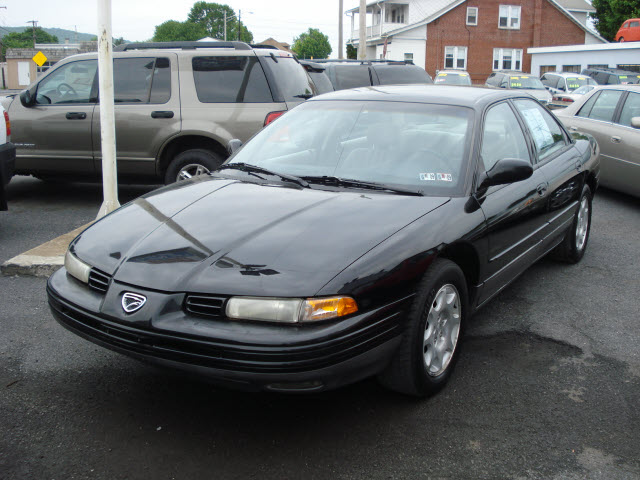
The Eagle Vision is a full-sized, front-wheel drive four-door sports sedan produced from 1992 until 1997. Marketed by the newly-formed Eagle brand by Chrysler Corporation, it replaced the AMC/Renault-designed Eagle Premier. The Eagle Vision was badged as the Chrysler Vision in Europe.
The Vision debuted at the 1992 North American International Auto Show in Detroit. As one of the LH sedans, it was Automobile Magazine's Automobile of the Year in 1993, and ultimately the only Eagle model to be wholly designed and built in-house by Chrysler.
The Vision's design can be traced to 1985 at the automaker's Advanced Concept Studio in Carlsbad, California. The lead designer, Kevin Verduyn, goal was an "exotic, four-passenger, grand-tourer for the 1990s." The design process was to focus on the interior and then work out the outside. This provided generous space for passengers while the layout generated a new proportion on which to build the exterior design with an aerodynamic concept. Using full-sized drawings, the studio sculptors created a fiberglass full-size model code-named "Navajo". After a management review in 1986, the design was sent to the Chrysler Center in Highland Park, Michigan. The Navajo proposal generated enthusiasm, but there was no chassis to accommodate the design.
In March 1987, the Chrysler Corporation purchased Lamborghini, the bankrupt Italian sports car manufacturer. Chrysler's acquisition of Lamborghini sparked plans for a mutually beneficial partnership. Chrysler offered the Italian sports car maker access to resources and technology. To mark this, Chrysler aimed to unveil an eye-catching prototype at the 1987 Frankfurt Auto Show that was scheduled less than six months away, showcasing their European re-entry. The Highland Park design team assumed the project given the tight schedule. The Navajo body provided the initial form on a modified wheelbase Lamborghini Jalpa chassis. The Navajo's exterior design was reworked and became the Lamborghini Portofino. The concept was heralded as a design triumph, setting in motion Chrysler's decision to produce a production sedan with the Portofino's revolutionary exterior design, called "cab forward". This body design was characterized by the long, low-slung windshield and relatively short overhangs. The wheels were effectively pushed to the car's corners, creating a larger passenger cabin than contemporary vehicles in its class.
The design of the chassis began in the late 1980s after Chrysler bought American Motors Corporation (AMC) in 1987, from which the Eagle division is derived. During this time, Chrysler began designing replacements for the Dodge Dynasty, Chrysler Fifth Avenue, and a potential Plymouth version. The initial design of Dodge's LH bore a resemblance to the outgoing Dynasty, and this design was scrapped entirely after François Castaing, formerly AMC's Vice President of product engineering and development, became Chrysler's Vice President of vehicle engineering in 1988. Under Castaing's leadership, the new design began with the Eagle Premier.
The chassis design was continually refined throughout the following years, as it underpinned more Chrysler concepts: the 1989 Chrysler Millennium and 1990 Eagle Optima. The Premier's longitudinal engine mounting layout was inherited, as were the front suspension geometry and braking system. The chassis itself became a flexible architecture capable of supporting front or rear-wheel drive (designated "LH" and "LX" respectively). The transmission was inspired by the Premier's Audi and ZF automatics. Borrowing heavily from Chrysler's A604 (41TE) "Ultradrive" transversely mounted automatic, it became the A606 (also known as 42LE).
By 1990, Chrysler managers decided that the new technologically advanced car would need to include an updated engine. Until then, the only engine confirmed for use was Chrysler's 3.3 L pushrod V6. The 3.3 L engine's 60° block was bored out to 3.5 L, while the pushrod-actuated valves were replaced with SOHC cylinder heads with four valves per cylinder, making it an advanced 3.5 L V6.
The appearance of the Vision continued the cab-forward exterior design of the 1987 Lamborghini Portofino concept with its aerodynamic shape, contributing to little wind noise inside this large car. The engineering and sleek styling gave the Vision a low drag coefficient (0.31), equal to the two-seat Porsche 997 sports car.
Hub AI
Eagle Vision AI simulator
(@Eagle Vision_simulator)
Eagle Vision
The Eagle Vision is a full-sized, front-wheel drive four-door sports sedan produced from 1992 until 1997. Marketed by the newly-formed Eagle brand by Chrysler Corporation, it replaced the AMC/Renault-designed Eagle Premier. The Eagle Vision was badged as the Chrysler Vision in Europe.
The Vision debuted at the 1992 North American International Auto Show in Detroit. As one of the LH sedans, it was Automobile Magazine's Automobile of the Year in 1993, and ultimately the only Eagle model to be wholly designed and built in-house by Chrysler.
The Vision's design can be traced to 1985 at the automaker's Advanced Concept Studio in Carlsbad, California. The lead designer, Kevin Verduyn, goal was an "exotic, four-passenger, grand-tourer for the 1990s." The design process was to focus on the interior and then work out the outside. This provided generous space for passengers while the layout generated a new proportion on which to build the exterior design with an aerodynamic concept. Using full-sized drawings, the studio sculptors created a fiberglass full-size model code-named "Navajo". After a management review in 1986, the design was sent to the Chrysler Center in Highland Park, Michigan. The Navajo proposal generated enthusiasm, but there was no chassis to accommodate the design.
In March 1987, the Chrysler Corporation purchased Lamborghini, the bankrupt Italian sports car manufacturer. Chrysler's acquisition of Lamborghini sparked plans for a mutually beneficial partnership. Chrysler offered the Italian sports car maker access to resources and technology. To mark this, Chrysler aimed to unveil an eye-catching prototype at the 1987 Frankfurt Auto Show that was scheduled less than six months away, showcasing their European re-entry. The Highland Park design team assumed the project given the tight schedule. The Navajo body provided the initial form on a modified wheelbase Lamborghini Jalpa chassis. The Navajo's exterior design was reworked and became the Lamborghini Portofino. The concept was heralded as a design triumph, setting in motion Chrysler's decision to produce a production sedan with the Portofino's revolutionary exterior design, called "cab forward". This body design was characterized by the long, low-slung windshield and relatively short overhangs. The wheels were effectively pushed to the car's corners, creating a larger passenger cabin than contemporary vehicles in its class.
The design of the chassis began in the late 1980s after Chrysler bought American Motors Corporation (AMC) in 1987, from which the Eagle division is derived. During this time, Chrysler began designing replacements for the Dodge Dynasty, Chrysler Fifth Avenue, and a potential Plymouth version. The initial design of Dodge's LH bore a resemblance to the outgoing Dynasty, and this design was scrapped entirely after François Castaing, formerly AMC's Vice President of product engineering and development, became Chrysler's Vice President of vehicle engineering in 1988. Under Castaing's leadership, the new design began with the Eagle Premier.
The chassis design was continually refined throughout the following years, as it underpinned more Chrysler concepts: the 1989 Chrysler Millennium and 1990 Eagle Optima. The Premier's longitudinal engine mounting layout was inherited, as were the front suspension geometry and braking system. The chassis itself became a flexible architecture capable of supporting front or rear-wheel drive (designated "LH" and "LX" respectively). The transmission was inspired by the Premier's Audi and ZF automatics. Borrowing heavily from Chrysler's A604 (41TE) "Ultradrive" transversely mounted automatic, it became the A606 (also known as 42LE).
By 1990, Chrysler managers decided that the new technologically advanced car would need to include an updated engine. Until then, the only engine confirmed for use was Chrysler's 3.3 L pushrod V6. The 3.3 L engine's 60° block was bored out to 3.5 L, while the pushrod-actuated valves were replaced with SOHC cylinder heads with four valves per cylinder, making it an advanced 3.5 L V6.
The appearance of the Vision continued the cab-forward exterior design of the 1987 Lamborghini Portofino concept with its aerodynamic shape, contributing to little wind noise inside this large car. The engineering and sleek styling gave the Vision a low drag coefficient (0.31), equal to the two-seat Porsche 997 sports car.