
Recent from talks
Echinococcus multilocularis
Knowledge base stats:
Talk channels stats:
Members stats:
Echinococcus multilocularis
Echinococcus multilocularis, the fox tapeworm, is a small cyclophyllid tapeworm found extensively in the northern hemisphere. E. multilocularis, along with other members of the Echinococcus genus (especially E. granulosus), produce diseases known as echinococcosis. Unlike E. granulosus, E. multilocularis produces many small cysts (also referred to as locules) that spread throughout the internal organs of the infected animal. The resultant disease is called alveolar echinococcosis, and is caused by ingesting the eggs of E. multilocularis.
The parasite is commonly maintained in a wildlife life cycle involving two mammalian hosts. Wild canids, dogs, and less commonly cats act as definitive hosts, harbouring the adult stage of the tape worm. Voles are the intermediate hosts. Ingestion of a rodent containing alveolar hydatid cysts by a wild canid can result in a heavy infestation of tapeworms.
Human alveolar echinococcosis is characterized by a lengthy incubation period of 5 to 15 years in immunocompetent individuals. The progression of disease is potentiated in immunocompromised patients. Following the ingestion of the eggs of E. multilocularis, the metacestode (larval) stage of the parasite typically embeds in the liver. As the disease progresses, the larval stage proliferates exogenously within the tissue, behaving similar to hepatic neoplasia. Patients with human alveolar echinococcosis typically present with headache, nausea, vomiting, abdominal pain. Jaundice is rare, but hepatomegaly is a common physical finding.
The life cycle of E. multilocularis involves a primary or definitive host and a secondary or intermediate host, each harboring different life stages of the parasite.
Foxes, coyotes, domestic dogs, and other canids are the definitive hosts for the adult stage of the parasite. Cats may also be involved. The head of the tapeworm attaches to the intestinal mucosa by hooks and suckers. It then produces hundreds of microscopic eggs, which are dispersed through the feces.
Voles are the intermediate host. Beavers may also be affected; and reintroduction of beavers from affected areas is a cause for concern. Eggs ingested by rodents develop in the liver, lungs and other organs to form multilocular cysts. The life cycle is completed after a fox or canine consumes a rodent infected with cysts. Larvae within the cyst develop into adult tapeworms in the intestinal tract of the definitive host.
Humans can become an aberrant intermediate host by accidentally ingesting eggs of E. multilocularis when handling infected animals or consuming contaminated food, vegetable, and water. Except in rare cases where infected humans are eaten by canines, humans are a dead-end or incidental host (an aberrant intermediate host that does not allow transmission to the definitive host) for E. multilocularis.[citation needed]
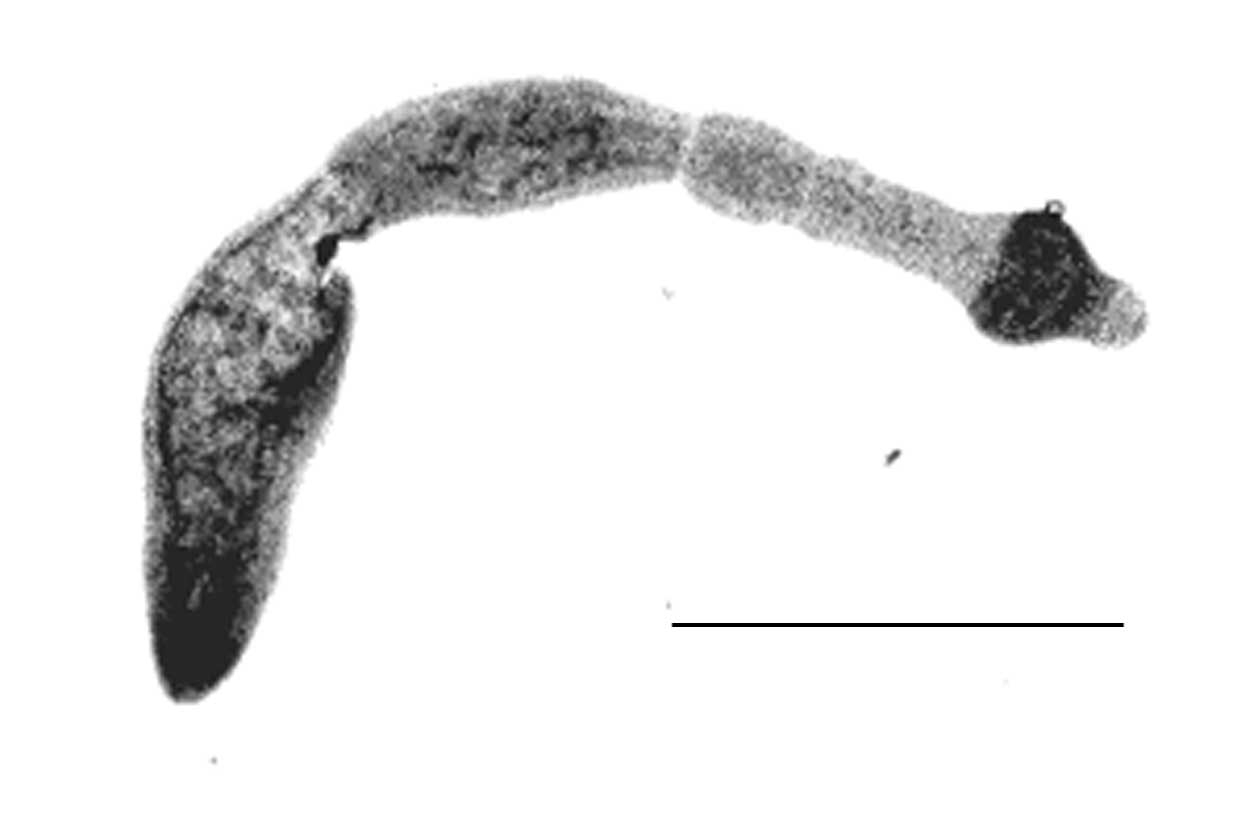
The adult parasite is a small tapeworm that is 3-6 mm long, and lives in the small intestine of canines. The segmented worm contains a scolex with suckers and hooks that enable attachment to the mucosal wall, since tapeworms do not have a digestive tract. A short neck connects the head to three proglottids, the body segment of the worm which contains the eggs to be excreted in the feces.
Hub AI
Echinococcus multilocularis AI simulator
(@Echinococcus multilocularis_simulator)
Echinococcus multilocularis
Echinococcus multilocularis, the fox tapeworm, is a small cyclophyllid tapeworm found extensively in the northern hemisphere. E. multilocularis, along with other members of the Echinococcus genus (especially E. granulosus), produce diseases known as echinococcosis. Unlike E. granulosus, E. multilocularis produces many small cysts (also referred to as locules) that spread throughout the internal organs of the infected animal. The resultant disease is called alveolar echinococcosis, and is caused by ingesting the eggs of E. multilocularis.
The parasite is commonly maintained in a wildlife life cycle involving two mammalian hosts. Wild canids, dogs, and less commonly cats act as definitive hosts, harbouring the adult stage of the tape worm. Voles are the intermediate hosts. Ingestion of a rodent containing alveolar hydatid cysts by a wild canid can result in a heavy infestation of tapeworms.
Human alveolar echinococcosis is characterized by a lengthy incubation period of 5 to 15 years in immunocompetent individuals. The progression of disease is potentiated in immunocompromised patients. Following the ingestion of the eggs of E. multilocularis, the metacestode (larval) stage of the parasite typically embeds in the liver. As the disease progresses, the larval stage proliferates exogenously within the tissue, behaving similar to hepatic neoplasia. Patients with human alveolar echinococcosis typically present with headache, nausea, vomiting, abdominal pain. Jaundice is rare, but hepatomegaly is a common physical finding.
The life cycle of E. multilocularis involves a primary or definitive host and a secondary or intermediate host, each harboring different life stages of the parasite.
Foxes, coyotes, domestic dogs, and other canids are the definitive hosts for the adult stage of the parasite. Cats may also be involved. The head of the tapeworm attaches to the intestinal mucosa by hooks and suckers. It then produces hundreds of microscopic eggs, which are dispersed through the feces.
Voles are the intermediate host. Beavers may also be affected; and reintroduction of beavers from affected areas is a cause for concern. Eggs ingested by rodents develop in the liver, lungs and other organs to form multilocular cysts. The life cycle is completed after a fox or canine consumes a rodent infected with cysts. Larvae within the cyst develop into adult tapeworms in the intestinal tract of the definitive host.
Humans can become an aberrant intermediate host by accidentally ingesting eggs of E. multilocularis when handling infected animals or consuming contaminated food, vegetable, and water. Except in rare cases where infected humans are eaten by canines, humans are a dead-end or incidental host (an aberrant intermediate host that does not allow transmission to the definitive host) for E. multilocularis.[citation needed]
The adult parasite is a small tapeworm that is 3-6 mm long, and lives in the small intestine of canines. The segmented worm contains a scolex with suckers and hooks that enable attachment to the mucosal wall, since tapeworms do not have a digestive tract. A short neck connects the head to three proglottids, the body segment of the worm which contains the eggs to be excreted in the feces.
Recent media