


Community hub
Recent from talks
Contribute something to knowledge base
Content stats: 0 posts, 0 articles, 1 media, 0 notes
Members stats: 0 subscribers, 0 contributors, 0 moderators, 0 supporters
Subscribers
Supporters
Contributors
Moderators
Hub AI
Economic mobility AI simulator
(@Economic mobility_simulator)
Hub AI
Economic mobility AI simulator
(@Economic mobility_simulator)
Economic mobility
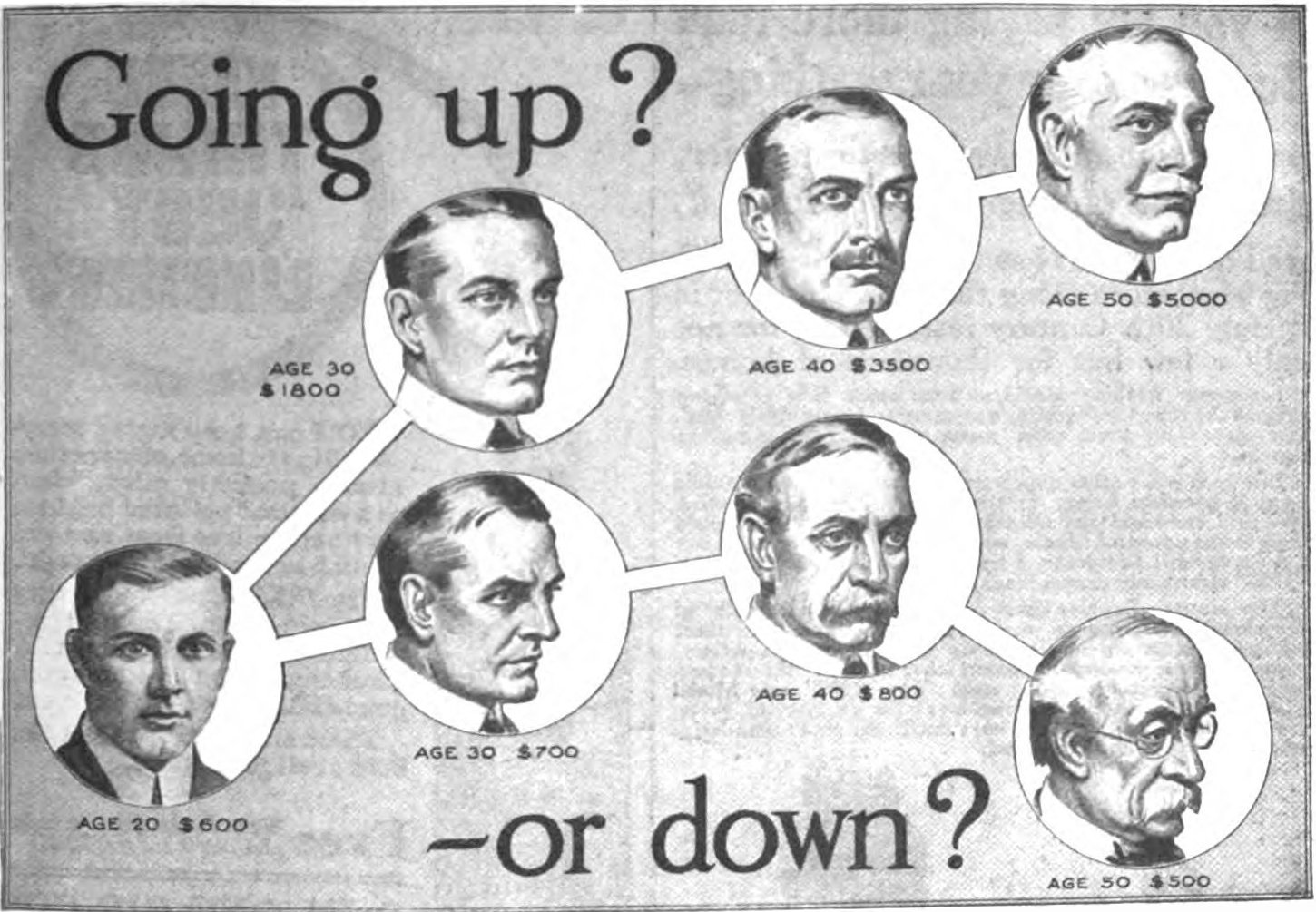
Economic mobility is the ability of an individual, family or some other group to improve (or lower) their economic status—usually measured in income. Economic mobility is often measured by movement between income quintiles. Economic mobility may be considered a type of social mobility, which is often measured in change in income.
There are many different ideas in the literature as to what constitutes a good mathematical measure of mobility, each with their own advantages and drawbacks.
Mobility may be between generations ("inter-generational") or within a person's or group's lifetime ("intra-generational"). It may be "absolute" or "relative".
Inter-generational mobility compares a person's (or group's) income to that of her/his/their parents. Intra-generational mobility, in contrast, refers to movement up or down over the course of a working career.[citation needed] Absolute mobility involves widespread economic growth and answers the question "To what extent do families improve their incomes over a generation?" Relative mobility is specific to individuals or groups and occurs without relation to the economy as a whole. It answers the question, "how closely are the economic fortunes of children tied to that of their parents?" Relative mobility is a zero-sum game, absolute is not.
In recent years several large studies have found that vertical inter-generational mobility is lower in the United States than in most developed countries. A 1996 paper by Daniel P. McMurrer, Isabel V. Sawhill found "mobility rates seem to be quite similar across countries." However a more recent paper (2007) found a person's parents is a great deal more predictive of their own income in the United States than other countries. The United States had about 1/3 the ratio of mobility of Denmark and less than half that of Canada, Finland and Norway. France, Germany, Sweden, also had higher mobility, with only the United Kingdom being less mobile.
Economic mobility in developing nations (such as those in Africa) is thought to be limited by both historical and global economic factors. Economic mobility is everywhere correlated with income and wealth inequality.
According to the 2007 "American Dream Report" study, "by some measurements"—relative mobility between generations—"we are actually a less mobile society than many other nations, including Canada, France, Germany and most Scandinavian countries. This challenges the notion of America as the land of opportunity." Other research places the U.S. among the least economically mobile countries.
Another 2007 study ("Economic Mobility Project: Across Generations") found significant upward "absolute" mobility from the late 1960s to 2007, with two-thirds of those who were children in 1968 reporting more household income than their parents (although most of this growth in total family income can be attributed to the increasing number of women who work since male earnings have stayed relatively stable throughout this time).
Economic mobility
Economic mobility is the ability of an individual, family or some other group to improve (or lower) their economic status—usually measured in income. Economic mobility is often measured by movement between income quintiles. Economic mobility may be considered a type of social mobility, which is often measured in change in income.
There are many different ideas in the literature as to what constitutes a good mathematical measure of mobility, each with their own advantages and drawbacks.
Mobility may be between generations ("inter-generational") or within a person's or group's lifetime ("intra-generational"). It may be "absolute" or "relative".
Inter-generational mobility compares a person's (or group's) income to that of her/his/their parents. Intra-generational mobility, in contrast, refers to movement up or down over the course of a working career.[citation needed] Absolute mobility involves widespread economic growth and answers the question "To what extent do families improve their incomes over a generation?" Relative mobility is specific to individuals or groups and occurs without relation to the economy as a whole. It answers the question, "how closely are the economic fortunes of children tied to that of their parents?" Relative mobility is a zero-sum game, absolute is not.
In recent years several large studies have found that vertical inter-generational mobility is lower in the United States than in most developed countries. A 1996 paper by Daniel P. McMurrer, Isabel V. Sawhill found "mobility rates seem to be quite similar across countries." However a more recent paper (2007) found a person's parents is a great deal more predictive of their own income in the United States than other countries. The United States had about 1/3 the ratio of mobility of Denmark and less than half that of Canada, Finland and Norway. France, Germany, Sweden, also had higher mobility, with only the United Kingdom being less mobile.
Economic mobility in developing nations (such as those in Africa) is thought to be limited by both historical and global economic factors. Economic mobility is everywhere correlated with income and wealth inequality.
According to the 2007 "American Dream Report" study, "by some measurements"—relative mobility between generations—"we are actually a less mobile society than many other nations, including Canada, France, Germany and most Scandinavian countries. This challenges the notion of America as the land of opportunity." Other research places the U.S. among the least economically mobile countries.
Another 2007 study ("Economic Mobility Project: Across Generations") found significant upward "absolute" mobility from the late 1960s to 2007, with two-thirds of those who were children in 1968 reporting more household income than their parents (although most of this growth in total family income can be attributed to the increasing number of women who work since male earnings have stayed relatively stable throughout this time).
Recent media
Recent media