
Recent from talks
Edgar Nelson Rhodes
Knowledge base stats:
Talk channels stats:
Members stats:
Edgar Nelson Rhodes
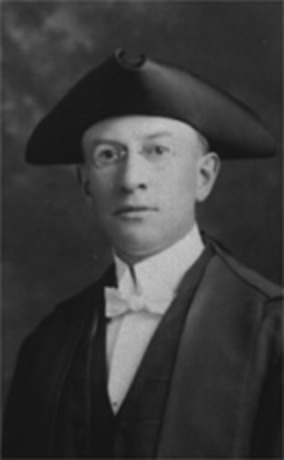
Edgar Nelson Rhodes, PC (January 5, 1877 – March 15, 1942), was a Canadian parliamentarian from Nova Scotia who served as Premier of Nova Scotia from 1925 to 1930.
He was first elected to the House of Commons of Canada in 1908 as a member of the Conservative Party. In January 1917, he became Speaker of the House of Commons of Canada when his predecessor, Albert Sévigny, was appointed to the Canadian Cabinet. Rhodes was retained in the position following the 1917 election that fall, becoming the third Speaker since James Cockburn to preside over more than one Parliament. In 1921, he was made a member of the Queen's Privy Council for Canada before retiring from politics to become president of the British-American Nickel Company, whose previous president had been James Hamet Dunn.
The company failed in 1925, and he returned to provincial politics. Prior to the 1925 provincial election, he was asked to become leader of the Nova Scotia Conservative Party after the leader of the party, W. L. Hall, was assaulted on the waterfront. Rhodes took over the party and led it to victory in the 1925 election. The Conservatives defeated a Liberal government that had been in power for forty-three years but had been, in its last years, wracked by an economic downturn and severe labour unrest among miners in Cape Breton.
Rhodes ran on a Maritime Rights platform, promising to curtail federal influence and stop the exodus of people from the province. The Tories more than doubled their seats in the Nova Scotia House of Assembly, winning forty out of forty-three seats. An important factor in their victory was the failure of the governing Liberals to resolve a long strike by the province's coal miners. When Cape Breton coal miner William Davis was killed by company police in a confrontation on June 11, voters looked to the Tories for solutions. Rhodes engineered a settlement of the dispute and appointed a royal commission. The new government later introduced pensions for teachers and allowances for widowed mothers.
During its first term, the government eliminated the requirement for newly-appointed ministers to run for re-election in 1927.
The Legislative Council, the province's appointed upper house, dated from 1838 and was meant to mimic the imperial House of Lords. It had, however, been the source of constant criticism from 1870, and every government since 1878 had promised or at least supported its abolition. The Council had been normally sized at 21 members prior to confederation, and the British North America Act 1867 provided for the continuation of provincial constitutions. Failing to further specify anything on such constitutions, the Act left doubt as to whether the Council was therefore limited to the customary 21 members, the 18 members actually empanelled at the time of the Act, or as many members as the Sovereign, however represented in Nova Scotia, wished. Further statutes of the provincial constitution continued this confusion. Similar equivocation existed as to whether appointments to the Council were for life or the mere pleasure of the Sovereign.
Partisan politics also played a role in this issue, with Liberals largely yielding to the Council's presence as it was able to help the party organization and Tories opposing it for that reason. Liberal George Henry Murray, premier from 1896 to 1923, nominally supported its abolition but introduced only half-hearted measures to that end, and when money was ample enough to afford the second chamber he and the Liberal press largely supported its continuation. By 1923, the communist J. B. McLachlan stoked enough fear that the Council was able to position itself as the last barrier to his activities. Murray's successor Armstrong reformed the Council by limiting future appointees to ten-year terms in 1925, but achieved little else.
By the time of Rhodes's assumption of office, only one Conservative was on the Council. The new government declined to fill vacancies in the Council lest the new officeholders become too attached to its continued existence. It appointed F. P. Bligh to represent it in the Council in 1926, making him its President in 1927, and appointed R. H. Butts to be the government leader; those were the only two appointments of the government to the Council that were not for the express purpose of securing its abolition. Rhodes attempted to pay off the councillors in 1926, with ten-year pensions to those appointed for life and five-year pensions to those appointed for ten years, but the offer was rejected. After this failure, Rhodes advised the Lieutenant-Governor James Cranswick Tory to appoint enough Councillors to vote the body out of existence, arguing that the Sovereign, duly represented by the Lieutenant-Governor in Nova Scotia, continued to have the right to appoint an unlimited number of persons to the Council. Tory referred the matter to the federal Governor General in Council, who told him to limit the appointments to 21 total councillors pending further judicial review.
Hub AI
Edgar Nelson Rhodes AI simulator
(@Edgar Nelson Rhodes_simulator)
Edgar Nelson Rhodes
Edgar Nelson Rhodes, PC (January 5, 1877 – March 15, 1942), was a Canadian parliamentarian from Nova Scotia who served as Premier of Nova Scotia from 1925 to 1930.
He was first elected to the House of Commons of Canada in 1908 as a member of the Conservative Party. In January 1917, he became Speaker of the House of Commons of Canada when his predecessor, Albert Sévigny, was appointed to the Canadian Cabinet. Rhodes was retained in the position following the 1917 election that fall, becoming the third Speaker since James Cockburn to preside over more than one Parliament. In 1921, he was made a member of the Queen's Privy Council for Canada before retiring from politics to become president of the British-American Nickel Company, whose previous president had been James Hamet Dunn.
The company failed in 1925, and he returned to provincial politics. Prior to the 1925 provincial election, he was asked to become leader of the Nova Scotia Conservative Party after the leader of the party, W. L. Hall, was assaulted on the waterfront. Rhodes took over the party and led it to victory in the 1925 election. The Conservatives defeated a Liberal government that had been in power for forty-three years but had been, in its last years, wracked by an economic downturn and severe labour unrest among miners in Cape Breton.
Rhodes ran on a Maritime Rights platform, promising to curtail federal influence and stop the exodus of people from the province. The Tories more than doubled their seats in the Nova Scotia House of Assembly, winning forty out of forty-three seats. An important factor in their victory was the failure of the governing Liberals to resolve a long strike by the province's coal miners. When Cape Breton coal miner William Davis was killed by company police in a confrontation on June 11, voters looked to the Tories for solutions. Rhodes engineered a settlement of the dispute and appointed a royal commission. The new government later introduced pensions for teachers and allowances for widowed mothers.
During its first term, the government eliminated the requirement for newly-appointed ministers to run for re-election in 1927.
The Legislative Council, the province's appointed upper house, dated from 1838 and was meant to mimic the imperial House of Lords. It had, however, been the source of constant criticism from 1870, and every government since 1878 had promised or at least supported its abolition. The Council had been normally sized at 21 members prior to confederation, and the British North America Act 1867 provided for the continuation of provincial constitutions. Failing to further specify anything on such constitutions, the Act left doubt as to whether the Council was therefore limited to the customary 21 members, the 18 members actually empanelled at the time of the Act, or as many members as the Sovereign, however represented in Nova Scotia, wished. Further statutes of the provincial constitution continued this confusion. Similar equivocation existed as to whether appointments to the Council were for life or the mere pleasure of the Sovereign.
Partisan politics also played a role in this issue, with Liberals largely yielding to the Council's presence as it was able to help the party organization and Tories opposing it for that reason. Liberal George Henry Murray, premier from 1896 to 1923, nominally supported its abolition but introduced only half-hearted measures to that end, and when money was ample enough to afford the second chamber he and the Liberal press largely supported its continuation. By 1923, the communist J. B. McLachlan stoked enough fear that the Council was able to position itself as the last barrier to his activities. Murray's successor Armstrong reformed the Council by limiting future appointees to ten-year terms in 1925, but achieved little else.
By the time of Rhodes's assumption of office, only one Conservative was on the Council. The new government declined to fill vacancies in the Council lest the new officeholders become too attached to its continued existence. It appointed F. P. Bligh to represent it in the Council in 1926, making him its President in 1927, and appointed R. H. Butts to be the government leader; those were the only two appointments of the government to the Council that were not for the express purpose of securing its abolition. Rhodes attempted to pay off the councillors in 1926, with ten-year pensions to those appointed for life and five-year pensions to those appointed for ten years, but the offer was rejected. After this failure, Rhodes advised the Lieutenant-Governor James Cranswick Tory to appoint enough Councillors to vote the body out of existence, arguing that the Sovereign, duly represented by the Lieutenant-Governor in Nova Scotia, continued to have the right to appoint an unlimited number of persons to the Council. Tory referred the matter to the federal Governor General in Council, who told him to limit the appointments to 21 total councillors pending further judicial review.
Recent media