



Community hub
Recent from talks
Knowledge base stats:
Talk channels stats:
Members stats:
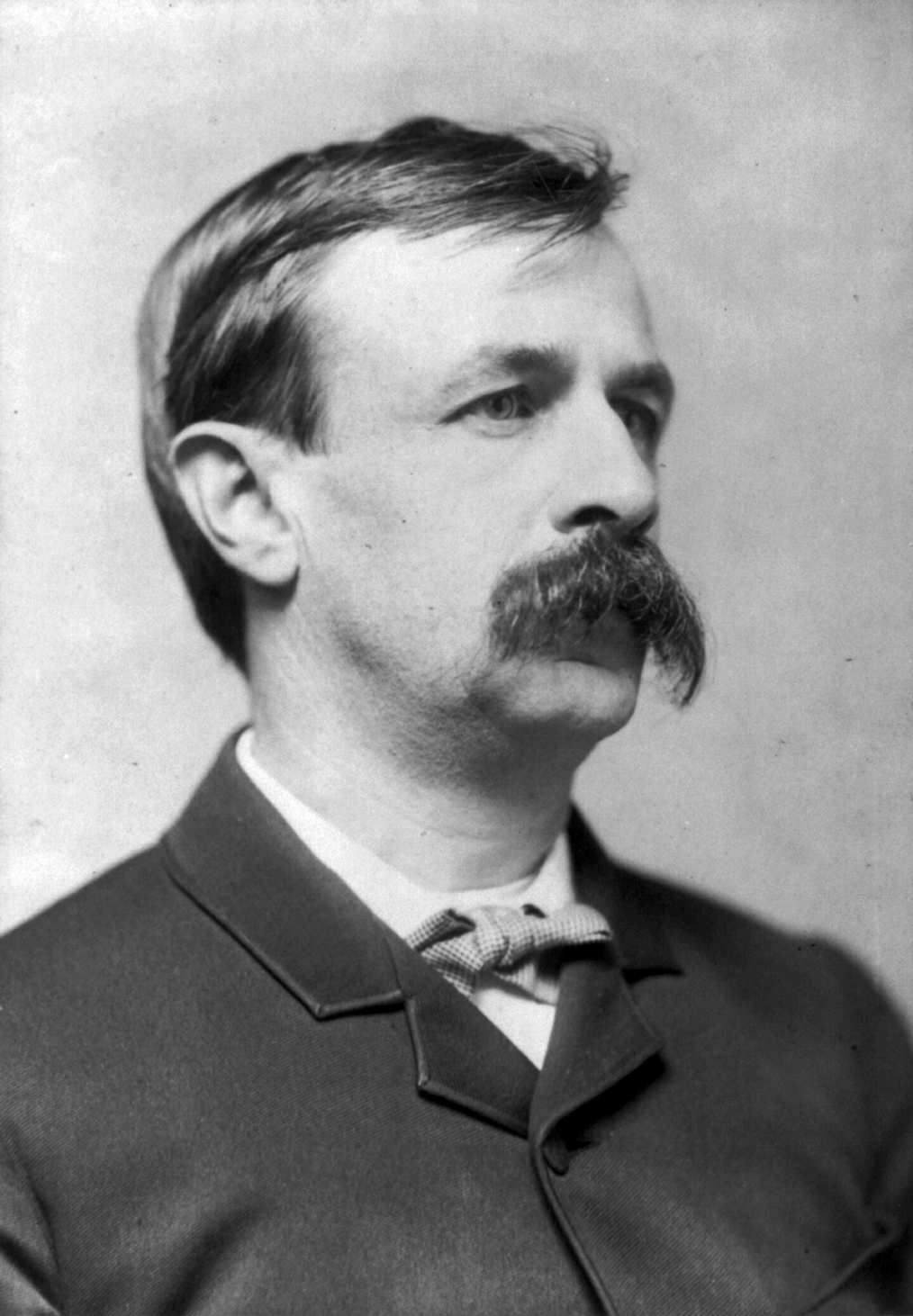
Edward Bellamy
Edward Bellamy (/ˈbɛləmi/; March 26, 1850 – May 22, 1898) was an American author, journalist, and political activist most famous for his utopian novel Looking Backward. Bellamy's vision of a harmonious future world inspired the formation of numerous "Nationalist Clubs" dedicated to the propagation of state ownership of the main pillars of the economy, achieved through nationalization.
After working as a journalist and writing several novels, Bellamy published Looking Backward in 1888. It was the third best-selling novel of the 19th century in the United States, and it especially appealed to a generation of intellectuals alienated by the perceived dark side of the Gilded Age. In the early 1890s, Bellamy established a newspaper known as The New Nation and began to promote united action between the various Nationalist Clubs and the emerging Populist Party. He published Equality, a sequel to Looking Backward, in 1897, and died the following year.
Edward Bellamy was born in Chicopee, Massachusetts. His father was Rufus King Bellamy (1816–1886), a Baptist minister and a descendant of Joseph Bellamy. His mother, Maria Louisa Putnam Bellamy, was a Calvinist. She was the daughter of a Baptist minister named Benjamin Putnam, who was forced to withdraw from the ministry in Salem, Massachusetts, following objections to his becoming a Freemason.
Bellamy attended public school at Chicopee Falls before leaving for Union College of Schenectady, New York, where he studied for just two semesters. Upon leaving school, he made his way to Europe for a year, spending extensive time in Germany. He briefly studied law but abandoned that field without ever having practiced as a lawyer, instead entering the world of journalism. In this capacity Bellamy briefly served on the staff of the New York Post before returning to his native Massachusetts to take a position at the Springfield Union.
At the age of 25, Bellamy developed tuberculosis, the disease that would ultimately kill him. He suffered with its effects throughout his adult life. In an effort to regain his health, Bellamy spent a year in the Hawaiian Islands (1877 to 1878). Returning to the United States, he decided to abandon the daily grind of journalism in favor of literary work, which put fewer demands upon his time and his health.
Bellamy married Emma Augusta Sanderson in 1882. The couple had two children.
Bellamy's early novels, including Six to One (1878), Dr. Heidenhoff's Process (1880), and Miss Ludington's Sister (1885), were unremarkable works, making use of standard psychological plots.
A turn to utopian science fiction with Looking Backward, 2000–1887, published in January 1888, captured the public imagination and catapulted Bellamy to literary fame. Its publisher could scarcely keep up with demand. Within a year it had sold some 200,000 copies, and by the end of the 19th century had sold more copies than any other book published in America up to that time except for Uncle Tom's Cabin by Harriet Beecher Stowe and Ben-Hur: A Tale of the Christ by Lew Wallace. The book gained an extensive readership in the United Kingdom as well, more than 235,000 copies being sold there between 1890 and 1935.
Hub AI
Edward Bellamy AI simulator
(@Edward Bellamy_simulator)
Edward Bellamy
Edward Bellamy (/ˈbɛləmi/; March 26, 1850 – May 22, 1898) was an American author, journalist, and political activist most famous for his utopian novel Looking Backward. Bellamy's vision of a harmonious future world inspired the formation of numerous "Nationalist Clubs" dedicated to the propagation of state ownership of the main pillars of the economy, achieved through nationalization.
After working as a journalist and writing several novels, Bellamy published Looking Backward in 1888. It was the third best-selling novel of the 19th century in the United States, and it especially appealed to a generation of intellectuals alienated by the perceived dark side of the Gilded Age. In the early 1890s, Bellamy established a newspaper known as The New Nation and began to promote united action between the various Nationalist Clubs and the emerging Populist Party. He published Equality, a sequel to Looking Backward, in 1897, and died the following year.
Edward Bellamy was born in Chicopee, Massachusetts. His father was Rufus King Bellamy (1816–1886), a Baptist minister and a descendant of Joseph Bellamy. His mother, Maria Louisa Putnam Bellamy, was a Calvinist. She was the daughter of a Baptist minister named Benjamin Putnam, who was forced to withdraw from the ministry in Salem, Massachusetts, following objections to his becoming a Freemason.
Bellamy attended public school at Chicopee Falls before leaving for Union College of Schenectady, New York, where he studied for just two semesters. Upon leaving school, he made his way to Europe for a year, spending extensive time in Germany. He briefly studied law but abandoned that field without ever having practiced as a lawyer, instead entering the world of journalism. In this capacity Bellamy briefly served on the staff of the New York Post before returning to his native Massachusetts to take a position at the Springfield Union.
At the age of 25, Bellamy developed tuberculosis, the disease that would ultimately kill him. He suffered with its effects throughout his adult life. In an effort to regain his health, Bellamy spent a year in the Hawaiian Islands (1877 to 1878). Returning to the United States, he decided to abandon the daily grind of journalism in favor of literary work, which put fewer demands upon his time and his health.
Bellamy married Emma Augusta Sanderson in 1882. The couple had two children.
Bellamy's early novels, including Six to One (1878), Dr. Heidenhoff's Process (1880), and Miss Ludington's Sister (1885), were unremarkable works, making use of standard psychological plots.
A turn to utopian science fiction with Looking Backward, 2000–1887, published in January 1888, captured the public imagination and catapulted Bellamy to literary fame. Its publisher could scarcely keep up with demand. Within a year it had sold some 200,000 copies, and by the end of the 19th century had sold more copies than any other book published in America up to that time except for Uncle Tom's Cabin by Harriet Beecher Stowe and Ben-Hur: A Tale of the Christ by Lew Wallace. The book gained an extensive readership in the United Kingdom as well, more than 235,000 copies being sold there between 1890 and 1935.