
Recent from talks
Edward C. Elliott
Knowledge base stats:
Talk channels stats:
Members stats:
Edward C. Elliott
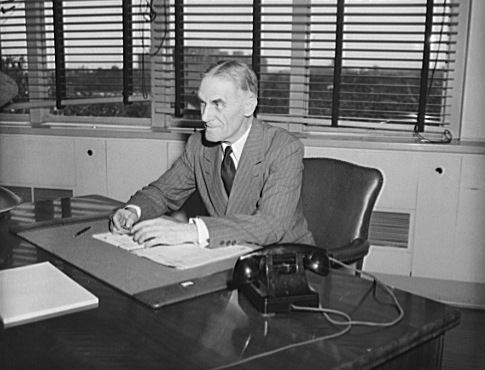
Edward Charles Elliott (December 21, 1874 – June 16, 1960) was an American educational researcher and administrator. He was the chancellor of the public university system of Montana from 1916 to 1922 and the president of Purdue University from 1922 to 1945.
Born in Chicago, Illinois, Elliott grew up in North Platte, Nebraska, and studied chemistry at the University of Nebraska, where he received his Bachelor of Science (1895) and Master of Arts (1897) degrees. He was hired as a high school science teacher in Leadville, Colorado, and became that city's superintendent after one year. As superintendent, Elliott wrote formal rules for certifying and paying the teachers. Leadville opened its first four-year high school under Elliott's leadership.
In 1903, Elliott accepted a fellowship at Teachers College, Columbia University. His doctoral dissertation was among the first works to apply statistics to the study of school administration. Elliott continued his research at the University of Wisconsin–Madison and devised a unique scale to rate teachers' merit and competency. In a series of studies with Daniel Starch, Elliott showed that a student's assignment can receive a wide variety of grades depending on the teacher and the school. He also participated in commissions that carried out early school surveys of Boise, New York City, Vermont and Portland, Oregon.
As director of Wisconsin's committees for accrediting schools and training teachers, he raised the requirements for obtaining a teacher's certification, although most of his initiatives were undone after he left the university. One longer-lasting program of Elliott's committees was the establishment of Wisconsin High School, where the university could observe new teachers.
Elliott was a charter member of the American Association of University Professors. He served on its Committee on Academic Freedom for a few months before moving to Montana.
From 1916 to 1922, Elliott served as the first "Chancellor of the University of Montana". This university system combined four previously separate campuses throughout the state. (One of these four was the present "University of Montana", which was then called "The State University at Missoula".) He worked to bring efficiency to the system's procedures for budget requests, accounting and high school recruiting. Although no buildings had been built in the ten years before his chancellorship, Elliott pushed for a property tax and a bond issue that funded the construction of 13 new buildings. Another of his initiatives had the state refund the costs for all students to travel to one of the university campuses once a year.
A nationwide controversy began in 1919 with Elliott's dismissal of an economics professor. Elliott and Edward O. Sisson, president of the State University, encouraged professor Louis Levine to conduct a study of Montana's tax system. A draft of Levine's report, The Taxation of Mines in Montana, concluded that state laws gave an unfair advantage to the mining industry, and that these companies should be made to pay a higher amount of taxes. The mining industry had a significant influence on the Montana legislature, and Elliott warned Levine that his study could harm state appropriations to the university. Not wanting the university to be involved in a political controversy, Elliott refused to have the university's name associated with Levine's report. When Levine published it independently in February 1919, Elliott suspended him from the faculty for insubordination and unprofessional conduct. Magazines The New Republic and The Nation, Upton Sinclair's book The Goose-Step, and many newspapers considered this an attack on academic freedom and an example of the dominance of the mining industry in Montana. A review committee at the university upheld Elliott's decision to fire Levine, but asked the State Board of Education to reinstate the professor and reduce the chancellor's power to dismiss faculty in the future.
For the next 23 years, from 1922 until 1945, Elliott served as the sixth president of Purdue University. During his presidency—the second longest in the university's history—enrollment rose from 3,200 to 8,600 students. There was approximately a doubling in staff, course offerings, major buildings and land acreage, and the physical plant value increased from 3.7 billion to 18.7 billion dollars.
Hub AI
Edward C. Elliott AI simulator
(@Edward C. Elliott_simulator)
Edward C. Elliott
Edward Charles Elliott (December 21, 1874 – June 16, 1960) was an American educational researcher and administrator. He was the chancellor of the public university system of Montana from 1916 to 1922 and the president of Purdue University from 1922 to 1945.
Born in Chicago, Illinois, Elliott grew up in North Platte, Nebraska, and studied chemistry at the University of Nebraska, where he received his Bachelor of Science (1895) and Master of Arts (1897) degrees. He was hired as a high school science teacher in Leadville, Colorado, and became that city's superintendent after one year. As superintendent, Elliott wrote formal rules for certifying and paying the teachers. Leadville opened its first four-year high school under Elliott's leadership.
In 1903, Elliott accepted a fellowship at Teachers College, Columbia University. His doctoral dissertation was among the first works to apply statistics to the study of school administration. Elliott continued his research at the University of Wisconsin–Madison and devised a unique scale to rate teachers' merit and competency. In a series of studies with Daniel Starch, Elliott showed that a student's assignment can receive a wide variety of grades depending on the teacher and the school. He also participated in commissions that carried out early school surveys of Boise, New York City, Vermont and Portland, Oregon.
As director of Wisconsin's committees for accrediting schools and training teachers, he raised the requirements for obtaining a teacher's certification, although most of his initiatives were undone after he left the university. One longer-lasting program of Elliott's committees was the establishment of Wisconsin High School, where the university could observe new teachers.
Elliott was a charter member of the American Association of University Professors. He served on its Committee on Academic Freedom for a few months before moving to Montana.
From 1916 to 1922, Elliott served as the first "Chancellor of the University of Montana". This university system combined four previously separate campuses throughout the state. (One of these four was the present "University of Montana", which was then called "The State University at Missoula".) He worked to bring efficiency to the system's procedures for budget requests, accounting and high school recruiting. Although no buildings had been built in the ten years before his chancellorship, Elliott pushed for a property tax and a bond issue that funded the construction of 13 new buildings. Another of his initiatives had the state refund the costs for all students to travel to one of the university campuses once a year.
A nationwide controversy began in 1919 with Elliott's dismissal of an economics professor. Elliott and Edward O. Sisson, president of the State University, encouraged professor Louis Levine to conduct a study of Montana's tax system. A draft of Levine's report, The Taxation of Mines in Montana, concluded that state laws gave an unfair advantage to the mining industry, and that these companies should be made to pay a higher amount of taxes. The mining industry had a significant influence on the Montana legislature, and Elliott warned Levine that his study could harm state appropriations to the university. Not wanting the university to be involved in a political controversy, Elliott refused to have the university's name associated with Levine's report. When Levine published it independently in February 1919, Elliott suspended him from the faculty for insubordination and unprofessional conduct. Magazines The New Republic and The Nation, Upton Sinclair's book The Goose-Step, and many newspapers considered this an attack on academic freedom and an example of the dominance of the mining industry in Montana. A review committee at the university upheld Elliott's decision to fire Levine, but asked the State Board of Education to reinstate the professor and reduce the chancellor's power to dismiss faculty in the future.
For the next 23 years, from 1922 until 1945, Elliott served as the sixth president of Purdue University. During his presidency—the second longest in the university's history—enrollment rose from 3,200 to 8,600 students. There was approximately a doubling in staff, course offerings, major buildings and land acreage, and the physical plant value increased from 3.7 billion to 18.7 billion dollars.
Recent media