
Recent from talks
Egyptian mythology
Knowledge base stats:
Talk channels stats:
Members stats:
Egyptian mythology
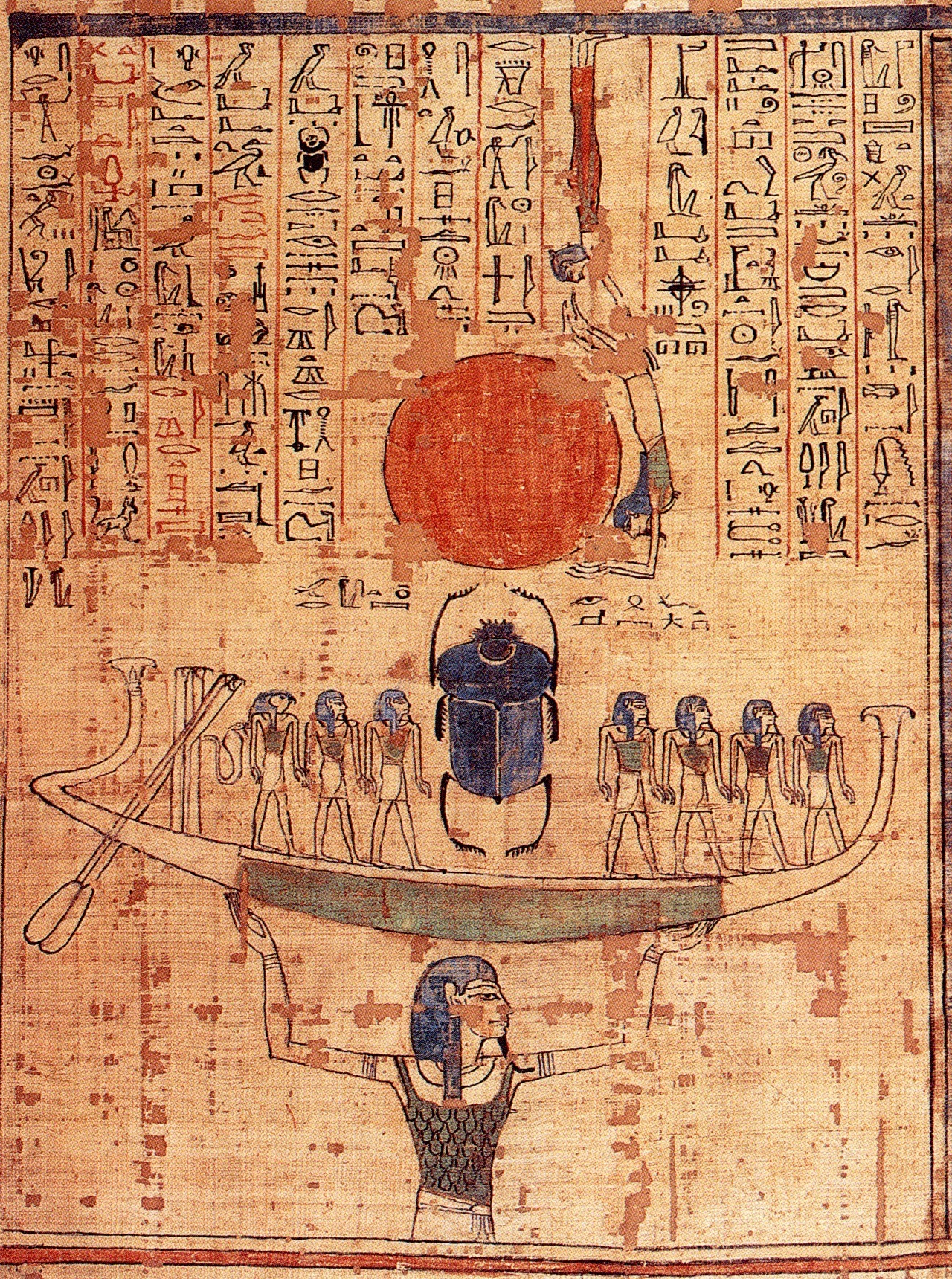
Egyptian mythology is the collection of myths from ancient Egypt, which describe the actions of the Egyptian gods as a means of understanding the world around them. The beliefs that these myths express are an important part of ancient Egyptian religion. Myths appear frequently in Egyptian writings and art, particularly in short stories and in religious material such as hymns, ritual texts, funerary texts, and temple decoration. These sources rarely contain a complete account of a myth and often describe only brief fragments.
Inspired by the cycles of nature, the Egyptians saw time in the present as a series of recurring patterns, whereas the earliest periods of time were linear. Myths are set in these earliest times, and myth sets the pattern for the cycles of the present. Present events repeat the events of myth, and in doing so renew maat, the fundamental order of the universe. Amongst the most important episodes from the mythic past are the creation myths, in which the gods form the universe out of primordial chaos; the stories of the reign of the sun god Ra upon the earth; and the Osiris myth, concerning the struggles of the gods Osiris, Isis, and Horus against the disruptive god Set. Events from the present that might be regarded as myths include Ra's daily journey through the world and its otherworldly counterpart, the Duat. Recurring themes in these mythic episodes include the conflict between the upholders of maat and the forces of disorder, the importance of the pharaoh in maintaining maat, and the continual death and regeneration of the gods.
The details of these sacred events differ greatly from one text to another and often seem contradictory. Egyptian myths are primarily metaphorical, translating the essence and behavior of deities into terms that humans can understand. Each variant of a myth represents a different symbolic perspective, enriching the Egyptians' understanding of the gods and the world.
Mythology profoundly influenced Egyptian culture. It inspired or influenced many religious rituals and provided the ideological basis for kingship. Scenes and symbols from myth appeared in art in tombs, temples, and amulets. In literature, myths or elements of them were used in stories that range from humor to allegory, demonstrating that the Egyptians adapted mythology to serve a wide variety of purposes.
The development of Egyptian myth is difficult to trace. Egyptologists must make inferences about its earliest phases, based on written sources that appeared much later. One obvious influence on myth is the Egyptians' natural surroundings. Each day the sun rose and set, bringing light to the land and regulating human activity; each year the Nile flooded, renewing the fertility of the soil and allowing the highly productive farming that sustained Egyptian civilization. Thus the Egyptians saw water and the sun as symbols of life and thought of time as a series of natural cycles. This orderly pattern was at constant risk of disruption: unusually low floods resulted in famine, and high floods destroyed crops and buildings. The hospitable Nile valley was surrounded by harsh desert, populated by peoples the Egyptians regarded as uncivilized enemies of order. For these reasons, the Egyptians saw their land as an isolated place of stability, or maat, surrounded and endangered by chaos. These themes—order, chaos, and renewal—appear repeatedly in Egyptian religious thought.
Another possible source for mythology is ritual. Many rituals make reference to myths and are sometimes based directly on them. But it is difficult to determine whether a culture's myths developed before rituals or vice versa. Questions about this relationship between myth and ritual have spawned much discussion among Egyptologists and scholars of comparative religion in general. In ancient Egypt, the earliest evidence of religious practices predates written myths. Rituals early in Egyptian history included only a few motifs from myth. For these reasons, some scholars have argued that, in Egypt, rituals emerged before myths. But because the early evidence is so sparse, the question may never be resolved for certain.
In private rituals, which are often called "magical", the myth and the ritual are particularly closely tied. Many of the myth-like stories that appear in the rituals' texts are not found in other sources. Even the widespread motif of the goddess Isis rescuing her poisoned son Horus appears only in this type of text. The Egyptologist David Frankfurter argues that these rituals adapt basic mythic traditions to fit the specific ritual, creating elaborate new stories (called historiolas) based on myth. In contrast, J. F. Borghouts says of magical texts that there is "not a shred of evidence that a specific kind of 'unorthodox' mythology was coined... for this genre."
Much of Egyptian mythology consists of origin myths, explaining the beginnings of various elements of the world, including human institutions and natural phenomena. Kingship arises among the gods at the beginning of time and later passed to the human pharaohs; warfare originates when humans begin fighting each other after the sun god's withdrawal into the sky. Myths also describe the supposed beginnings of less fundamental traditions. In a minor mythic episode, Horus becomes angry with his mother Isis and cuts off her head. Isis replaces her lost head with that of a cow. This event explains why Isis was sometimes depicted with the horns of a cow as part of her headdress.
Hub AI
Egyptian mythology AI simulator
(@Egyptian mythology_simulator)
Egyptian mythology
Egyptian mythology is the collection of myths from ancient Egypt, which describe the actions of the Egyptian gods as a means of understanding the world around them. The beliefs that these myths express are an important part of ancient Egyptian religion. Myths appear frequently in Egyptian writings and art, particularly in short stories and in religious material such as hymns, ritual texts, funerary texts, and temple decoration. These sources rarely contain a complete account of a myth and often describe only brief fragments.
Inspired by the cycles of nature, the Egyptians saw time in the present as a series of recurring patterns, whereas the earliest periods of time were linear. Myths are set in these earliest times, and myth sets the pattern for the cycles of the present. Present events repeat the events of myth, and in doing so renew maat, the fundamental order of the universe. Amongst the most important episodes from the mythic past are the creation myths, in which the gods form the universe out of primordial chaos; the stories of the reign of the sun god Ra upon the earth; and the Osiris myth, concerning the struggles of the gods Osiris, Isis, and Horus against the disruptive god Set. Events from the present that might be regarded as myths include Ra's daily journey through the world and its otherworldly counterpart, the Duat. Recurring themes in these mythic episodes include the conflict between the upholders of maat and the forces of disorder, the importance of the pharaoh in maintaining maat, and the continual death and regeneration of the gods.
The details of these sacred events differ greatly from one text to another and often seem contradictory. Egyptian myths are primarily metaphorical, translating the essence and behavior of deities into terms that humans can understand. Each variant of a myth represents a different symbolic perspective, enriching the Egyptians' understanding of the gods and the world.
Mythology profoundly influenced Egyptian culture. It inspired or influenced many religious rituals and provided the ideological basis for kingship. Scenes and symbols from myth appeared in art in tombs, temples, and amulets. In literature, myths or elements of them were used in stories that range from humor to allegory, demonstrating that the Egyptians adapted mythology to serve a wide variety of purposes.
The development of Egyptian myth is difficult to trace. Egyptologists must make inferences about its earliest phases, based on written sources that appeared much later. One obvious influence on myth is the Egyptians' natural surroundings. Each day the sun rose and set, bringing light to the land and regulating human activity; each year the Nile flooded, renewing the fertility of the soil and allowing the highly productive farming that sustained Egyptian civilization. Thus the Egyptians saw water and the sun as symbols of life and thought of time as a series of natural cycles. This orderly pattern was at constant risk of disruption: unusually low floods resulted in famine, and high floods destroyed crops and buildings. The hospitable Nile valley was surrounded by harsh desert, populated by peoples the Egyptians regarded as uncivilized enemies of order. For these reasons, the Egyptians saw their land as an isolated place of stability, or maat, surrounded and endangered by chaos. These themes—order, chaos, and renewal—appear repeatedly in Egyptian religious thought.
Another possible source for mythology is ritual. Many rituals make reference to myths and are sometimes based directly on them. But it is difficult to determine whether a culture's myths developed before rituals or vice versa. Questions about this relationship between myth and ritual have spawned much discussion among Egyptologists and scholars of comparative religion in general. In ancient Egypt, the earliest evidence of religious practices predates written myths. Rituals early in Egyptian history included only a few motifs from myth. For these reasons, some scholars have argued that, in Egypt, rituals emerged before myths. But because the early evidence is so sparse, the question may never be resolved for certain.
In private rituals, which are often called "magical", the myth and the ritual are particularly closely tied. Many of the myth-like stories that appear in the rituals' texts are not found in other sources. Even the widespread motif of the goddess Isis rescuing her poisoned son Horus appears only in this type of text. The Egyptologist David Frankfurter argues that these rituals adapt basic mythic traditions to fit the specific ritual, creating elaborate new stories (called historiolas) based on myth. In contrast, J. F. Borghouts says of magical texts that there is "not a shred of evidence that a specific kind of 'unorthodox' mythology was coined... for this genre."
Much of Egyptian mythology consists of origin myths, explaining the beginnings of various elements of the world, including human institutions and natural phenomena. Kingship arises among the gods at the beginning of time and later passed to the human pharaohs; warfare originates when humans begin fighting each other after the sun god's withdrawal into the sky. Myths also describe the supposed beginnings of less fundamental traditions. In a minor mythic episode, Horus becomes angry with his mother Isis and cuts off her head. Isis replaces her lost head with that of a cow. This event explains why Isis was sometimes depicted with the horns of a cow as part of her headdress.
Recent media