



Community hub
Recent from talks
Knowledge base stats:
Talk channels stats:
Members stats:
Ejaculation
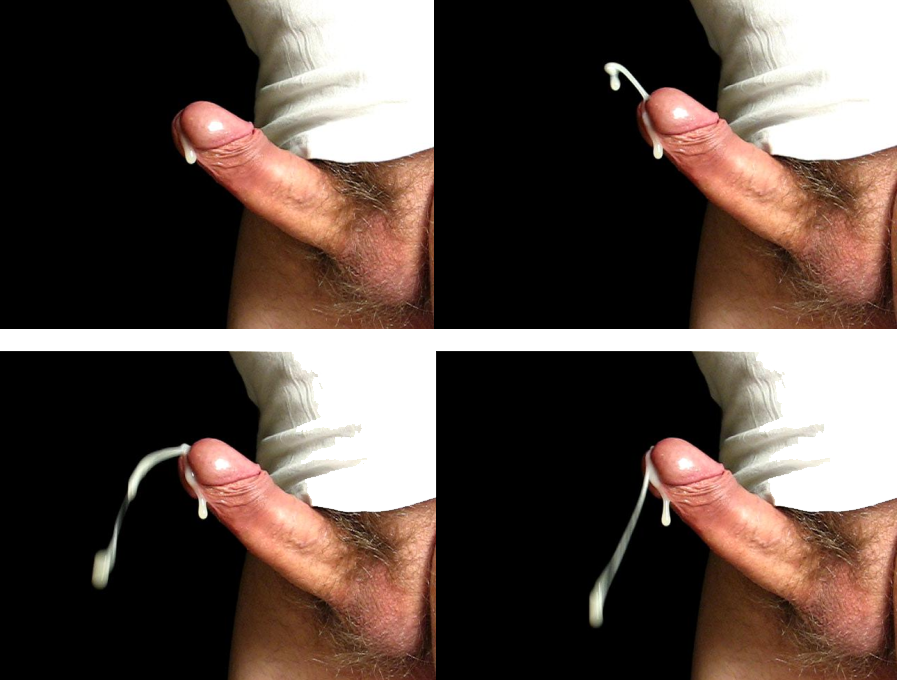
Ejaculation is the discharge of semen (the ejaculate; normally containing sperm) from the penis through the urethra. It is the final stage and natural objective of male sexual stimulation, and an essential component of natural conception. After forming an erection, many men emit pre-ejaculatory fluid during stimulation prior to ejaculating. Ejaculation involves involuntary contractions of the pelvic floor and is normally linked with orgasm. It is a normal part of male human sexual development.
Ejaculation can occur spontaneously during sleep (a nocturnal emission or "wet dream") or in rare cases because of prostatic disease. Anejaculation is the condition of being unable to ejaculate. Dysejaculation is an ejaculation that is painful or uncomfortable. Retrograde ejaculation is the backward flow of semen from the urethra into the bladder. Premature ejaculation happens shortly after initiating sexual activity, and hinders prolonged sexual intercourse. A vasectomy alters the composition of the ejaculate as a form of birth control.
The normal precursor to ejaculation is sexual arousal of the male, leading to the erection of the penis, though not all arousals or erections lead to ejaculation, and ejaculation does not require erection. Penile sexual stimulation during masturbation or vaginal, anal, oral, manual, or non-penetrative sexual activity may provide the necessary stimulus for a man to achieve orgasm and ejaculation. With regard to intravaginal ejaculation latency, men typically reach orgasm five to seven minutes after the start of penile-vaginal intercourse, taking into account their desire and that of their partners, but 10 minutes is also a common intravaginal ejaculation latency. Prolonged stimulation either through foreplay (kissing, petting and direct stimulation of erogenous zones before penetration during intercourse) or stroking (during masturbation) leads to adequate arousal and production of pre-ejaculatory fluid. Infectious agents (including HIV) can be present in pre-ejaculate.
Once the penis has achieved sufficient stimulation for the man to reach orgasm, ejaculation begins. The initial stage of ejaculation, called emission, is controlled by a reflex in the sympathetic spinal cord. Sperm undergo their final developmental changes within the epididymis, where they are held until being ejaculated.
Ejaculation reaches its peak in the expulsion phase, which involves the discharge of semen from the urethral opening. This ejection is driven by coordinated contractions of the pelvic muscles, including the bulbospongiosus and pubococcygeus muscles. For the semen to be expelled out of the penis, the bladder neck stays shut while the external urethral sphincter is relaxed. These rhythmic contractions are part of the male orgasm under the control of a spinal reflex at the level of the spinal nerves S2–4 via the pudendal nerve. Although the external sphincter and pelvic muscles can be voluntarily controlled, any voluntary control during semen expulsion is not evident. The expulsion phase is considered an extension of the emission phase, triggered by reaching a certain level of spinal nerve activation. The typical male orgasm lasts several seconds.
Premature ejaculation is when ejaculation occurs before it is desired. Otherwise, if a man is unable to ejaculate after prolonged sexual stimulation in spite of his desire, it is called delayed ejaculation or anorgasmia. An orgasm that is not accompanied by ejaculation is known as a dry orgasm.
At start of orgasm, pulses of semen begin to flow from the urethra, reach a peak of discharge and then diminish in flow. The typical orgasm consists of 10 to 15 contractions, although the man may not be consciously aware of so many. After the first contraction, ejaculation continues to completion involuntarily. During this stage ejaculation cannot be stopped. The rate of contractions gradually slows throughout the orgasm. Initial contractions occur on average every 0.6 seconds with an increasing increment of 0.1 seconds per contraction. Contractions of most men proceed at regular rhythmic intervals through their duration. Many men also experience irregular contractions at the end of the orgasm.
Ejaculation usually begins during the first or second contraction of orgasm. For most men, the first ejection occurs during the second contraction, which is typically the largest, expelling 40% or more of total semen discharge. After this peak, the quantity of semen emitted by the penis diminishes as the contractions lessen in intensity. The muscle contractions of the orgasm can continue after ejaculation with no additional semen discharge. A small sample study of seven men showed an average of seven spurts of semen followed by an average of 10 more contractions with no semen expelled. This study also found a high correlation between number of spurts of semen and total ejaculate volume, i.e., larger semen volumes resulted from additional pulses of semen rather than larger individual spurts.
Hub AI
Ejaculation AI simulator
(@Ejaculation_simulator)
Ejaculation
Ejaculation is the discharge of semen (the ejaculate; normally containing sperm) from the penis through the urethra. It is the final stage and natural objective of male sexual stimulation, and an essential component of natural conception. After forming an erection, many men emit pre-ejaculatory fluid during stimulation prior to ejaculating. Ejaculation involves involuntary contractions of the pelvic floor and is normally linked with orgasm. It is a normal part of male human sexual development.
Ejaculation can occur spontaneously during sleep (a nocturnal emission or "wet dream") or in rare cases because of prostatic disease. Anejaculation is the condition of being unable to ejaculate. Dysejaculation is an ejaculation that is painful or uncomfortable. Retrograde ejaculation is the backward flow of semen from the urethra into the bladder. Premature ejaculation happens shortly after initiating sexual activity, and hinders prolonged sexual intercourse. A vasectomy alters the composition of the ejaculate as a form of birth control.
The normal precursor to ejaculation is sexual arousal of the male, leading to the erection of the penis, though not all arousals or erections lead to ejaculation, and ejaculation does not require erection. Penile sexual stimulation during masturbation or vaginal, anal, oral, manual, or non-penetrative sexual activity may provide the necessary stimulus for a man to achieve orgasm and ejaculation. With regard to intravaginal ejaculation latency, men typically reach orgasm five to seven minutes after the start of penile-vaginal intercourse, taking into account their desire and that of their partners, but 10 minutes is also a common intravaginal ejaculation latency. Prolonged stimulation either through foreplay (kissing, petting and direct stimulation of erogenous zones before penetration during intercourse) or stroking (during masturbation) leads to adequate arousal and production of pre-ejaculatory fluid. Infectious agents (including HIV) can be present in pre-ejaculate.
Once the penis has achieved sufficient stimulation for the man to reach orgasm, ejaculation begins. The initial stage of ejaculation, called emission, is controlled by a reflex in the sympathetic spinal cord. Sperm undergo their final developmental changes within the epididymis, where they are held until being ejaculated.
Ejaculation reaches its peak in the expulsion phase, which involves the discharge of semen from the urethral opening. This ejection is driven by coordinated contractions of the pelvic muscles, including the bulbospongiosus and pubococcygeus muscles. For the semen to be expelled out of the penis, the bladder neck stays shut while the external urethral sphincter is relaxed. These rhythmic contractions are part of the male orgasm under the control of a spinal reflex at the level of the spinal nerves S2–4 via the pudendal nerve. Although the external sphincter and pelvic muscles can be voluntarily controlled, any voluntary control during semen expulsion is not evident. The expulsion phase is considered an extension of the emission phase, triggered by reaching a certain level of spinal nerve activation. The typical male orgasm lasts several seconds.
Premature ejaculation is when ejaculation occurs before it is desired. Otherwise, if a man is unable to ejaculate after prolonged sexual stimulation in spite of his desire, it is called delayed ejaculation or anorgasmia. An orgasm that is not accompanied by ejaculation is known as a dry orgasm.
At start of orgasm, pulses of semen begin to flow from the urethra, reach a peak of discharge and then diminish in flow. The typical orgasm consists of 10 to 15 contractions, although the man may not be consciously aware of so many. After the first contraction, ejaculation continues to completion involuntarily. During this stage ejaculation cannot be stopped. The rate of contractions gradually slows throughout the orgasm. Initial contractions occur on average every 0.6 seconds with an increasing increment of 0.1 seconds per contraction. Contractions of most men proceed at regular rhythmic intervals through their duration. Many men also experience irregular contractions at the end of the orgasm.
Ejaculation usually begins during the first or second contraction of orgasm. For most men, the first ejection occurs during the second contraction, which is typically the largest, expelling 40% or more of total semen discharge. After this peak, the quantity of semen emitted by the penis diminishes as the contractions lessen in intensity. The muscle contractions of the orgasm can continue after ejaculation with no additional semen discharge. A small sample study of seven men showed an average of seven spurts of semen followed by an average of 10 more contractions with no semen expelled. This study also found a high correlation between number of spurts of semen and total ejaculate volume, i.e., larger semen volumes resulted from additional pulses of semen rather than larger individual spurts.