


Community hub
Recent from talks
Contribute something to knowledge base
Content stats: 0 posts, 0 articles, 1 media, 0 notes
Members stats: 0 subscribers, 0 contributors, 0 moderators, 0 supporters
Subscribers
Supporters
Contributors
Moderators
Hub AI
Electronic health record AI simulator
(@Electronic health record_simulator)
Hub AI
Electronic health record AI simulator
(@Electronic health record_simulator)
Electronic health record
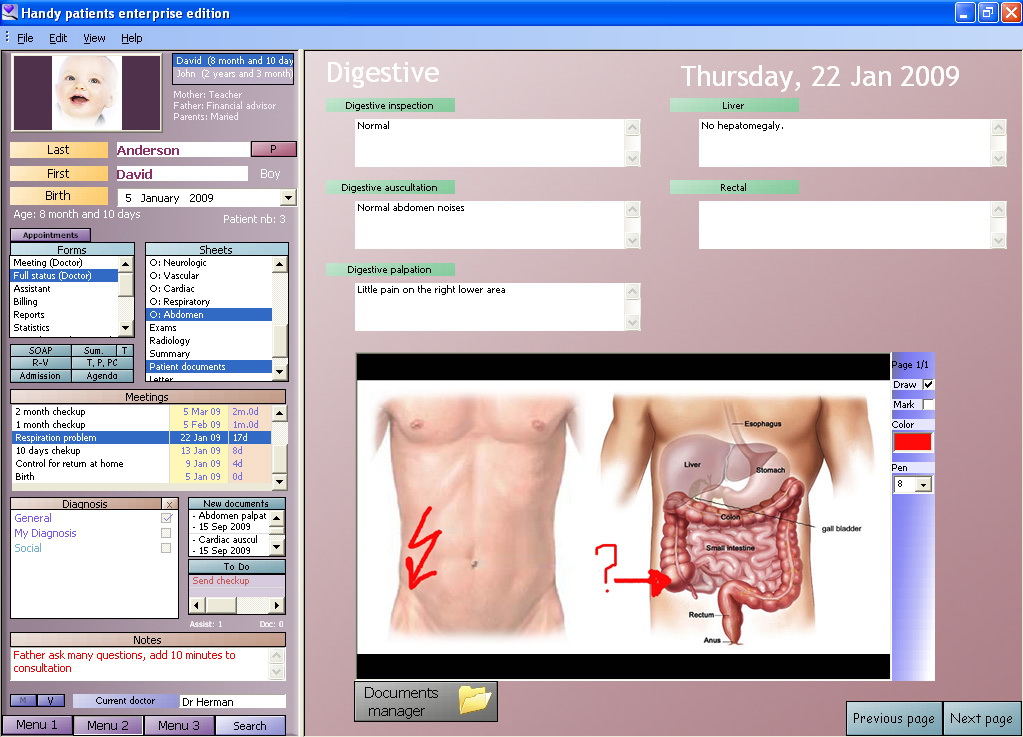
An electronic health record (EHR) is the systematized collection of electronically stored patient and population health information in a digital format. These records can be shared across different health care settings. Records are shared through network-connected, enterprise-wide information systems or other information networks and exchanges. EHRs may include a range of data, including demographics, medical history, medication and allergies, immunization status, laboratory test results, radiology images, vital signs, personal statistics like age and weight, and billing information.
For several decades, EHRs have been touted as key to increasing quality of care. EHR combines all patients' demographics into a large pool, which assists providers in the creation of "new treatments or innovation in healthcare delivery" to improve quality outcomes in healthcare. Combining multiple types of clinical data from the system's health records has helped clinicians identify and stratify chronically ill patients. EHR can also improve quality of care through the use of data and analytics to prevent hospitalizations among high-risk patients.
EHR systems are designed to store data accurately and to capture a patient's state across time. It eliminates the need to track down a patient's previous paper medical records and assists in ensuring data is up-to-date, accurate, and legible. It also allows open communication between the patient and the provider while providing "privacy and security." EHR is cost-efficient, decreases the risk of lost paperwork, and can reduce risk of data replication as there is only one modifiable file, which means the file is more likely up to date. Due to the digital information being searchable and in a single file, EMRs (electronic medical records) are more effective when extracting medical data to examine possible trends and long-term changes in a patient. The widespread adoption of EHRs and EMRs may also facilitate population-based studies of medical records.
The terms EHR, electronic patient record (EPR), and electronic medical record (EMR) have often been used interchangeably, but "subtle" differences exist. The electronic health record (EHR) is a more longitudinal collection of the electronic health information of individual patients or populations. The EMR, in contrast, is the patient record created by providers for specific encounters in hospitals and ambulatory environments and can serve as a data source for an EHR.
EMRs are essentially digital versions of the paper documents used in a clinician's office, typically functioning as an internal system within a practice. An EMR includes the medical and treatment history of patients treated by that specific practice.
In contrast, a personal health record (PHR) is an electronic application for recording individual medical data that the individual patient controls and may make available to health providers.
While there is still considerable debate around the superiority of electronic health records over paper records, the research literature paints a more realistic picture of the benefits and downsides.
The increased transparency, portability, and accessibility acquired by the adoption of electronic medical records may increase the ease with which they can be accessed by healthcare professionals, but also can increase the amount of stolen information by unauthorized persons or unscrupulous users versus paper medical records, as acknowledged by the increased security requirements for electronic medical records included in the Health Insurance Portability and Accountability Act (HIPAA) and by large-scale breaches in confidential records reported by EMR users. Concerns about security contribute to the resistance shown to their adoption.[weasel words]
Electronic health record
An electronic health record (EHR) is the systematized collection of electronically stored patient and population health information in a digital format. These records can be shared across different health care settings. Records are shared through network-connected, enterprise-wide information systems or other information networks and exchanges. EHRs may include a range of data, including demographics, medical history, medication and allergies, immunization status, laboratory test results, radiology images, vital signs, personal statistics like age and weight, and billing information.
For several decades, EHRs have been touted as key to increasing quality of care. EHR combines all patients' demographics into a large pool, which assists providers in the creation of "new treatments or innovation in healthcare delivery" to improve quality outcomes in healthcare. Combining multiple types of clinical data from the system's health records has helped clinicians identify and stratify chronically ill patients. EHR can also improve quality of care through the use of data and analytics to prevent hospitalizations among high-risk patients.
EHR systems are designed to store data accurately and to capture a patient's state across time. It eliminates the need to track down a patient's previous paper medical records and assists in ensuring data is up-to-date, accurate, and legible. It also allows open communication between the patient and the provider while providing "privacy and security." EHR is cost-efficient, decreases the risk of lost paperwork, and can reduce risk of data replication as there is only one modifiable file, which means the file is more likely up to date. Due to the digital information being searchable and in a single file, EMRs (electronic medical records) are more effective when extracting medical data to examine possible trends and long-term changes in a patient. The widespread adoption of EHRs and EMRs may also facilitate population-based studies of medical records.
The terms EHR, electronic patient record (EPR), and electronic medical record (EMR) have often been used interchangeably, but "subtle" differences exist. The electronic health record (EHR) is a more longitudinal collection of the electronic health information of individual patients or populations. The EMR, in contrast, is the patient record created by providers for specific encounters in hospitals and ambulatory environments and can serve as a data source for an EHR.
EMRs are essentially digital versions of the paper documents used in a clinician's office, typically functioning as an internal system within a practice. An EMR includes the medical and treatment history of patients treated by that specific practice.
In contrast, a personal health record (PHR) is an electronic application for recording individual medical data that the individual patient controls and may make available to health providers.
While there is still considerable debate around the superiority of electronic health records over paper records, the research literature paints a more realistic picture of the benefits and downsides.
The increased transparency, portability, and accessibility acquired by the adoption of electronic medical records may increase the ease with which they can be accessed by healthcare professionals, but also can increase the amount of stolen information by unauthorized persons or unscrupulous users versus paper medical records, as acknowledged by the increased security requirements for electronic medical records included in the Health Insurance Portability and Accountability Act (HIPAA) and by large-scale breaches in confidential records reported by EMR users. Concerns about security contribute to the resistance shown to their adoption.[weasel words]
Recent media
Recent media