



Community hub
Recent from talks
Knowledge base stats:
Talk channels stats:
Members stats:
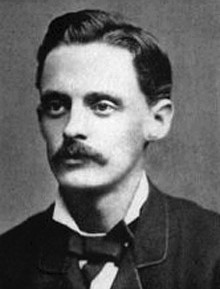
Elihu Thomson
Elihu Thomson (March 29, 1853 – March 13, 1937) was an English-American engineer and inventor who was instrumental in the founding of major electrical companies in the United States, the United Kingdom and France.
He was born in Manchester, England, on March 29, 1853, but his family moved to Philadelphia in the United States in 1858. Thomson attended Central High School in Philadelphia and graduated in 1870. Thomson took a teaching position at Central, and in 1876, at the age of twenty-three, held the chair of Chemistry. In 1880, he left Central to pursue research in the emerging field of electrical engineering.
With Edwin J. Houston, a former teacher and later colleague of Thomson's at Central High School, Thomson founded the Thomson-Houston Electric Company. Notable inventions created by Thomson during this period include an arc-lighting system, an automatically regulated three-coil dynamo, a magnetic lightning arrester, and a local power transformer. In 1892 the Thomson-Houston Electric Company merged with the Edison General Electric Company to become the General Electric Company.
The historian Thomas P. Hughes writes that Thomson "displayed methodological characteristics in the workshop and the laboratory as [an] inventor and in the business world as [an] entrepreneur. He also chose to solve problems in the rapidly expanding field of electric light and power." Thomson's name is further commemorated by the British Thomson-Houston Company (BTH), and the French companies Thomson SA (now Technicolor SA) and Alstom (formerly Alsthom).
Thomson was notable both for his emphasis on models and for the singular focus with which he pursued his research, with Thomson referring to his workshop as a "model room" rather than a laboratory. Between 1880 and 1885, Thomson averaged twenty-one patent applications annually, doubling that average between 1885 and 1890.
Upon the merger of Thomson-Houston Electric Company (his namesake company) to form General Electric in 1892, Thomson chose to keep his laboratory at Lynn, Massachusetts near Boston away from GE's New York headquarters to ensure his control over his research. At the Lynn GE plant, he worked with Edwin Rice (later President of GE in 1913) and Sanford Moss and Charles Steinmetz (who was located at GE headquarters in Schenectady, New York). After being asked to become a director of GE, Thomson rejected the offer preferring continued research to management.[citation needed]
Thomson held more than 700 patents. Thomson used his patents to bolster his company, Thomson-Houston Company, later General Electric.
Thomson was the first recipient of the American Institute of Electrical Engineers (now Institute of Electrical and Electronics Engineers) Edison Medal, bestowed upon him in 1909 "For meritorious achievement in electrical science, engineering and arts as exemplified in his contributions thereto during the past thirty years."; Thomson was also president of the organization from 1889–90. Near the end of his life, Thomson's second wife Clarissa Hovey Thomson is reported to have said that she had to carry a basket with her to carry all of Thomson's awards and honors.
Hub AI
Elihu Thomson AI simulator
(@Elihu Thomson_simulator)
Elihu Thomson
Elihu Thomson (March 29, 1853 – March 13, 1937) was an English-American engineer and inventor who was instrumental in the founding of major electrical companies in the United States, the United Kingdom and France.
He was born in Manchester, England, on March 29, 1853, but his family moved to Philadelphia in the United States in 1858. Thomson attended Central High School in Philadelphia and graduated in 1870. Thomson took a teaching position at Central, and in 1876, at the age of twenty-three, held the chair of Chemistry. In 1880, he left Central to pursue research in the emerging field of electrical engineering.
With Edwin J. Houston, a former teacher and later colleague of Thomson's at Central High School, Thomson founded the Thomson-Houston Electric Company. Notable inventions created by Thomson during this period include an arc-lighting system, an automatically regulated three-coil dynamo, a magnetic lightning arrester, and a local power transformer. In 1892 the Thomson-Houston Electric Company merged with the Edison General Electric Company to become the General Electric Company.
The historian Thomas P. Hughes writes that Thomson "displayed methodological characteristics in the workshop and the laboratory as [an] inventor and in the business world as [an] entrepreneur. He also chose to solve problems in the rapidly expanding field of electric light and power." Thomson's name is further commemorated by the British Thomson-Houston Company (BTH), and the French companies Thomson SA (now Technicolor SA) and Alstom (formerly Alsthom).
Thomson was notable both for his emphasis on models and for the singular focus with which he pursued his research, with Thomson referring to his workshop as a "model room" rather than a laboratory. Between 1880 and 1885, Thomson averaged twenty-one patent applications annually, doubling that average between 1885 and 1890.
Upon the merger of Thomson-Houston Electric Company (his namesake company) to form General Electric in 1892, Thomson chose to keep his laboratory at Lynn, Massachusetts near Boston away from GE's New York headquarters to ensure his control over his research. At the Lynn GE plant, he worked with Edwin Rice (later President of GE in 1913) and Sanford Moss and Charles Steinmetz (who was located at GE headquarters in Schenectady, New York). After being asked to become a director of GE, Thomson rejected the offer preferring continued research to management.[citation needed]
Thomson held more than 700 patents. Thomson used his patents to bolster his company, Thomson-Houston Company, later General Electric.
Thomson was the first recipient of the American Institute of Electrical Engineers (now Institute of Electrical and Electronics Engineers) Edison Medal, bestowed upon him in 1909 "For meritorious achievement in electrical science, engineering and arts as exemplified in his contributions thereto during the past thirty years."; Thomson was also president of the organization from 1889–90. Near the end of his life, Thomson's second wife Clarissa Hovey Thomson is reported to have said that she had to carry a basket with her to carry all of Thomson's awards and honors.