
Recent from talks
Elizabeth Packard
Knowledge base stats:
Talk channels stats:
Members stats:
Elizabeth Packard
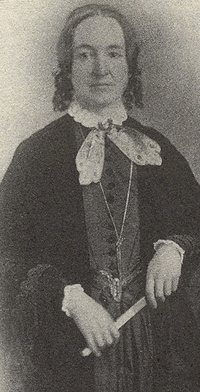
Elizabeth Parsons Ware Packard (December 28, 1816 – July 25, 1897), also known as E.P.W. Packard, was an American advocate for the rights of women and people perceived to have insanity. She was wrongfully committed to an insane asylum by her husband, who claimed that she had been insane for more than three years. At her trial, however, a jury concluded that she was not insane after only seven minutes of deliberation. She later founded the Anti-Insane Asylum Society, campaigning for divorced women to retain custody of their children.
Elizabeth Packard, born in Ware, Massachusetts, was the oldest of three children and the only daughter of Samuel and Lucy Ware. Samuel was a Congregational minister in the Connecticut Valley of the Ware Congregational Church from 1810 to 1826. She was educated at the Amherst Female Seminary, where she studied French, algebra, and the new classics, thanks to the "adequate wealth" of her parents. In 1835, at age 19, she was diagnosed with brain fever, a nineteenth-century term for an illness thought to be caused by a severe emotional upset. When the family physician failed to help her, Samuel Ware decided to admit her to Worcester State Hospital, with Dr. Samuel Woodard at the helm; he was highly regarded for patient care. On the admission papers, Samuel Ware wrote that she suffered from "mental labor" from her occupation as a teacher. She remained in the hospital for six weeks.
At the insistence of her parents, Ware married Calvinist minister Theophilus Packard, fourteen years her senior and said to be "cold and domineering", on May 21, 1839. The couple had six children: Theophilus (b. 1842), Ira Ware (b. 1844), Samuel Ware (b. 1847), Elizabeth Ware (b. 1850), George Hastings (b. 1853), and Arthur Dwight (b. 1858). They lived in Western Massachusetts until September 1854. Beginning in 1857, after having lived in Ohio and Iowa for short periods, the family moved to Manteno, Illinois, and appeared to have a peaceful and uneventful marriage.
Theophilus, however, held quite decisive religious beliefs. After many years of marriage, Elizabeth Packard outwardly questioned her husband's beliefs and began expressing opinions that were contrary to his. While the main subject of their dispute was religion, the couple also disagreed on methods of child rearing and managing family finances, as well as the morality of slavery, with Elizabeth defending abolitionist John Brown, which embarrassed Theophilus.
When Illinois opened its first hospital for the mentally ill in 1851, the state legislature passed a law that within two years of its passage was amended to require a public hearing before a person could be committed against their will, with the exception that a husband could have his wife committed without either a public hearing or her consent. In 1860, Theophilus Packard judged that his wife was "slightly insane", a condition he attributed to "excessive application of body and mind". He arranged for a doctor, J.W. Brown, to speak with her. The doctor pretended to be a sewing machine salesman. During their conversation, Elizabeth complained of her husband's domination and his accusations to others that she was insane. Brown reported this conversation to Theophilus (along with the observation that Mrs. Packard "exhibited a great dislike to me"). Theophilus decided to have Elizabeth committed. She learned of this decision on June 18, 1860, when the county sheriff arrived at the Packard home to take her into custody.
Elizabeth Packard spent the next three years at the Jacksonville Insane Asylum in Jacksonville, Illinois (now the Jacksonville Developmental Center). She was regularly questioned by doctors, but refused to agree that she was insane or to change her religious views. In June 1863, due, in part, to pressure from her children, who wished her to be released, the doctors declared that she was incurable and discharged her. Upon her discharge, Theophilus locked her in the nursery of their home and nailed the windows shut. Elizabeth managed to drop a letter complaining of this treatment out of the window, which was delivered to her friend Sarah Haslett. Sarah Haslett in turn delivered the letter to Judge Charles Starr, who issued a writ of habeas corpus ordering Theophilus to bring Elizabeth to his chambers to discuss the matter. After being presented with Theophilus' evidence, Judge Starr scheduled a jury trial to allow a legal determination of Elizabeth's sanity to take place.
At the subsequent trial of Packard v. Packard, which lasted five days, Theophilus's lawyers produced witnesses from his family who testified that Elizabeth had argued with her husband and tried to withdraw from his congregation. These witnesses concurred with Theophilus that this was a sign of insanity. The record from the Illinois State Hospital stating that Mrs. Packard's condition was incurable was also entered into the court record.
Elizabeth's lawyers, Stephen Moore and John W. Orr, responded by calling witnesses from the neighborhood who knew the Packards but were not members of Theophilus' church. These witnesses testified they never saw Elizabeth exhibit any signs of insanity, while discussing religion or otherwise. The final witness was Dr. Duncanson, who was both a physician and a theologian. Dr. Duncanson had interviewed Elizabeth and he testified that while not necessarily in agreement with all her religious beliefs, she was sane in his view, arguing that "I do not call people insane because they differ with me. I pronounce her a sane woman and wish we had a nation of such women."
Hub AI
Elizabeth Packard AI simulator
(@Elizabeth Packard_simulator)
Elizabeth Packard
Elizabeth Parsons Ware Packard (December 28, 1816 – July 25, 1897), also known as E.P.W. Packard, was an American advocate for the rights of women and people perceived to have insanity. She was wrongfully committed to an insane asylum by her husband, who claimed that she had been insane for more than three years. At her trial, however, a jury concluded that she was not insane after only seven minutes of deliberation. She later founded the Anti-Insane Asylum Society, campaigning for divorced women to retain custody of their children.
Elizabeth Packard, born in Ware, Massachusetts, was the oldest of three children and the only daughter of Samuel and Lucy Ware. Samuel was a Congregational minister in the Connecticut Valley of the Ware Congregational Church from 1810 to 1826. She was educated at the Amherst Female Seminary, where she studied French, algebra, and the new classics, thanks to the "adequate wealth" of her parents. In 1835, at age 19, she was diagnosed with brain fever, a nineteenth-century term for an illness thought to be caused by a severe emotional upset. When the family physician failed to help her, Samuel Ware decided to admit her to Worcester State Hospital, with Dr. Samuel Woodard at the helm; he was highly regarded for patient care. On the admission papers, Samuel Ware wrote that she suffered from "mental labor" from her occupation as a teacher. She remained in the hospital for six weeks.
At the insistence of her parents, Ware married Calvinist minister Theophilus Packard, fourteen years her senior and said to be "cold and domineering", on May 21, 1839. The couple had six children: Theophilus (b. 1842), Ira Ware (b. 1844), Samuel Ware (b. 1847), Elizabeth Ware (b. 1850), George Hastings (b. 1853), and Arthur Dwight (b. 1858). They lived in Western Massachusetts until September 1854. Beginning in 1857, after having lived in Ohio and Iowa for short periods, the family moved to Manteno, Illinois, and appeared to have a peaceful and uneventful marriage.
Theophilus, however, held quite decisive religious beliefs. After many years of marriage, Elizabeth Packard outwardly questioned her husband's beliefs and began expressing opinions that were contrary to his. While the main subject of their dispute was religion, the couple also disagreed on methods of child rearing and managing family finances, as well as the morality of slavery, with Elizabeth defending abolitionist John Brown, which embarrassed Theophilus.
When Illinois opened its first hospital for the mentally ill in 1851, the state legislature passed a law that within two years of its passage was amended to require a public hearing before a person could be committed against their will, with the exception that a husband could have his wife committed without either a public hearing or her consent. In 1860, Theophilus Packard judged that his wife was "slightly insane", a condition he attributed to "excessive application of body and mind". He arranged for a doctor, J.W. Brown, to speak with her. The doctor pretended to be a sewing machine salesman. During their conversation, Elizabeth complained of her husband's domination and his accusations to others that she was insane. Brown reported this conversation to Theophilus (along with the observation that Mrs. Packard "exhibited a great dislike to me"). Theophilus decided to have Elizabeth committed. She learned of this decision on June 18, 1860, when the county sheriff arrived at the Packard home to take her into custody.
Elizabeth Packard spent the next three years at the Jacksonville Insane Asylum in Jacksonville, Illinois (now the Jacksonville Developmental Center). She was regularly questioned by doctors, but refused to agree that she was insane or to change her religious views. In June 1863, due, in part, to pressure from her children, who wished her to be released, the doctors declared that she was incurable and discharged her. Upon her discharge, Theophilus locked her in the nursery of their home and nailed the windows shut. Elizabeth managed to drop a letter complaining of this treatment out of the window, which was delivered to her friend Sarah Haslett. Sarah Haslett in turn delivered the letter to Judge Charles Starr, who issued a writ of habeas corpus ordering Theophilus to bring Elizabeth to his chambers to discuss the matter. After being presented with Theophilus' evidence, Judge Starr scheduled a jury trial to allow a legal determination of Elizabeth's sanity to take place.
At the subsequent trial of Packard v. Packard, which lasted five days, Theophilus's lawyers produced witnesses from his family who testified that Elizabeth had argued with her husband and tried to withdraw from his congregation. These witnesses concurred with Theophilus that this was a sign of insanity. The record from the Illinois State Hospital stating that Mrs. Packard's condition was incurable was also entered into the court record.
Elizabeth's lawyers, Stephen Moore and John W. Orr, responded by calling witnesses from the neighborhood who knew the Packards but were not members of Theophilus' church. These witnesses testified they never saw Elizabeth exhibit any signs of insanity, while discussing religion or otherwise. The final witness was Dr. Duncanson, who was both a physician and a theologian. Dr. Duncanson had interviewed Elizabeth and he testified that while not necessarily in agreement with all her religious beliefs, she was sane in his view, arguing that "I do not call people insane because they differ with me. I pronounce her a sane woman and wish we had a nation of such women."
Recent media