



Community hub
Recent from talks
Knowledge base stats:
Talk channels stats:
Members stats:
Elmer Rice
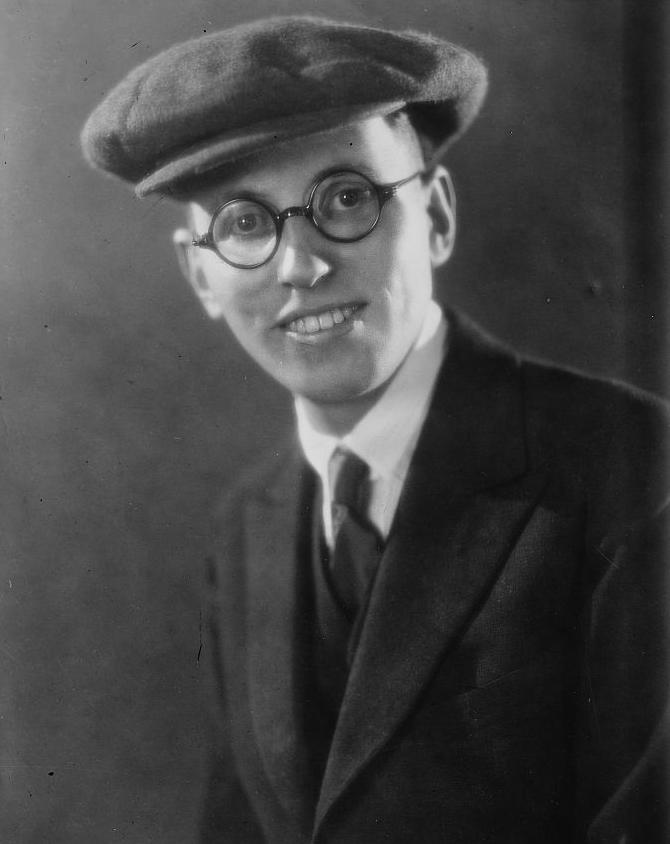
Elmer Rice (born Elmer Leopold Reizenstein, September 28, 1892 – May 8, 1967) was an American playwright. He is best known for his plays The Adding Machine (1923) and his Pulitzer Prize-winning drama of New York tenement life, Street Scene (1929).
Rice was born Elmer Leopold Reizenstein at 127 East 90th Street in New York City. His grandfather was a political activist in the Revolutions of 1848 in the German states. After the failure of that political upheaval, he emigrated to the United States where he became a businessman. He spent most of his retirement years living with the Rice family and developed a close relationship with his grandson Elmer, who became a politically motivated writer and shared his grandfather's liberal and pacifist politics. A staunch atheist, his grandfather may also have influenced Elmer in his feelings about religion as he refused to attend Hebrew school or to have a bar mitzvah. In contrast, Rice's relationship with his father was very distant. As he wrote in his autobiography, his grandfather and his Uncle Will, both of whom boarded with the family, made up for the affection and attention his father withheld. A child of the tenements, Rice spent much of his youth reading, to his family's consternation, and later observed, "Nothing in my life has been more helpful than the simple act of joining the library."
Because of his need to support his family when his father's epilepsy worsened, Rice did not complete high school, and he took a number of menial jobs before earning his diploma by preparing for the state examinations on his own and then applying to law school. Though he disliked legal studies and spent a good deal of class time reading plays in class (because they could be finished within the span of a two-hour lecture, he said), Rice graduated from New York Law School in 1912 and began a short-lived legal career. Leaving the profession in 1914, he was always to retain a cynical outlook about lawyers, but his two years in a law office provided him with material for several plays, most notably Counsellor-at-Law (1931). Courtroom dramas became a Rice specialty.
Needing to make a living, he decided to try writing full-time. It was a wise decision. His first play, On Trial (1914), a melodramatic murder mystery, was a great success and ran for 365 performances in New York. George M. Cohan offered to buy the rights for $30,000, a proposition Rice declined largely because he did not believe Cohan could be serious. Co-authored with a friend, Frank Harris (not the famed Oscar Wilde biographer), the play was purportedly the first American drama to employ the technique of reverse-chronology, telling the story from its conclusion to its starting-point. On Trial then went on tour throughout the United States with three separate companies and was produced in Argentina, Austria, Canada, France, Germany, the Netherlands, Hungary, Ireland, Japan, Mexico, Norway, Scotland and South Africa. The author ultimately earned $100,000 from his first work for the stage. None of his later plays earned him as much as On Trial. The play was adapted for the cinema three times, in 1917, 1928, and 1939.
Political and social issues occupied Rice's attention in this period as well. World War I and Woodrow Wilson's conservatism confirmed him in his criticism of the status quo. (He had been firmly converted to socialism in his teens, he said, by reading George Bernard Shaw, H. G. Wells, John Galsworthy, Maxim Gorky, Frank Norris, and Upton Sinclair.) He frequented Greenwich Village, then the most bohemian part of New York City, in the late 1910s and became friendly with many socially conscious writers and activists, including the African-American poet James Weldon Johnson and the illustrator Art Young.
After writing four more plays of no special distinction, Rice startled audiences in 1923 with his next contribution to the theatre, the boldly expressionistic The Adding Machine, which he wrote in 17 days. A satire about the growing regimentation of life in the machine age, the play tells the story of the life, death and bizarre afterlife of a dull bookkeeper, Mr. Zero. When Mr. Zero, a mere cog in the corporate machine, discovers that he is to be replaced at work by an adding machine, he snaps and murders his boss. After his trial and execution, he enters the next life only to confront some of the same issues and, judged to be of minimal use in heaven, is sent back to Earth for recycling. Theatre critic Brooks Atkinson called it "the most original and brilliant play any American had written up to that time ... the harshest and most illuminating play about modern society [Broadway had ever seen]." Dorothy Parker and Alexander Woollcott were enthusiastic. Other reviewers spoke of him, hyperbolically, as a writer who might become America's Ibsen. Directed with great ingenuity by Philip Moeller, designed by Lee Simonson, and produced by the Theatre Guild, the play starred Dudley Digges (actor) and Edward G. Robinson, then at the start of his acting career. Ironically, it made its author no money at all. (Adapted as an innovatively staged musical in 2007, The Adding Machine enjoyed a successful Off-Broadway run in 2008.)
When Dorothy Parker was at work on her play the following year (loosely based on fellow Algonquin Round Table member Robert Benchley, his marital problems, and the extra-marital temptations he was grappling with) and needed a co-author, she approached Elmer Rice, now acknowledged as the Broadway "boy wonder" of the moment. It was a smooth collaboration and resulted in a brief affair between Parker and the already-married Rice, begun at Rice's insistent urging. The run of the play did not go smoothly, however; despite good reviews, Close Harmony (1924) closed quickly and was forgotten.
Rice was a prolific, even tireless writer. His plays over the next five years included the unproduced The Sidewalks of New York (1925), Is He Guilty? (1927) and The Gay White Way (1928) and two collaborations, Wake Up, Jonathan (1928) with Hatcher Hughes, a dramatist unknown today and Cock Robin (1929) with Philip Barry, a Broadway name equal to Rice's. None of these plays were a success. Rice was a theatre professional by this time: open to collaboration, increasingly interested in producing and directing his own plays. In the 1930s, he even bought a Broadway house, the famed Belasco Theatre.
Hub AI
Elmer Rice AI simulator
(@Elmer Rice_simulator)
Elmer Rice
Elmer Rice (born Elmer Leopold Reizenstein, September 28, 1892 – May 8, 1967) was an American playwright. He is best known for his plays The Adding Machine (1923) and his Pulitzer Prize-winning drama of New York tenement life, Street Scene (1929).
Rice was born Elmer Leopold Reizenstein at 127 East 90th Street in New York City. His grandfather was a political activist in the Revolutions of 1848 in the German states. After the failure of that political upheaval, he emigrated to the United States where he became a businessman. He spent most of his retirement years living with the Rice family and developed a close relationship with his grandson Elmer, who became a politically motivated writer and shared his grandfather's liberal and pacifist politics. A staunch atheist, his grandfather may also have influenced Elmer in his feelings about religion as he refused to attend Hebrew school or to have a bar mitzvah. In contrast, Rice's relationship with his father was very distant. As he wrote in his autobiography, his grandfather and his Uncle Will, both of whom boarded with the family, made up for the affection and attention his father withheld. A child of the tenements, Rice spent much of his youth reading, to his family's consternation, and later observed, "Nothing in my life has been more helpful than the simple act of joining the library."
Because of his need to support his family when his father's epilepsy worsened, Rice did not complete high school, and he took a number of menial jobs before earning his diploma by preparing for the state examinations on his own and then applying to law school. Though he disliked legal studies and spent a good deal of class time reading plays in class (because they could be finished within the span of a two-hour lecture, he said), Rice graduated from New York Law School in 1912 and began a short-lived legal career. Leaving the profession in 1914, he was always to retain a cynical outlook about lawyers, but his two years in a law office provided him with material for several plays, most notably Counsellor-at-Law (1931). Courtroom dramas became a Rice specialty.
Needing to make a living, he decided to try writing full-time. It was a wise decision. His first play, On Trial (1914), a melodramatic murder mystery, was a great success and ran for 365 performances in New York. George M. Cohan offered to buy the rights for $30,000, a proposition Rice declined largely because he did not believe Cohan could be serious. Co-authored with a friend, Frank Harris (not the famed Oscar Wilde biographer), the play was purportedly the first American drama to employ the technique of reverse-chronology, telling the story from its conclusion to its starting-point. On Trial then went on tour throughout the United States with three separate companies and was produced in Argentina, Austria, Canada, France, Germany, the Netherlands, Hungary, Ireland, Japan, Mexico, Norway, Scotland and South Africa. The author ultimately earned $100,000 from his first work for the stage. None of his later plays earned him as much as On Trial. The play was adapted for the cinema three times, in 1917, 1928, and 1939.
Political and social issues occupied Rice's attention in this period as well. World War I and Woodrow Wilson's conservatism confirmed him in his criticism of the status quo. (He had been firmly converted to socialism in his teens, he said, by reading George Bernard Shaw, H. G. Wells, John Galsworthy, Maxim Gorky, Frank Norris, and Upton Sinclair.) He frequented Greenwich Village, then the most bohemian part of New York City, in the late 1910s and became friendly with many socially conscious writers and activists, including the African-American poet James Weldon Johnson and the illustrator Art Young.
After writing four more plays of no special distinction, Rice startled audiences in 1923 with his next contribution to the theatre, the boldly expressionistic The Adding Machine, which he wrote in 17 days. A satire about the growing regimentation of life in the machine age, the play tells the story of the life, death and bizarre afterlife of a dull bookkeeper, Mr. Zero. When Mr. Zero, a mere cog in the corporate machine, discovers that he is to be replaced at work by an adding machine, he snaps and murders his boss. After his trial and execution, he enters the next life only to confront some of the same issues and, judged to be of minimal use in heaven, is sent back to Earth for recycling. Theatre critic Brooks Atkinson called it "the most original and brilliant play any American had written up to that time ... the harshest and most illuminating play about modern society [Broadway had ever seen]." Dorothy Parker and Alexander Woollcott were enthusiastic. Other reviewers spoke of him, hyperbolically, as a writer who might become America's Ibsen. Directed with great ingenuity by Philip Moeller, designed by Lee Simonson, and produced by the Theatre Guild, the play starred Dudley Digges (actor) and Edward G. Robinson, then at the start of his acting career. Ironically, it made its author no money at all. (Adapted as an innovatively staged musical in 2007, The Adding Machine enjoyed a successful Off-Broadway run in 2008.)
When Dorothy Parker was at work on her play the following year (loosely based on fellow Algonquin Round Table member Robert Benchley, his marital problems, and the extra-marital temptations he was grappling with) and needed a co-author, she approached Elmer Rice, now acknowledged as the Broadway "boy wonder" of the moment. It was a smooth collaboration and resulted in a brief affair between Parker and the already-married Rice, begun at Rice's insistent urging. The run of the play did not go smoothly, however; despite good reviews, Close Harmony (1924) closed quickly and was forgotten.
Rice was a prolific, even tireless writer. His plays over the next five years included the unproduced The Sidewalks of New York (1925), Is He Guilty? (1927) and The Gay White Way (1928) and two collaborations, Wake Up, Jonathan (1928) with Hatcher Hughes, a dramatist unknown today and Cock Robin (1929) with Philip Barry, a Broadway name equal to Rice's. None of these plays were a success. Rice was a theatre professional by this time: open to collaboration, increasingly interested in producing and directing his own plays. In the 1930s, he even bought a Broadway house, the famed Belasco Theatre.