
Recent from talks
Emperor Yang of Sui
Knowledge base stats:
Talk channels stats:
Members stats:
Emperor Yang of Sui
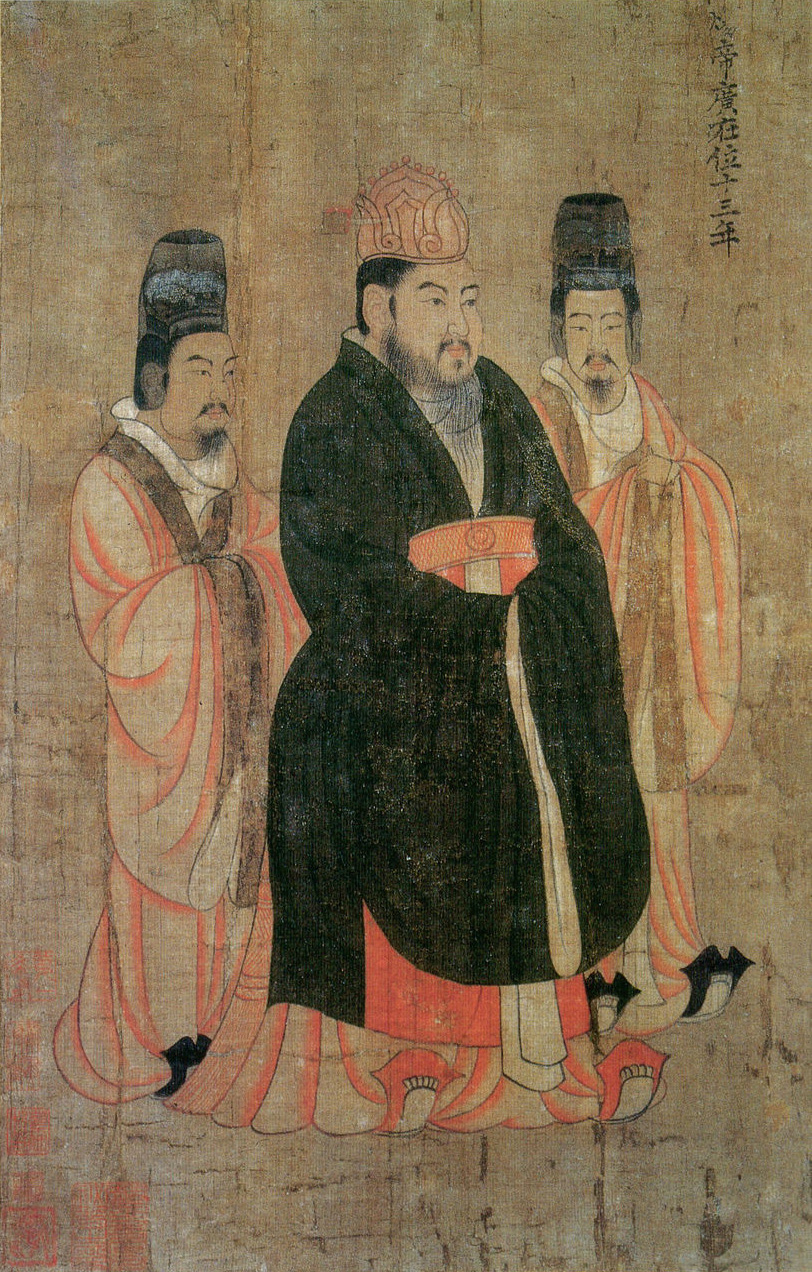
Emperor Yang of Sui (Chinese: 隋煬帝, 569 – 11 April 618), personal name Yang Guang (楊廣), alternative name Ying (英), childhood name Amo (阿摩), Xianbei name Puliuru Guang (普六茹廣), was the second emperor of the Sui dynasty of China.
Emperor Yang's original name was Yang Ying, but he was renamed by his father Emperor Wen, after consulting with oracles, to Yang Guang. Yang Guang was made the Prince of Jin after Emperor Wen established the Sui dynasty in 581. In 588, he was granted command of the five armies that invaded the Chen dynasty in southern China and was widely praised for the success of this campaign. These military achievements, as well as his machinations against his older brother Yang Yong, led to him becoming crown prince in 600. After the death of his father in 604, generally considered, though unproven, by most traditional historians to be a murder ordered by Yang Guang, he ascended the Sui throne.
Emperor Yang, ruling from 604 to 618, committed to several large construction projects, most notably the completion of the Grand Canal, and the reconstruction of the Great Wall. He also ordered several military expeditions that brought Sui to its greatest territorial extent, one of which, the conquest of Champa, resulted in the death of thousands of Sui soldiers from malaria. These expeditions, along with a series of disastrous campaigns against Goguryeo, left the empire bankrupt and the populace in revolt. With northern China in turmoil, Emperor Yang spent his last days in Jiangdu (江都, in modern Yangzhou, Jiangsu), where he was eventually strangled in a coup led by his general Yuwen Huaji.
Despite his accomplishments, Emperor Yang is generally considered by traditional historians to be one of the worst tyrants in Chinese history and the reason for the Sui dynasty's relatively short rule. His failed campaigns against Goguryeo, and the conscriptions levied to man them, coupled with increased taxation to finance these wars, and civil unrest as a result of this taxation, ultimately led to the downfall of the dynasty.
Yang Guang was born in 569, during the reign of Emperor Wu of Northern Zhou. His parents were Yang Jian, the Duke of Sui, and Yang Jian's wife Duchess Dugu Qieluo; his maternal grandfather was Dugu Xin, a prominent military general and official. He was his parents' second son, after Yang Yong, and he had at least one older sister, Yang Lihua, who became the wife of Emperor Wu's crown prince Yuwen Yun (the later Emperor Xuan) in 573. He was considered handsome and intelligent in his youth, and of Yang Jian's and Duchess Dugu's sons, they favored him the most. Sometime during Northern Zhou, on account of Yang Jian's achievements, he was created the Duke of Yanmen.
In 580, Yang Jian seized power as regent after Emperor Xuan's death. In 581, he had Emperor Xuan's son (by the concubine Zhu Manyue), Emperor Jing, yield the throne to him, ending Northern Zhou and establishing the Sui dynasty as its Emperor Wen. Emperor Wen created Yang Yong crown prince and created his other sons imperial princes. Yang Guang thus received the title of Prince of Jin.
Also in 581, Emperor Wen made Yang Guang the commandant at Bing Province (并州, roughly modern Taiyuan, Shanxi), in charge of the provinces north of the Yellow River. In 582, Emperor Wen set up a branch of the executive bureau of his government (尚書省; Shangshu Sheng) at Bing Province and made Yang Guang its head. He made the official Wang Shao (王韶) the deputy head and had him assist Yang Guang. Later in 582, Emperor Wen took a daughter of his vassal Emperor Ming of Western Liang (Xiao Kui) to be Yang Guang's wife and princess. It was said that Yang Guang loved and respected her.
In 584, after some Sui military and diplomatic victories, Tujue's Shabolüe Khan Ashina Shetu submitted to Sui. Yang Guang suggested to Emperor Wen that he rejected Ashina Shetu's overture and launch a major attack on Tujue, but Emperor Wen refused. In 585, with Ashina Shetu under attack from one of his subordinate khans, the Datou Khan Ashina Dianjue, Emperor Wen in fact sent Yang Guang to aid Ashina Shetu.
Hub AI
Emperor Yang of Sui AI simulator
(@Emperor Yang of Sui_simulator)
Emperor Yang of Sui
Emperor Yang of Sui (Chinese: 隋煬帝, 569 – 11 April 618), personal name Yang Guang (楊廣), alternative name Ying (英), childhood name Amo (阿摩), Xianbei name Puliuru Guang (普六茹廣), was the second emperor of the Sui dynasty of China.
Emperor Yang's original name was Yang Ying, but he was renamed by his father Emperor Wen, after consulting with oracles, to Yang Guang. Yang Guang was made the Prince of Jin after Emperor Wen established the Sui dynasty in 581. In 588, he was granted command of the five armies that invaded the Chen dynasty in southern China and was widely praised for the success of this campaign. These military achievements, as well as his machinations against his older brother Yang Yong, led to him becoming crown prince in 600. After the death of his father in 604, generally considered, though unproven, by most traditional historians to be a murder ordered by Yang Guang, he ascended the Sui throne.
Emperor Yang, ruling from 604 to 618, committed to several large construction projects, most notably the completion of the Grand Canal, and the reconstruction of the Great Wall. He also ordered several military expeditions that brought Sui to its greatest territorial extent, one of which, the conquest of Champa, resulted in the death of thousands of Sui soldiers from malaria. These expeditions, along with a series of disastrous campaigns against Goguryeo, left the empire bankrupt and the populace in revolt. With northern China in turmoil, Emperor Yang spent his last days in Jiangdu (江都, in modern Yangzhou, Jiangsu), where he was eventually strangled in a coup led by his general Yuwen Huaji.
Despite his accomplishments, Emperor Yang is generally considered by traditional historians to be one of the worst tyrants in Chinese history and the reason for the Sui dynasty's relatively short rule. His failed campaigns against Goguryeo, and the conscriptions levied to man them, coupled with increased taxation to finance these wars, and civil unrest as a result of this taxation, ultimately led to the downfall of the dynasty.
Yang Guang was born in 569, during the reign of Emperor Wu of Northern Zhou. His parents were Yang Jian, the Duke of Sui, and Yang Jian's wife Duchess Dugu Qieluo; his maternal grandfather was Dugu Xin, a prominent military general and official. He was his parents' second son, after Yang Yong, and he had at least one older sister, Yang Lihua, who became the wife of Emperor Wu's crown prince Yuwen Yun (the later Emperor Xuan) in 573. He was considered handsome and intelligent in his youth, and of Yang Jian's and Duchess Dugu's sons, they favored him the most. Sometime during Northern Zhou, on account of Yang Jian's achievements, he was created the Duke of Yanmen.
In 580, Yang Jian seized power as regent after Emperor Xuan's death. In 581, he had Emperor Xuan's son (by the concubine Zhu Manyue), Emperor Jing, yield the throne to him, ending Northern Zhou and establishing the Sui dynasty as its Emperor Wen. Emperor Wen created Yang Yong crown prince and created his other sons imperial princes. Yang Guang thus received the title of Prince of Jin.
Also in 581, Emperor Wen made Yang Guang the commandant at Bing Province (并州, roughly modern Taiyuan, Shanxi), in charge of the provinces north of the Yellow River. In 582, Emperor Wen set up a branch of the executive bureau of his government (尚書省; Shangshu Sheng) at Bing Province and made Yang Guang its head. He made the official Wang Shao (王韶) the deputy head and had him assist Yang Guang. Later in 582, Emperor Wen took a daughter of his vassal Emperor Ming of Western Liang (Xiao Kui) to be Yang Guang's wife and princess. It was said that Yang Guang loved and respected her.
In 584, after some Sui military and diplomatic victories, Tujue's Shabolüe Khan Ashina Shetu submitted to Sui. Yang Guang suggested to Emperor Wen that he rejected Ashina Shetu's overture and launch a major attack on Tujue, but Emperor Wen refused. In 585, with Ashina Shetu under attack from one of his subordinate khans, the Datou Khan Ashina Dianjue, Emperor Wen in fact sent Yang Guang to aid Ashina Shetu.
Recent media