



Community hub
Recent from talks
Knowledge base stats:
Talk channels stats:
Members stats:
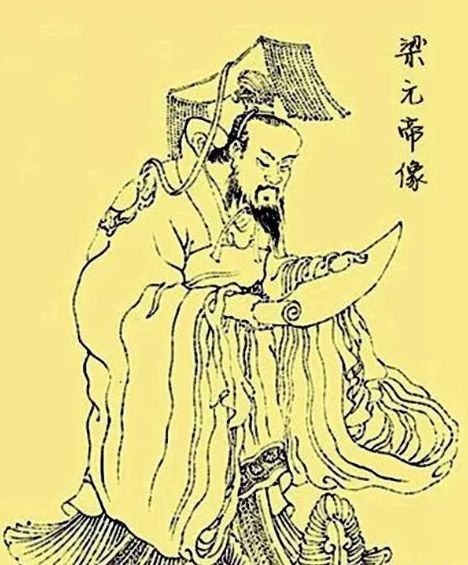
Emperor Yuan of Liang
Emperor Yuan of Liang (Chinese: 梁元帝; pinyin: Liáng Yuándì) (16 September 508 – 27 January 555), personal name Xiao Yi (蕭繹), courtesy name Shicheng (世誠), childhood name Qifu (七符), was an emperor of the Chinese Liang dynasty. After his father Emperor Wu and brother Emperor Jianwen were successively taken hostage and controlled by the rebel general Hou Jing, Xiao Yi was largely viewed as the de facto leader of Liang, and after defeating Hou in 552 declared himself emperor. In 554, after offending Yuwen Tai, the paramount general of rival Western Wei, Western Wei forces descended on and captured his capital Jiangling (江陵, in modern Jingzhou, Hubei), executing him and instead declaring his nephew Xiao Cha (Emperor Xuan) the Emperor of Liang.
Emperor Yuan was a renowned writer and collector of ancient books, but was criticized by historians for concentrating on eliminating potential contenders for the throne rather than on fighting Hou Jing. As Jiangling was besieged by Western Wei troops, Emperor Yuan set his collection of more than 140,000 volumes of ancient books on fire, and this is commonly considered one of the greatest disasters for the study of ancient works in Chinese history.
Xiao Yi was born in 508, as the seventh son of the dynasty founder Emperor Wu. His mother was Emperor Wu's concubine Ruan Lingying (阮令贏), whose original surname was Shi (石), and who had previously been concubine to the Southern Qi prince Xiao Yaoguang (蕭遙光) and then the emperor Xiao Baojuan, and whose surname was changed to Ruan by Emperor Wu. In 514, at the age of six, he was created the Prince of Xiangdong. As the years went by, he got increasingly higher offices, and by 547 he was not only the governor of the key Jing Province (荊州, modern central and western Hubei), but was also titular commander of the troops of the other provinces in the central empire.
Xiao Yi was blind in one eye, as a result of a botched treatment by Emperor Wu for an eye ailment. He was known as learned in literary matters, but not well-versed in military matters. His relationship with his wife Princess Xu Zhaopei was very chilly, and he rarely visited her bedchambers—once every two or three years. When he did, she would mock him by putting makeup on only one side of her face, and when he saw it, he would storm out. She also conducted affairs with a number of men.
In 548, the general Hou Jing, who had defected from Eastern Wei in 547, rebelled from his headquarters at Shouyang (壽陽, in modern Lu'an, Anhui). He quickly arrived at the capital Jiankang and, after capturing the outer city, put the palace under siege. Despite the desperate situation that the capital was in, Xiao Yi only sent partial troops, commanded by his heir apparent Xiao Fangdeng (蕭方等) and general Wang Sengbian, to join the other provincial troops to try to lift Jiankang's siege. However, the provincial troops, once they gathered, were hesitant to engage Hou's troops. Xiao Yi himself, commanding the majority of his troops, halted at the border between Jing Province and Ying Province (郢州, modern eastern Hubei), claiming that he needed to wait for the other provincial troops to gather before he could proceed. Meanwhile, as soon as he heard news that Emperor Wu had entered into peace with Hou in spring 549, he withdrew his troops entirely. Hou soon reneged on the peace agreement, however, and put the palace under siege again in earnest, and he soon captured it, seizing Emperor Wu and the crown prince Xiao Gang (Xiao Yi's older brother) effectively as hostages. The provincial troops already at Jiankang took no action and disbanded. Xiao Fangdeng and Wang Sengbian took their troops back to Jing Province. Upon their arrival, Xiao Yi's response was to strengthen the defense of his headquarters at Jiangling. He declined requests by several other provincial governors that he formally undertake imperial powers, but then began to act in accordance therewith, including commissioning generals and governors and creating titles, particularly after his cousin Xiao Shao (蕭韶) the Marquess of Shangjia fled out of Jiankang and claimed to carry a secret edict from Emperor Wu authorizing Xiao Yi to exercise those authorities. When Emperor Wu died in summer 549 and was succeeded by Xiao Gang (as Emperor Jianwen), Xiao Yi learned the news of Emperor Wu's death but kept it secret from his people and army.
Meanwhile, Xiao Yi was displeased that his nephews Xiao Yu (蕭譽) the Prince of Hedong, the governor of Xiang Province (湘州, modern Hunan) and Xiao Cha the Prince of Yueyang, the governor of Yong Province (雍州, modern northwestern Hubei), were resisting his orders. At the same time, his friend Zhang Zuan (張纘), who had a prior dispute with Xiao Yu, falsely informed him that Xiao Yu and Xiao Cha were planning to attack him together. Xiao Yi therefore prepared first to attack Xiao Yu. Xiao Fangdeng, who was fearful of his father on account of his father's chilly relations with his mother Princess Xu, volunteered to command the troops against Xiao Yu, but was defeated by Xiao Yu and drowned in battle. Xiao Yi did not mourn Xiao Fangdeng, and subsequently forced Princess Xu to commit suicide. He would not take another wife for the rest of his life.
Meanwhile, Xiao Yi sent Bao Quan (鮑泉) and Wang Sengbian against Xiao Yu, but over a minor disagreement in strategy, he pierced Wang's leg with a sword and nearly killed him, and Bao ended up commanding the army on his own. Wang would be spared only after his mother made urgent pleas to Xiao Yi to spare her son. Bao was able to defeat Xiao Yu and force Xiao Yu back into his headquarters at Changsha (長沙, in modern Changsha, Hunan), but after putting Changsha under siege for months was unable to capture it. Xiao Cha, trying to save his brother, marched on Jiangling, and Xiao Yi was forced to release Wang from prison and have him command Jiangling's defense forces against Xiao Cha. Wang defeated Xiao Cha, who was forced to retreat back to his headquarters at Xiangyang (襄陽, in modern Xiangfan, Hubei). Xiao Yi subsequently replaced Bao with Wang in sieging Changsha. Meanwhile, Xiao Cha, unable to save his brother and fearful that he would be Xiao Yi's next target, submitted to Western Wei, and Western Wei's paramount general Yuwen Tai sent the general Yang Zhong (楊忠) to assist Xiao Cha, defeating Xiao Yi's army commanded by Liu Zhongli (柳仲禮) in spring 550 and capturing all of Liang territory north of the Han River, after which Xiao Yi made peace with Western Wei, effectively acknowledging Western Wei's suzerainty over Xiao Cha's domain and further declared Liang to be a subordinate state.
Xiao Yi's older brother Xiao Guan (蕭綸) the Prince of Shaoling, at that time holding his troops at Jiangxia (江夏, in modern Wuhan, Hubei), considered trying to save Xiao Yu, but felt that he did not have enough strength to do so, and therefore sent letters to Xiao Yi, trying to persuade him to give up the siege on Changsha. Xiao Yi refused, and continued the siege. Soon, Changsha fell, and Wang executed Xiao Yu. It was only after this point that Xiao Yi acknowledged Emperor Wu's death. While he implicitly recognized Emperor Jianwen as the rightful emperor, he refused to recognize Emperor Jianwen's era name Dabao (大寶) and continued to use Emperor Wu's era name Taiqing (太清), and, citing the fact that Hou Jing was actually in control, did not recognize Emperor Jianwen's edicts. When Xiao Yi's younger brother Xiao Ji the Prince of Wuling, who was then controlling the modern Sichuan and Chongqing region, sent an army commanded by his heir apparent Xiao Yuanzhao (蕭圓照) toward Jing Province, claiming to be willing to accept Xiao Yi's command in attacking Hou, Xiao Yi commissioned Xiao Yuanzhao as the governor of Xin Province (信州, modern eastern Chongqing) and ordered him to halt at Xin Province's capital Baidicheng and not to proceed any further.
Hub AI
Emperor Yuan of Liang AI simulator
(@Emperor Yuan of Liang_simulator)
Emperor Yuan of Liang
Emperor Yuan of Liang (Chinese: 梁元帝; pinyin: Liáng Yuándì) (16 September 508 – 27 January 555), personal name Xiao Yi (蕭繹), courtesy name Shicheng (世誠), childhood name Qifu (七符), was an emperor of the Chinese Liang dynasty. After his father Emperor Wu and brother Emperor Jianwen were successively taken hostage and controlled by the rebel general Hou Jing, Xiao Yi was largely viewed as the de facto leader of Liang, and after defeating Hou in 552 declared himself emperor. In 554, after offending Yuwen Tai, the paramount general of rival Western Wei, Western Wei forces descended on and captured his capital Jiangling (江陵, in modern Jingzhou, Hubei), executing him and instead declaring his nephew Xiao Cha (Emperor Xuan) the Emperor of Liang.
Emperor Yuan was a renowned writer and collector of ancient books, but was criticized by historians for concentrating on eliminating potential contenders for the throne rather than on fighting Hou Jing. As Jiangling was besieged by Western Wei troops, Emperor Yuan set his collection of more than 140,000 volumes of ancient books on fire, and this is commonly considered one of the greatest disasters for the study of ancient works in Chinese history.
Xiao Yi was born in 508, as the seventh son of the dynasty founder Emperor Wu. His mother was Emperor Wu's concubine Ruan Lingying (阮令贏), whose original surname was Shi (石), and who had previously been concubine to the Southern Qi prince Xiao Yaoguang (蕭遙光) and then the emperor Xiao Baojuan, and whose surname was changed to Ruan by Emperor Wu. In 514, at the age of six, he was created the Prince of Xiangdong. As the years went by, he got increasingly higher offices, and by 547 he was not only the governor of the key Jing Province (荊州, modern central and western Hubei), but was also titular commander of the troops of the other provinces in the central empire.
Xiao Yi was blind in one eye, as a result of a botched treatment by Emperor Wu for an eye ailment. He was known as learned in literary matters, but not well-versed in military matters. His relationship with his wife Princess Xu Zhaopei was very chilly, and he rarely visited her bedchambers—once every two or three years. When he did, she would mock him by putting makeup on only one side of her face, and when he saw it, he would storm out. She also conducted affairs with a number of men.
In 548, the general Hou Jing, who had defected from Eastern Wei in 547, rebelled from his headquarters at Shouyang (壽陽, in modern Lu'an, Anhui). He quickly arrived at the capital Jiankang and, after capturing the outer city, put the palace under siege. Despite the desperate situation that the capital was in, Xiao Yi only sent partial troops, commanded by his heir apparent Xiao Fangdeng (蕭方等) and general Wang Sengbian, to join the other provincial troops to try to lift Jiankang's siege. However, the provincial troops, once they gathered, were hesitant to engage Hou's troops. Xiao Yi himself, commanding the majority of his troops, halted at the border between Jing Province and Ying Province (郢州, modern eastern Hubei), claiming that he needed to wait for the other provincial troops to gather before he could proceed. Meanwhile, as soon as he heard news that Emperor Wu had entered into peace with Hou in spring 549, he withdrew his troops entirely. Hou soon reneged on the peace agreement, however, and put the palace under siege again in earnest, and he soon captured it, seizing Emperor Wu and the crown prince Xiao Gang (Xiao Yi's older brother) effectively as hostages. The provincial troops already at Jiankang took no action and disbanded. Xiao Fangdeng and Wang Sengbian took their troops back to Jing Province. Upon their arrival, Xiao Yi's response was to strengthen the defense of his headquarters at Jiangling. He declined requests by several other provincial governors that he formally undertake imperial powers, but then began to act in accordance therewith, including commissioning generals and governors and creating titles, particularly after his cousin Xiao Shao (蕭韶) the Marquess of Shangjia fled out of Jiankang and claimed to carry a secret edict from Emperor Wu authorizing Xiao Yi to exercise those authorities. When Emperor Wu died in summer 549 and was succeeded by Xiao Gang (as Emperor Jianwen), Xiao Yi learned the news of Emperor Wu's death but kept it secret from his people and army.
Meanwhile, Xiao Yi was displeased that his nephews Xiao Yu (蕭譽) the Prince of Hedong, the governor of Xiang Province (湘州, modern Hunan) and Xiao Cha the Prince of Yueyang, the governor of Yong Province (雍州, modern northwestern Hubei), were resisting his orders. At the same time, his friend Zhang Zuan (張纘), who had a prior dispute with Xiao Yu, falsely informed him that Xiao Yu and Xiao Cha were planning to attack him together. Xiao Yi therefore prepared first to attack Xiao Yu. Xiao Fangdeng, who was fearful of his father on account of his father's chilly relations with his mother Princess Xu, volunteered to command the troops against Xiao Yu, but was defeated by Xiao Yu and drowned in battle. Xiao Yi did not mourn Xiao Fangdeng, and subsequently forced Princess Xu to commit suicide. He would not take another wife for the rest of his life.
Meanwhile, Xiao Yi sent Bao Quan (鮑泉) and Wang Sengbian against Xiao Yu, but over a minor disagreement in strategy, he pierced Wang's leg with a sword and nearly killed him, and Bao ended up commanding the army on his own. Wang would be spared only after his mother made urgent pleas to Xiao Yi to spare her son. Bao was able to defeat Xiao Yu and force Xiao Yu back into his headquarters at Changsha (長沙, in modern Changsha, Hunan), but after putting Changsha under siege for months was unable to capture it. Xiao Cha, trying to save his brother, marched on Jiangling, and Xiao Yi was forced to release Wang from prison and have him command Jiangling's defense forces against Xiao Cha. Wang defeated Xiao Cha, who was forced to retreat back to his headquarters at Xiangyang (襄陽, in modern Xiangfan, Hubei). Xiao Yi subsequently replaced Bao with Wang in sieging Changsha. Meanwhile, Xiao Cha, unable to save his brother and fearful that he would be Xiao Yi's next target, submitted to Western Wei, and Western Wei's paramount general Yuwen Tai sent the general Yang Zhong (楊忠) to assist Xiao Cha, defeating Xiao Yi's army commanded by Liu Zhongli (柳仲禮) in spring 550 and capturing all of Liang territory north of the Han River, after which Xiao Yi made peace with Western Wei, effectively acknowledging Western Wei's suzerainty over Xiao Cha's domain and further declared Liang to be a subordinate state.
Xiao Yi's older brother Xiao Guan (蕭綸) the Prince of Shaoling, at that time holding his troops at Jiangxia (江夏, in modern Wuhan, Hubei), considered trying to save Xiao Yu, but felt that he did not have enough strength to do so, and therefore sent letters to Xiao Yi, trying to persuade him to give up the siege on Changsha. Xiao Yi refused, and continued the siege. Soon, Changsha fell, and Wang executed Xiao Yu. It was only after this point that Xiao Yi acknowledged Emperor Wu's death. While he implicitly recognized Emperor Jianwen as the rightful emperor, he refused to recognize Emperor Jianwen's era name Dabao (大寶) and continued to use Emperor Wu's era name Taiqing (太清), and, citing the fact that Hou Jing was actually in control, did not recognize Emperor Jianwen's edicts. When Xiao Yi's younger brother Xiao Ji the Prince of Wuling, who was then controlling the modern Sichuan and Chongqing region, sent an army commanded by his heir apparent Xiao Yuanzhao (蕭圓照) toward Jing Province, claiming to be willing to accept Xiao Yi's command in attacking Hou, Xiao Yi commissioned Xiao Yuanzhao as the governor of Xin Province (信州, modern eastern Chongqing) and ordered him to halt at Xin Province's capital Baidicheng and not to proceed any further.