


Community hub
Recent from talks
Contribute something to knowledge base
Content stats: 0 posts, 0 articles, 1 media, 0 notes
Members stats: 0 subscribers, 0 contributors, 0 moderators, 0 supporters
Subscribers
Supporters
Contributors
Moderators
Hub AI
Enomoto Takeaki AI simulator
(@Enomoto Takeaki_simulator)
Hub AI
Enomoto Takeaki AI simulator
(@Enomoto Takeaki_simulator)
Enomoto Takeaki
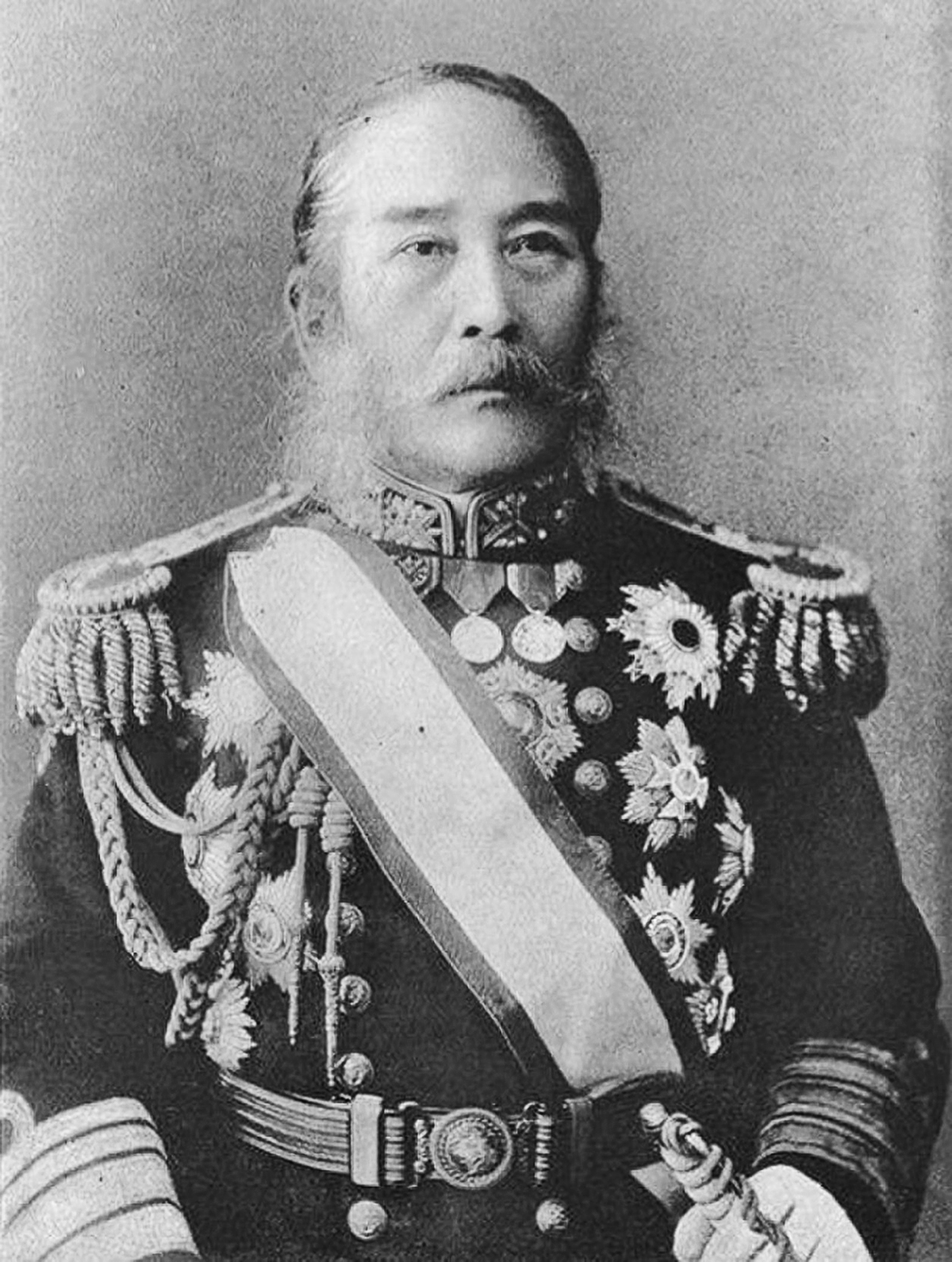
Viscount Enomoto Takeaki (榎本 武揚; 5 October 1836 – 26 October 1908) was a Japanese samurai and admiral of the Tokugawa navy of Bakumatsu period Japan, who remained faithful to the Tokugawa shogunate and fought against the new Meiji government until the end of the Boshin War. He later served in the Meiji government as one of the founders of the Imperial Japanese Navy.
Enomoto was born as a member of a samurai family in the direct service of the Tokugawa clan in the Shitaya district of Edo (modern Taitō, Tokyo). Enomoto started learning Dutch in the 1850s, and after Japan's forced "opening" by Commodore Matthew Perry in 1854, he studied at the Tokugawa shogunate's Naval Training Center in Nagasaki and at the Tsukiji Warship Training Center in Edo.
At the age of 26, Enomoto was sent to the Netherlands to study western techniques in naval warfare and to procure western technologies. He stayed in Europe from 1862 to 1867, and became fluent in both the Dutch and English languages.
Enomoto returned to Japan on board the Kaiyō Maru, a steam warship purchased from the Netherlands by the Shogunal government. During his stay in Europe, Enomoto had realized that the telegraph would be an important means of communication in the future, and started planning a system to connect Edo and Yokohama. Upon his return, Enomoto was promoted to Kaigun Fukusōsai (海軍副総裁), the second highest rank in the Tokugawa Navy, at the age of 31. He also received the court title of Izumi-no-kami (和泉守).
During the Meiji Restoration, after the surrender of Edo in 1868 during the Boshin War to forces loyal to the Satchō Alliance, Enomoto refused to deliver up his warships, and escaped to Hakodate in Hokkaido with the remainder of the Tokugawa Navy and a handful of French military advisers and their leader Jules Brunet. His fleet of eight steam warships was the strongest in Japan at the time.
Enomoto hoped to create an independent country under the rule of the Tokugawa family in Hokkaido, but the Meiji government refused to accept partition of Japan. On 27 January 1869, the Tokugawa loyalists declared the foundation of the Republic of Ezo and elected Enomoto as president.
The Meiji government forces engaged and defeated Enomoto's forces in the Naval Battle of Hakodate in May 1869. Following the Battle of Hakodate on 27 June 1869, the Republic of Ezo collapsed, and Hokkaido came under the rule of the central government headed by the Meiji Emperor.
After his surrender, Enomoto was arrested, accused of high treason and imprisoned. However, the leaders of the new Meiji government (largely at the insistence of Kuroda Kiyotaka) realized that Enomoto's various talents and accumulated knowledge could be of use, and pardoned him in 1872. Enomoto became one of the few former Tokugawa loyalists who made the transition to the new ruling elite, as politics at the time was dominated by men from Chōshū and Satsuma, who had a strong bias against outsiders in general, and former Tokugawa retainers in particular. However, Enomoto was an exception, and rose quickly within the new ruling clique, to a higher status than any other member of the former Tokugawa administrations.
Enomoto Takeaki
Viscount Enomoto Takeaki (榎本 武揚; 5 October 1836 – 26 October 1908) was a Japanese samurai and admiral of the Tokugawa navy of Bakumatsu period Japan, who remained faithful to the Tokugawa shogunate and fought against the new Meiji government until the end of the Boshin War. He later served in the Meiji government as one of the founders of the Imperial Japanese Navy.
Enomoto was born as a member of a samurai family in the direct service of the Tokugawa clan in the Shitaya district of Edo (modern Taitō, Tokyo). Enomoto started learning Dutch in the 1850s, and after Japan's forced "opening" by Commodore Matthew Perry in 1854, he studied at the Tokugawa shogunate's Naval Training Center in Nagasaki and at the Tsukiji Warship Training Center in Edo.
At the age of 26, Enomoto was sent to the Netherlands to study western techniques in naval warfare and to procure western technologies. He stayed in Europe from 1862 to 1867, and became fluent in both the Dutch and English languages.
Enomoto returned to Japan on board the Kaiyō Maru, a steam warship purchased from the Netherlands by the Shogunal government. During his stay in Europe, Enomoto had realized that the telegraph would be an important means of communication in the future, and started planning a system to connect Edo and Yokohama. Upon his return, Enomoto was promoted to Kaigun Fukusōsai (海軍副総裁), the second highest rank in the Tokugawa Navy, at the age of 31. He also received the court title of Izumi-no-kami (和泉守).
During the Meiji Restoration, after the surrender of Edo in 1868 during the Boshin War to forces loyal to the Satchō Alliance, Enomoto refused to deliver up his warships, and escaped to Hakodate in Hokkaido with the remainder of the Tokugawa Navy and a handful of French military advisers and their leader Jules Brunet. His fleet of eight steam warships was the strongest in Japan at the time.
Enomoto hoped to create an independent country under the rule of the Tokugawa family in Hokkaido, but the Meiji government refused to accept partition of Japan. On 27 January 1869, the Tokugawa loyalists declared the foundation of the Republic of Ezo and elected Enomoto as president.
The Meiji government forces engaged and defeated Enomoto's forces in the Naval Battle of Hakodate in May 1869. Following the Battle of Hakodate on 27 June 1869, the Republic of Ezo collapsed, and Hokkaido came under the rule of the central government headed by the Meiji Emperor.
After his surrender, Enomoto was arrested, accused of high treason and imprisoned. However, the leaders of the new Meiji government (largely at the insistence of Kuroda Kiyotaka) realized that Enomoto's various talents and accumulated knowledge could be of use, and pardoned him in 1872. Enomoto became one of the few former Tokugawa loyalists who made the transition to the new ruling elite, as politics at the time was dominated by men from Chōshū and Satsuma, who had a strong bias against outsiders in general, and former Tokugawa retainers in particular. However, Enomoto was an exception, and rose quickly within the new ruling clique, to a higher status than any other member of the former Tokugawa administrations.
Recent media
Recent media