
Recent from talks
Escobar Rebellion
Knowledge base stats:
Talk channels stats:
Members stats:
Escobar Rebellion
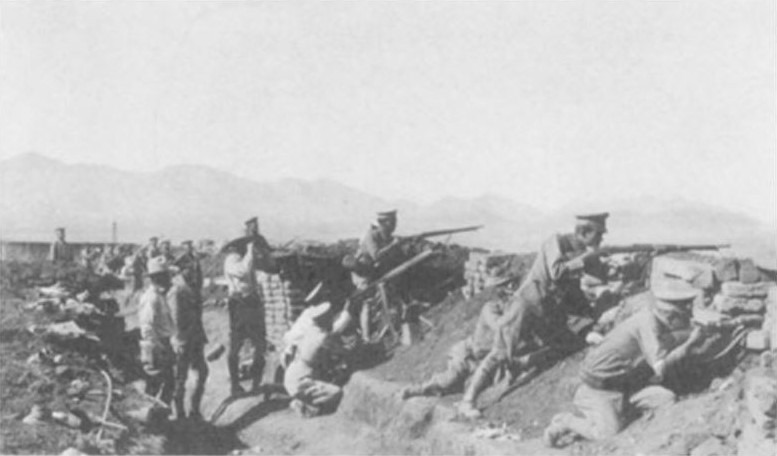
The Escobar Rebellion was a conflict in northern Mexico in 1929 during the Maximato, between the government forces of President Emilio Portes Gil and rebel forces under the command of General José Gonzalo Escobar. After some initial success in taking over several key cities in the northern half of the country, the Escobar rebels were decisively defeated in a major battle at Jiménez, Chihuahua, and were eventually swept aside by the advancing government forces under the command of General Calles.
The Escobar Rebellion was the last in a series of rebellions following the end of the Mexican civil war in 1920, when the left wing faction of Plutarco Elías Calles, Álvaro Obregón and Adolfo de la Huerta (collectively known as "The Sonoran Triangle") took control of the federal government from Venustiano Carranza under the Plan of Agua Prieta. Following the assassination of President-elect Obregón on July 17, 1928, and the end of Calles' term as president on November 30, the former governor of Tamaulipas, Emilio Portes Gil, was selected unanimously to succeed Calles as provisional president until a new election could be held the following year, in November 1929. As a civilian with no military experience, the selection of Portes Gil upset many officers in the Mexican military, now largely composed of the armies of individual revolutionary leaders, who wanted one of their own in office to continue the tradition of having a general for president. Earlier, Venustiano Carranza had attempted to impose a civilian to succeed him in the 1920 elections, leading to his ouster and death.
At the time, one of the Mexican Army's most popular and wealthy officers was General Don José Gonzalo Escobar, who was described as "brave, young and dashing" for his role in defeating Pancho Villa in the 1919 battle for Ciudad Juárez and for later involvement in crushing the de la Huerta revolt of 1923 and the Gomez-Serrano revolt in 1927. Although Escobar at first proclaimed his loyalty to Calles and his successor, neither president trusted him and both considered Escobar to be high on their list of troublesome generals. As Escobar was assuring Calles and Portes Gil of his loyalty, in secret he made plans to take control of the federal government and establish himself as president.
Drafting the "Plan of Hermosillo" late in 1928, Escobar planned to launch his rebellion the following spring, citing corruption in the Calles-Portes Gil government as the reason for the revolt, which was called the "Renovating Revolution" by Escobar and his men. Portes Gil, like Escobar, knew that the success of any rebellion would largely be determined by supplies brought in from across the international border in the United States. Consequently, Portes Gil launched a "two-phase plan" to have the United States government seal the border to any potential rebel needs and also resupply the Mexican Army with war materiel, including modern combat aircraft. Both requests were granted in February 1929, just weeks before the opening of hostilities.
The rebellion officially began on March 3, 1929. Escobar maintained his guise as a loyal subject for as long as he could, having sent a letter to Portes Gil offering his services just hours before leading an attack on the city of Monterrey, in Nuevo Leon. Many Mexican Army officers defected to join Escobar's rebellion, often taking their entire command with them, so that by the opening of hostilities Escobar was in command of nearly 30,000 men, including a large contingent of Yaqui Indians. After a ten-hour battle Monterrey was under rebel control. Escobar remained in the city just as long as it took to remove $345,000 from local banks and to ransack the home of General Juan Andreu Almazán. From there Escobar retired by way of Saltillo, tearing up railroad tracks as he went. Portes Gil moved quickly to crush Escobar's rebellion by putting Calles in command of federal military and naval forces, which consisted of about 72% of Mexico's original ground forces, in addition to the air force and some 5,000 agrarians from San Luis Potosí.
The beginning of the rebellion was set to coincide with the inauguration of President Herbert Hoover on March 4, 1929. Escobar hoped that if he could win a few battles and quickly take control of the government that he would receive recognition from Hoover's administration by default, as his foreign policies were not yet defined, but Hoover backed Portes Gil and the established constitution. This had a significant impact on the outcome of the rebellion, according to columnist Drew Pearson, who said that many of the garrisons that defected to join Escorbar's revolt soon deserted back to the federal government after learning of Hoover's decision.
Immediately after their capture of Monterrey, Escobar forces further up north moved to take control of the ports of entry along the Arizona-Sonora border, while further to the south Escobar forces under General Jesus M. Aguirre unsuccessfully attacked Veracruz. Rebels in Sinaloa won a significant victory at Mazatlán, where they inflicted "considerable punishment" on retreating government forces and in Agua Prieta and Naco, the garrisons revolted to join the rebels, placing the customs collector and other officials in jail. At the same time a force of some 500 rebels occupied Nogales, Sonora, and succeeded in placing the customs collector, the immigration inspector, the postmaster and other officials under arrest. However, most of those arrested swore allegiance to Escobar and were allowed to return to work shortly thereafter. After successfully taking over the Arizona ports of entry, several border towns on the West Texas frontier quickly came under rebel control. By March 5, rebel forces were in command of Villa Acuña, Piedras Negras and Ojinaga, and moving to take control of Ciudad Juárez, Mexico's largest city on the international border and its greatest port of entry, opposite of El Paso, Texas.
The Battle of Juárez began a couple of days later in the early morning hours of March 8. Rebel forces under the command of General Marcelino Murrieta quickly swept through the city, forcing the federal garrison back to positions along the Rio Grande, adjacent to the international border and thousands of American spectators who had formed up to watch the hostilities from the river's edge, windows and roof tops. Troopers of the 7th Cavalry were also present to protect American lives and prevent the fighting from spilling over to their side of the border. Several stray bullets landed on the American side, causing a few casualties, but nobody was killed. The thirteen-story El Paso bank building was struck so many times that the upper floors had to be evacuated for safety. After hours of heavy fighting along the international border, when it appeared as though the rebels would soon be victorious, the commander of the American forces in El Paso, General George Van Horn Moseley, crossed the line into Mexico to confer with the federal commander, General Matias Ramos, to ask about his intentions. General Ramos informed Moseley that he was willing to surrender the city, but only if the rebels guaranteed him and his men proper treatment as prisoners of war, or be allowed to cross into the United States for internment. The latter was agreed upon and by the end of the day some 300 Mexican Army officers and men, along with their wives and children, crossed the border for internment at Fort Bliss. The rebels were now in control of Mexico's most important port of entry, and they intended to use it as a source of weapons and war material and other supplies from the United States.
Hub AI
Escobar Rebellion AI simulator
(@Escobar Rebellion_simulator)
Escobar Rebellion
The Escobar Rebellion was a conflict in northern Mexico in 1929 during the Maximato, between the government forces of President Emilio Portes Gil and rebel forces under the command of General José Gonzalo Escobar. After some initial success in taking over several key cities in the northern half of the country, the Escobar rebels were decisively defeated in a major battle at Jiménez, Chihuahua, and were eventually swept aside by the advancing government forces under the command of General Calles.
The Escobar Rebellion was the last in a series of rebellions following the end of the Mexican civil war in 1920, when the left wing faction of Plutarco Elías Calles, Álvaro Obregón and Adolfo de la Huerta (collectively known as "The Sonoran Triangle") took control of the federal government from Venustiano Carranza under the Plan of Agua Prieta. Following the assassination of President-elect Obregón on July 17, 1928, and the end of Calles' term as president on November 30, the former governor of Tamaulipas, Emilio Portes Gil, was selected unanimously to succeed Calles as provisional president until a new election could be held the following year, in November 1929. As a civilian with no military experience, the selection of Portes Gil upset many officers in the Mexican military, now largely composed of the armies of individual revolutionary leaders, who wanted one of their own in office to continue the tradition of having a general for president. Earlier, Venustiano Carranza had attempted to impose a civilian to succeed him in the 1920 elections, leading to his ouster and death.
At the time, one of the Mexican Army's most popular and wealthy officers was General Don José Gonzalo Escobar, who was described as "brave, young and dashing" for his role in defeating Pancho Villa in the 1919 battle for Ciudad Juárez and for later involvement in crushing the de la Huerta revolt of 1923 and the Gomez-Serrano revolt in 1927. Although Escobar at first proclaimed his loyalty to Calles and his successor, neither president trusted him and both considered Escobar to be high on their list of troublesome generals. As Escobar was assuring Calles and Portes Gil of his loyalty, in secret he made plans to take control of the federal government and establish himself as president.
Drafting the "Plan of Hermosillo" late in 1928, Escobar planned to launch his rebellion the following spring, citing corruption in the Calles-Portes Gil government as the reason for the revolt, which was called the "Renovating Revolution" by Escobar and his men. Portes Gil, like Escobar, knew that the success of any rebellion would largely be determined by supplies brought in from across the international border in the United States. Consequently, Portes Gil launched a "two-phase plan" to have the United States government seal the border to any potential rebel needs and also resupply the Mexican Army with war materiel, including modern combat aircraft. Both requests were granted in February 1929, just weeks before the opening of hostilities.
The rebellion officially began on March 3, 1929. Escobar maintained his guise as a loyal subject for as long as he could, having sent a letter to Portes Gil offering his services just hours before leading an attack on the city of Monterrey, in Nuevo Leon. Many Mexican Army officers defected to join Escobar's rebellion, often taking their entire command with them, so that by the opening of hostilities Escobar was in command of nearly 30,000 men, including a large contingent of Yaqui Indians. After a ten-hour battle Monterrey was under rebel control. Escobar remained in the city just as long as it took to remove $345,000 from local banks and to ransack the home of General Juan Andreu Almazán. From there Escobar retired by way of Saltillo, tearing up railroad tracks as he went. Portes Gil moved quickly to crush Escobar's rebellion by putting Calles in command of federal military and naval forces, which consisted of about 72% of Mexico's original ground forces, in addition to the air force and some 5,000 agrarians from San Luis Potosí.
The beginning of the rebellion was set to coincide with the inauguration of President Herbert Hoover on March 4, 1929. Escobar hoped that if he could win a few battles and quickly take control of the government that he would receive recognition from Hoover's administration by default, as his foreign policies were not yet defined, but Hoover backed Portes Gil and the established constitution. This had a significant impact on the outcome of the rebellion, according to columnist Drew Pearson, who said that many of the garrisons that defected to join Escorbar's revolt soon deserted back to the federal government after learning of Hoover's decision.
Immediately after their capture of Monterrey, Escobar forces further up north moved to take control of the ports of entry along the Arizona-Sonora border, while further to the south Escobar forces under General Jesus M. Aguirre unsuccessfully attacked Veracruz. Rebels in Sinaloa won a significant victory at Mazatlán, where they inflicted "considerable punishment" on retreating government forces and in Agua Prieta and Naco, the garrisons revolted to join the rebels, placing the customs collector and other officials in jail. At the same time a force of some 500 rebels occupied Nogales, Sonora, and succeeded in placing the customs collector, the immigration inspector, the postmaster and other officials under arrest. However, most of those arrested swore allegiance to Escobar and were allowed to return to work shortly thereafter. After successfully taking over the Arizona ports of entry, several border towns on the West Texas frontier quickly came under rebel control. By March 5, rebel forces were in command of Villa Acuña, Piedras Negras and Ojinaga, and moving to take control of Ciudad Juárez, Mexico's largest city on the international border and its greatest port of entry, opposite of El Paso, Texas.
The Battle of Juárez began a couple of days later in the early morning hours of March 8. Rebel forces under the command of General Marcelino Murrieta quickly swept through the city, forcing the federal garrison back to positions along the Rio Grande, adjacent to the international border and thousands of American spectators who had formed up to watch the hostilities from the river's edge, windows and roof tops. Troopers of the 7th Cavalry were also present to protect American lives and prevent the fighting from spilling over to their side of the border. Several stray bullets landed on the American side, causing a few casualties, but nobody was killed. The thirteen-story El Paso bank building was struck so many times that the upper floors had to be evacuated for safety. After hours of heavy fighting along the international border, when it appeared as though the rebels would soon be victorious, the commander of the American forces in El Paso, General George Van Horn Moseley, crossed the line into Mexico to confer with the federal commander, General Matias Ramos, to ask about his intentions. General Ramos informed Moseley that he was willing to surrender the city, but only if the rebels guaranteed him and his men proper treatment as prisoners of war, or be allowed to cross into the United States for internment. The latter was agreed upon and by the end of the day some 300 Mexican Army officers and men, along with their wives and children, crossed the border for internment at Fort Bliss. The rebels were now in control of Mexico's most important port of entry, and they intended to use it as a source of weapons and war material and other supplies from the United States.
Recent media